Is renunciation about retreating into the forest to avoid people, or about standing in the middle of the crowd while the mind remains undisturbed?
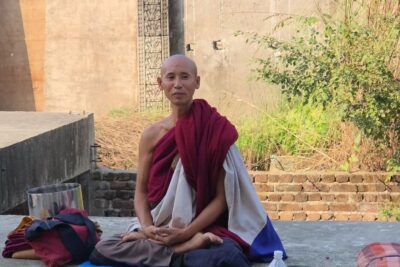
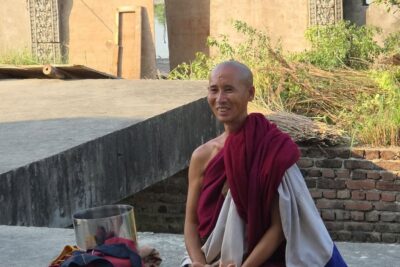
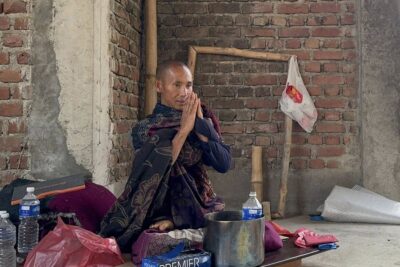
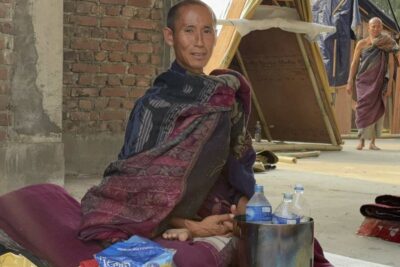
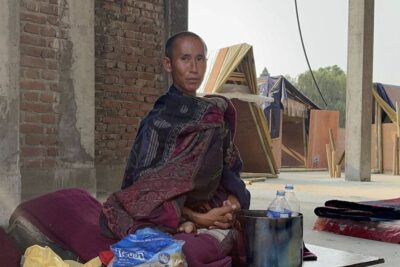
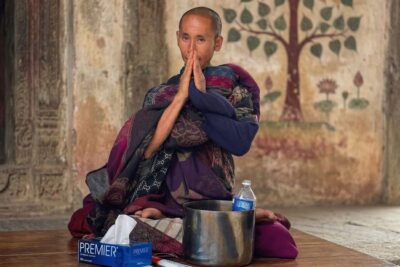
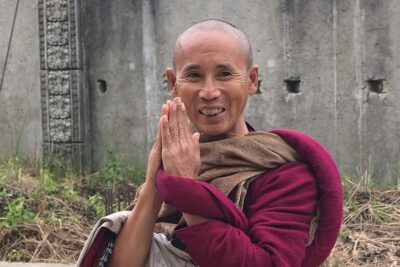
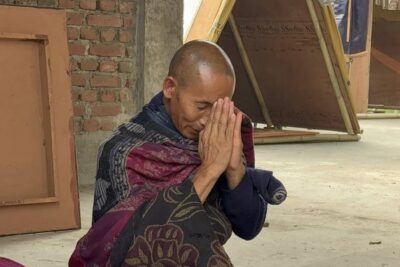
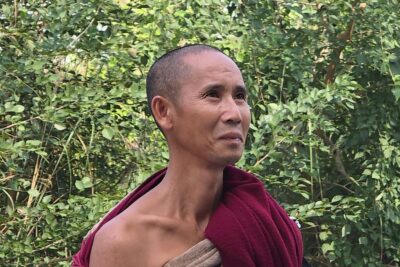
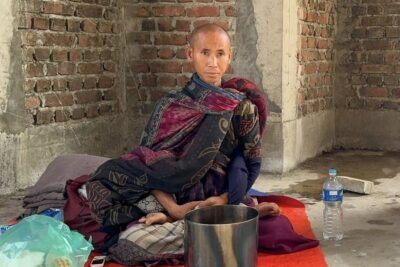
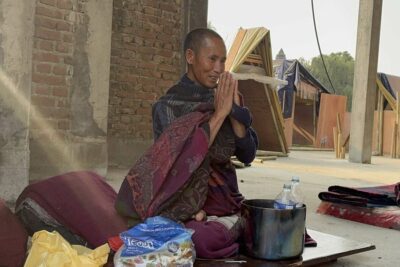
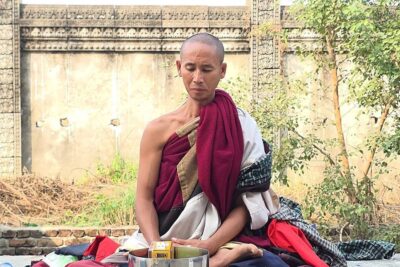
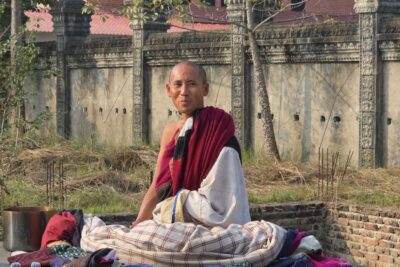
Buddhist disciple asks: I see that you have changed; previously you used to find an empty spot to eat and turn your face away, but recently you sit in an open space among the crowd for everyone to film and take photos freely? (February 28, 2026 – Nepal)
Master Minh Tue answers:
That is my renunciation.
If I see myself sitting here eating and people are filming, and I am not happy, I hate it, then it brings afflictions to myself.
Now, it’s fine if they film, and fine if they don’t. Being able to maintain peace anywhere is much better. This is a matter of learning and practicing for myself.
Many people are curious to know how I eat and sleep, whether I am truly a practitioner, so I sit there for them to see.
Even if they film or ask more questions, I still practice keeping my mind in check.
Training in contemplating emptiness: not me, not mine. If I still cling, I will definitely suffer.
I haven’t reached the perfect level yet, but I am practicing gradually every day to adapt.
* Master Minh Tue always gives brief answers suited to each listener. Below is a deeper explanation for those who wish to learn further.
From Avoidance to Acceptance: What True Renunciation Looks Like
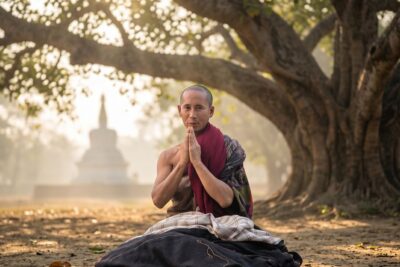
Many people think renunciation means leaving everything behind — hiding in deep forests, far from noise and people.
In the early stages of practice, that makes sense. When the mind is still weak, avoiding distractions is a way to protect concentration. Finding quiet places to eat, turning away from cameras — these are outer layers of protection.
But outer protection has limits.
Why the Master stopped hiding
Master Minh Tue used to avoid being filmed. He would find empty spots, turn his back to cameras. Then one day, he sat down in the middle of the crowd and let everyone watch.
This was not a compromise with fame. It was a shift from formal renunciation — changing the environment — to inner renunciation — changing the mind.
If being filmed makes the heart feel “not happy, hateful,” then that discomfort is exactly the affliction. The camera is not the problem. The reaction to the camera is.
Reaching the state of “fine if they film, fine if they don’t” — that is true inner freedom.
How this applies to daily life
You do not need to be a monk to face this challenge. Think about everyday situations:
- Someone takes your photo without asking at a public event.
- A colleague criticizes your work in front of the whole team.
- Strangers stare and whisper when you eat alone at a restaurant.
In each case, the discomfort does not come from the situation. It comes from clinging to “my privacy,” “my reputation,” “my image.”
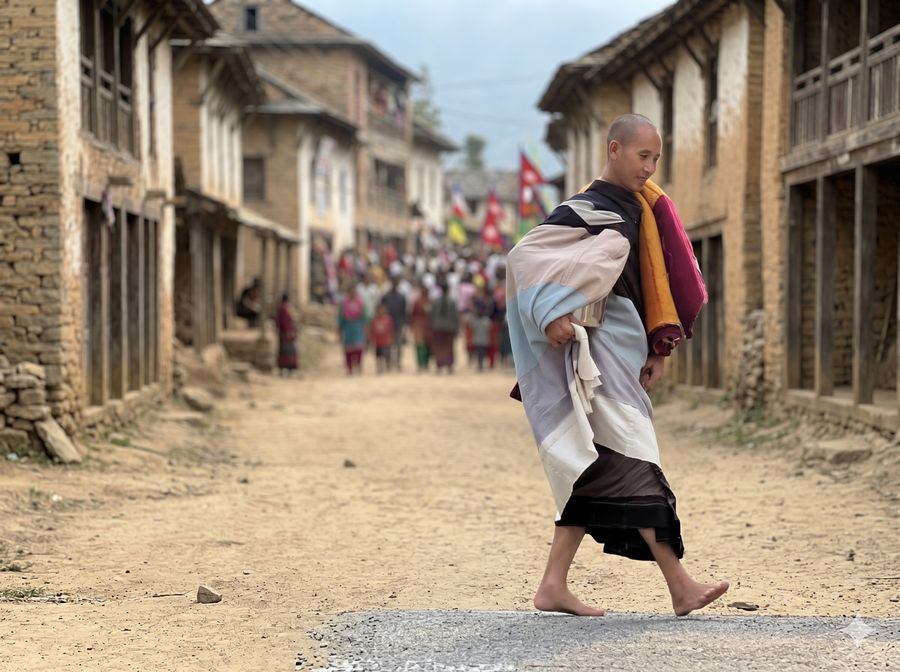
True renunciation is not about removing the crowd. It is about removing the reaction. This is closely related to how to keep a calm mind when constantly bothered — a challenge the Master faces every single day on his walking journey.
Contemplating Emptiness and Non-Self (Anatta)
The Master mentioned a core practice of Buddhism: “Training in contemplating emptiness: not me, not mine.” This is the realization of the truth of Non-Self (Anatta).
Why do we suffer when we are scrutinized, criticized, or bothered? Because we cling tightly to the “I” (Ego) and things belonging to “I” (Mine). We think: “MY privacy is being invaded,” “MY honor is damaged.”
The practice of Contemplating Emptiness helps the practitioner realize that this body, these feelings are not truly ours, they are just a borrowing of the five aggregates. When the “I” shrinks to zero, all praise and blame, all camera lenses pointed at us just pass through like shining into an endless void. If there is no “I” to be hurt, how can there be suffering?
Practicing Detachment Step by Step
The Master’s sincere confession: “I haven’t reached the perfect level yet, but I am practicing gradually every day to adapt” is a great source of inspiration. Enlightenment is not a magical transformation overnight, but a persistent daily practice.
For us laypeople as well, instead of constantly trying to change circumstances or running away from people we don’t like, let’s learn to keep our minds calm right amidst those storms. Circumstances do not make us suffer, it is our clinging that is the fire burning ourselves.
In your view, what is the hardest aspect of renunciation in modern daily life?
Leave a comment below to share your perspective and learn from one another.