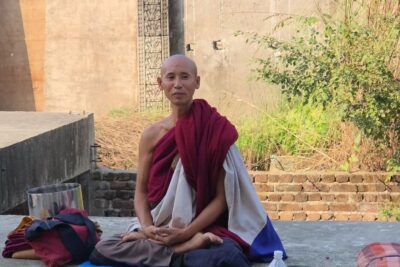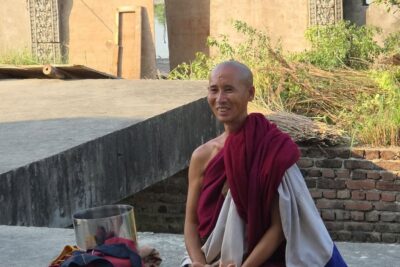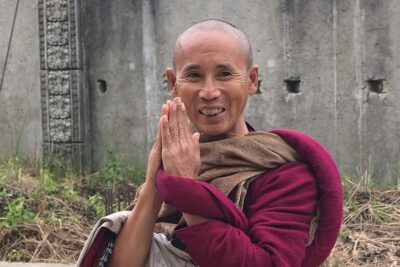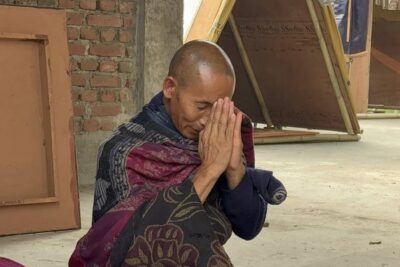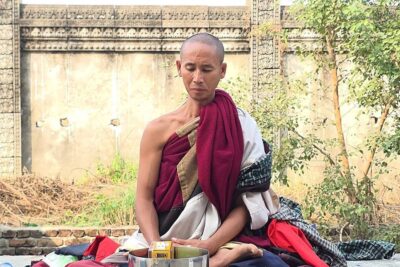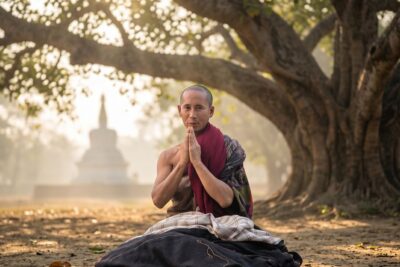
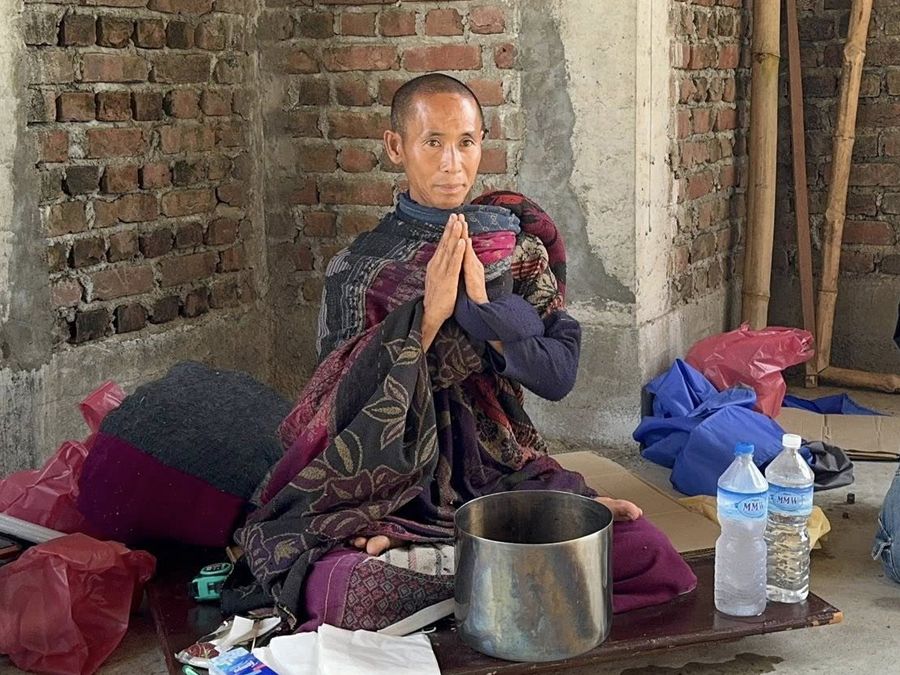
Letting go — two simple words, yet everyone has stumbled over them. You hear the Dharma, feel it’s right, resolve to release your grip — then find yourself holding on again the next day. On February 28, 2026 in Nepal, a Buddhist disciple asked Master Minh Tue the question many carry quietly in their hearts.
Buddhist disciple asks: When a person wants to learn about Buddhism and wants to achieve results, one must let go gradually, right Master? (February 28, 2026 – Nepal)
Master Minh Tue answers:
Listen and understand, have faith, have belief, and then let go.
Because letting go is not easy. Letting go also requires willpower, requires faith, one must know the path or contemplate it before daring to let go.
After listening, having faith, then one can abandon things, otherwise, if one does not understand, one’s wisdom is not enough to abandon them.
In life, it is because we cling to things to serve our own needs.
We let go of the small things first before we can give up the big things.
Starting to let go from small things is the only way to completely eliminate those karmic attachments.
When we know, we let go without regret.
* Master Minh Tue always gives brief and concise answers suitable for the listener in each circumstance. Below is a deeper explanation and analysis so that those who wish to learn can thoroughly grasp the Master’s teachings.
Letting go is not losing, but untying the bonds
Many people think letting go is a simple matter: hearing the Dharma, feeling it’s right, and thinking that just “letting go” is done. But in reality, letting go is one of the hardest practices.
The human mind from beginningless time has been programmed to hold on. Holding onto money to feel safe, holding onto fame to feel valuable, holding onto relationships to feel supported. Even very small habits like not surfing social media for a day make us feel restless. Because inherently, we always want to “cling to things to serve our own needs,” as the Master clearly pointed out.
“Listen and understand, have faith” – The core key to letting go
The Master emphasized: “Listen and understand, have faith, have belief, and then let go.” So, compared to Buddhist doctrine, what do we need to “understand” and what do we need to “believe” in?
The “Understanding” here is the thorough comprehension of the Four Noble Truths – the foundation of Buddhism:
- The Truth of Suffering & The Truth of the Cause of Suffering: Clearly understand that clinging and attachment (craving) is the root cause of all afflictions and suffering. The more we hold on, the more we fear loss, and the more uneasy our mind becomes.
- The Truth of the End of Suffering & The Truth of the Path: Understand and have absolute faith that when we untie those attachments, the mind will achieve a state of true freedom and peace. The path to that liberation is entirely practical through Sila, Samadhi, and Panna (Morality, Concentration, and Wisdom).
Only when we have Right View about the impermanent nature of all things will our wisdom be clear enough to realize: Letting go is not a loss, but an exchange for peace. Without this understanding (lacking enough wisdom), even if people force themselves to let go, their hearts will still feel regret, still crave, and will return to holding on at any moment.
The journey of renunciation: Starting from small grains of sand
With deep faith in karma and the path of practice, we will generate willpower. But letting go does not mean throwing everything away immediately. The Master teaches very practically: “We let go of the small things first before we can give up the big things.”
Today, reduce a bit of competitiveness in speech. Tomorrow, reduce a bit of greed for unnecessary items. The day after, let go of a bit of anger towards someone who goes against our will. Like that, letting go from the smallest things, the karma of attachment will gradually be eliminated. Until one day, when our mind is big enough and calm enough, we will be able to let go of greater things with absolutely “no regrets”.
On your journey of practicing letting go, what has been the hardest obstacle to overcome?
Leave a comment below to share your perspective and learn from one another.