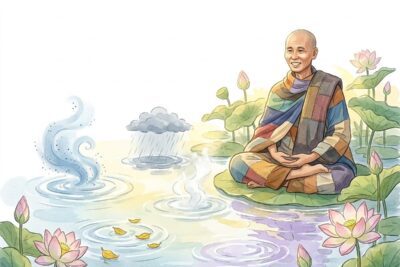
There is a question many people ask when they first encounter Buddhism: “Does non-self mean I don’t exist?”
And the answer often leaves them more confused: “Not exactly — but not the opposite either.”
Anattā (non-self) in Pali is one of the three fundamental characteristics of all phenomena according to the Buddha — alongside impermanence and suffering. But among the three, non-self is the hardest to understand, the easiest to misunderstand, and simultaneously the one with the greatest liberating power when genuinely grasped.
Non-Self Does Not Mean “I Do Not Exist”
This is the most common misunderstanding.
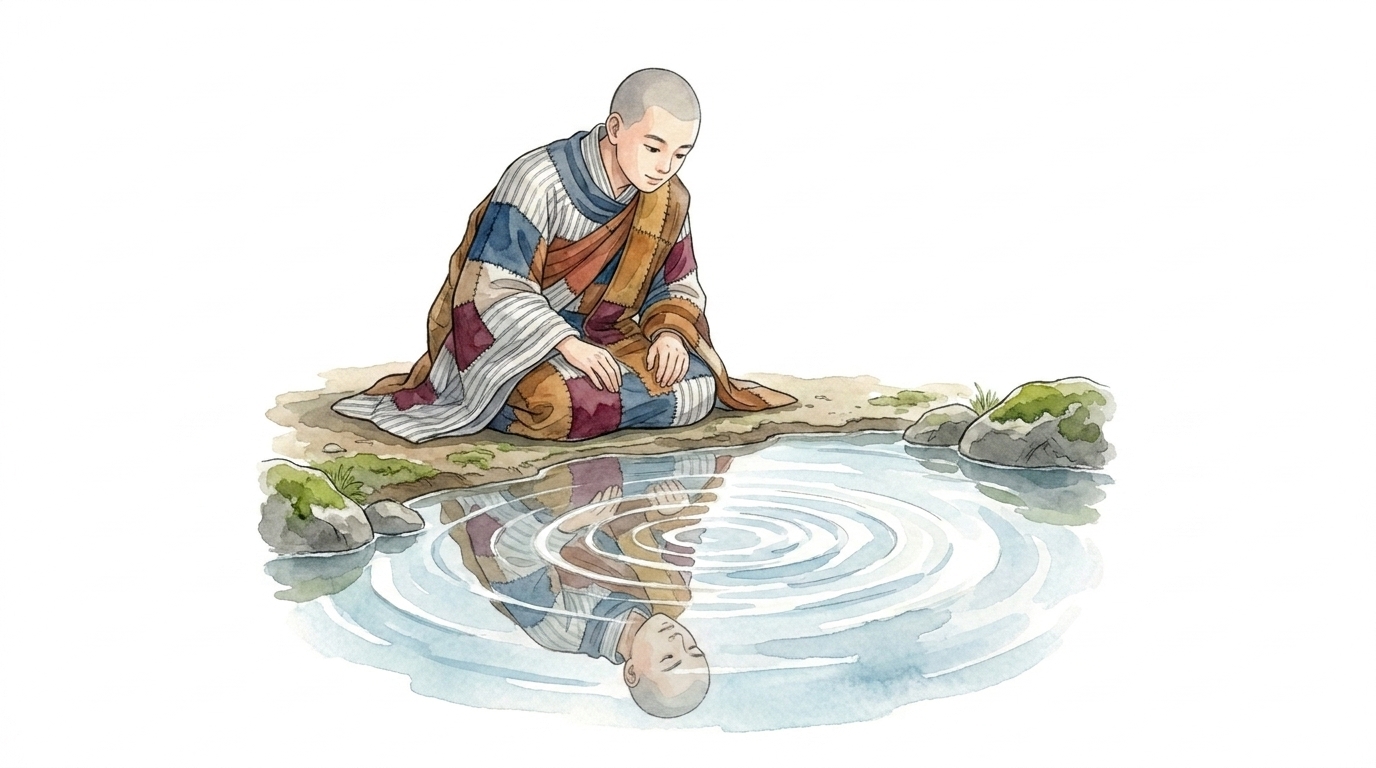
When the Buddha taught non-self, he was not denying your existence. You are sitting here, reading these words, thinking and feeling — no one is denying that. What the Buddha pointed to is this: the “self” you assume to be fixed, unchanging, independent, and permanent — that does not exist in the way you currently believe.
In other words: there is a process unfolding — thoughts, emotions, perceptions, actions. But there is no entity standing behind all those processes, owning them, and existing forever without change.
This is one of the points where Buddhism differs most profoundly from many religions and philosophical traditions — those that often assume a “deathless soul” or a “true self” somewhere within.
The Five Aggregates – What We Call “I”
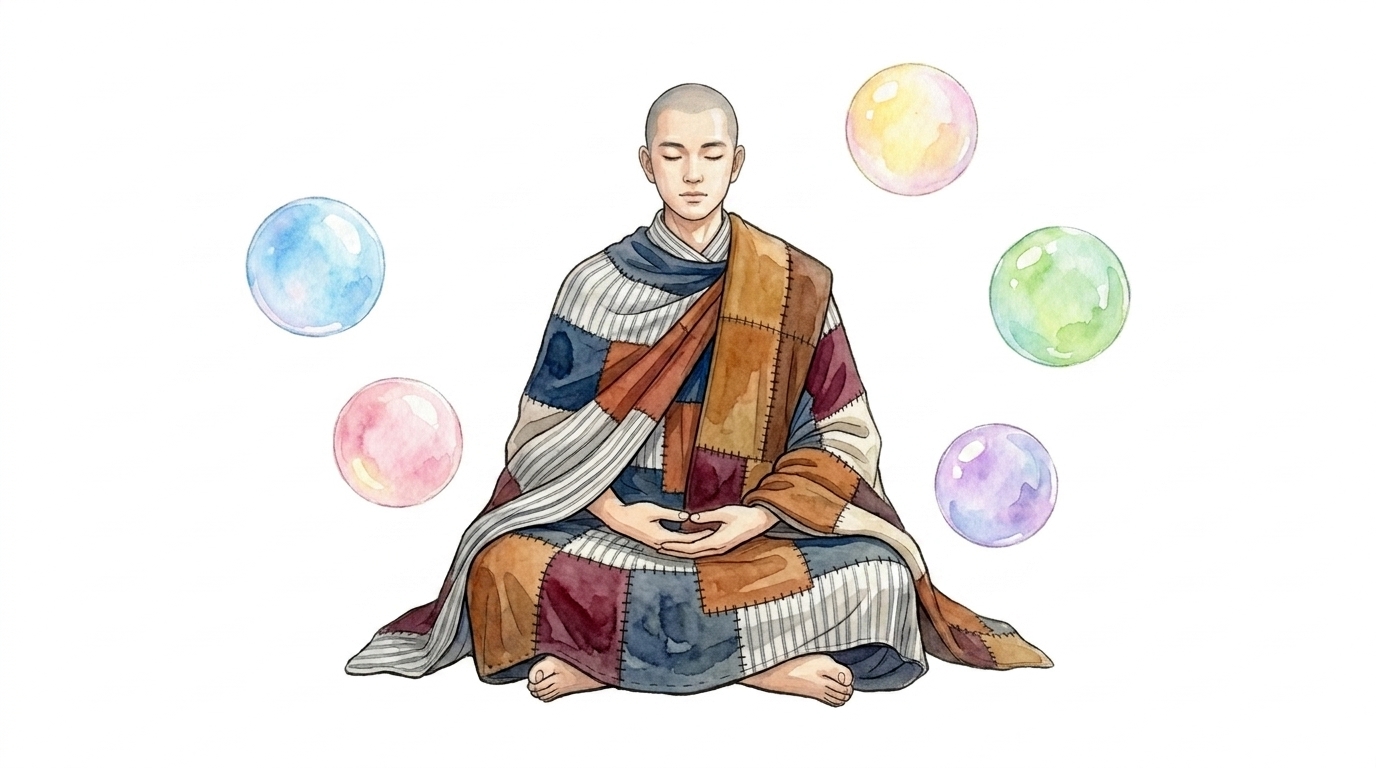
To explain non-self, the Buddha analyzed what we call “a person” or “oneself” into five groups of factors — the Five Aggregates (pañcakkhandha):
1. Form (Rūpa) — the material body: flesh, bones, blood, sense organs. What can be seen and touched.
2. Feeling tone (Vedanā) — sensation: every experience is colored by one of three feeling tones — pleasant, unpleasant, or neutral.
3. Perception (Saññā) — recognition and categorization: the ability to identify and classify things — this is red, this is a familiar smell, this is a voice I know.
4. Mental formations (Saṅkhāra) — volitional activities, psychological habits, reactive tendencies built up over time — this is what generates karma.
5. Consciousness (Viññāṇa) — awareness: the knowing that arises through the six sense doors (eye, ear, nose, tongue, body, mind).
The Buddha asked of each aggregate: “Is this ‘me’? Is it ‘mine’? Is it ‘my self’?”
And on close investigation, the answer is always: no.
The body is not “me” — because we cannot fully control it; it ages and becomes ill whether we want it to or not. Feelings are not “me” — because they come and go; we do not choose them. Thoughts are not “me” — because sometimes we are surprised by our own thoughts, as though they arise from somewhere we do not control.
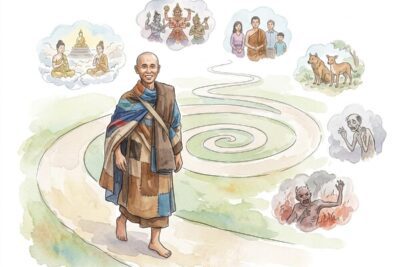
So where is the “self”? The Buddha does not say “I do not exist.” He says: what we call “I” is actually a temporary combination of five groups of factors in continuous change — like a flame, which is not a fixed “thing” but a process of burning unfolding continuously.
How Non-Self Differs from Nihilism
This is an important distinction.
Nihilism says: nothing has meaning, nothing is real, everything is pointless. This is one extreme.
Eternalism (the opposite view) says: there is a fixed, permanent, independent self that exists forever. This is the other extreme.
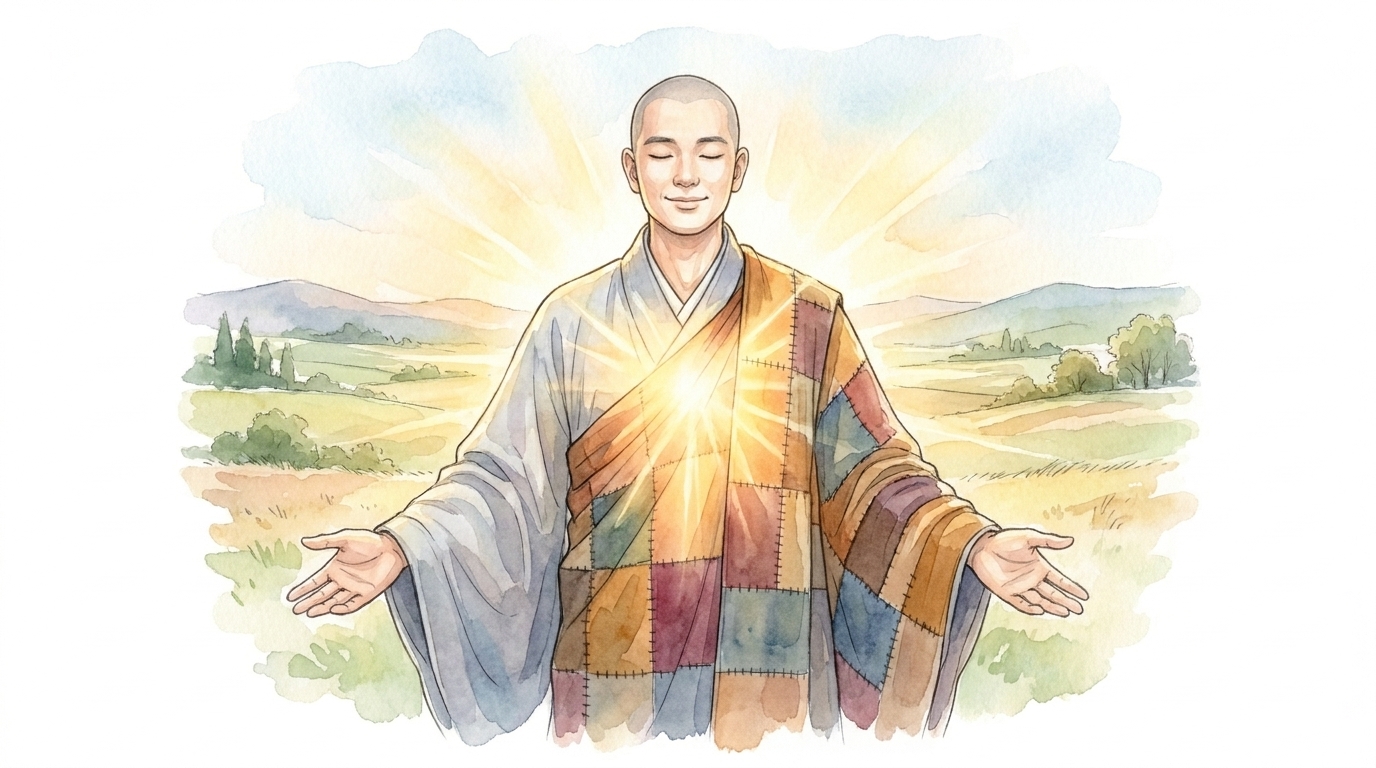
The Buddha taught the Middle Way — not falling into either extreme. He did not say “there is nothing at all” and did not say “there is an immortal soul.” He said: there is process, there is continuity, there is cause and effect — but no fixed entity standing behind all of that.
The practical consequences of misunderstanding this are real: if non-self is confused with nihilism, someone might think “since there is no ‘I,’ my actions have no consequences” — that is a dangerous misreading. Buddhism is clear: karma still operates, actions still bear fruit, responsibility is still real — even without a fixed self behind them.
What Changes When Non-Self Is Practiced?
Non-self is not merely a philosophical theory — it is a practice with clear effects on daily life.
Less defensiveness. When someone criticizes us, the usual response is to protect the “self” — anger, explanation, counter-attack. When practicing non-self, we can receive criticism as useful information without needing to defend something that does not exist in the absolute sense.
Less comparison. Much suffering comes from comparing “me” to others — am I smarter or less smart, more or less attractive, more or less successful? When the “self” is no longer a rigid entity needing to be protected and elevated, comparison loses much of its weight.
Less isolation in an unexpected way. Paradoxically, as the rigid boundary between “me” and “others” begins to soften, we feel more connected, not less. The sense of isolation often comes from the conviction “I am an island separate from the world” — and non-self dissolves that illusion.
Less fear of death. Fear of death is largely fear of the “self” being erased. When non-self practice reveals that the “self” was never a fixed entity to begin with, the nature of that fear begins to change.
Thay Minh Tue and Non-Self
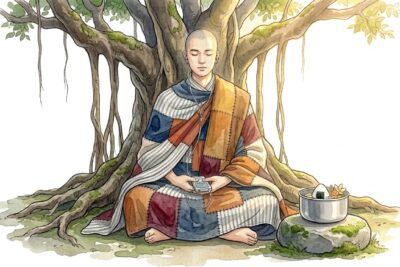
Non-self is perhaps the teaching that Thay Minh Tue embodies most visibly — not through words, but through how he relates to fame, praise, criticism, and the unexpected celebrity that came his way.
Not accepting titles. When people call him “a holy monk,” “a realized practitioner,” or compare him to arahants, Thay consistently declines these designations. Not false modesty — he genuinely does not want to build a “image” of himself. Those who still strongly protect the self tend to welcome exalted titles. Thay does not.
Not defending himself against criticism. When people doubt him, criticize him, or attack him with words, he does not counter-argue, offer lengthy explanations, or attempt to rebuild his image. This is the expression of someone who does not need to protect a rigid self.
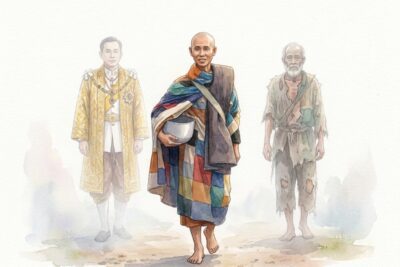
Treating everyone equally. From officials to homeless people, from those who revere him to those who challenge him — Thay meets everyone with the same manner. That can only happen when “this person matters more to me than that one” has dissolved — meaning the self is no longer the center around which all relationships are arranged.
Not accumulating “things that are mine.” No home, no money, no possessions, no formal disciples, no organization bearing his name. All of those are ways the self extends beyond the body — Thay does none of that.
The interesting thing is: the paradox of non-self lives right here. The less one clings to a “self,” the more vivid one becomes to those around — not fading, not disappearing, but on the contrary, carrying a quiet influence that needs no effort to create. Thay Minh Tue’s journey is the most vivid living example of that paradox.
A Small Step to Begin Touching Non-Self
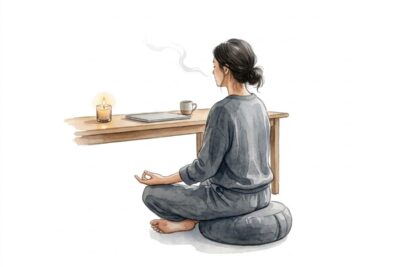
You do not need to fully understand the Five Aggregates or memorize scriptures to begin practicing non-self. Just try one small thing:
The next time you feel angry, defensive, or hurt — instead of acting immediately, pause for a moment and ask: “What is it that feels threatened right now? Is it truly ‘me’ — or is it simply a reaction arising?”
No immediate answer is needed. Just ask the question — and observe what happens next.
That is the moment non-self begins entering real life.
Learn more: who is Thầy Minh Tuệ?Biography, the dhutanga practice and the walking pilgrimage.Read more →