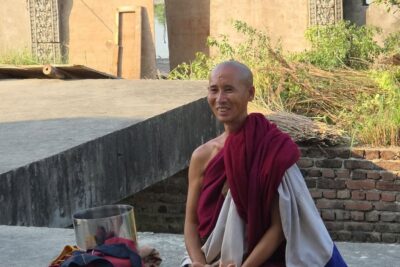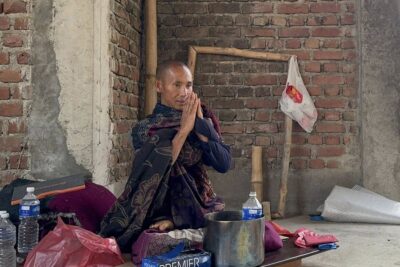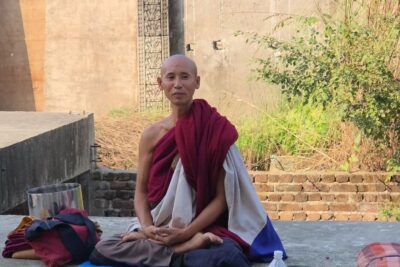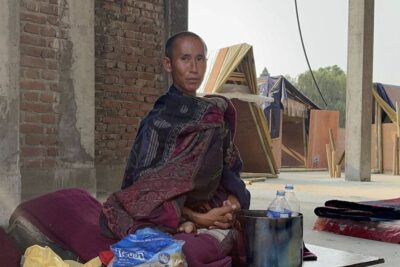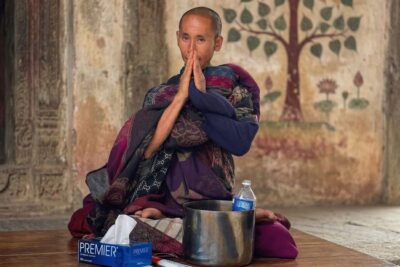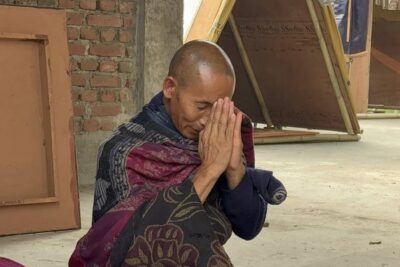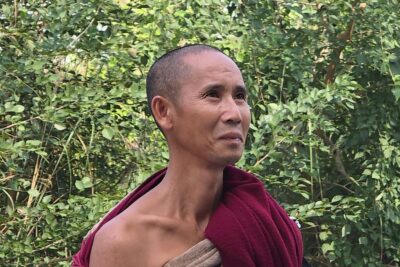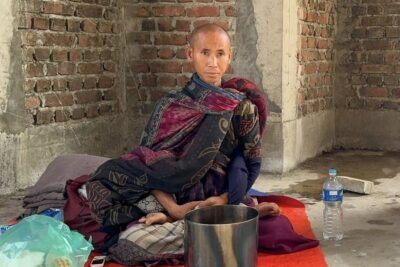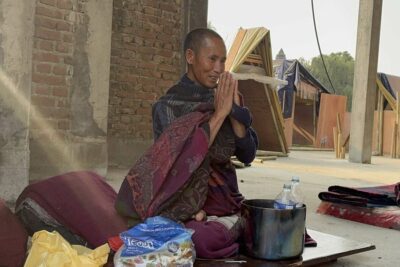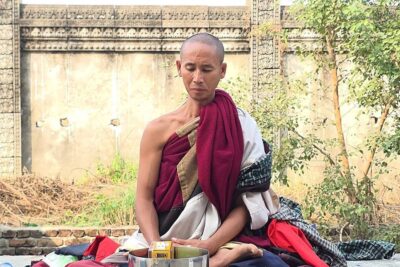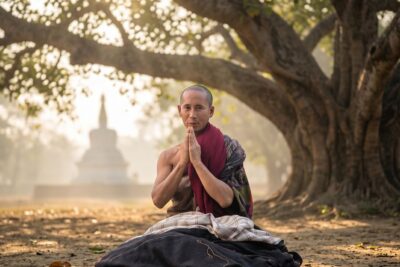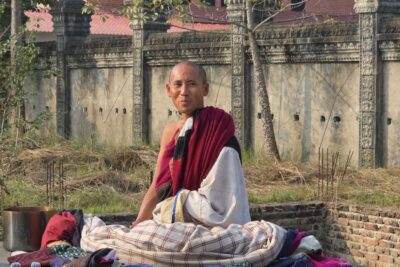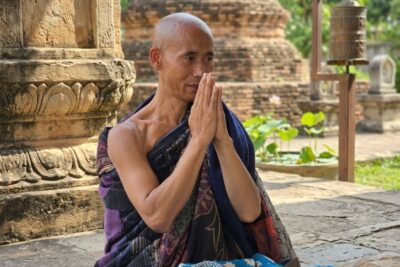
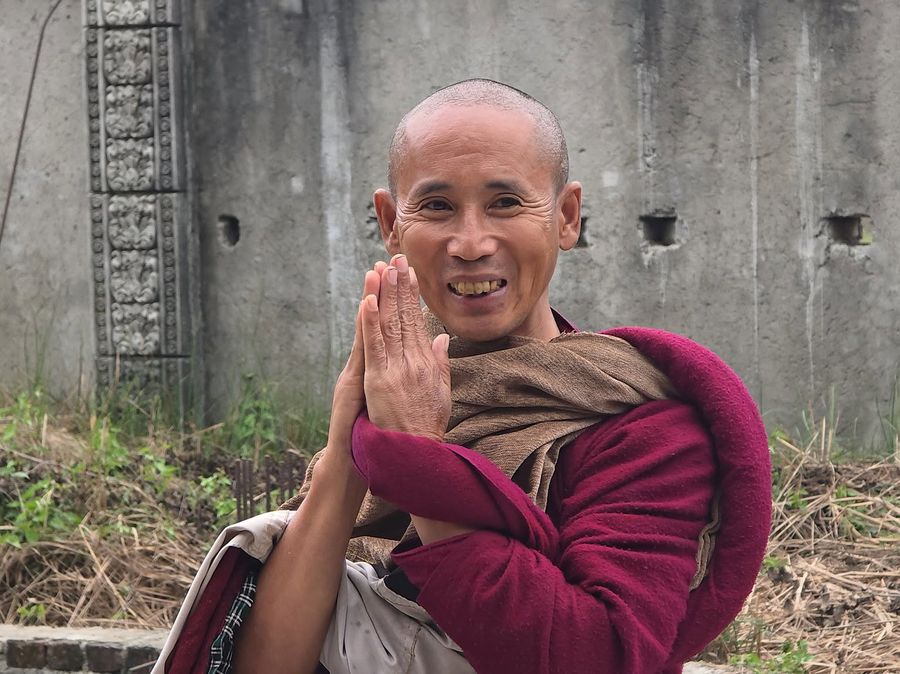
Every day, camera operators follow from morning to night, appearing wherever the Master goes. Practicing patience when disturbed by cameras constantly is no small challenge for someone trying to maintain stillness in practice. In Nepal on February 19, 2026, Master Minh Tue shared how he handles this — not by sending people away, but by completely transforming his perspective on them.
Buddhist disciple asks: We listen to you and only film when you are sharing the Dharma, but there are some people who follow you all day long from morning till afternoon, meeting them everywhere you go. Their audience likes it that way, so are they just showing off, Master? (February 19, 2026 – Nepal)
Master Minh Tue answers:
That is also a binding tie from the loving fans pushing that channel. They only do it because they have benefits, they find joy in it. I also said, wow, why is there such an affinity that everywhere I go I see this man filming.
But you can’t chase them away; if we run over and tell them off, we become angry and greedy. Basically, we learn for ourselves. Under Nepal’s law, they have the right to stand there, and we also have the right to stand there. This is a delicate situation to learn from.
If we run out and say, “You go somewhere else so I can be peaceful,” then we have not achieved patience. Just think of them as a YouTuber, a Buddhist, or a Buddha… so that we can stably practice. Chasing them away so that we can be safe is not the meaning of spiritual practice.
* Master Minh Tue always gives brief and concise answers suitable for the listener in each circumstance. Below is a deeper explanation and analysis so that those who wish to learn can thoroughly grasp the Master’s teachings.
Chasing others away for your own safety is not practicing
The Master does not judge whether the people filming are right or wrong, showing off or not. He sees through their motives (because the audience likes it, because of the benefits). Having understood that, the Master shifts his perspective from the outside to the inside of his mind: If we chase them away, our mind of anger and greed arises.
Chasing others away to regain quietness for oneself is a defensive reaction of the Ego (Self). But as the Master said: “Chasing them away so that we can be safe is not the meaning of spiritual practice.” True spiritual practice is maintaining inner tranquility even when the outside is full of disturbances.
Changing perspectives to achieve Patience
This is a wonderful lesson in insight meditation: “Just think of them as a YouTuber, a Buddhist, or a Buddha… so that we can stably practice.”
If we view them as “bothersome people,” our mind will generate frustration. But if we view them as a Buddha (or a test sent by the Buddha) to train our patience, the anger immediately vanishes. The law allows them to stand there, circumstances force them to be there, so the only thing we can do and control is keeping our mind undisturbed. That is the pinnacle of patience.
Practicing amidst disturbance, not away from it
A common misunderstanding in spiritual practice is that peace requires silence and solitude. Many practitioners seek remote temples or quiet retreats, believing external stillness equals internal stillness. Master Minh Tue’s response challenges this assumption entirely: real practice happens precisely in the moments when we are disturbed.
The cameras, the constant presence of others, the loss of privacy — these are not obstacles to practice. They are the practice. Every moment of irritation is a chance to observe the arising of anger. Every urge to chase someone away is a chance to notice the ego’s demand for comfort. The Master does not merely endure these situations; he uses them as the very ground for cultivating patience.
This approach echoes a broader theme in the Master’s teachings: we cannot grow by avoiding difficulty, only by meeting noise and adversity with an undisturbed mind. If peace only exists when conditions are perfect, it is not true peace — it is merely the absence of challenge. When a practitioner can remain steady through both praise and criticism, that is genuine equanimity.
When you are constantly disturbed, what is your first reaction? Share your thoughts below.
Leave a comment below to share your perspective and learn from one another.