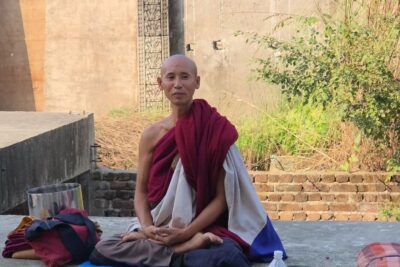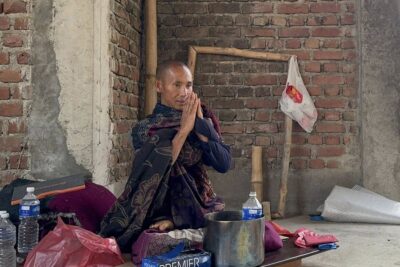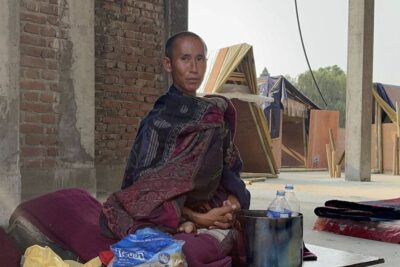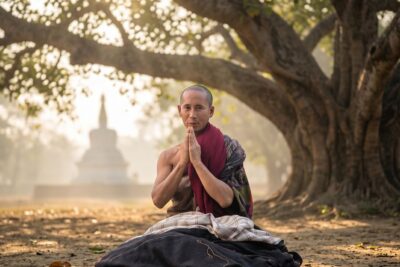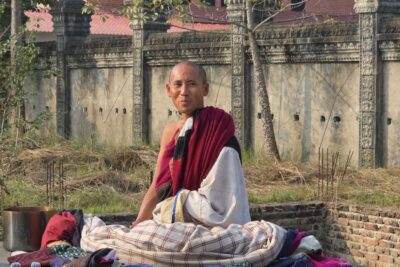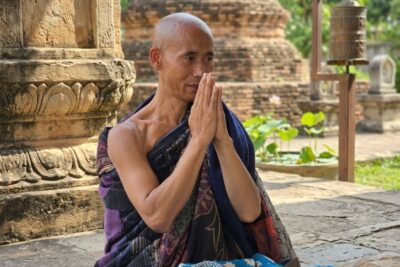

Is following a master the path to liberation — or just another form of attachment? In Nepal on February 25, 2026, a disciple raised this question. The Master’s answer pointed straight to the Buddha’s final teaching: be your own lamp. No one can practice on your behalf.
Buddhist disciple asks: Someone said that their following you is not good for you, what do you think? (February 25, 2026 – Nepal) (February 23, 2026 – Nepal)
Master Minh Tue answers:
I have already said, whoever still has greed, anger, and delusion is just not good for themselves.
I don’t know who everyone following is, but when following and greed or anger arises, that person is not good.
Everyone has the right to practice and learn, but in practice, men and women do not stay close to each other. We must be in a place suitable for our learning.
Do not greedily follow and then get angry; either way leads to suffering.
I am not talking about destroying or harming anyone; help yourselves, be your own lamp, light your own torch.
It is not that only one person gets to learn the Dharma while others do not. Anyone can learn, but what’s important is who overcomes the trials.
The Dharma is equanimous and patient. I meet everyone here for only a few years, then everyone must die; no one can stay permanently.
What’s important is what karma you bring with you: greedy attachment or hatred.
Before dying, one should accumulate a little merit, because if hatred and anger arise at the last minute, it knocks down all the efforts of spiritual practice built up over time.
* Master Minh Tue always gives brief and concise answers suitable for the listener in each circumstance. Below is a deeper explanation and analysis so that those who wish to learn can thoroughly grasp the Master’s teachings.
Following a Master: What Is the Mind Really Seeking?
Many people justify following a master as a way to protect him and learn the true Dharma. But the Master pointed straight to the core: The issue does not lie in following whom, but in what the follower’s mind contains.
If one follows with a mind seeking benefits (greed for blessings, fame, or attention), when their desires are not met (or hindered by others), immediately the Mind of Anger will arise. “Do not greedily follow and then get angry; either way leads to suffering.” Following a master may appear as a good deed, but when driven by attachment, it fosters the Three Poisons. (Greed – Anger – Delusion). That primarily destroys the merit and blessings of the person themselves. This pattern of attachment echoes what the Master discusses in walking the Middle Way beyond love and hate.
Be Your Own Lamp — The Buddha’s Teaching on Self-Reliance
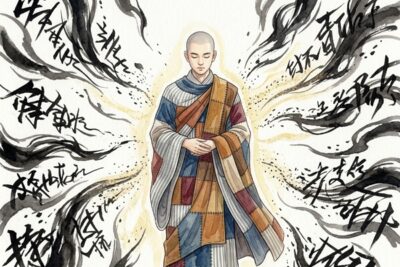
The Master reiterates one of the greatest final teachings of the Buddha before entering Nirvana: “Be a lamp unto yourself, light your own torch.” The Buddha or true practitioners are just guides (Teachers). No one can practice on behalf of another. Self-reliance — not devotion to a teacher — is what the Buddha asked for in his final words: be your own lamp.
The Dharma is equanimous. There is no special privilege in following a master — staying close does not bring faster enlightenment. Any place suitable for keeping precepts and maintaining a pure mind is the best practice center. If staying next to a practitioner but the mind remains unsettled, then practicing and correcting one’s mind at home brings far more merit. For those struggling with this balance, the Master also shares how to handle family ties on the path to liberation.
Near-Death Karma: Why the Last Moment Matters Most
The saying: “I meet everyone here for only a few years, then everyone must die” carries a strong concept of mindfulness of death (Maranassati). Human life is short, meeting each other is a karmic condition, but eventually, everyone must face the cycle of birth and death alone.
The Master particularly warns about Near-death karma (karma arising right before death). If one does good deeds their whole life, but at the last moment of life gets frustrated and angry (due to obstacles or dissatisfaction), then all accumulated merit is burned away, and consciousness will fall into a bad realm. This connects to the Master’s teaching on letting go when beginning to study the Dharma. Therefore, protecting the soul from anger is far more important than protecting the outer appearance.
Where is the line between following a master to learn — and becoming dependent on them?
Leave a comment below to share your perspective and learn from one another.