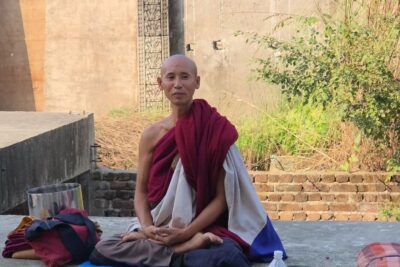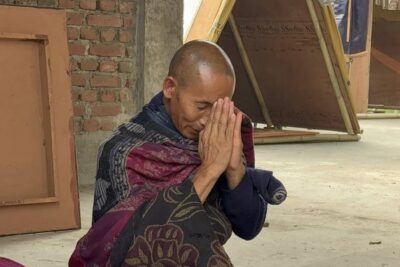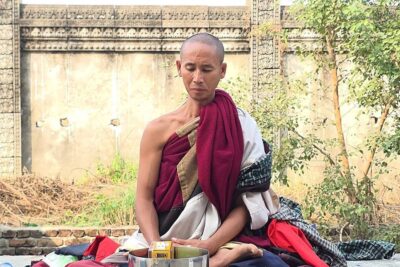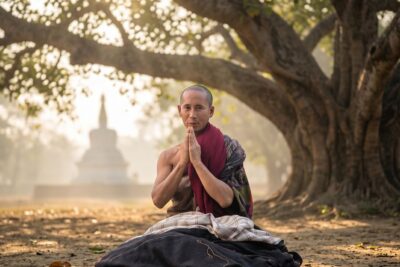
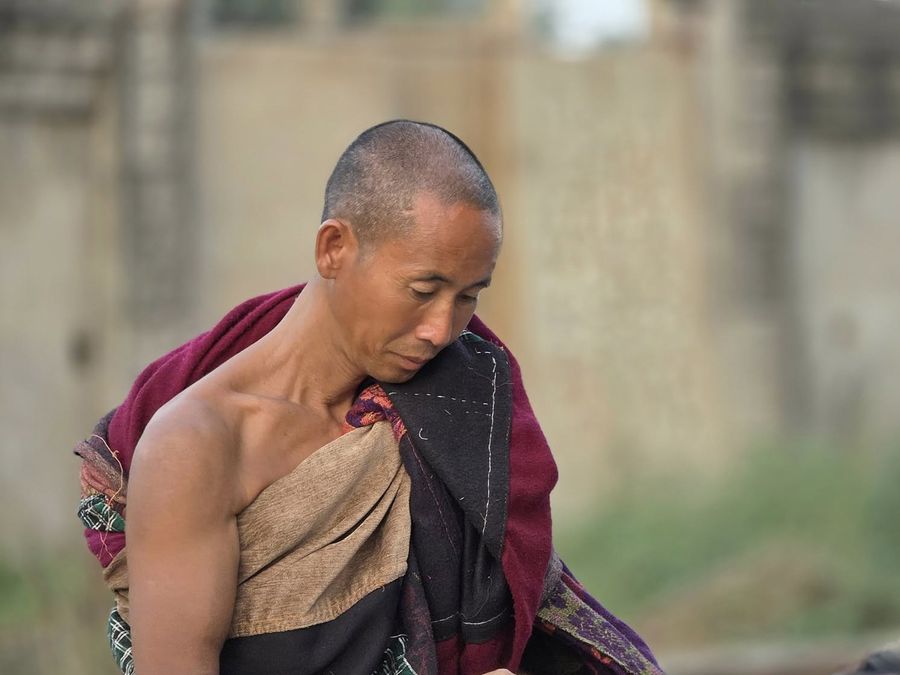
Once admired, now abandoned. Once praised, now criticized. This is familiar to anyone in the public eye — but for a practitioner, it is a genuine test of the truth of impermanence. In Nepal on February 22, 2026, Master Minh Tue shared his perspective on those who once supported him and now criticize him.
Buddhist disciple asks: Some Buddhists used to love your virtues but now no longer care about those good things, saying this and that; is it considered slandering or insulting a practitioner? (February 22, 2026 – Nepal)
Master Minh Tue answers:
Those things are just impermanent.
As everyone sees, the great Shakyamuni Buddha was born, and even if people wished for the Buddha to stay forever, it wasn’t possible; impermanence comes. It is not that Dhutanga practices will exist forever.
If conditions are sufficient, one practices Dhutanga; if conditions are not sufficient, one cannot practice it.
Basically, we practice so that if people praise us, we do not become infatuated or obsessed.
If they switch to cursing us, saying we are no longer right, we do not become sad and suffer because of it.
Whether they praise or do not praise, it is all the same.
For me, if people bring food, I eat that amount, if I go begging, I eat that amount; I remain peaceful.
* Master Minh Tue always gives brief and concise answers suitable for the listener in each circumstance. Below is a deeper explanation and analysis so that those who wish to learn can thoroughly grasp the Master’s teachings.
Everything is governed by Impermanence
The concept of “Impermanence” (Anicca) is often understood as change, nothing lasts forever. When facing the question about people who once loved him now turning to insult him, the Master does not condemn them as “slanderers.” He just looks at that phenomenon through the lens of natural law: That is Impermanence.
Even the great Shakyamuni Buddha, no matter how much people longed for him, his physical body could not exist eternally. Even a spiritual practice like Dhutanga requires enough “karmic conditions” to be practiced. Human affection and emotion are even more fragile and easily changed. Understanding Impermanence is the way to cut the cord of expectation and disappointment.
The “Immovable” state of mind before Praise and Criticism
The peak of spiritual practice is expressed in these two sentences: “If people praise us, we do not become infatuated. If they switch to cursing us… we do not become sad and suffer.”
This is exactly the state of Equanimity (Upekkha). If you take others’ praise as your joy, you will be crushed by their criticism. The ego is always nourished by praise. When we contemplate Non-Self, the sounds of cursing or praising are just physical sound waves passing through the eardrums, unable to touch the inner peace. For those who struggle with this, Master Minh Tue also shares a practical method for keeping patience in heated moments.
Self-generated peace, independent of external circumstances
The concluding sentence: “If people bring food, I eat that amount, if I go begging, I eat that amount; I remain peaceful,” portrays the portrait of a truly free person. Their happiness does not lie in how many people cheer for them today, or whether the offered food is delicious or bad. Their peace is available from within; as long as they keep the precepts and practice, they will find peace wherever they sit.
From Impermanence to inner freedom: a practical reflection
In daily life, most of us unconsciously place our emotional well-being in the hands of others. A compliment lifts us up; a harsh word brings us down. We become like a leaf, tossed by the wind of public opinion. Master Minh Tue’s teaching offers a radical alternative: instead of trying to control how others see us, we can train ourselves to remain steady regardless of external judgments.
This does not mean becoming cold or indifferent. Rather, it is about recognizing that other people’s opinions — whether admiring or condemning — arise from their conditions and perspectives, which are themselves impermanent. When we truly see this, there is no need for resentment toward those who criticize, nor attachment to those who praise. Both reactions come from the same misunderstanding: that external validation defines who we are. This is closely related to walking the Middle Way beyond love and hate.
The practice begins with small moments — noticing how a negative comment stings, or how a compliment inflates the ego — and gently returning to equanimity each time. If you find it difficult to restrain yourself when spoken ill of, know that this is a universal struggle. Over months and years, this awareness becomes natural, and what once felt like an attack simply becomes another passing phenomenon, no different from clouds moving across the sky.
Have you ever changed your view of someone from positive to negative? What caused that shift?
Leave a comment below to share your perspective and learn from one another.