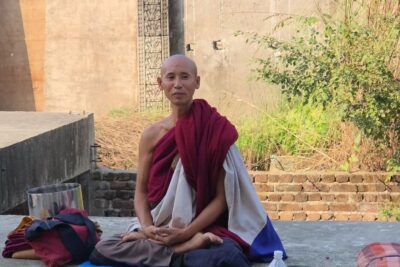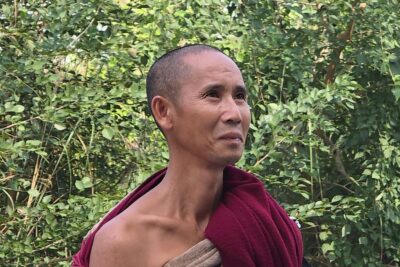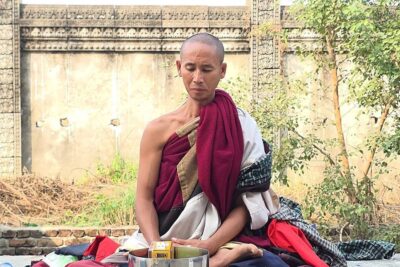

Reading sutras on your own is difficult and prone to misunderstanding. Listening to Dharma talks feels easier to absorb. So which approach is better for students of Buddhism? In Nepal on February 19, 2026, Master Minh Tue answered — and the response gets to the heart of a deeper question: are we learning the Buddha’s words, or learning someone else’s interpretation of them?
Buddhist disciple asks: Some people stumble when reading sutras, but if they listen to Dharma talks, is it better Master? (February 19, 2026 – Nepal)
Master Minh Tue answers:
Reading sutras helps you remember longer and more accurately. When listening to sutras, sometimes you don’t remember clearly or the recitation is wrong. If you cannot listen and understand the sutras yourself, you can listen to Dharma talks, but when listening to talks, I’m afraid you might be led astray by the personal views of the lecturer and practice incorrectly.
I only listen to the original sutras (Nikaya) and gain insight myself, understand it myself, rather than completely trusting the spoken talks. Whatever you can understand, understand it; whatever you cannot, leave it be and do not rush to refute it, but always rely on the original sutras.
* Master Minh Tue always gives brief and concise answers suitable for the listener in each circumstance. Below is a deeper explanation and analysis so that those who wish to learn can thoroughly grasp the Master’s teachings.
The danger of “Personal Views” when listening to talks
The Master’s answer touches upon a very practical issue today: There are too many Dharma talks, each monk has a different way of interpreting, and sometimes they contradict each other. The Master does not deny the benefits of listening to talks (especially for those who cannot understand sutras themselves), but he gives a sharp warning: I’m afraid you might be led astray by the personal views of the lecturer and practice incorrectly.
Personal views are subjective perspectives. When a Dharma lecturer has not attained Arahantship, their teachings (no matter how good) are still mixed with their ego, life experiences, and subjective misunderstandings. If listeners completely entrust their faith to the lecturer, they are not learning the Buddha’s words, but learning “someone else’s interpretation of the Buddha”. If that guidance is wrong, the consequence is deviating from the original path of liberation.
Returning to the roots: Nikaya Sutras and Self-insight
Master Minh Tue’s secret to practice is extremely solid: Only listen to the original sutras (Nikaya – the sutra collection recorded closest to the time the Buddha was alive) and gain insight yourself.
Insight (Tri kiến) means seeing and understanding it yourself through your own contemplation and practice. Reading original sutras might have dry language, repeated many times (for easy memorization in the past) and is sometimes difficult to understand, but it is the purest water that has not passed through anyone’s personal filter.
The correct attitude when approaching Original Sutras
The Master’s subtlety also lies in the attitude when reading sutras: “Whatever you can understand, understand it; whatever you cannot, leave it be and do not rush to refute it.”
The Buddha’s Dharma is extremely profound; there are things beyond our current capacity and wisdom. When reading a passage that the mind has not fully grasped, the arrogant reaction of the Ego is to hastily criticize, refute, or doubt. A truly wise person will set that passage aside and patiently continue to practice. As wisdom (merit) grows over time, naturally one day reading it again, it will light up and be fully understood.
How do you primarily study the Dharma — reading sutras, listening to talks, or direct practice? Share your experience.
Leave a comment below to share your perspective and learn from one another.