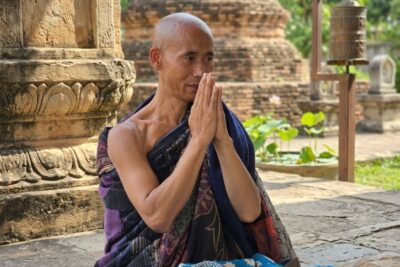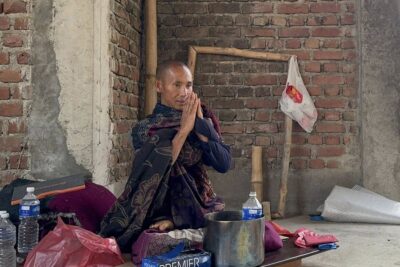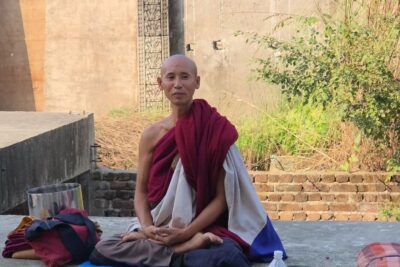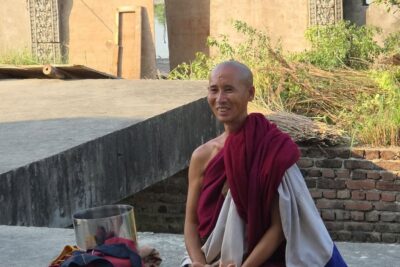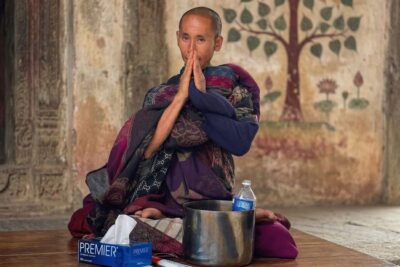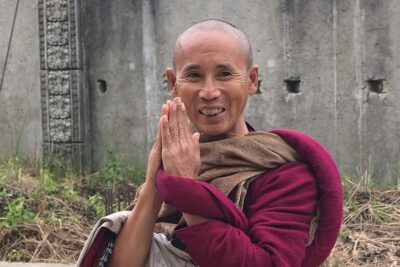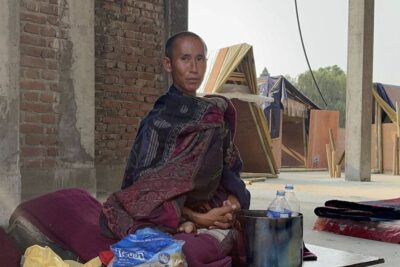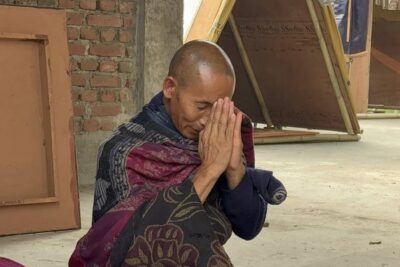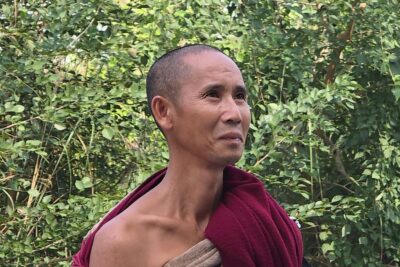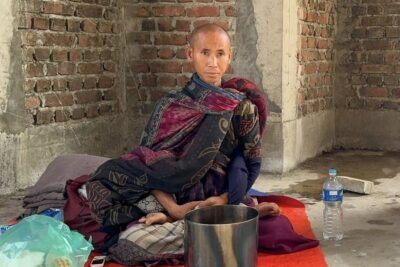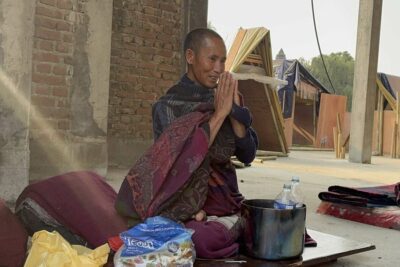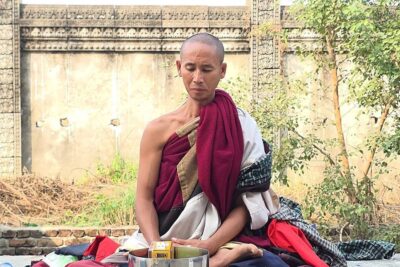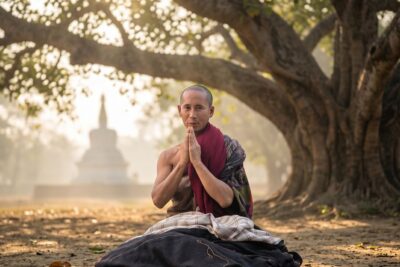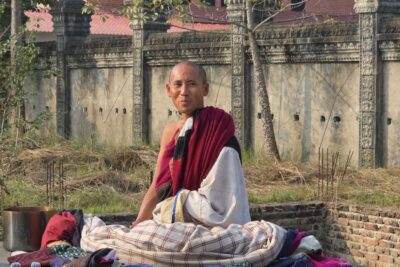
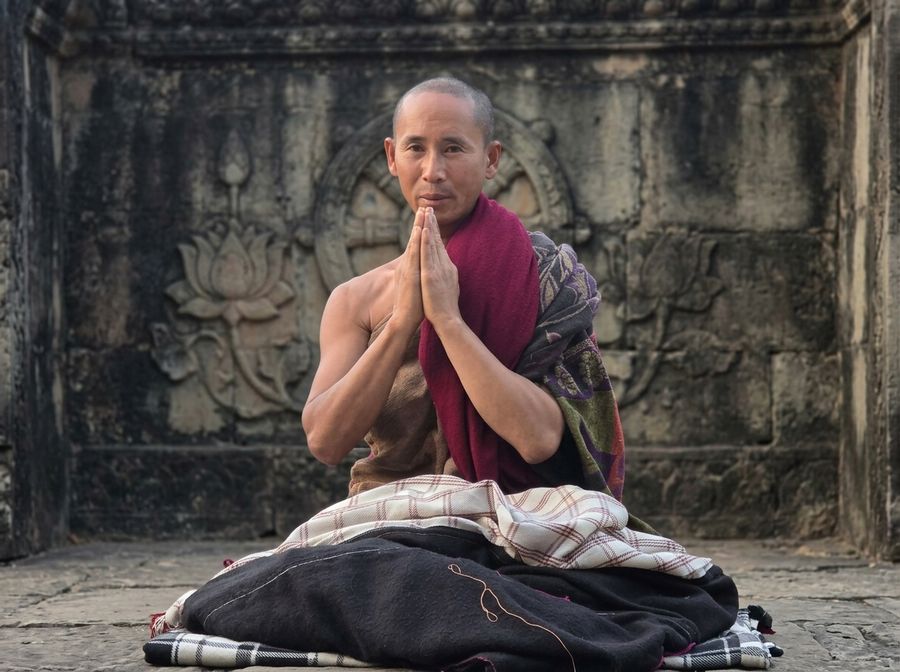
When thousands of people bow before Master Minh Tue, he consistently and gently redirects them toward the Buddha, Dhamma, and Sangha. This is not social modesty — it is a practical lesson on the meaning of paying homage to the Three Jewels. In Nepal on February 19, 2026, the Master explained what correct homage looks like and who the Sangha Jewel truly is.
Buddhist disciple asks: Sometimes I see people paying homage to you; how did you say we should correctly pay homage to the Buddha, Dharma, and Sangha? (February 19, 2026 – Nepal)
Master Minh Tue answers:
You should pay homage to the Buddha, Dharma, and Sangha in hope of gaining precepts, concentration, and wisdom for liberation. Paying homage to me, an ordinary person who is just learning, easily makes me arrogant.
Everyone should pay homage to the Tathagata, Shakyamuni Buddha, and Amitabha Buddha, which is a better and more beautiful form of respect. The Sangha consists of those who observe precepts and practice according to the righteous Dharma; if they don’t observe precepts, they are not the Sangha.
When meeting those who do not yet observe precepts, we still pay homage with the attitude of respecting the Three Jewels, treating them as noble monks so we can increase our respect, and should not distinguish between ordinary monks or noble monks based on outward appearances.
* Master Minh Tue always gives brief and concise answers suitable for the listener in each circumstance. Below is a deeper explanation and analysis so that those who wish to learn can thoroughly grasp the Master’s teachings.
Refusing personal homage to protect humility
Anyone who is bowed to and cheered by thousands of people easily falls into the trap of conceit. Master Minh Tue refuses to accept those bows for a very practical reason in practice: “Paying homage to me, an ordinary person who is just learning, easily makes me arrogant.” The Master is always conscious of protecting his mind from “Arrogance” (the proud Ego) – one of the most subtle and difficult-to-destroy afflictions.
This action also reminds Buddhists: Do not deify an individual. Bowing to an ordinary human being does not bring merit for liberation; instead, direct that absolute respect towards the Buddha (Tathagata, Shakyamuni Buddha, Amitabha Buddha) – those who are fully enlightened.
Right View on the “Sangha Jewel”
The Master defines the word Sangha very clearly: “The Sangha consists of those who observe precepts and practice according to the righteous Dharma; if they don’t observe precepts, they are not the Sangha.” The Sangha Jewel does not lie in the monastic robes or degrees, but in Virtuous Conduct (Precepts). If there are no precepts, the outward appearance carries no meaning of liberation.
Respecting the Three Jewels: Bowing to Buddha-nature, not outward appearances
This is the most subtle and profound point in the answer. If we meet a monk who does not yet observe precepts (an ordinary monk), should we despise them? The Master teaches NO. “When meeting those who do not yet observe precepts, we still pay homage with the attitude of respecting the Three Jewels, treating them as noble monks so we can increase our respect.”
Your bow is not for the weakness of that monk, but your bow is directed towards the image of the Buddha, towards the robe of renunciation. When you bow with the attitude of “treating them as noble monks,” that non-discriminating respectful mind will generate immeasurable merit for you. Do not use mortal eyes to scrutinize and distinguish good and bad; use a tolerant mind to see the Buddha-nature in every sentient being. That is the true meaning of paying homage.
How do you understand the Three Jewels — Buddha, Dhamma, Sangha — in your own practice?
Leave a comment below to share your perspective and learn from one another.