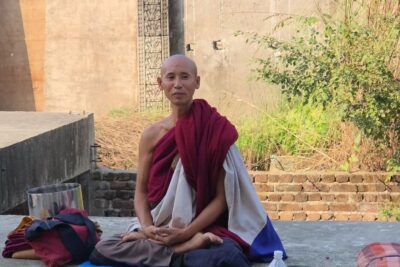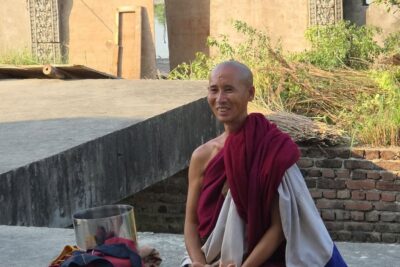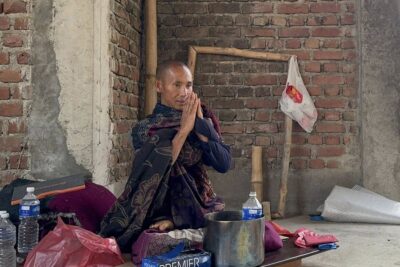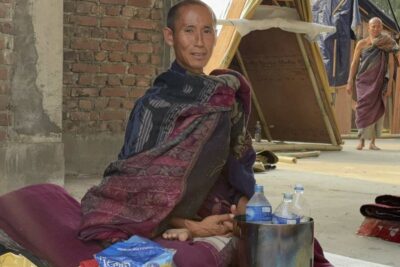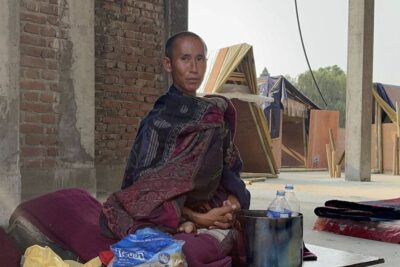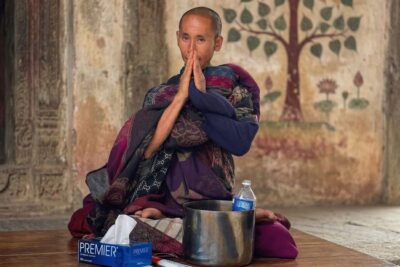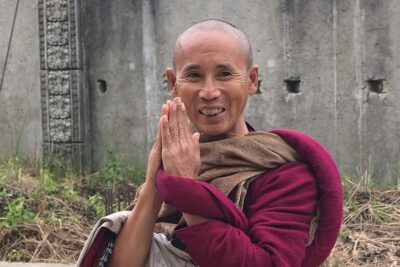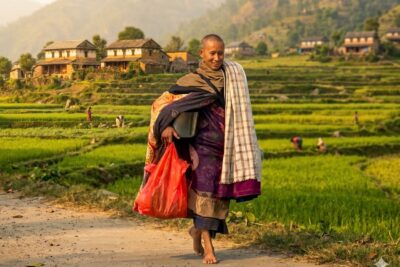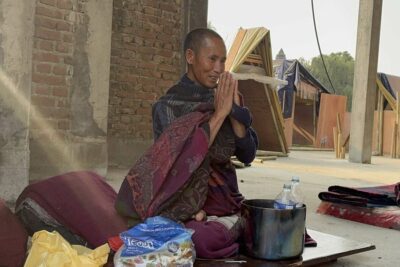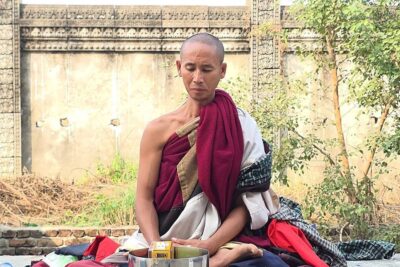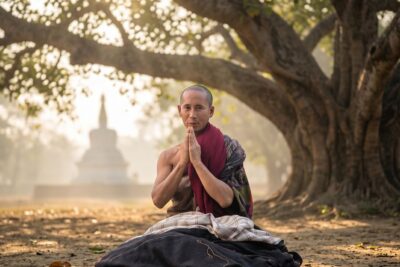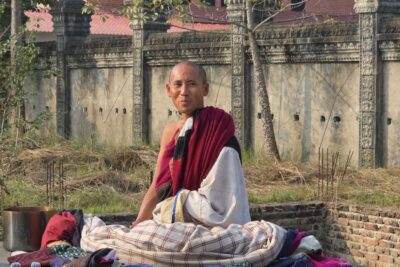
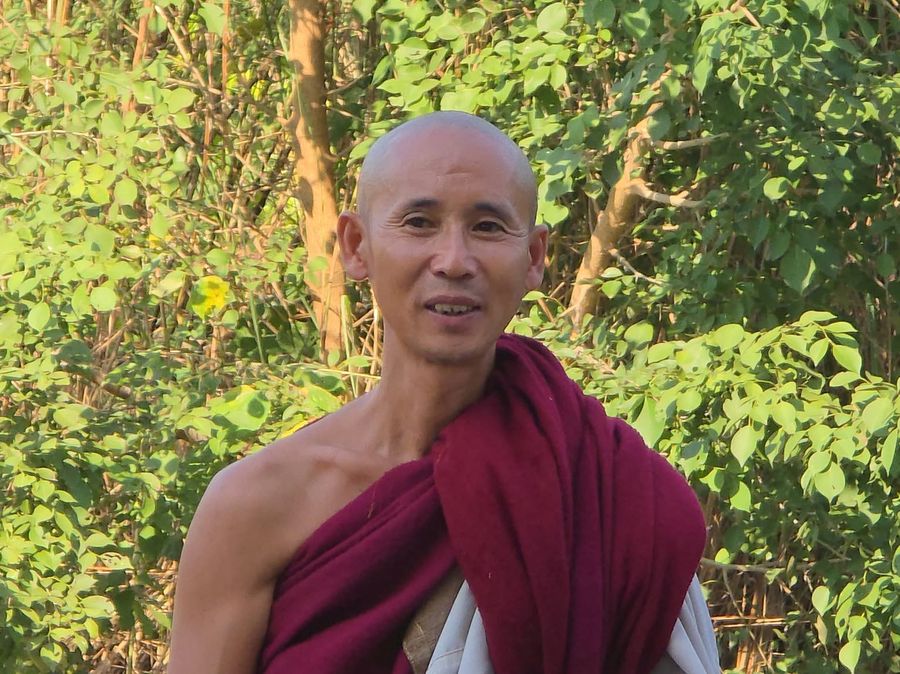
This is one of the hardest questions a lay practitioner must face: does family — spouse, children, aging parents — constitute an obstacle on the path to liberation? A Buddhist disciple brought this concern to Master Minh Tue in Nepal on February 25, 2026. His answer does not merely reassure — it clarifies where the true boundary between responsibility and renunciation lies.
Buddhist disciple asks: I feel that everything is very good, but regarding the path of liberation, my family, husband, and children are binding ties. Could you please give me some encouragement? (February 25, 2026 – Nepal)
Master Minh Tue answers:
The things you have sown and done, like spouse and family, are binding ties and consequences.
Now you want to be liberated and no longer bound, but you do not have enough conditions yet.
When you understand this, you must live a lay life but do good deeds, give charity, and observe the precepts. On Uposatha days, dedicate your merits and vow for supreme perfect enlightenment.
Wait until those karmic debts dissipate and end, only then can you be liberated.
If you suddenly follow without enough conditions, carrying a bowl while your mind still worries about family responsibilities, unsettled and uncommitted, it won’t work.
In the past when I was in the secular world, I also practiced observing the precepts, continuously taking the Eight Precepts before asking to become a monk so that there would be no more karmic debts binding me.
* Master Minh Tue always gives brief and concise answers suitable for the listener in each circumstance. Below is a deeper explanation and analysis so that those who wish to learn can thoroughly grasp the Master’s teachings.
Do not run away from Karmic Conditions
The Master’s answer is a splash of cold but extremely sobering water for those who hold illusions about “abandoning the world to become a monastic.” The Master confirmed: yes, family and children bring binding ties and consequences. However, those are the seeds (causes) we ourselves planted previously. When the tree bears fruit, we cannot brutally chop it down and run away.
A person with responsibilities to their spouse, children, and elderly parents who suddenly leaves to become a monastic when their family is not ready and things are unsettled… that is not called renunciation, but selfishness and escaping responsibilities. As the Master clearly stated: “Carrying a bowl while your mind still worries about family responsibilities, unsettled… it won’t work.” Practicing is to achieve liberation, but if the body leaves while the mind is still bound by remorse, liberation is impossible.
A practical path for Laypeople
If one does not have enough conditions to become a monastic, a Buddhist can completely practice right in daily life. The Master outlines a very clear roadmap:
- Charity and Precepts: Live a good secular and spiritual life, fully observing the 5 basic precepts (No killing, no stealing, no sexual misconduct, no lying, no intoxicants). Do good deeds to accumulate merit.
- Practicing the Eight Precepts: On Uposatha days (such as the full moon and new moon days), a layperson can take and keep the 8 precepts, living a pure life like a true monastic for 24 hours. Master Minh Tue himself maintained this practice for a long time when he was in the secular world before becoming a monk.
Liberation is the result of “clearing debts”
Buddhist scriptures teach that a practitioner who wants to go far must resolve all grudges and binding karmic conditions. When we fulfill our duties to our family with compassion, sacrifice, and responsibility, we are actually repaying our karmic debts. When the karmic debts naturally dissipate, the children grow up independently, and the family is peaceful, then the “untying” will happen very naturally and completely.
In your view, can a layperson fulfill family responsibilities and still genuinely practice Buddhism?
Leave a comment below to share your perspective and learn from one another.