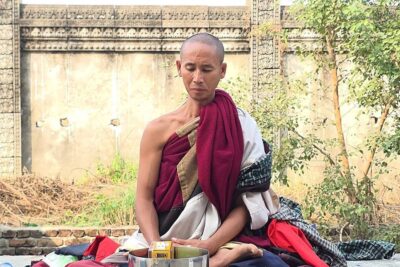
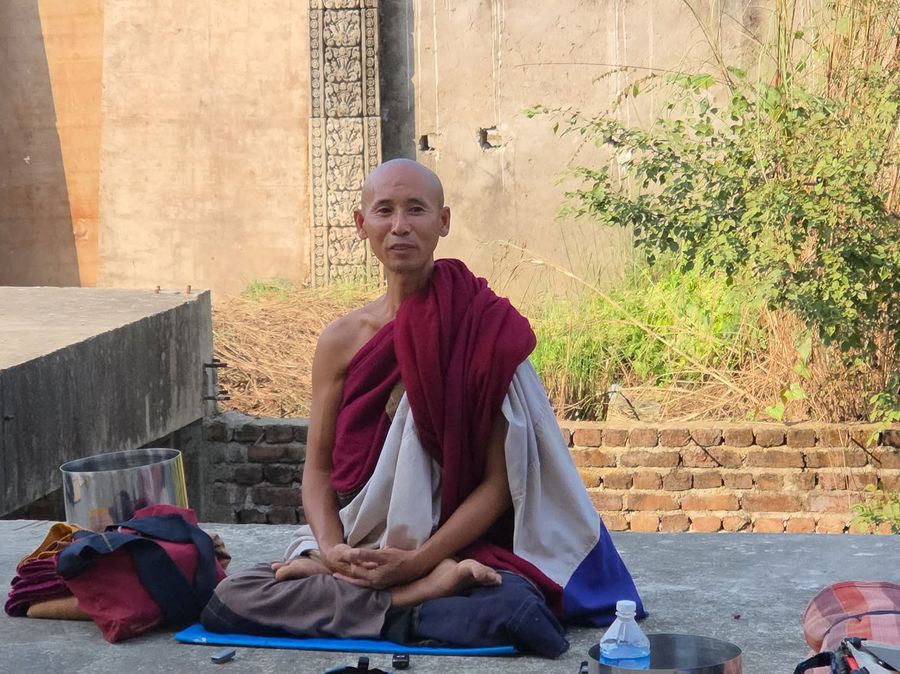
Love and hate — two opposites of the mind, yet sharing one root: attachment. In Nepal on February 23, 2026, a disciple observed that love can sometimes turn into craving. Master Minh Tue’s answer reveals the nature of the Middle Way — not the midpoint between love and hate, but a liberation from both.
Buddhist disciple asks: Master, you have many people who love you, do you want to say anything to them? I feel that sometimes love also becomes greed, is that right Master? (February 23, 2026 – Nepal)
Master Minh Tue answers:
Love is the same as hate, one must overcome both to walk the Middle Way.
People who love us and bring things to offer and help are sowing good conditions and gaining merit.
People who hate us, curse and beat us are creating evil karma.
I am not attached to love, nor do I harbor resentment toward hate; one must be liberated from both.
If we are attached to love, having people build a temple for us to stay in and always wanting delicious meals cooked by them, and suffering when we don’t have them, that is an attachment we cannot escape from.
If we are hated and prevented from begging for alms, and we give up practicing, that won’t work either.
We must persevere in our goal; thanks to that love and hate, it helps us overcome.
* Master Minh Tue always gives brief and concise answers suitable for the listener in each circumstance. Below is a deeper explanation and analysis so that those who wish to learn can thoroughly grasp the Master’s teachings.
The Middle Way: Escaping the grip of dualistic extremes
The Buddha discovered The Middle Way (Majjhima Patipada) — a path that avoids two extremes: extreme asceticism and sensory indulgence. In this answer, Master Minh Tue pointed out a wonderful application of the Middle Way to spiritual life: Not leaning towards resentment (when hated) and not drowning in attachment (when loved).
The soft trap of “Being Loved”
We easily recognize the harm of being hated (generating frustration, anger, depression). But few are vigilant against the silent destruction of being loved and pampered. In Buddhism, that is called Attachment.
The Master gives a very practical example: “Having people build a temple for us to stay in and always wanting delicious meals cooked by them, and suffering when we don’t have them.” When served too much, the mind of greed (attachment) will arise. You begin to rely, expect, and when circumstances change (no longer receiving attention), you will fall into extreme suffering. Worldly love is inherently impermanent. Clinging to it is like clinging to a deflating float in the middle of the ocean.
Using adversity as a whetstone for the sword of wisdom
Facing those who hate him, the Master is neither sad nor abandons his practice: “If we are hated and prevented from begging for alms, and we give up practicing, that won’t work either.” He even views them with compassion (clearly seeing they are creating bad karma for themselves).
The peak of spiritual practice is not avoiding praise and criticism, but using both praise and criticism as means to test one’s mind. “Thanks to that love and hate, it helps us overcome.” Those who love help us check if we are bound by Attachment (Greed). Those who hate help us check if our Anger arises. Overcoming this dual test, the mind will achieve true liberation.
Do you believe it is possible to love someone without becoming attached? Share your perspective.
Leave a comment below to share your perspective and learn from one another.