In the time of the Buddha, some bhikkhus did not accept new robes from donors. Instead, they gathered discarded cloth — fabric from charnel grounds, torn rags thrown away, cloth that had wrapped the dead — then washed, dyed, and sewed it into robes to wear.
That robe is called the rag robe (paṃsukūla-cīvara) — literally, “cloth picked up from dust.”
It sounds crude, perhaps even repulsive. But behind the rag robe lies one of the most profound lessons on letting go, contentment with little, and inner freedom.
What Is the Paṃsukūla Robe?
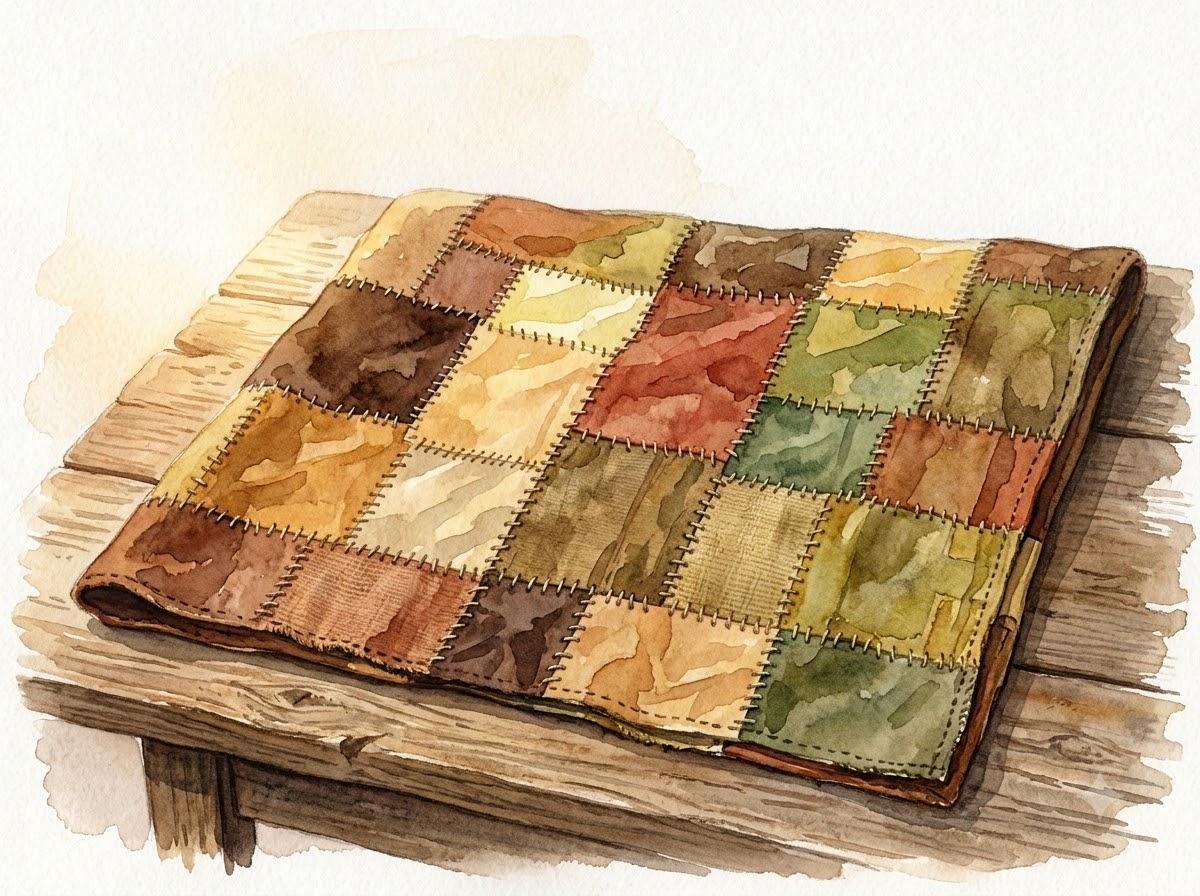
The paṃsukūla robe (paṃsukūla-cīvara) is a robe made from found cloth — not new fabric offered by donors. Sources of cloth include:
Charnel ground cloth: Fabric that had wrapped corpses after cremation or burial.
Discarded cloth: Torn or old fabric that people had thrown away — on roads, at refuse heaps, in public places.
Cloth gnawed by rodents or otherwise damaged: Pieces of fabric that no ordinary person would want to use.
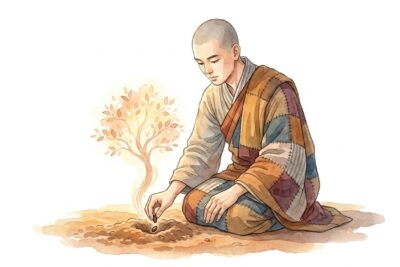
The practitioner would collect these pieces, wash them with water, dye them with natural colors (typically earthy brown, deep ochre, or reddish-brown from tree bark and roots), then sew the patches together into a robe.
In the Visuddhimagga (The Path of Purification), Venerable Buddhaghosa lists 23 types of cloth eligible for making a rag robe — all sharing one characteristic: unwanted by anyone, owned by no one, left behind.
Why Choose the Rag Robe?
The rag robe practice is one of the 13 dhutanga (ascetic) practices — voluntary observances for practitioners who wish to live a life of the greatest contentment with little (appiccha) and satisfaction (santuṭṭhi).
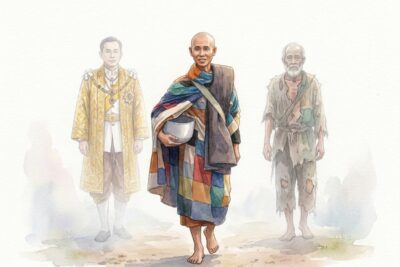
The reason was not material deprivation. In the Buddha’s time, many wealthy donors were eager to offer the finest robes. But some practitioners chose not to accept — because they recognized that:
Fine robes nourish craving: When wearing new, beautiful robes, the mind easily falls into comparison, pride, and attachment. “My robe is finer than his” — and defilement begins right there.
The rag robe cuts dependence: No need for anyone to offer robes, no waiting, no sense of obligation or emotional debt. Self-sufficient — and therefore free.
The rag robe is a meditation on impermanence (anicca): Wearing cloth from a charnel ground, the practitioner constantly remembers: this body too will be like that cloth one day — abandoned. What use is clinging to appearances?
The Buddha and the Rag Robe
The Buddha did not require all bhikkhus to wear rag robes. He permitted both options: accepting offered robes and gathering rag cloth. But he praised the rag robe practice — regarding it as an expression of contentment and fewness of wishes.
In the Anguttara Nikāya, the Buddha commended Venerable Mahā Kassapa for maintaining the rag robe practice throughout his life — even though the Buddha invited him multiple times to accept better robes.
Venerable Mahā Kassapa declined, saying he kept this practice not only for himself, but to set an example for future generations. He wanted those who came after to know that the simplest possible life is sufficient for the path of practice — no luxury of any kind is needed.
Master Minh Tuệ — The Rag Robe in the Modern Age
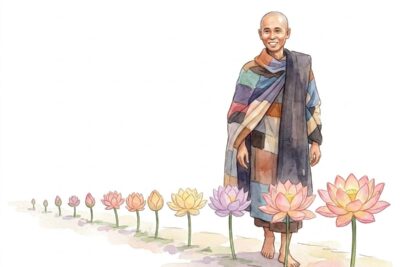
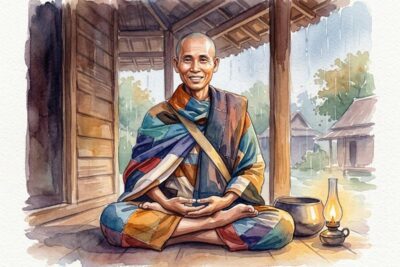
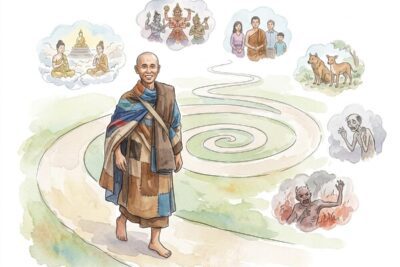
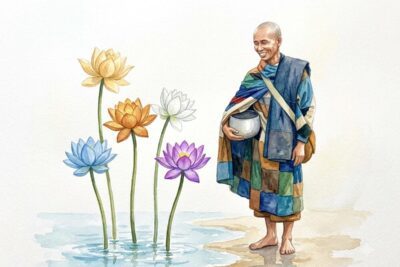
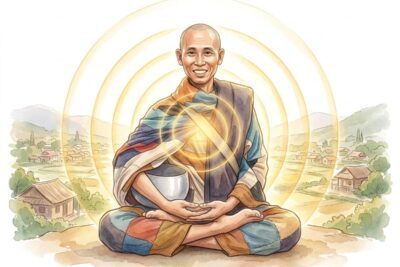
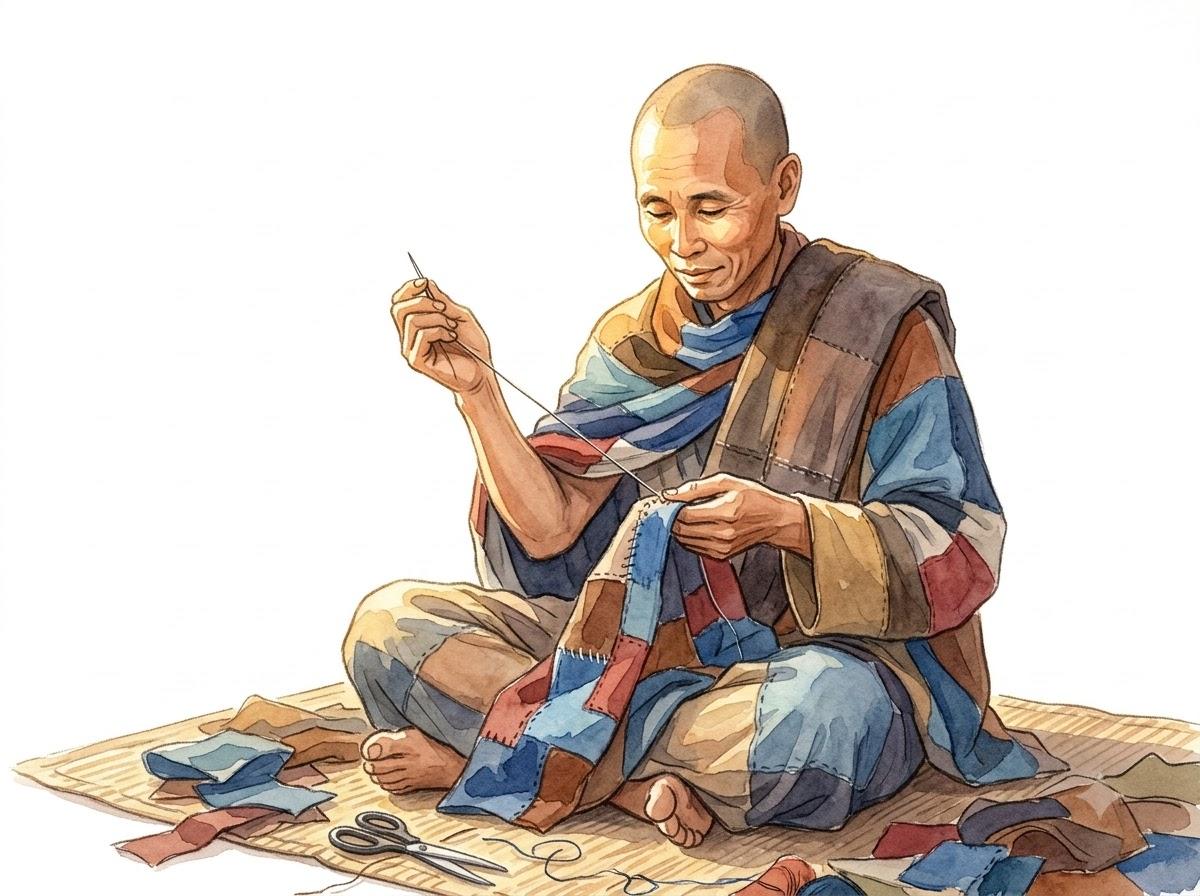
The most recognizable image of Master Minh Tuệ is his heavily patched robe — many pieces of cloth in different colors and textures, sewn together. This is not a designed garment — it is a paṃsukūla robe in the truest spirit of the practice that the Buddha and Venerable Mahā Kassapa upheld over 2,500 years ago.
He does not accept new robes from donors. When his robe tears, he patches it with found cloth. When patching is no longer possible, he finds new fabric — from sources others have discarded. In the Visuddhimagga, Venerable Buddhaghosa lists the legitimate sources for rag robe cloth: fabric discarded at refuse heaps, cemeteries, roadsides, cloth gnawed by rodents or damaged by insects — all belonging to the category of what no one wants. Precisely because no one wants it, the wearer of the rag robe owes no one — this is the deepest meaning of the practice: complete freedom from dependence.
His patched robe has become a symbol — not of poverty, but of freedom. In an age where clothing is a vehicle for self-expression — brands, style, status — a patchwork robe is the most powerful statement possible: my value does not reside in what I wear. When you need nothing from anyone, the mind is completely at ease.
Many people initially looked at his robe and thought: “How pitiful.” But upon understanding the meaning behind it, that feeling transformed into respect — as they realized this was a deliberate choice, not a forced circumstance. Venerable Mahā Kassapa was once advised by the Buddha to rest and abandon the rag robe due to his advanced age — yet he refused, saying this practice benefited himself and served as an example for future generations. Master Minh Tuệ’s years of maintaining the rag robe practice carry the same significance: not enduring suffering, but living proof that a human being can exist on far less than society considers necessary.
Note: This analysis is based on observable behavior, not Master Minh Tuệ’s own words about his inner experience.
The Rag Robe and Buddhist Robe Construction
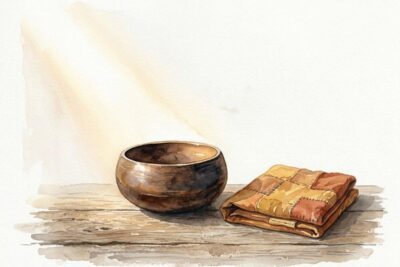
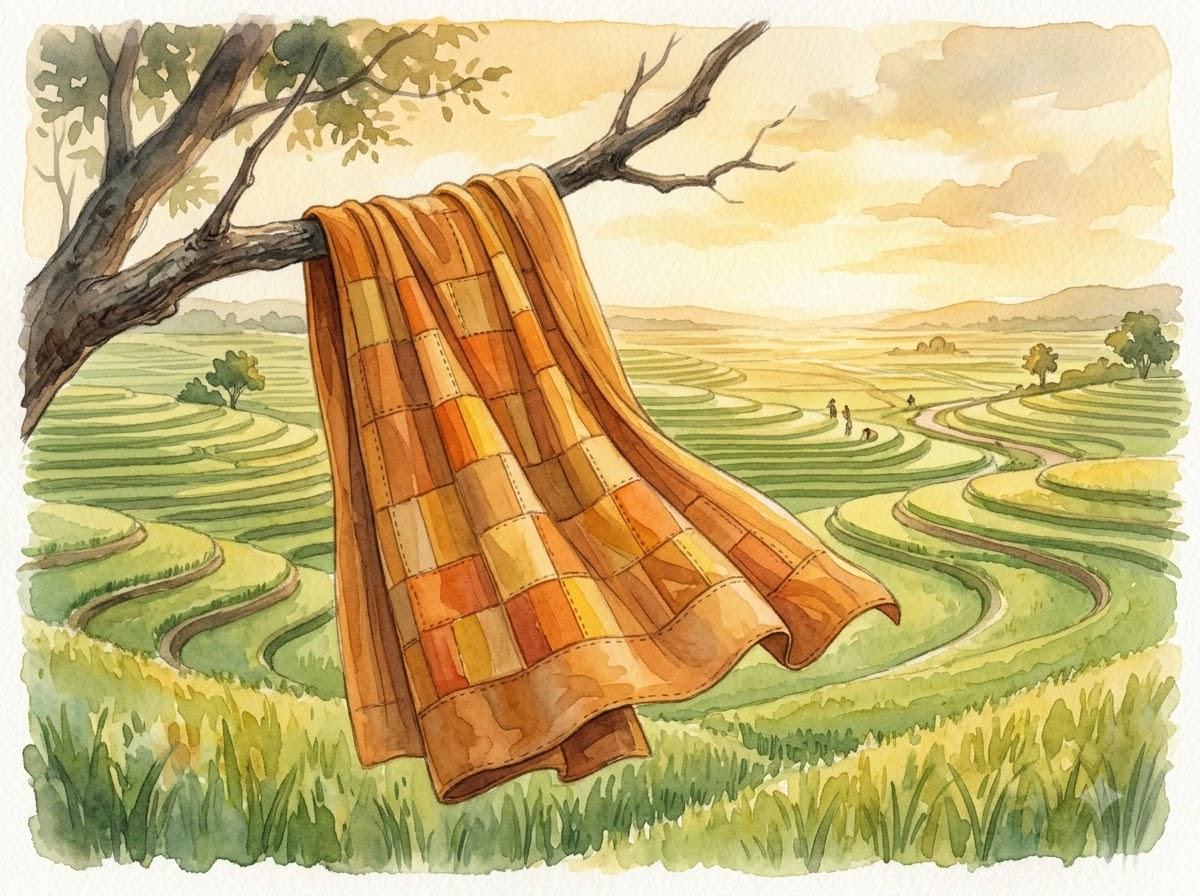
In the Buddhist tradition, the robe (cīvara) is sewn in the pattern of “merit fields” (kasāya) — many small pieces of cloth arranged in horizontal and vertical rows, resembling rice paddies seen from above.
This sewing style originates directly from the rag robe: because gathered cloth was typically small, torn, and uneven, it had to be cut into pieces and assembled. Over time, this pattern became a defining feature of Buddhist robes — even when new cloth was offered, robes were still cut into pieces and sewn in the merit-field pattern.
This carries deep meaning: even new robes bear the imprint of the rag robe — reminding the wearer of the spirit of letting go, humility, and non-attachment to outward appearance.
Lessons from the Rag Robe for Lay Practitioners
You do not need to wear a rag robe to learn its lessons. The core spirit can be applied directly:
Do not let clothing define you: How much money, how much time do we spend on clothing? Not because we need to, but because we fear being judged. The rag robe reminds us: your value does not reside in what you wear.
Use things until they are truly used up: Instead of buying new because you are tired of the old, use what you have until it genuinely cannot serve anymore. That is contentment with little (santuṭṭhi) in everyday life.
See value in what others discard: A piece of cloth that is thrown away — worthless to one person, yet sufficient to make a robe for another. Value is not an inherent property of an object — it depends on perspective.
The Rag Robe and Dyeing in Buddhism
The color of Buddhist robes is not accidental. The word “kasāya” (the root of the Vietnamese “cà-sa”) literally means “dyed color” — because rag robes needed to be dyed to unify the appearance of the mixed cloth pieces and eliminate their original look.
In the Theravāda tradition, robes are typically dyed with natural materials: jackfruit bark for deep yellow, jackfruit wood for brown, clay for reddish-brown. Each region and tradition has its own dyeing formula — producing different shades: turmeric yellow in Myanmar, reddish-brown in Thailand, dark brown in Sri Lanka.
The purpose of dyeing is not aesthetics — it is to remove the attractiveness of the cloth. New white fabric is appealing; fabric dyed earth-brown is not. That very “unattractiveness” protects the practitioner from attachment to clothing.
The Rag Robe Across Buddhist Traditions
The rag robe practice is most common in the Theravāda tradition, particularly within the Thai Forest Tradition. Masters such as Ajahn Mun spent years living in the forest, wearing rag robes and strictly observing the dhutanga practices.
In Mahāyāna Buddhism, a similar spirit exists but is less commonly practiced in its literal form. Nevertheless, many Chan (Zen) masters also lived lives of extreme simplicity — the spirit of “non-attachment to outward appearance” is shared across all traditions.
In Vietnam, before Master Minh Tuệ, the rag robe practice existed almost exclusively in texts and commentaries. He has brought it back into lived reality — reminding the Buddhist community that practice does not require luxury or comfort — only a sincere heart and a simple life.
Frequently Asked Questions
What is a paṃsukūla robe?
A paṃsukūla (rag robe) is a monastic robe made from found cloth — fabric discarded at charnel grounds, torn rags thrown away, cloth that no one wants. The practitioner washes, dyes, and sews the patches into a robe instead of accepting new cloth from donors.
Why do practitioners choose to wear rag robes?
To eliminate attachment to clothing, reduce dependence on others, and practice the contemplation of impermanence (anicca). The rag robe is one of the 13 dhutanga practices — voluntary observances for those who wish to live with the utmost contentment and few wishes.
Does Master Minh Tuệ wear a paṃsukūla robe?
Yes. His robe, patched together from many pieces of different-colored cloth, is a paṃsukūla robe in the truest traditional spirit. He does not accept new robes from donors but gathers cloth himself and sews the patches together.