Buddhism has spread across Asia over 2,500 years, branching into many schools and traditions. Someone encountering this diversity for the first time often wonders: which is the “original”? Which reflects what the Buddha himself taught?
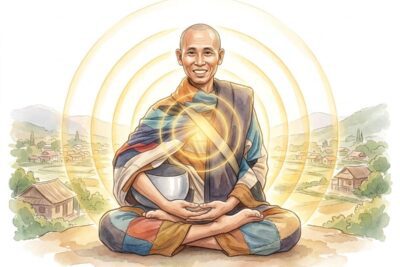
The short answer is that all major Buddhist schools have preserved something authentic. But among them, Theravāda makes the strongest historical claim to representing the earliest recoverable form of the Buddha’s teaching — and this is the tradition Thay Minh Tue practices.
What Does Theravāda Mean?
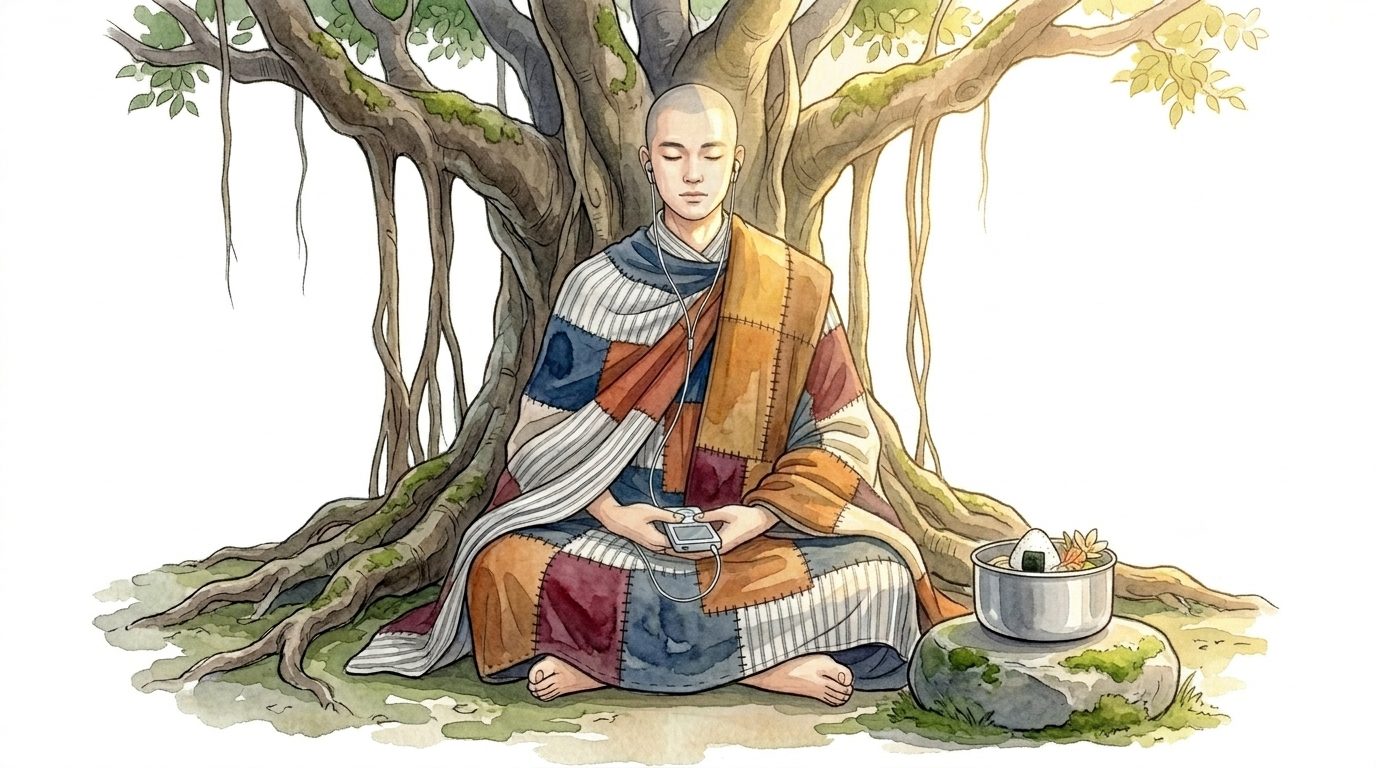
Theravāda in Pali means “Teaching of the Elders” (thera = elder, vāda = teaching/doctrine). The name refers to the senior monks (theras) who gathered after the Buddha’s passing to preserve and codify his teachings.
The Theravāda tradition is based on the Pali Canon (Tipiṭaka) — three “baskets” of text:
- Vinaya Piṭaka — the monastic code of discipline
- Sutta Piṭaka — the discourses (including the Nikāyas that Thay listens to)
- Abhidhamma Piṭaka — systematic philosophical analysis of mind and matter
The Nikāyas in particular — five collections of discourses — are considered the closest textual record of what the Buddha actually said. Scholars from multiple traditions, including Mahāyāna, generally acknowledge that the Pali Nikāyas represent an early stratum of Buddhist literature.
Where Is Theravāda Practiced Today?
Theravāda is the dominant form of Buddhism in:
- Sri Lanka — where the Pali Canon was first written down (1st century BCE)
- Thailand — home of the Thai Forest Tradition (Ajahn Mun, Ajahn Chah)
- Myanmar — a major center of Vipassana practice
- Cambodia and Laos
In Vietnam, Buddhist practice has historically been predominantly Mahāyāna (Đại Thừa). Theravāda is practiced mainly in the south and among the Khmer community. However, interest in Theravāda and the Pali Nikāyas has grown significantly in recent decades — and Thay Minh Tue is part of that current.
Theravāda and Mahāyāna – Key Differences
Both traditions honor the Buddha and share core teachings (the Four Noble Truths, the Eightfold Path, impermanence, karma). The differences are real but often overstated.
The scriptural basis: Theravāda relies on the Pali Nikāyas as its primary scriptural authority. Mahāyāna accepts these but adds a large body of later Sanskrit sutras — the Perfection of Wisdom texts, the Lotus Sutra, the Pure Land sutras, and many others.
The ideal practitioner: Theravāda emphasizes the path to Arahantship — complete liberation through the eradication of all defilements. Mahāyāna elevates the Bodhisattva ideal — the being who delays personal liberation to save all beings across countless lifetimes.
The role of other beings: Theravāda emphasizes personal effort as the primary cause of liberation — no external being can grant awakening. Mahāyāna includes practices directed toward Buddha-figures who actively assist practitioners (Pure Land devotion to Amitābha being the most well-known in Vietnam).
Practice emphasis: Theravāda places strong emphasis on Vipassana meditation, monastic discipline, and direct study of the Pali Nikāyas. Mahāyāna includes a wider range of practices — chanting, ritual, visualization, and devotional practice.
Neither is simply “better.” They address different practitioners with different inclinations, in different cultural contexts. Both have produced genuinely realized practitioners.
Why Thay Minh Tue Follows Theravāda
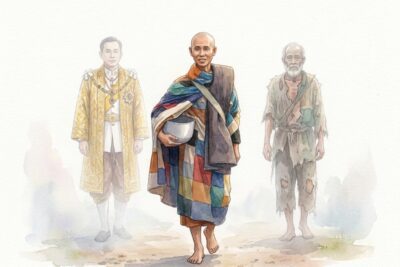
His practice framework — the 13 Dhutanga practices, alms round, the monastic precepts, the emphasis on Vipassana — all derive directly from the Theravāda system.
His daily habit of listening to Nikāya recordings reflects the Theravāda emphasis on direct engagement with the Buddha’s words as recorded in the Pali texts. He does not chant Sanskrit mantras or invoke the assistance of Buddha-figures — his practice is grounded entirely in what the Nikāyas prescribe.
This is not a judgment of other traditions. It is simply the form of practice that matches Thay’s approach: direct, grounded in early texts, emphasizing personal effort and direct investigation over faith-based devotion.
What Theravāda Offers to the Modern Practitioner
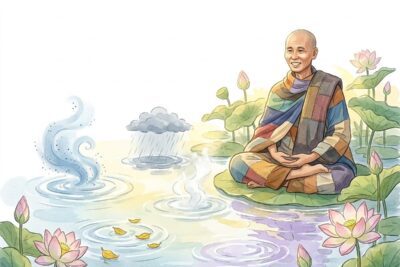
One of Theravāda’s particular contributions to the modern world is its emphasis on verifiable practice. The meditation methods it preserves — especially Vipassana and the four foundations of mindfulness — have been studied extensively by modern science and found to produce measurable psychological benefits.
The Nikāyas themselves have been fully translated into major world languages and are freely available. Anyone can read what the Buddha said, in reasonably reliable translation, and begin practice based directly on those instructions. There is no required intermediary, no priestly hierarchy, no dependence on specialized ritual knowledge.
This directness — practice the Buddha’s teaching, observe the results in your own experience — is something Thay Minh Tue embodies in the most literal possible way: taking the words of the Nikāyas and living them, step by step, on the road.
Learn more: who is Thầy Minh Tuệ?Biography, the dhutanga practice and the walking pilgrimage.Read more →