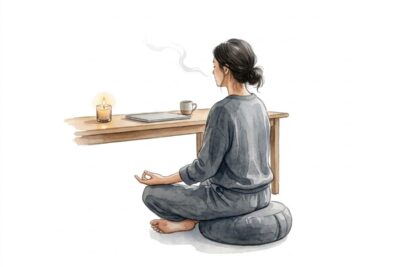
Each day, most of us eat three meals — sometimes with snacks in between. A significant portion of each day revolves around food: thinking about the next meal, preparing food, searching for restaurants, scrolling through food photos online.
Thay Minh Tue eats one meal each day — before noon, from whatever people offer. No more, no less.
This is not fasting. Not self-punishment. This is Ekasanika — the one-meal practice — a practice with roots in the time of the Buddha, with a very specific and very clear purpose.
What Is Ekasanika?
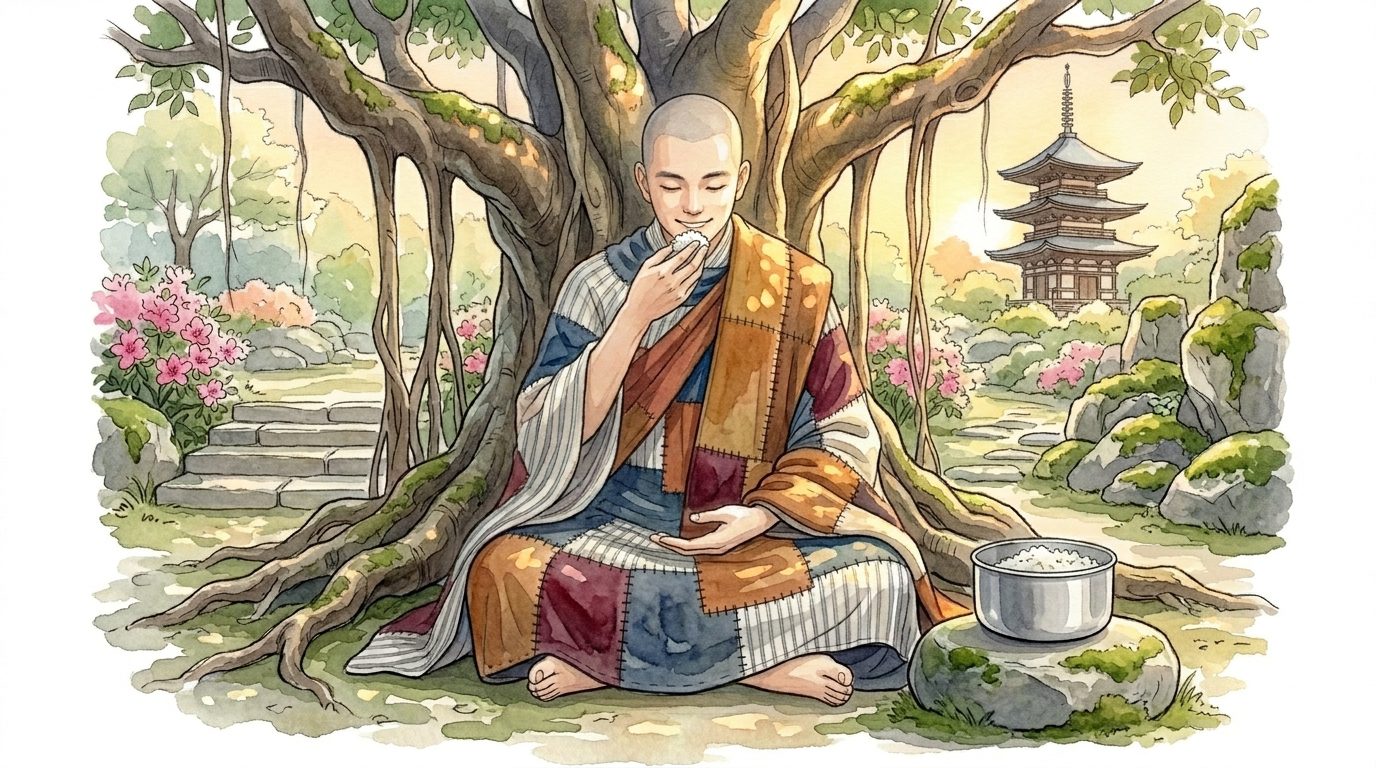
Ekasanika in Pali means “one who eats once” — the practitioner of this dhutanga eats only one meal per day, before noon, and eats nothing more until the following morning.
In the system of 13 Dhutanga practices of Theravada Buddhism, Ekasanika is the eighth. Like all the Dhutangas, it is voluntary — a practitioner chooses to undertake it as a way of deepening practice, not as an externally imposed rule.
The Pali Vinaya describes three levels of this practice:
- Most strict: eating only once per day, at one place, receiving food into the bowl only once.
- Middle: eating only one meal before noon, but receiving food from multiple donors.
- Flexible: eating in one continuous sitting without rising mid-meal to add more food.
Why Does Buddhism Teach Eating Less?
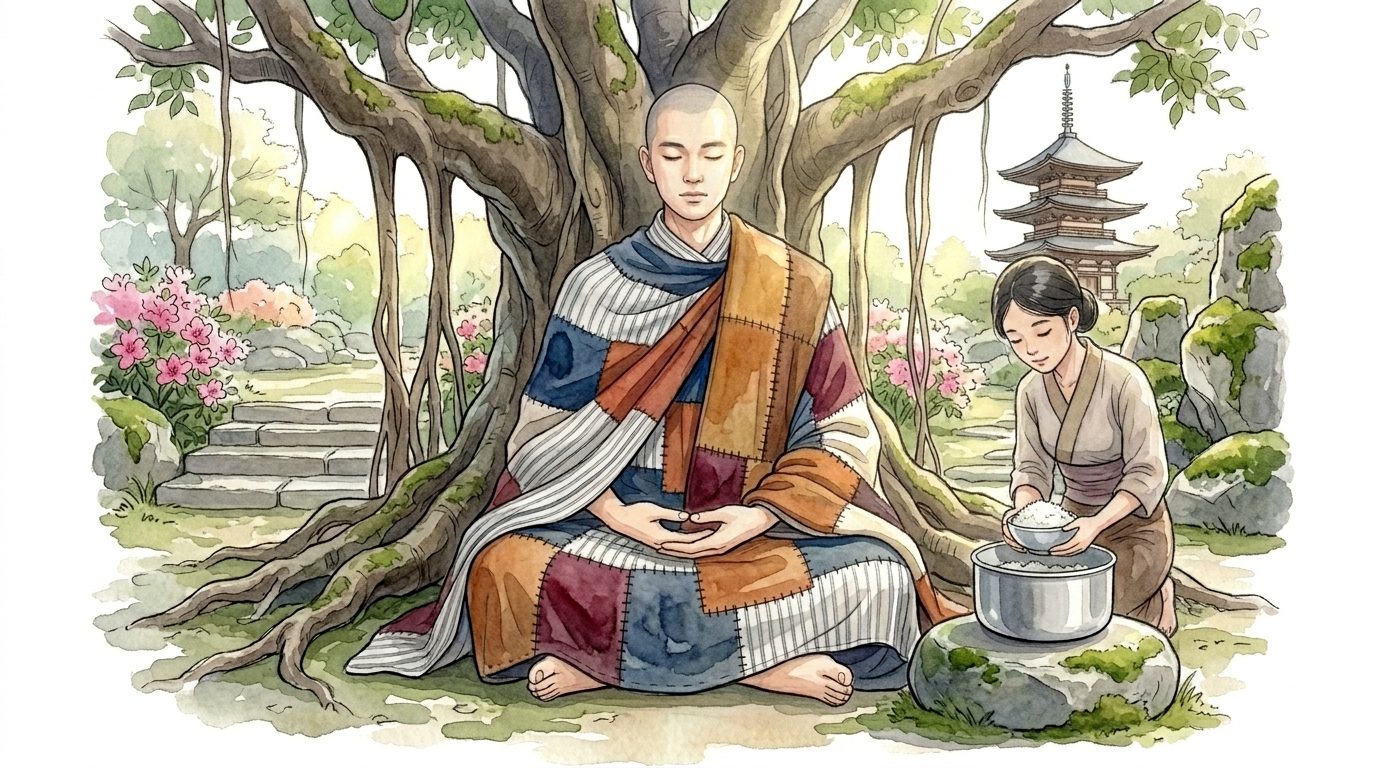
Buddhist monks eat one meal a day to reduce craving for taste-pleasure, keep the mind clear for meditation, and lighten the burden on lay supporters who provide food. The Buddha himself practiced this and recommended it.
The answer appears in one of the shortest but most penetrating of the Buddha’s instructions. When asked about the purpose of alms round and moderation in eating, he said:
“I eat to sustain the body, not for pleasure, not for physical beauty, not for strength, not for weight gain — only to maintain the health necessary for the practice of the holy life.”
This is the entire Buddhist approach to food in one sentence: eating is a means, not an end.
Eating less supports deeper meditation for several practical reasons:
First, a full meal makes the mind heavy, drowsy, and difficult to concentrate. Anyone who has tried meditating after a large meal knows this experience — the mind seems to sink.
Second, the mental activity of preparing, seeking, and thinking about food multiple times per day consumes a significant amount of mental energy. When that is reduced to once, the freed energy becomes available for practice.
Third — and most fundamentally — craving for food (āhāre nandi) is one of the most subtle and persistent forms of craving. The one-meal practice is not about punishing the body but about gradually reducing the hold of taste-pleasure, one of the stickiest forms of sensory attachment.
One Meal a Day and Intermittent Fasting – What Science Says
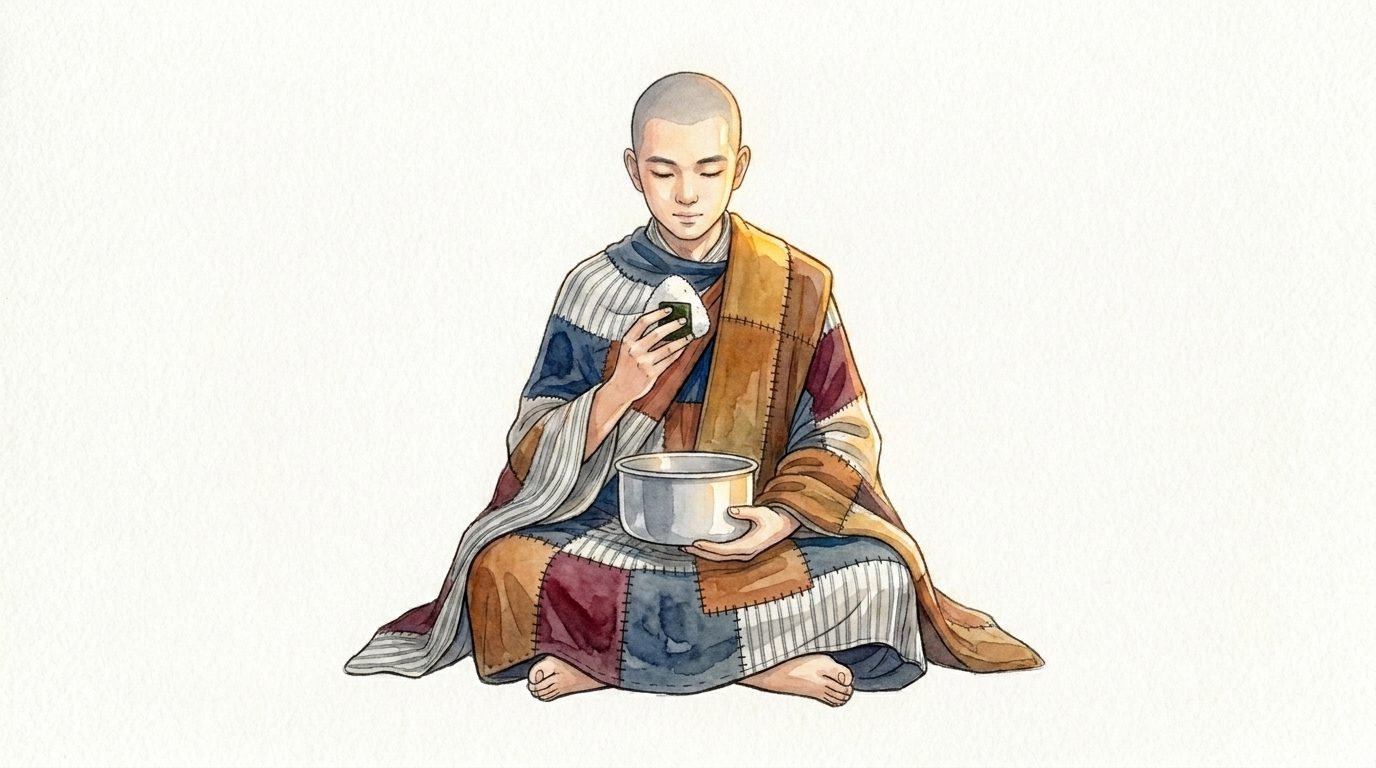
The one-meal practice in Buddhism — eating within a restricted window before noon — has significant overlap with what modern medicine calls Intermittent Fasting and Time-Restricted Eating.
Research over recent decades suggests:
- Reducing meal frequency and extending fasting periods is associated with improved brain function and increased alertness.
- Eating earlier in the day and finishing before afternoon aligns with the body’s natural circadian rhythm and supports better metabolism.
- Many teachers and practitioners who have sustained one-meal practice long-term report a sense of lightness, clarity, and reduced distraction by hunger after the adaptation period.
What is striking is that modern research focuses not just on how much is eaten but on when and how frequently — precisely what the Buddha emphasized 2,500 years ago.
Thay Minh Tue – What He Eats and How
Those who have walked alongside Thay or observed his journey confirm the following:
He accepts only vegetarian food — he does not accept meat or non-vegetarian offerings. Within that, whether rice, bread, fruit, or any other plant-based food offered, he receives without selecting or requesting anything further.
He eats everything in one meal before noon — not saving portions for later, not dividing it into multiple smaller servings.
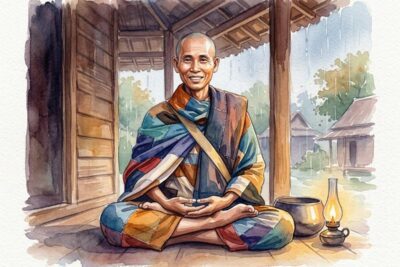
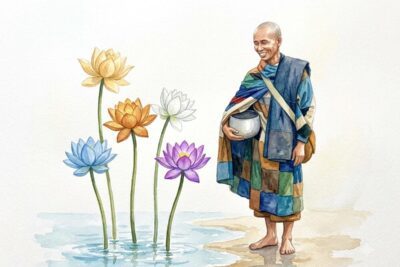
He uses the inner pot of a rice cooker — the removable bowl from inside an electric rice cooker — to receive food. Not a traditional wooden bowl, not a lacquered vessel, not an aluminum pot. A simple, found object, used as it is, without distinction.
One detail worth noting: Thay shows no visible preference or particular reaction to what food he receives. There is no sign of “I like this better than that.” This is the expression of what Buddhism calls upekkhā (equanimity) in eating — the mind neither lifted nor lowered by the experience of taste.
Observing Hunger After Noon
One of the practical challenges of Ekasanika is the afternoon and evening. After the single morning meal, hunger will come in the afternoon — especially in the early days.
This is when the one-meal practice becomes a genuine meditation.
When hunger arises, the practitioner observes it as an object of mindfulness: where is the feeling of hunger in the body? Does it change over time? How much of it is genuine physiological need, and how much is the mind’s habitual expectation that food should appear at the usual time?
Many meditation teachers describe that after several weeks of practice, the afternoon hunger diminishes substantially — not because the body lacks energy, but because the mind has stopped expecting and demanding.
How to Practice Mindful Eating as a Layperson
No one needs to eat one meal per day to learn something from this practice.
What Ekasanika teaches — at the level of principle — is that our relationship to food mirrors our relationship to craving in general.
A few small practices can carry this spirit into ordinary life:
Eating mindfully — eating slowly, without screens, noticing the flavor, texture, and color of food. This naturally reduces the quantity consumed without any forced restriction.
Stopping before completely full — the Japanese have hara hachi bu — eating to 80% capacity. The Buddha taught similarly: leave some space. A lighter meal supports clarity and alertness afterward.
Occasionally skipping a between-meal snack — not eating between main meals. Observing what happens in the mind when the snacking habit is not satisfied. This is not torture — it is a very useful observation.
Food nourishes the body — but the way we approach food nourishes (or poisons) the mind. That is what the one-meal practice is designed to reveal.
Learn more: who is Thầy Minh Tuệ?Biography, the dhutanga practice and the walking pilgrimage.Read more →