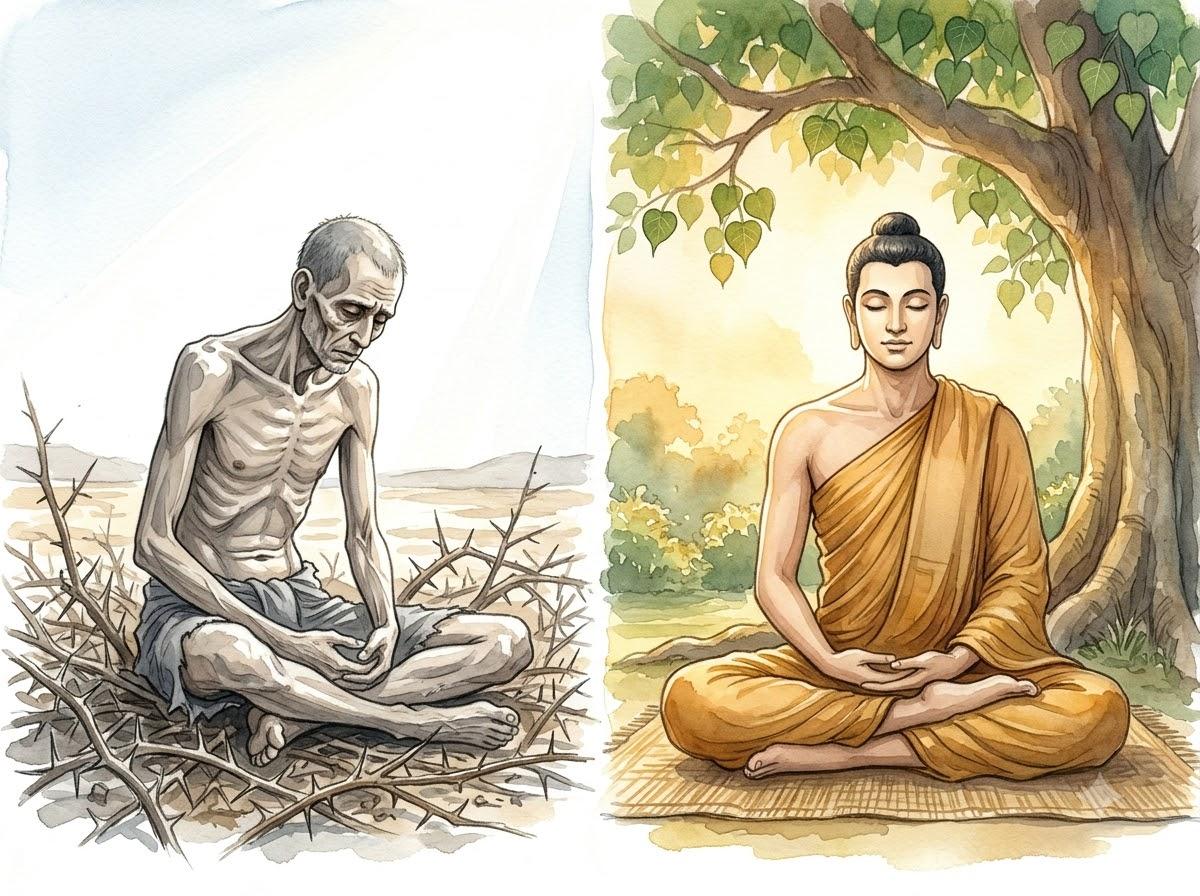
Before his awakening, Prince Siddhattha Gotama spent six years practicing extreme asceticism. He fasted until his body was nothing but skin stretched over bones. He held his breath until he nearly fainted. He lay on thorns, sat under the scorching sun, and exposed himself to freezing rain.
After those six years, he realized: all of it was futile.
Awakening does not come from tormenting the body. It comes from right understanding — and right understanding does not require a body driven to the edge of collapse.
This lesson was so important that the Buddha placed it at the very heart of his first discourse — when he declared the Middle Way, avoiding the two extremes: indulgence in sensual pleasure and self-mortification.
What Is Extreme Asceticism?
Extreme asceticism (attakilamathānuyoga) is the practice of deliberately inflicting pain, hunger, and exhaustion on the body in the belief that doing so will lead to spiritual liberation.
In the context of ancient India, when Prince Siddhattha left the palace, many schools of ascetic practice flourished. Jain ascetics, Brahmanical yogis, and numerous other groups believed:
“The body is the root of suffering. Tormenting the body burns away bad kamma. When kamma is exhausted, the soul will be liberated.”
Common forms of extreme asceticism included:
Extreme fasting: Eating only a few grains of rice per day, or going entirely without food for days on end.
Self-inflicted pain: Lying on thorns, standing on one foot through day and night, holding an arm raised until it withered.
Exposure to harsh weather: Sitting under the burning sun, immersing in freezing water, enduring rain without shelter.
Breath suppression: Attempting to stop breathing for extended periods, believing that controlling the breath is controlling the mind.
The Buddha’s Six Years of Asceticism
In the Majjhima Nikāya (MN 12 — the Greater Discourse on the Lion’s Roar), the Buddha recounted his six years of asceticism in vivid detail:
“I ate so little that my body became like a skeleton draped in skin. When I touched my stomach, I felt my spine. When I tried to stand, I fell. Hair fell from my body in clumps.”
He practiced alongside five ascetics (who would later become the group of Koṇḍañña). They believed he was on the verge of liberation because of the extremity of his self-mortification.
But one day, he realized: when the body is exhausted, the mind is also exhausted. There can be no meditation, no observation, no development of wisdom when the body lacks the basic energy to sustain life.
He recalled a childhood experience: sitting beneath a rose-apple tree during a plowing festival, his mind had naturally entered the first jhāna — without any self-mortification, without any pain. All that was needed was a calm mind, a healthy body, and right attention.
That was the moment he abandoned asceticism, accepted a bowl of milk-rice from the woman Sujātā, restored his health — and sat beneath the Bodhi tree to attain complete awakening.
Why Extreme Asceticism Does Not Lead to Liberation
The Buddha identified several reasons:
Asceticism rests on wrong view: Believing the body is an “enemy” that must be punished — this is a misunderstanding of self. The body is not the enemy — it is a tool for practice. Destroying your tool makes it useless.
Pain is not wisdom: Enduring pain does not automatically produce understanding. Someone who lies on thorns for ten years may develop impressive tolerance for pain — but that does not mean they understand impermanence (anicca), non-self (anattā), or the Four Noble Truths.
An exhausted body means an exhausted mind: Meditation requires a clear mind. A clear mind requires a body with sufficient health. Fasting to the point of near death makes meditation impossible — so extreme asceticism destroys the very goal it claims to pursue.
Asceticism can nourish conceit (māna): “I endure more than others” — that is pride. Extreme asceticism easily becomes a competition — who suffers more, who eats less — running completely counter to the spirit of letting go of self.
Distinguishing Self-Mortification from Simple Living
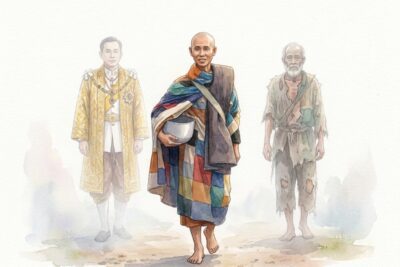
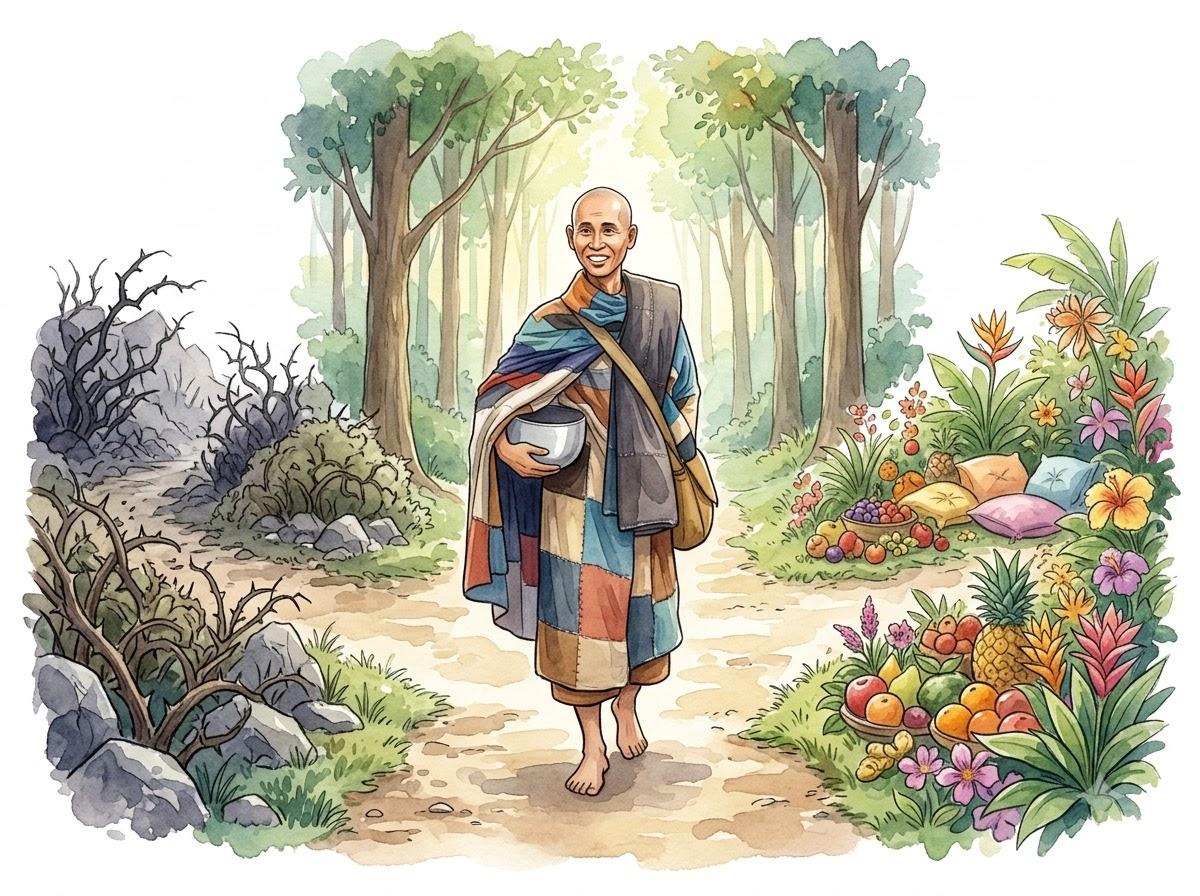
This is the most easily confused point — and the most common misunderstanding when people discuss Master Minh Tuệ. Many see him walking barefoot, eating one meal a day, sleeping outdoors — and call it “asceticism.” But there is a fundamental difference in purpose:
Self-mortification (attakilamathānuyoga): Deliberately inflicting pain on the body in the belief that pain itself leads to liberation. The goal is to suffer — viewing pain as a means of purification. The Buddha tried this path and abandoned it after six years.
Simple living (dhutanga — dhutaṅga): Reducing comforts so the mind has less to cling to. The goal is inner freedom — not pain. The Buddha permitted and encouraged the dhutanga practices in the Vinaya — because they support practice rather than oppose the Middle Way.
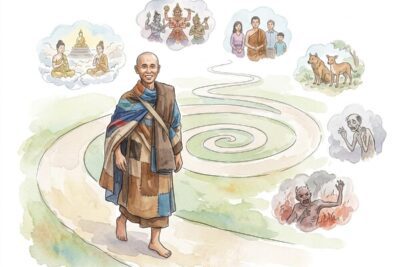
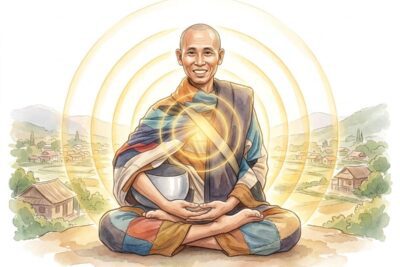
Master Minh Tuệ does not seek to inflict pain on himself. He simply does not chase comfort. When the sun is hot — he bears it. When rain falls — he bears it. Not because he wants to suffer, but because he does not allow comfort or discomfort to govern the mind. In Buddhist terminology, this is the difference between attakilamatha (self-torment) and dhuta (shaking off defilements) — two things that sound similar but point in entirely opposite directions.
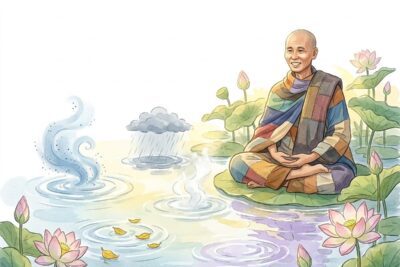
That is the Middle Way — neither indulging nor mortifying. Living simply, the mind at ease.
Master Minh Tuệ — The Middle Way on the Walking Path
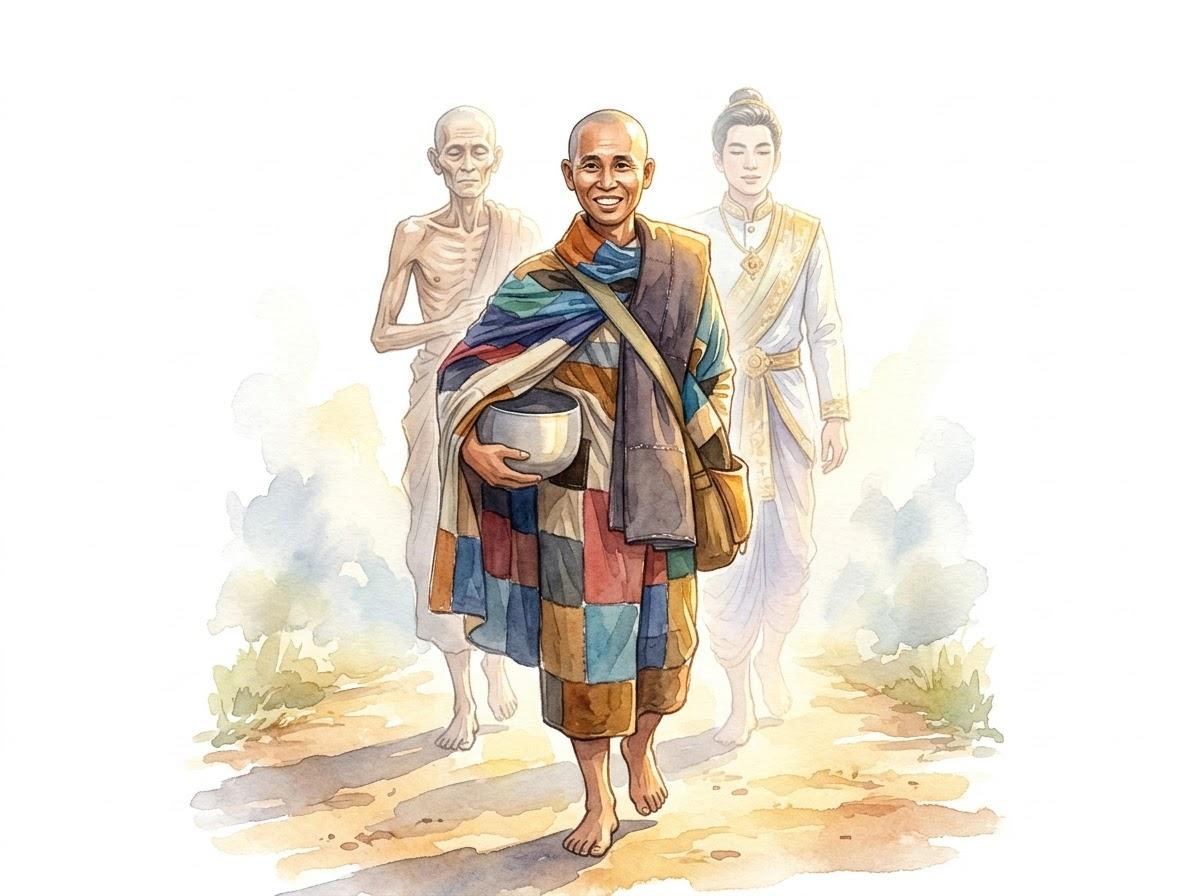
Some critics argue that Master Minh Tuệ is practicing “extreme asceticism.” This criticism comes from a surface-level view — but when measured against the criteria the Buddha set out in the Dhammacakkappavattana Sutta (SN 56.11) regarding the two extremes to avoid, his way of life is clearly different:
He eats adequately: Each day he eats one meal from his alms round — no extreme fasting, no deliberate starvation. Eating one meal per day (ekāsanika) is a dhutanga practice permitted by the Buddha, not a form of self-mortification. The body is nourished just enough for practice — no more, no less.
He rests: He sleeps and rests when needed — he does not force himself to stay awake through the night or deprive himself of sleep. During the annual rains retreat months, he pauses his walking. When circumstances prevent movement, he also stops. A self-mortifier does not allow himself rest — Master Minh Tuệ does.
He does not deliberately inflict pain: Walking barefoot is not about making the feet hurt — it is about not needing shoes. Sleeping outdoors is not about enduring cold — it is about not needing a house. The difference lies in intention (cetanā): self-mortification makes pain the goal, while dhutanga makes letting go the goal — any pain that occurs is a byproduct, not something sought.
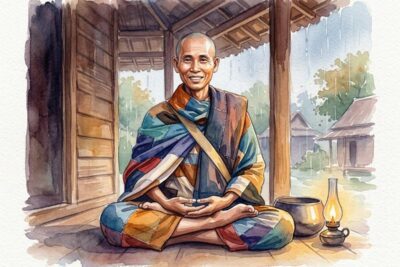
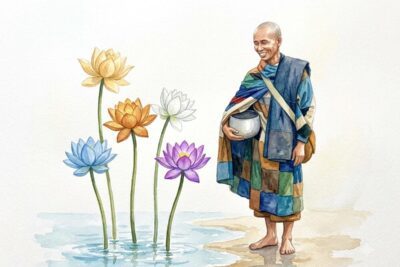
He is at peace: Everyone who meets him speaks of the serenity on his face. This is the most telling sign. In the scriptures, the Buddha described his own six years of asceticism: body emaciated, mind making no progress, face gaunt and hollow. A person practicing self-mortification has the face of someone enduring — strained, tense, or depleted. Master Minh Tuệ has the face of someone who is free — and that is the most convincing evidence that his path is not self-mortification.
This is precisely the distinction the Buddha pointed to: the right path does not lie in pain, but in letting go. And genuine letting go brings peace — not suffering.
Note: This analysis is based on observable behavior, not Master Minh Tuệ’s own words about his inner experience.
The Middle Way — The Path That Actually Works
When the Buddha abandoned asceticism, the five ascetics left him, believing he had “given up.” But it was precisely by abandoning the extreme that he found the right path.
The Middle Way is not “a bit of this and a bit of that.” It is an entirely different path — not sitting between indulgence and mortification, but transcending both. The Noble Eightfold Path — right view, right mindfulness, right concentration — has nothing to do with the body’s level of comfort or pain. It concerns the quality of the mind.
This was the Buddha’s greatest discovery: liberation does not reside in the body — it resides in the mind. And the mind needs a body healthy enough to do its work, not a body tortured to the point of collapse.
Extreme Asceticism in Other Religions
Extreme asceticism is not unique to ancient India. Many other religious traditions have similar forms: extreme fasting, self-flagellation, prolonged abstinence from food, and the renunciation of all comforts.
What makes Buddhism distinctive is that the Buddha tried it and abandoned it — not from theory, but from direct personal experience. Six years of asceticism gave him the authority to say: “I walked this path to its very end, and it leads nowhere.”
This lends a special credibility to the teaching of the Middle Way. The Buddha did not say “do not practice asceticism” from a position of comfort — he said it from the position of someone who had practiced asceticism more intensely than anyone, and then realized there was a different path.
Frequently Asked Questions
What is extreme asceticism?
Extreme asceticism (attakilamathānuyoga) is the deliberate infliction of pain, hunger, and exhaustion on the body in the belief that physical suffering leads to spiritual liberation. The Buddha practiced it for six years before abandoning it, declaring it a futile path.
Why did the Buddha abandon asceticism?
Because he realized that when the body is exhausted, the mind is also exhausted — making meditation and the development of wisdom impossible. Physical pain does not automatically produce understanding or liberation.
Is Master Minh Tuệ practicing extreme asceticism?
No. His way of life follows the dhutanga (ascetic simplicity) practices — reducing comforts so the mind has less to cling to, rather than deliberately inflicting pain. He eats sufficiently, rests when needed, and the serenity on his face suggests freedom, not endurance of suffering.