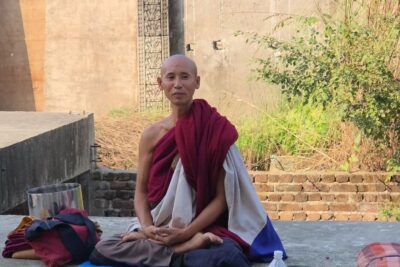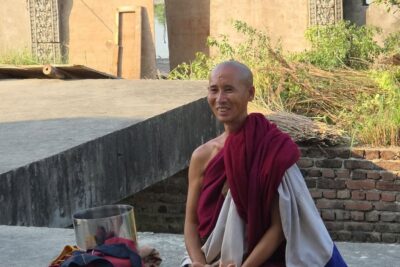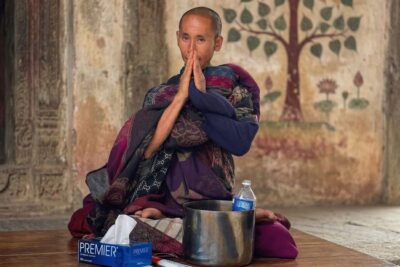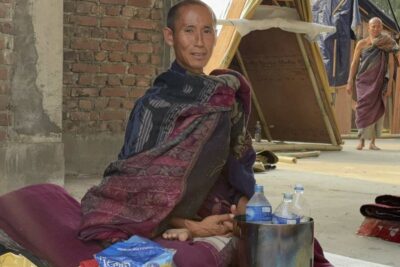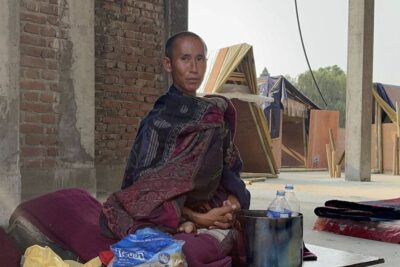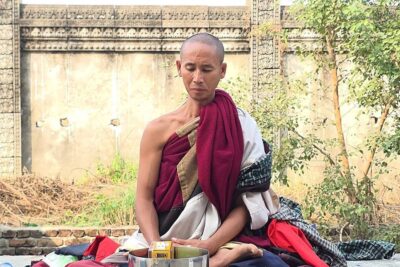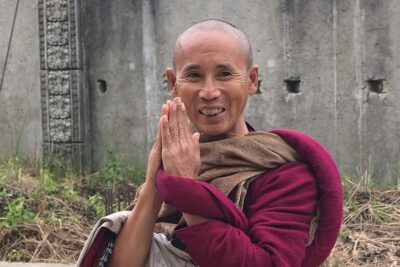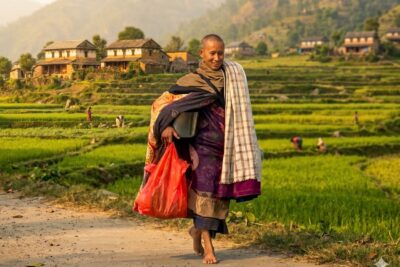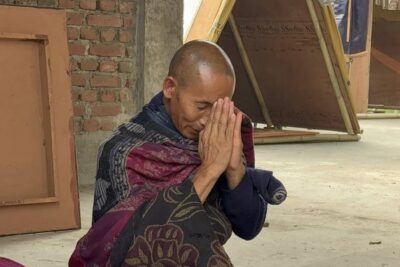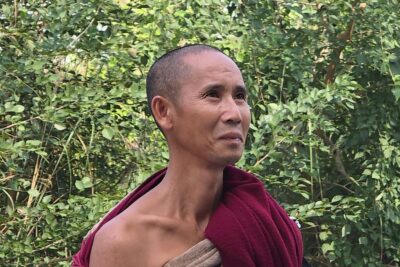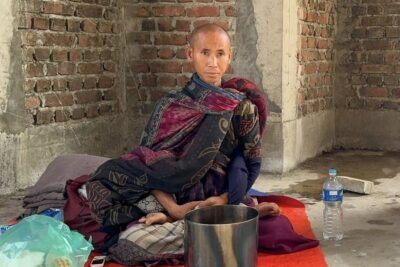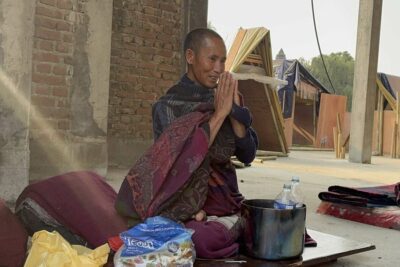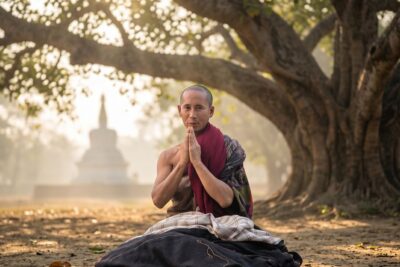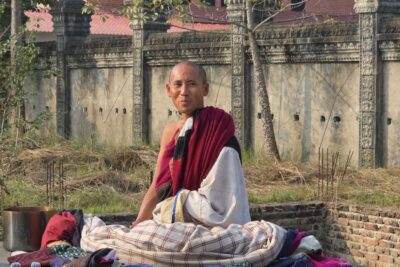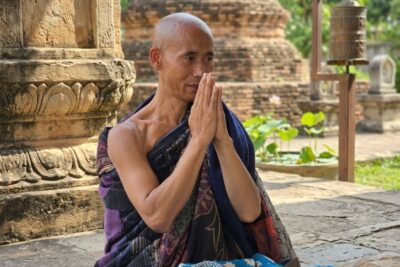
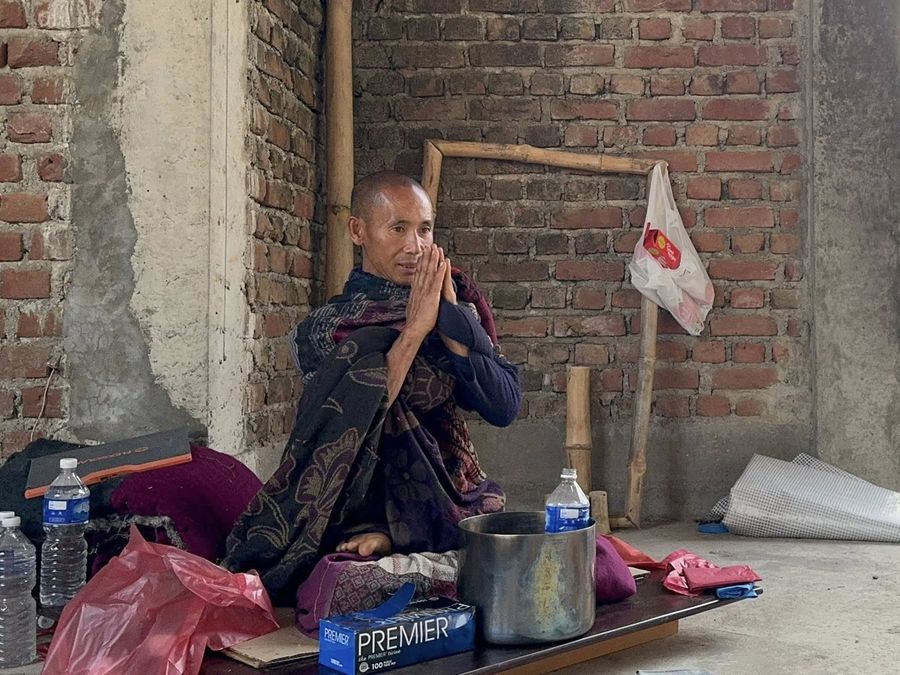
Looking at Master Minh Tue’s way of life — walking thousands of kilometers, eating one meal a day, sleeping sitting up, owning nothing — many assume this is the extreme asceticism that the Buddha himself rejected. In Nepal on February 19, 2026, the Master clarified the fundamental difference between ascetic self-mortification and the Dhutanga practices.
Buddhist disciple asks: Is Dhutanga practice the same as extreme asceticism, Master? (February 19, 2026 – Nepal)
Master Minh Tue answers:
My Dhutanga practice cannot be called extreme asceticism yet. Asceticism as stated in the sutras means going naked, living loosely without manners, wearing tree bark, eating on nails, bathing three times a night, enduring the cold in the forest. Self-mortification like Shakyamuni Buddha in the past, going to relieve himself and falling face down unable to get up, is what you call asceticism.
I now walk normally, still have strength, and eat full meals, so you can’t say it’s suffering. Compared to people who enjoy worldly desires, they see me as ascetic, but compared to the ascetic practitioners in the sutras, I am only at a middle level, just having few desires and knowing contentment.
Wherever I go I only have this much robes, sometimes even warmer than others; it’s just that everyone at home has a whole closet while I only have this much.
* Master Minh Tue always gives brief and concise answers suitable for the listener in each circumstance. Below is a deeper explanation and analysis so that those who wish to learn can thoroughly grasp the Master’s teachings.
Self-mortifying Asceticism: The extreme path the Buddha once abandoned
Buddhist history records that Prince Siddhartha (before becoming Buddha) once spent 6 years practicing extreme asceticism in the deep forest. Those were methods of torturing the physical body to the extreme, such as fasting to the point of being skin and bones (“falling face down unable to get up”), exposing himself to the sun, enduring the cold… with the belief that the more the body suffers, the more the soul is purified. However, ultimately, he realized this extreme method did not lead to enlightenment but only depleted his wisdom.
Master Minh Tue cites that image to affirm: The Dharma method he is practicing is not self-torture. He walks with normal strength, eats full meals (even if only one meal), and has proper robes to cover his body. That is not Extreme Asceticism (Attakilamathanuyoga).
Dhutanga: The Middle Way (Few desires and knowing contentment)
The Master defines his state extremely accurately: “I am only at a middle level, just having few desires and knowing contentment.” This is the core of Dhutanga practice – practicing maximum simplicity to eliminate greed (Few desires and knowing contentment).
Ordinary people are used to excess, living in large houses, having overflowing closets, eating 3-4 party meals a day. So when they see someone with only 3 robes and 1 bowl, eating 1 meal a day, they feel it is unbearable and consider it “suffering”. In fact, that suffering is due to the perspective of material attachment. To the Master, having enough warm robes to cover his body (sometimes warmer than others), having enough food to maintain his life, and having a free mind without worrying about assets — that is a gentle liberation, not any forced suffering.
In your view, where is the boundary between punishing the body and training the mind?
Leave a comment below to share your perspective and learn from one another.