“It’s karma” — this is one of the most commonly used phrases in modern life, applied to everything from traffic jams to illness to career setbacks. The word has traveled so far from its origin that it now means almost the opposite of what the Buddha actually taught.
The popular understanding: karma is fate — the universe’s accounting system, dispensing rewards and punishments according to some predetermined ledger. We were born into our circumstances because of what we did in past lives. What happens to us now is settled.
The Buddha’s actual teaching: karma is intentional action — and the most important thing about it is not what has already been created, but what is being created right now.
What Karma Actually Is
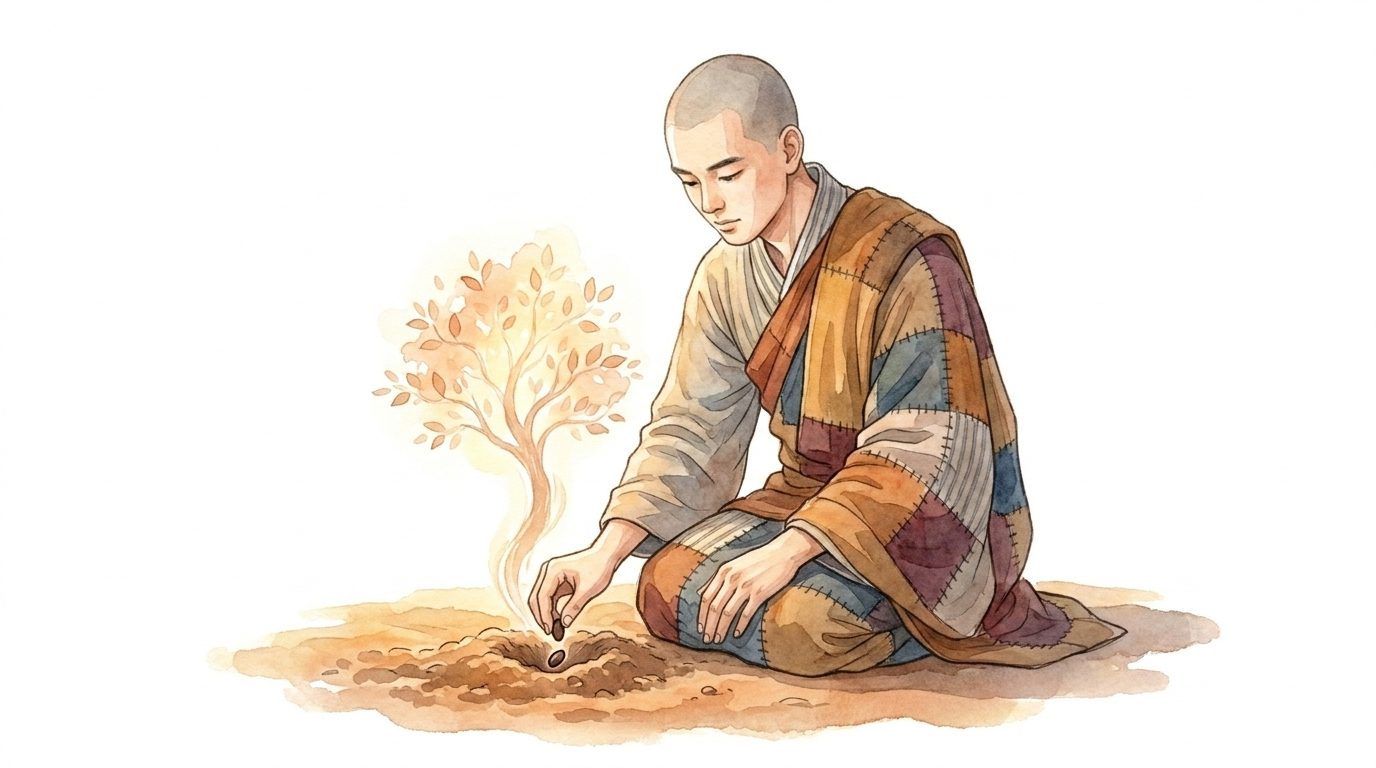
Kamma in Pali (the Sanskrit form is karma) comes from the root kar — to do, to act. The Buddha gave a precise definition in the Aṅguttara Nikāya:
“It is intention, monks, that I call karma. Having intended, one acts through body, speech, and mind.”
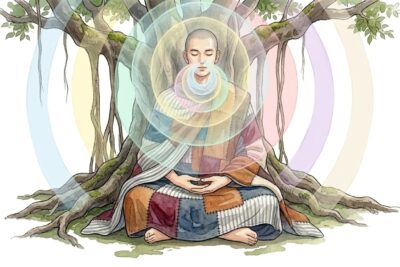
This is the central point: karma is not the action itself but the intention behind the action. An accidental harm is different from a deliberate one. What drives the action — what quality of mind gives rise to it — is what creates karma.
Wholesome intentions (generosity, compassion, wisdom) create wholesome karma. Unwholesome intentions (greed, hatred, delusion) create unwholesome karma.
What Karma Is Not
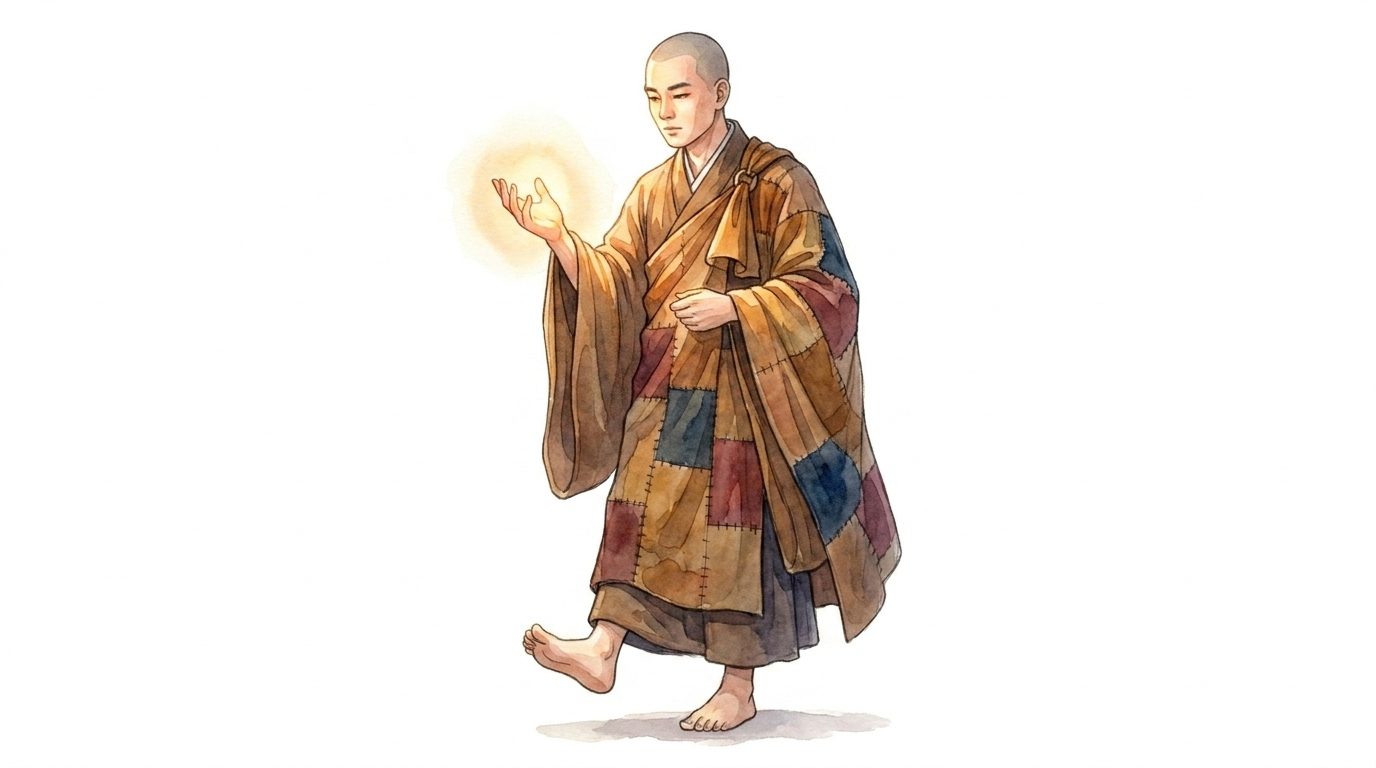
Karma is not fate. The Buddha explicitly rejected determinism — the idea that everything is predetermined. In the Tittha Sutta of the Aṅguttara Nikāya, he named determinism as one of three wrong views that destroy the basis for ethical action. If everything is already decided, there is no point in choosing well. But karma depends entirely on choices — which means choices genuinely matter.
Karma is not the only cause of what happens to us. This is an important nuance. The Buddha taught that illness can come from physical causes, from climate, from other people’s actions, or from karma — not every difficulty is “karmic punishment.” Reducing all suffering to personal karma can lead to blaming victims for their own misfortune.
Karma does not primarily mean “what goes around comes around” in a simple transactional sense. The relationship between action and result is complex, unfolding across many conditions and timeframes — not a mechanical vending machine.
Three Types of Karma
The Buddha described karma by its door of expression:
Bodily karma (kāya-kamma) — intentional actions of the body: helping, harming, offering, stealing.
Verbal karma (vacī-kamma) — intentional speech: honest words or deceptive ones, kind speech or harsh speech.
Mental karma (mano-kamma) — intentional thoughts: the quality of mind we deliberately cultivate — compassion, resentment, wisdom, delusion.
Of these three, mental karma is most fundamental — because body and speech follow the mind. A mind habituated to compassion will eventually express compassion in action and speech. A mind habituated to resentment will find expression for that too.
The Good News About Karma
The most liberating aspect of the Buddha’s teaching on karma is this: because the cause of karma is intention, and intention is in the present moment, the future is genuinely open.
Whatever karma has been created in the past — through ignorance, through unskillful choices, through the accumulated weight of old habits — none of it determines the present moment of choice. Right now, in this moment, intention can be compassionate. Right now, a new karmic direction can begin.
This is not optimistic wishful thinking — it is the logical consequence of the Buddha’s teaching. If karma is created by intention, and intention is available to change, then the trajectory of one’s life is not fixed. Practice is meaningful precisely because this is true.
Thay Minh Tue and Karma
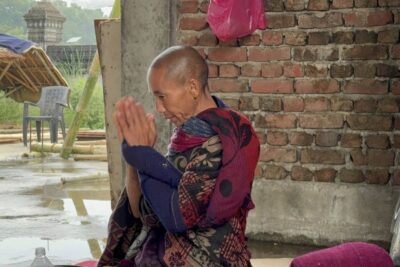
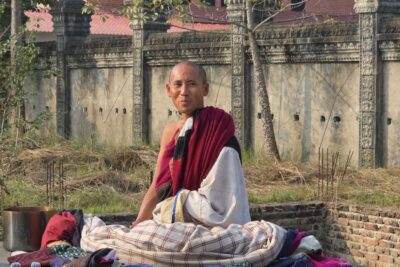
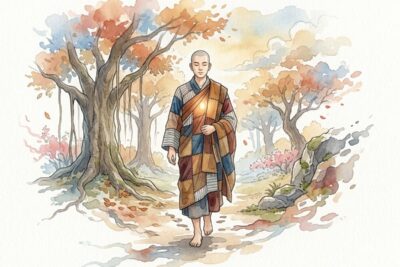
Thay Minh Tue’s entire journey can be understood as the deliberate creation of wholesome karma — each action chosen with clear intention, each day an accumulation of what the Buddha called puñña (merit, wholesome energy).
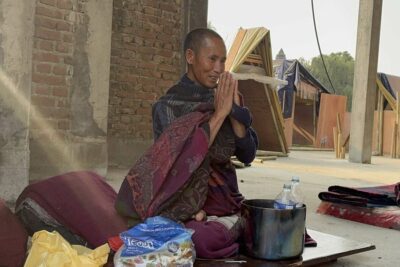
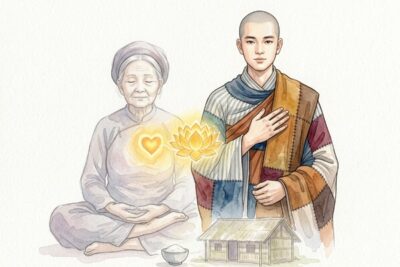
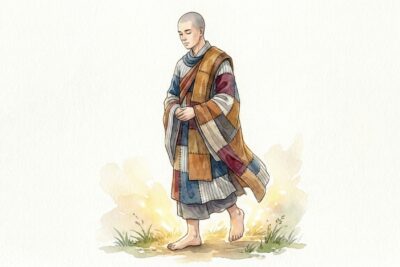
Every act of receiving alms without preference or discrimination — wholesome karma of equanimity. Every interaction with those who come to ask questions, answered honestly from the scriptures — wholesome karma of truthful speech. Every step taken without taking money, without accepting possessions beyond what is needed — wholesome karma of non-grasping.
But perhaps more significant is the transformation of past patterns. Thay’s choice to leave an ordinary life — work, family, the accumulations of a conventional existence — and step onto a path of complete simplicity, was itself an act of intentional redirection. Karma from the past does not determine where the road leads. The intention of each step forward does.
What he embodies is not the karma of a “special person” born with advantages. It is the karma being actively created, deliberately, one day at a time, by someone who understood what the Buddha meant: intention is karma, and intention is always available in the present moment.
Practicing with Karma in Daily Life
Understanding karma does not require a radical life change. It requires a shift in attention: from what has already happened to what is being chosen right now.
Before speaking: Is this word going to create connection or division? Clarity or confusion?
Before acting: Is this action coming from generosity or grasping? From care or from fear?
In the mind: What mental habits am I reinforcing right now through the quality of attention I am giving?
These small pauses — bringing intention into awareness before acting — are the most direct way to work with karma as the Buddha taught it. Not as a cosmic ledger to worry about, but as the living recognition that the quality of this moment’s choice shapes what follows.