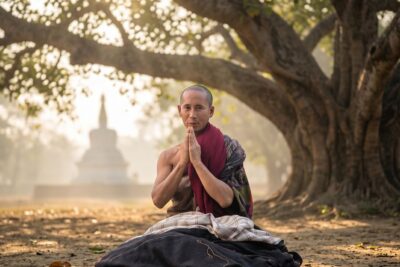

Buddhist practitioners often listen to chants and devotional songs to bring peace of mind. But under the Theravada vinaya, does this violate the precept against entertainment? In Nepal on February 19, 2026, Master Minh Tue drew a clear distinction: not all Buddhist-themed music is beneficial, and intention is what ultimately matters.
Buddhist disciple asks: Are playing music, singing, and dancing to songs or mantras related to Buddhism included in the prohibited precepts, Master? (February 19, 2026 – Nepal)
Master Minh Tue answers:
The people who make them are not attached, but since we cannot let go yet, we become attached and infatuated. Arahants are not attached, so it doesn’t matter, but since we haven’t escaped yet, we must isolate ourselves to practice.
It is like an opium addict; at first, they must stay far away, but once rehabilitated, they see it can no longer harm them. If listening to mantras or songs of praise brings faith and peace, then listening is normal. But if listening gives rise to greed, anger, or delusion, then you shouldn’t.
In worldly life, you get used to singing, so when your heart is sad, your mouth naturally sings that song; it is deeply ingrained. You must isolate yourself to destroy that thought; because it relates to greed and desire, you must guard and protect yourself.
* Master Minh Tue always gives brief and concise answers suitable for the listener in each circumstance. Below is a deeper explanation and analysis so that those who wish to learn can thoroughly grasp the Master’s teachings.
The fragile boundary between “Faith” and “Infatuation”
Many people justify that listening to Buddhist music is to purify their soul. The Master clearly distinguishes the purpose of listening: “If listening brings faith and peace, then listening is normal. But if listening gives rise to greed… then you shouldn’t.”
What is greed here? It is immersing oneself in the soothing melody, becoming sentimental, shedding tears because worldly emotions are awakened by the music, rather than by the awakening of wisdom. When you are so “addicted” to a Buddhist song that a day without it makes you restless, or you listen just to please your ears, you have fallen into a state of Infatuation. Music then inadvertently becomes a rope binding your consciousness instead of liberating it.
A lesson on “Guarding the sense doors”
The saying “In worldly life, you get used to singing, so when your heart is sad, your mouth naturally sings that song… You must isolate yourself to destroy that thought” reminds us of the practice of Guarding the six sense doors (Eye, Ear, Nose, Tongue, Body, Mind). When our ears are overly exposed to music (no matter what kind), the mind records it and forms a habit (habitual tendency). When meditating or needing tranquility, those melodies immediately echo in the head, breaking concentration.
The Master uses the example of an “opium addict” perfectly. An Arahant listening to music is like listening to the wind blow; the mind does not waver slightly. But we are people full of worldly habitual tendencies (rehabilitating from desires), if we do not actively “isolate” ourselves from emotional stimuli, we will easily be swept away.
The truth lies in the Mind, not in the scenery
Finally, whether an action breaks the precepts or not does not just lie in its outward form (what the song is called, who it belongs to), but in how that action affects your mind. If it helps reduce greed, anger, and delusion, do it. If it nurtures sentimental emotions and attachment, boldly let it go and isolate yourself to protect the purity of your soul.
What type of music do you listen to during practice? Does it help or hinder your concentration?
Leave a comment below to share your perspective and learn from one another.