Buddhism is sometimes presented as a path focused primarily on the individual — sitting quietly, observing the breath, understanding the nature of the self. While that is not wrong, it is incomplete.
The Buddha also taught a set of practices explicitly directed outward — toward all beings, without exception. These are the Four Brahmaviharas (catasso brahmavihārā): four radiant states of mind that the Buddha called the “divine abiding places” — the highest qualities a human heart can inhabit.
They are: Mettā (loving-kindness), Karuṇā (compassion), Muditā (sympathetic joy), and Upekkhā (equanimity).
What Are the Brahmaviharas?
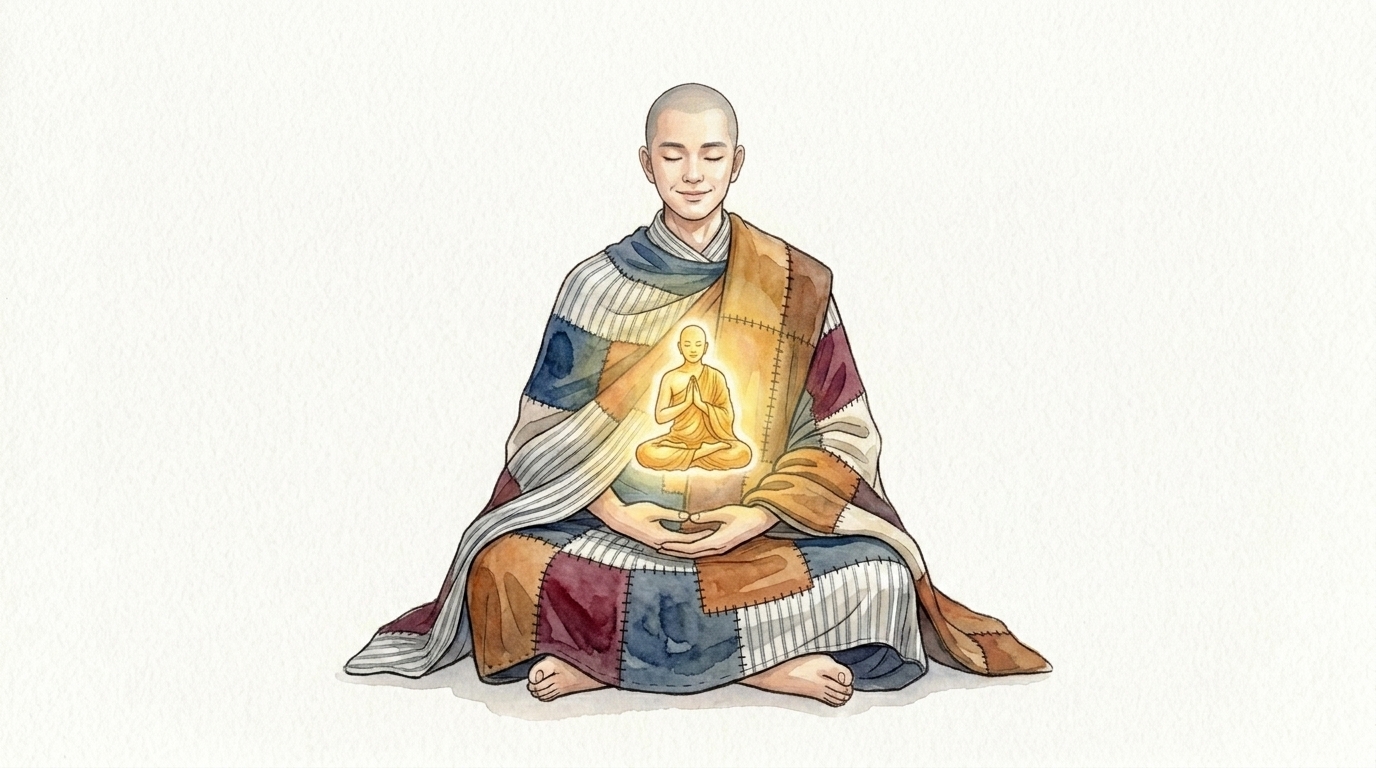
Brahmavihāra in Pali means “divine abiding” or “abode of the sublime.” These are not emotions in the ordinary sense — they are cultivated mental qualities, developed deliberately through practice until they become the natural orientation of the heart.
The Buddha described them as “immeasurable” (appamāṇa) because they are meant to extend without limit — to all beings in all directions, with no boundaries, no conditions, no exceptions.
Mettā – Loving-Kindness

Mettā is often translated as “loving-kindness” or “benevolence” — the sincere wish for all beings to be happy and free from suffering.
This is not the love of attraction, possession, or preferential attachment. It is non-preferential goodwill — a warmth that extends equally to strangers, to people we find difficult, and even to those who have harmed us.
The traditional Mettā practice begins with oneself — “May I be happy. May I be free from suffering.” — and then expands outward: to loved ones, to neutral people, to those we find difficult, and finally to all beings everywhere.
Why start with oneself? Because genuine care for others cannot be separated from genuine acceptance of oneself. Someone who is deeply harsh toward themselves will have limits on the love they can genuinely extend. Mettā toward oneself is not self-indulgence — it is the necessary foundation.
The near enemy and far enemy of Mettā
The Buddha described a near enemy and far enemy for each Brahmavihāra — the states that most easily corrupt or masquerade as the real thing.
The far enemy of Mettā is hatred — obvious and easily recognized.
The near enemy is sentimental attachment — the possessive love that says “I love you, therefore you should be the way I want you to be.” This looks like love but is actually a form of craving. Genuine Mettā has no conditions attached.
Karuṇā – Compassion
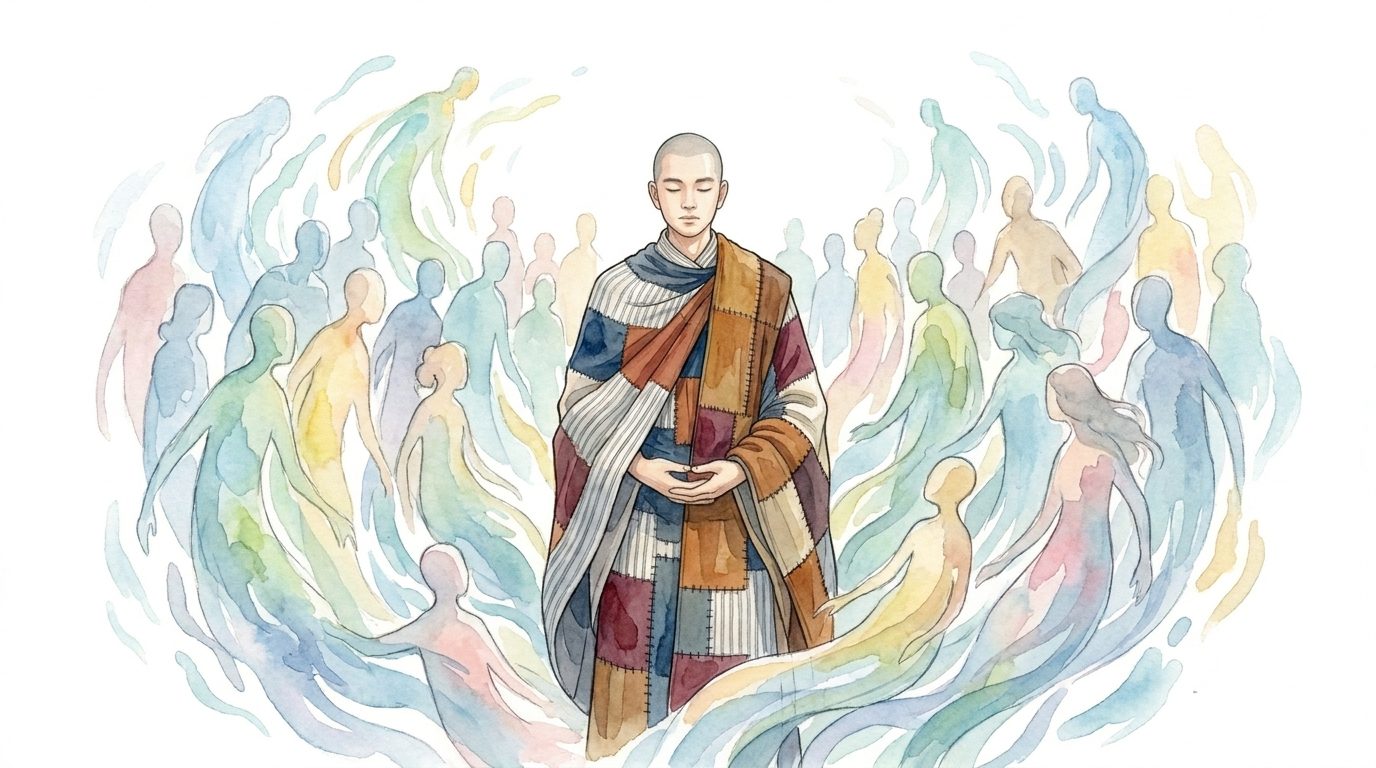
Karuṇā is the wish for all beings to be free from suffering — and the movement of the heart toward the suffering of others.
Compassion is not pity. Pity looks down — it implies a distance between oneself and the one who suffers, a sense of “how unfortunate they are, unlike me.” Compassion stands at the same level — it says “I recognize this suffering because suffering is part of what it is to be human.”
Karuṇā is also not absorption into another’s pain to the point of losing one’s own stability. The Buddha called this the near enemy of compassion — grief or distress (domanassa). When we become so overwhelmed by another’s suffering that we are destabilized, we lose the capacity to actually help. Genuine compassion requires the practitioner to remain grounded.
Equanimity (the fourth Brahmavihāra) is what allows compassion to remain open without being destabilized — to witness suffering clearly without collapsing into it.
Muditā – Sympathetic Joy
Muditā is the capacity to feel genuine happiness when others are happy or successful — without competition, without envy, without the subtle thought “but what about me?”
This is perhaps the most difficult of the four to cultivate in the modern world. We are conditioned by comparison — social media makes the successes of others constantly visible, and the default reaction of a comparison-driven mind is not joy but a diminished sense of one’s own standing.
Muditā is the antidote. When practiced genuinely, someone else’s happiness becomes a source of one’s own happiness — not diminishing but expanding it. The heart that can feel joy at another’s good fortune is a heart that has stepped out of the zero-sum frame of ego.
The near enemy of Muditā is excitement or manic enthusiasm — the kind of false joy that is really about stimulation rather than genuine happiness for another.
The far enemy is envy — the inability to be happy when another does well.
Upekkhā – Equanimity
Upekkhā is often translated as equanimity, but the Pali carries a richer meaning: a mind that is balanced, unbiased, undisturbed — not pulled high by the favorable or low by the unfavorable.
Equanimity is not indifference. This is the most important distinction to make. Indifference is disconnection — a closing of the heart to avoid being affected. Equanimity is full presence without being swept away. The heart remains open and caring, but is not destabilized by the waves of pleasant and unpleasant.
In the context of the four Brahmaviharas, equanimity is what allows the other three to function without burning out. Loving-kindness without equanimity becomes possessive. Compassion without equanimity becomes overwhelm. Sympathetic joy without equanimity becomes manic enthusiasm. Upekkhā is the steadying ground under all of them.
The near enemy of Upekkhā is indifference — cold detachment that looks like peace but is actually a kind of withdrawal.
The far enemy is passionate reactivity — being blown about by every shift in circumstance.
Thay Minh Tue and the Four Brahmaviharas
The four Brahmaviharas are visible in Thay Minh Tue’s conduct in ways that are observable without any interpretation being projected onto him.
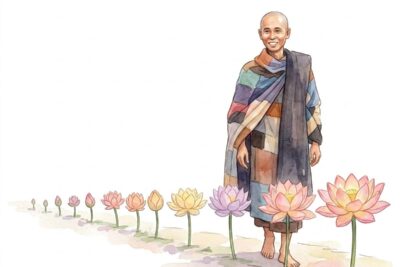
Mettā — He treats everyone who approaches him with the same quality of warmth and presence — whether they are a village elder, a child, a skeptic, or a devotee. There is no evidence of favoritism or of treating some people as more deserving of his attention than others. That equal quality of regard is a practical expression of Mettā.
Karuṇā — Those who have come to him in distress — weeping, carrying heavy personal burdens — report that he listened, was simply present, and did not turn them away. His availability to suffering, without urgency to fix or explain it away, is the face of genuine Karuṇā.
Muditā — When people around him experience joy — receiving news, sharing a meal, celebrating something — observers report that Thay’s face reflects genuine happiness for them. He does not maintain a studied blankness that some associate with serious practitioners. Joy in others appears to land naturally.
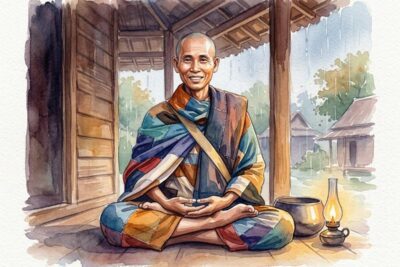
Upekkhā — The most visible of the four in his case. Before crowds of tens of thousands or walking alone; receiving extravagant praise or pointed criticism; in the temples of Nepal or on a rainy roadside in Vietnam — the quality of his presence does not appear to change. This steadiness, maintained across radically different circumstances over many years, is what Upekkhā looks like when practiced deeply.
Cultivating the Brahmaviharas in Daily Life
The four divine abiding places are not states reserved for meditation retreats. They can be grown in the texture of ordinary life.
Mettā: Try wishing one person well silently each day — someone you might not normally think to extend warmth toward. A stranger on the street, a colleague who irritates you. “May this person be well. May they be free from suffering.” Just the quiet wish.
Karuṇā: The next time you see or hear of someone suffering — in news, in conversation, in person — resist the impulse to immediately judge, fix, or explain. Simply pause and let the fact of their suffering register without deflection.
Muditā: Notice the next time someone around you succeeds at something. Observe your first internal reaction. If it is not joy, that is not a cause for self-criticism — it is useful information about where Muditā practice is needed.
Upekkhā: The next time a day does not go as planned, notice the quality of the inner response. Is the mind thrown significantly off? Practice returning to steadiness not by pushing the disruption away, but by recognizing: “This has changed. I can remain.”
Each of these small practices, sustained over time, begins to shift the default orientation of the heart — from reactive to responsive, from contracted to open.
Learn more: who is Thầy Minh Tuệ?Biography, the dhutanga practice and the walking pilgrimage.Read more →