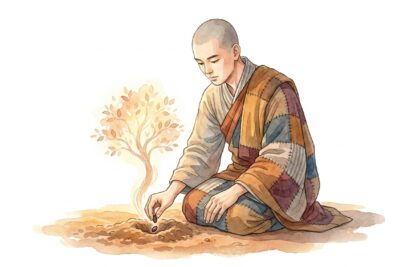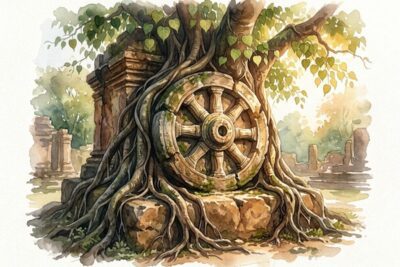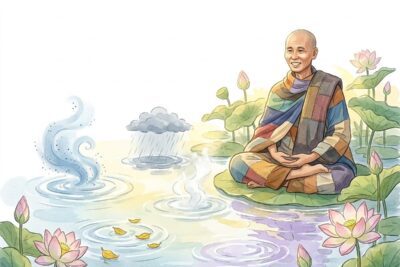
If the entire teaching of the Buddha had to be reduced to two words, many scholars would choose: let go.
The chain of suffering the Buddha described in Dependent Origination culminates in clinging (upādāna) — the grasping that turns craving into the architecture of a life. And the path out of that chain passes through the same point in reverse: releasing what has been held, unclenching what has been gripped.
But “letting go” is perhaps the most misunderstood phrase in popular Buddhism. Many people hear it as indifference — don’t care about anything, don’t invest in anyone, float through life without being moved. That is not what the Buddha taught. Understanding the difference is essential.
What Upādāna Actually Is
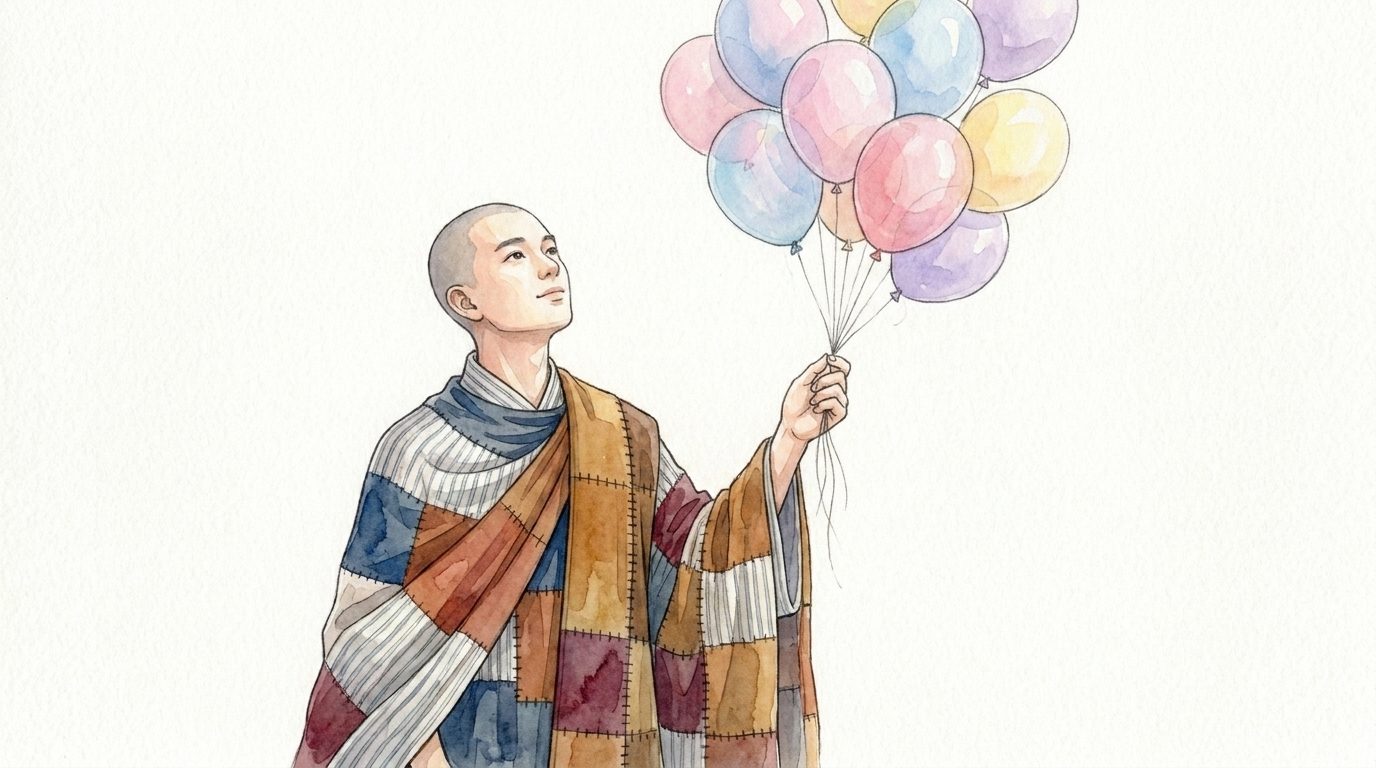
Upādāna in Pali means clinging, grasping, or attachment — the mental act of holding on to something as if it were permanent, as if it belonged to a solid and continuous “self,” as if losing it would mean losing everything.
The Buddha identified four types of clinging (upādāna):
Sensual clinging (kāmupādāna) — clinging to sensory pleasure: to tastes, sights, sounds, and the ongoing pursuit of pleasant experiences. Not experiencing pleasure, but being unable to release the requirement for it.
View clinging (diṭṭhupādāna) — clinging to beliefs and perspectives as absolute, unquestionable truth. The rigidity that cannot entertain being wrong, that defends its worldview as identity.
Rule and ritual clinging (sīlabbatupādāna) — clinging to forms, procedures, and rituals as inherently purifying, rather than as tools in service of a larger purpose. The letter without the spirit.
Self-doctrine clinging (attavādupādāna) — the deepest and most pervasive: clinging to a fixed, permanent, independent self. The root assumption that there is a “me” that must be protected, defended, and satisfied.
Letting Go Is Not Indifference
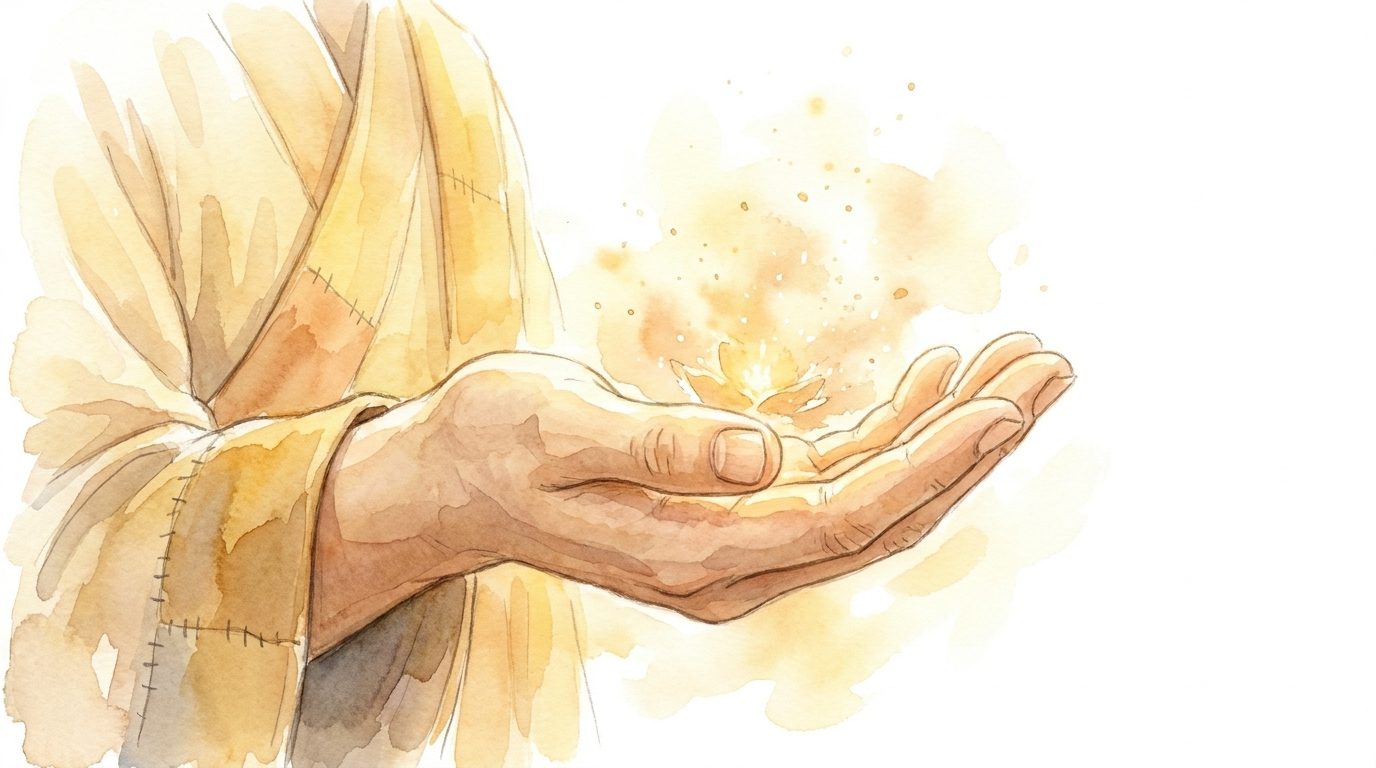
This is the point that most needs clarification.
Letting go in Buddhist practice is not becoming someone who doesn’t care — who feels nothing, invests in nothing, loves no one. That would be a kind of emotional death, not liberation.
The distinction is between experience and clinging to experience.
You can love someone deeply — the love is real, the connection is real, the joy is real. Letting go means not requiring that person to be a certain way, not demanding the relationship last forever in the same form, not collapsing when circumstances change. The love is present; the death-grip is absent.
You can work passionately toward a goal — the effort is genuine, the care is genuine. Letting go means not defining your worth by the outcome, not being destroyed if the result differs from the plan.
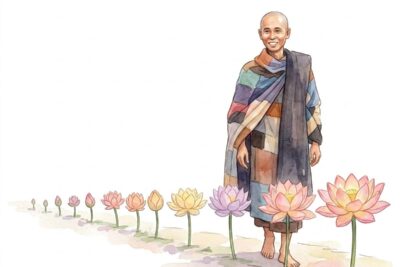
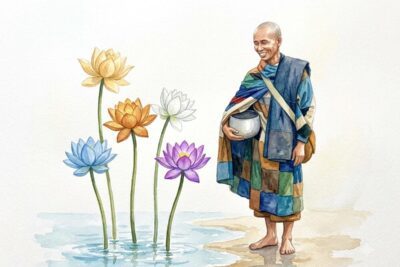
The Buddha drew the distinction with a classic image: the lotus flower grows in water, but its petals are not wet. The practitioner lives fully in the world — in relationships, work, joy, grief — but the water of circumstance does not soak in and drag the heart under.
Four Layers of Letting Go
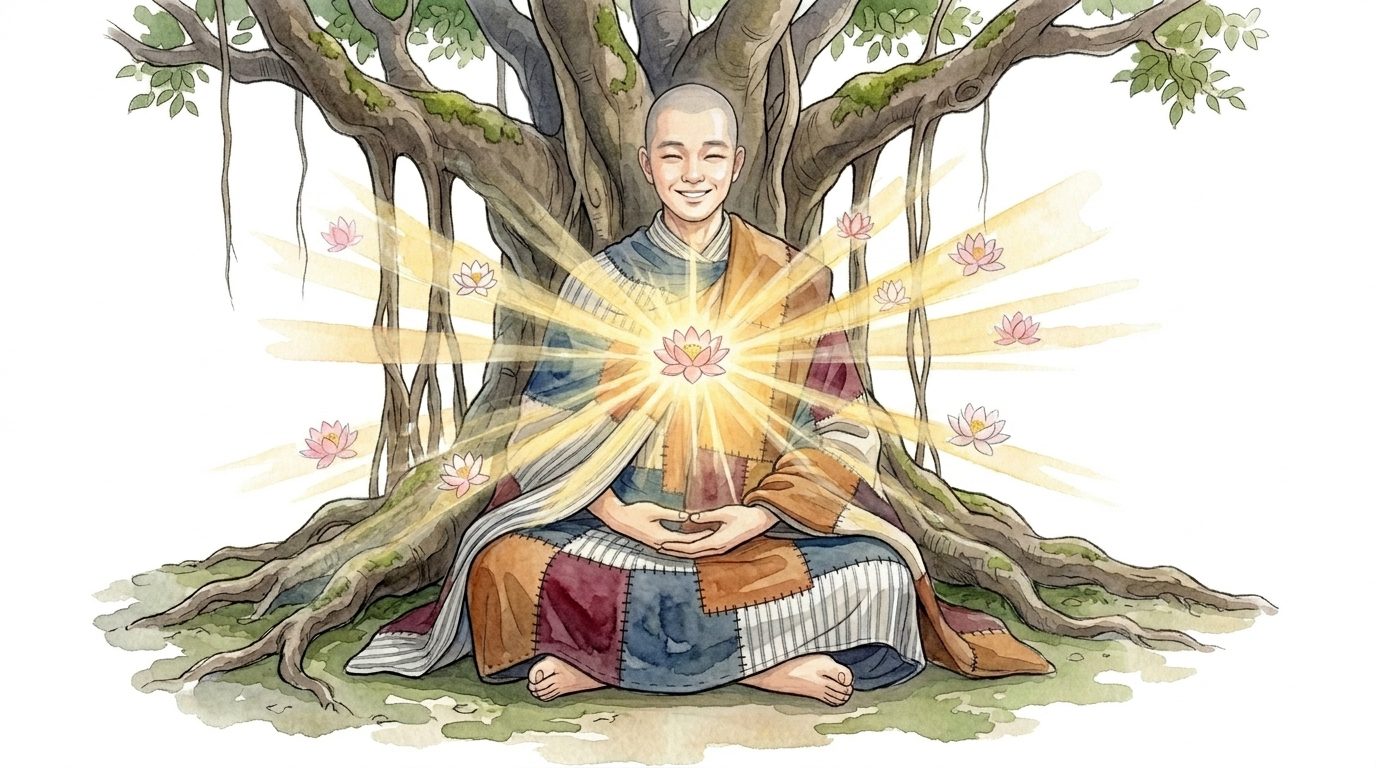
Letting go operates at progressively deeper levels:
Material things — the outermost layer: possessions, money, the accumulation of objects. Beginning to notice what is actually necessary and what is merely the habit of wanting more.
Reputation and recognition — the next layer: the need to be seen favorably, to be praised, to be remembered well. Harder than releasing objects, because the self feels more at stake.
Relationships — a deeper layer still: releasing the requirement that people be different from what they are, that relationships conform to what we want them to be. Loving freely rather than holding on possessively.
The self-concept — the deepest layer: the clinging to a fixed narrative about who “I” am, to the requirement that the self be consistent, successful, admirable. This is where letting go and non-self (anattā) fully converge.
Thay Minh Tue and Letting Go
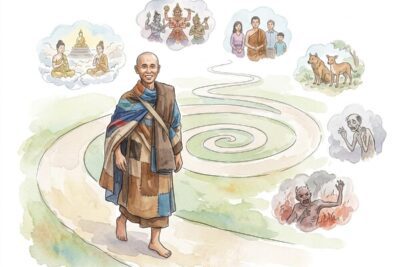
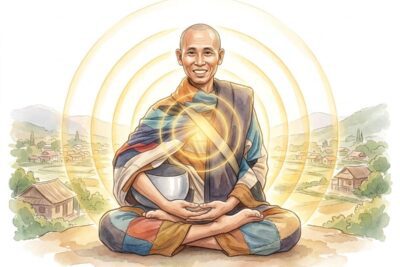
Thay Minh Tue’s life is a living demonstration of letting go practiced across all four layers.
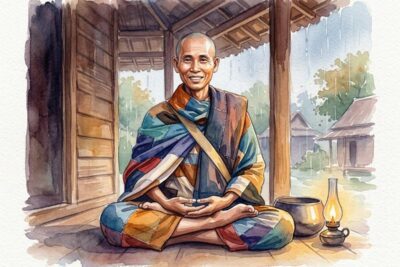
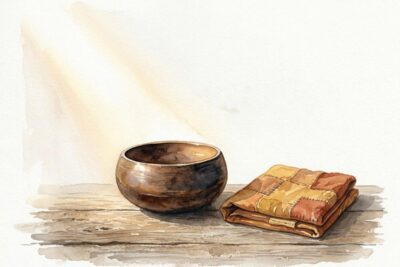
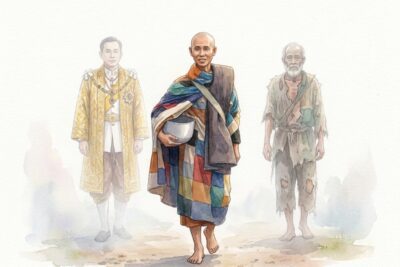
Material things: He owns nothing beyond what he carries — three patchwork robes sewn from discarded fabric and a plain aluminum pot. When people try to give him money, he declines. When people leave additional offerings he has no use for, he does not keep them. This is not poverty — it is chosen simplicity. The difference is that choice.
Reputation: When praised extravagantly, he redirects attention to the scripture rather than to himself. When criticized or doubted, he does not defend his image or seek to restore his reputation. Whatever people conclude, he continues walking.
Relationships: He has left the structure of conventional relationships — family, close ties, the network of mutual obligation that shapes ordinary social life. This is not coldness. It is the specific letting-go that the monastic path requires, freeing attention for the practice.
Self-concept: He never claims any stage of attainment. He never builds a teaching lineage around himself. He consistently says: “I am studying according to what the Buddha taught.” A practitioner who had not let go of the self-concept at some depth would find those words very difficult to mean.
Letting Go in Ordinary Life
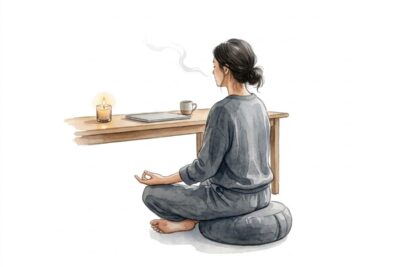
The liberating dimension of this teaching is that letting go does not require extraordinary circumstances. It can be practiced in the ordinary texture of each day.
With frustration: When something doesn’t go as planned, notice the tightening — the resistance to “it shouldn’t be this way.” Can the resistance be released, even slightly, without requiring the situation to change first?
With praise: When someone says something complimentary, notice if there is a clutching — wanting more, hoping it continues. Can the pleasant moment simply be received and allowed to pass?
With opinions: When someone disagrees with a view you hold, notice if the disagreement is experienced as a threat. Is the view something you are holding, or something you are?
With plans: When you have organized your idea of how the day or the year should unfold, practice holding that plan lightly — invested in the effort, not attached to the exact result.
None of these require becoming someone who doesn’t care. They require becoming someone who can care fully — and still release.
That is the letting-go the Buddha taught.
Learn more: who is Thầy Minh Tuệ?Biography, the dhutanga practice and the walking pilgrimage.Read more →