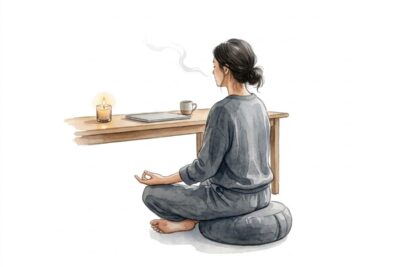
Try sitting upright on the floor for thirty minutes without leaning against anything — no chair, no wall, no lying down.
After thirty minutes, most people feel their back aching, their legs tingling, and an almost irresistible pull toward the floor.
Now imagine that is how you sleep — every night, for years.
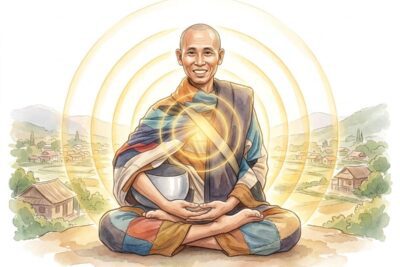
That is Thay Minh Tue’s Nesajjika practice.
What Is Nesajjika?
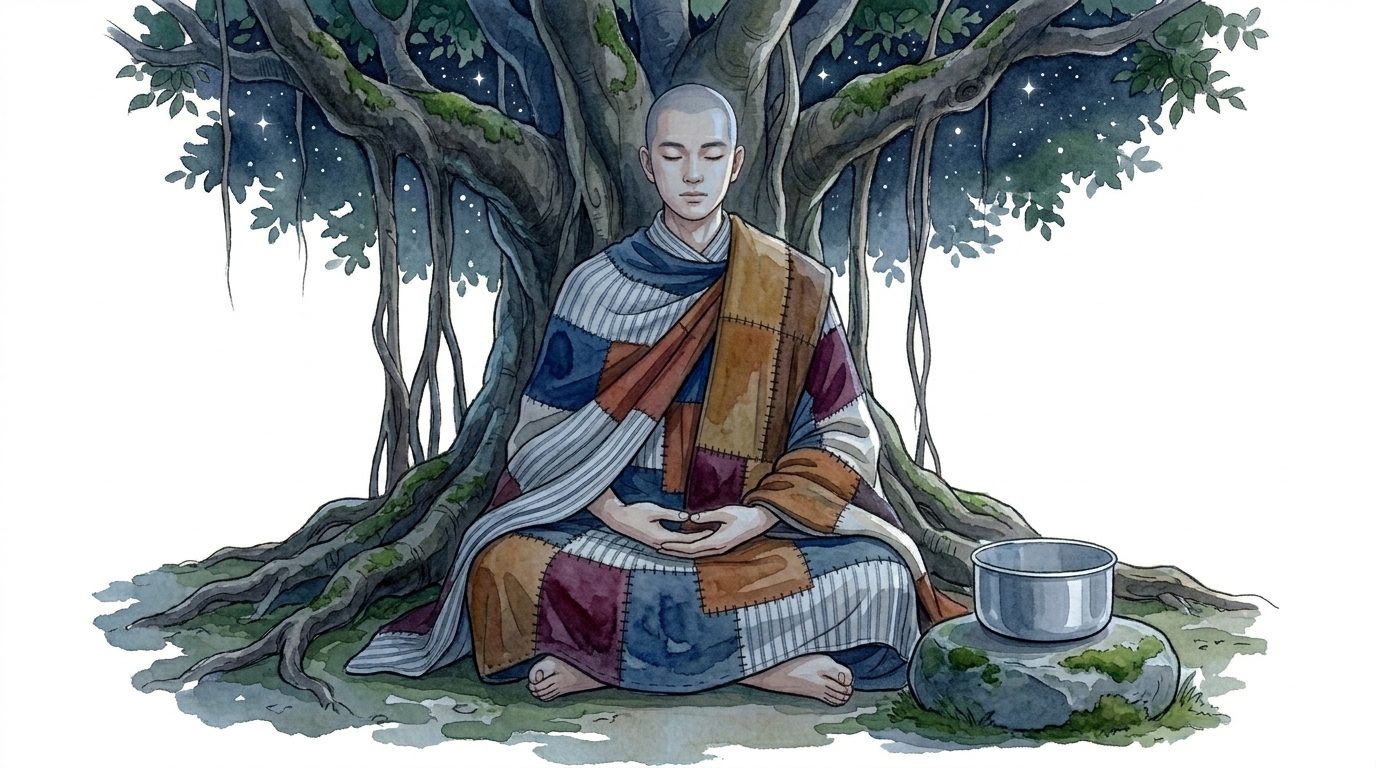
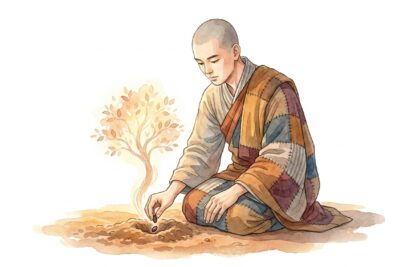
Nesajjika in Pali means “the non-lying practice” — the practitioner commits never to lie down in any circumstance: not to sleep, not to rest, not when ill (except in cases of absolute medical incapacity).
In the system of 13 Dhutanga practices recorded in the Theravāda Vinaya, Nesajjika is the thirteenth and final — considered the most stringent and demanding.
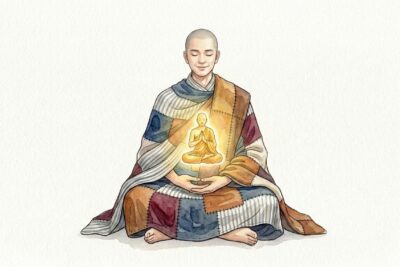
A practitioner of Nesajjika sleeps in one of two postures: full cross-legged sitting (both legs folded, back straight) or lightly leaning against a wall or tree trunk — but never lying fully down. When drowsiness comes, they sit in meditation until they drift off — and when they wake, they are still sitting.
Why Does Buddhism Teach This Practice?
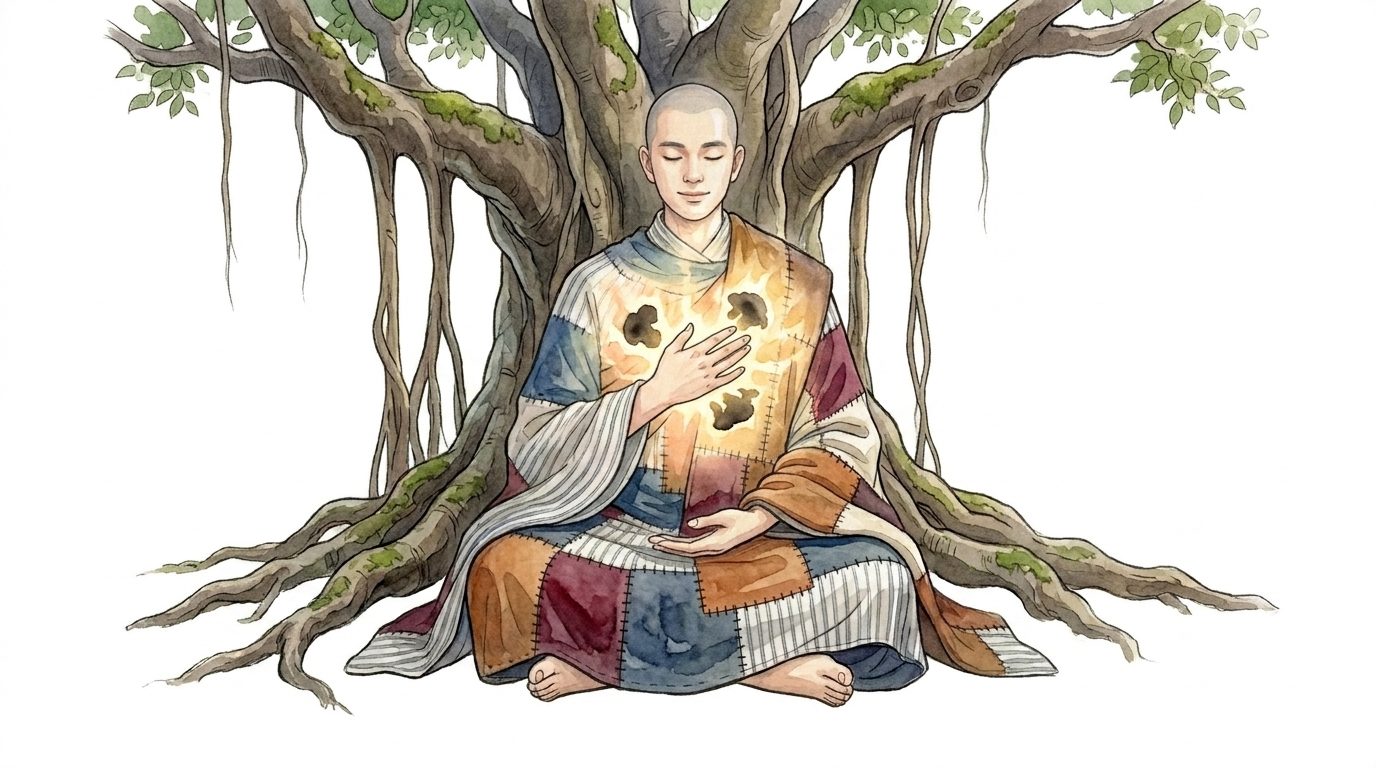
Nesajjika is not purposeless body-punishment. In Theravāda scripture, the Buddha explains its purpose clearly:
Counteracting torpor and drowsiness — thīna-middha (sloth and torpor) is one of the five hindrances — the five greatest obstacles to meditation. Someone who sleeps lying down in full comfort easily falls into heavy sleep, struggles to wake at the right time, and finds sustained wakefulness difficult. Sitting creates a natural “alarm” — when the body begins to tip over from sleep, the practitioner naturally jolts awake.
Developing energy and effort — viriya (effort, diligence) is one of the seven factors of awakening. Someone who chooses to sleep sitting rather than lying down is continuously training the will not to choose the easier, more comfortable option. This, over time, builds a quality of mental energy quite different from ordinary life.
Reducing attachment to bodily comfort — When lying down completely, the body passes through the state closest to death. Many Theravāda meditation teachers describe that people who sleep extensively in a lying position tend to develop deeper attachment to physical comfort — which becomes an obstacle to deep meditation.
Meditation Masters Who Practiced Nesajjika
Nesajjika is not merely theory in ancient texts — many great teachers in the Theravāda tradition have practiced and documented it.
Ajahn Mun Bhuridatta (1870–1949) — the founder of the Thai Forest Tradition — is recorded as having practiced Nesajjika for many years during solitary retreat deep in the forests of northern Thailand and Laos. His students describe him as sleeping very little, primarily in a sitting posture, and as transmitting this as a core part of the Dhutanga practice he passed down.
Ajahn Chah (1918–1992) — one of the most influential Theravāda teachers of the 20th century — also practiced multiple Dhutanga practices during his forest years, including Nesajjika during intensive retreat periods.
The Tudong tradition in Thailand and Myanmar continues to this day with monks who maintain sitting sleep as part of extended forest walking journeys.
The Physical Effects – A Scientific Perspective
The natural question when hearing about sleeping sitting up: “Is that harmful to health?”
Sleep research shows that a sitting posture does not prevent the completion of sleep cycles — including the REM sleep necessary for brain health. In fact, before the modern invention of beds, humans slept in a wider variety of postures, not necessarily lying flat.
That said, prolonged sitting sleep has physical challenges:
- The spine and back muscles bear different loading when sitting versus lying
- Circulation in the lower limbs requires more effort in a seated position
- The adaptation period can last from several months to a full year
Meditation teachers who have sustained this practice long-term typically describe that after the initial difficult period, the body adapts, and the quality of rest in a sitting posture becomes sufficient to maintain both health and clarity. Many of them have lived to old age in good health.
Thay Minh Tue – Nesajjika in Practice
Thay Minh Tue began training in Nesajjika years before 2021, going through many rounds of effort and relapse before the practice took hold. By 2021, he stopped lying down entirely — information he has confirmed in multiple conversations with those who have asked.
He continues to train and progress. There are times when he still needs a point of support — leaning lightly against a tree or wall — and he is working toward sitting upright through the night with no support at all.
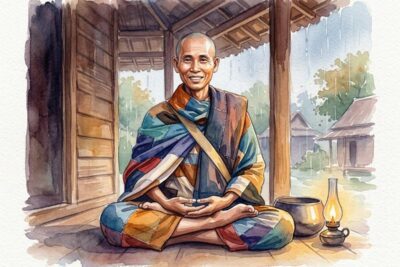
When resting at night, he sits in that posture wherever he is. No mattress, no special blanket, no added comfort of any kind.
This is Nesajjika practiced in real field conditions — not in a controlled monastery setting, but on a walking journey through every type of weather and terrain.
Nesajjika as evidence of genuine concentration
Those who have walked alongside Thay describe him as sleeping little yet remaining consistently alert and clear, walking steadily from early morning. No evidence of accumulated exhaustion or drowsiness dragging behind.
This says something about the depth of concentration developed: concentration is not only focus during sitting — it is the quality of a mind that remains wakeful even when the body rests in a way ordinary rest cannot achieve.
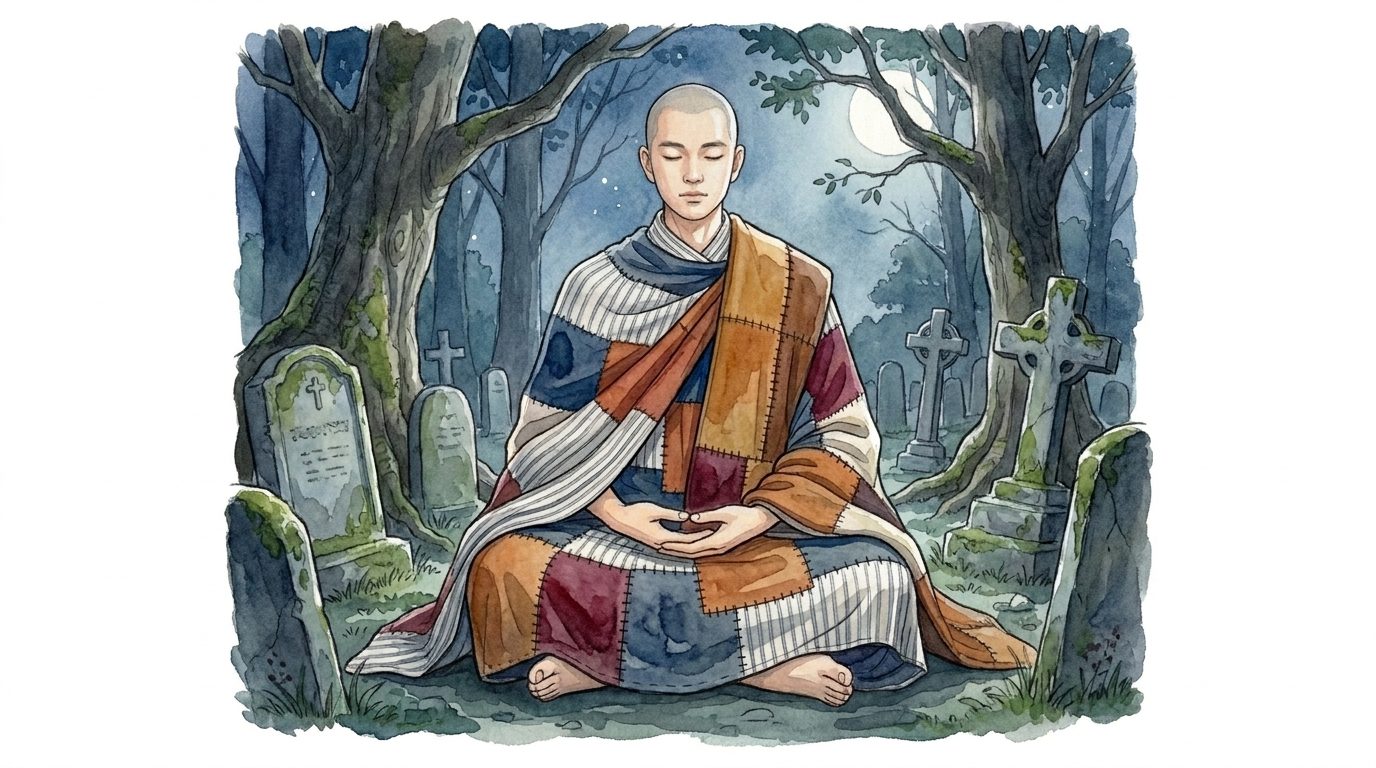
Sleeping in a cemetery — something Thay practiced for many years alone in Vietnam — combined with sleeping sitting up creates conditions in which most people would be unable to sleep even if they wanted to: darkness, silence, unfamiliarity, and the activation of deep primal fears. Yet Thay slept — calmly, without disturbance.
This is not courage in the ordinary sense. It is the result of concentration developed through many years of genuine practice — a mind no longer thrown by external circumstance, whatever that circumstance may be.
Nesajjika on the international journey
On his international journey since late 2024, the sleeping locations have shifted continuously — cemeteries, abandoned buildings, forest edges, doorstep overhangs, open courtyards — but Nesajjika remains constant regardless of place. This is one of the Dhutanga practices that requires no specific location or condition — only the body and the determination not to lie down.
The Lesson for Lay Practitioners
No one needs to sleep sitting up to learn something from this practice.
What Nesajjika teaches — at the level of principle — is something applicable more broadly: physical comfort can be relinquished a little further without losing what actually matters.
When we begin to notice, many of the things we assume are “necessary” for health and happiness turn out to be habit and expectation. A comfortable bed, air conditioning, thick mattresses — more comfortable, certainly, but not the actual condition of a peaceful mind.
The genuine peace — as Thay Minh Tue’s sleeping practice illustrates — does not come from circumstances. It comes from within.
Learn more: who is Thầy Minh Tuệ?Biography, the dhutanga practice and the walking pilgrimage.Read more →