No concept in Buddhism is more widely misunderstood than Nibbāna.
People speak of it as a mysterious realm in another dimension, where good people go after death. Or as “complete nothingness” — a kind of annihilation. Or as something only the Buddha and legendary saintly figures could attain, with no relevance to ordinary people.
All of those misunderstandings distort what the Buddha actually taught. And that matters — because when the destination is misunderstood, the entire path of practice gets misdirected.
What Is Nibbāna? The Definition in the Nikāyas
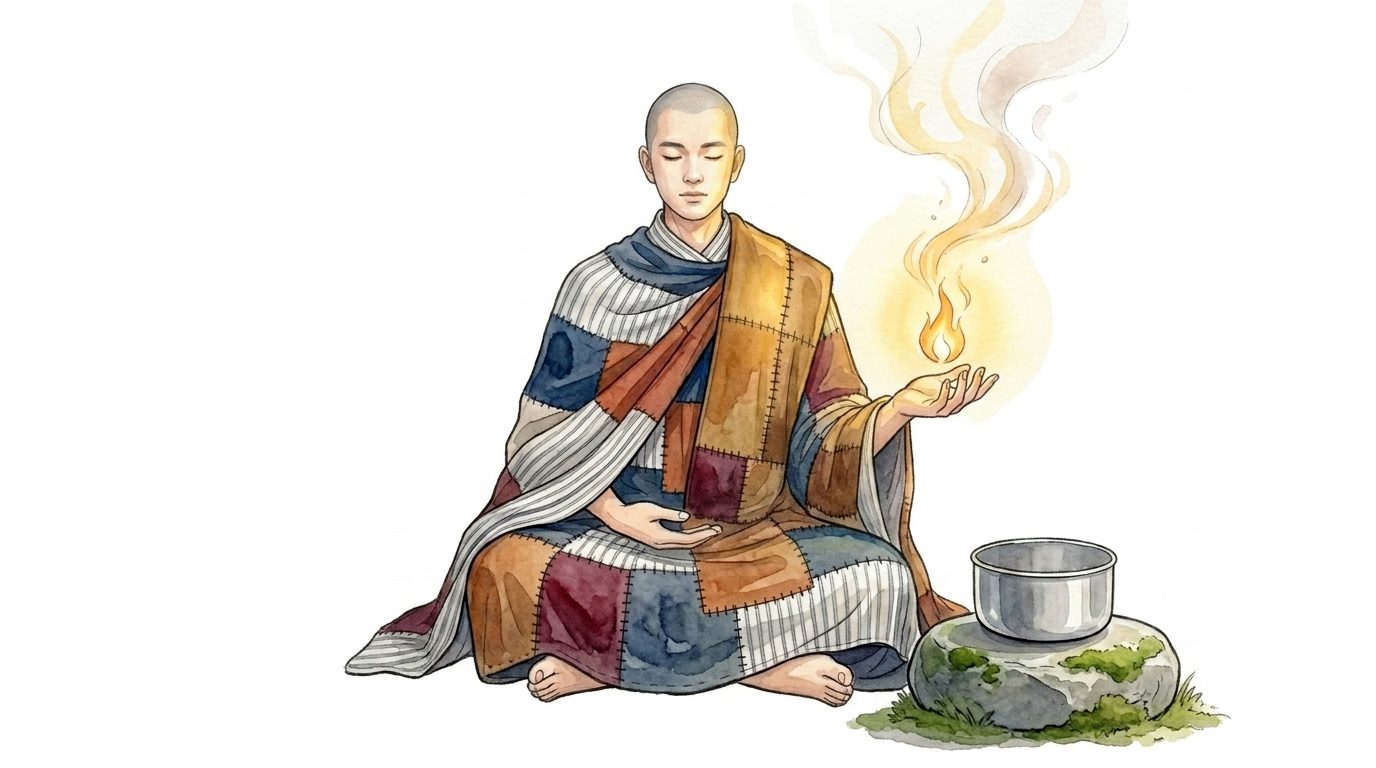
Nibbāna in Pali (or Nirvāṇa in Sanskrit) comes from the root meaning “the extinguishing of a flame” — like a fire going out when its fuel is exhausted.
What is the fire? The Buddha specifies clearly in multiple suttas:
“This, monks, is Nibbāna: the cessation of greed, the cessation of hatred, the cessation of delusion.”
(Saṃyutta Nikāya 38.1)
Not a heavenly realm. Not annihilation. Not death. Nibbāna is a state of mind no longer burning with greed, hatred, and delusion — and therefore no longer generating suffering.
When craving is present, we suffer from not getting what we want, or from fear of losing what we have. When aversion is present, we suffer because the world doesn’t conform to our wishes. When delusion is present, we suffer from not seeing reality clearly, chasing illusions. When these three fires are extinguished — the source of suffering is removed.
Two Kinds of Nibbāna
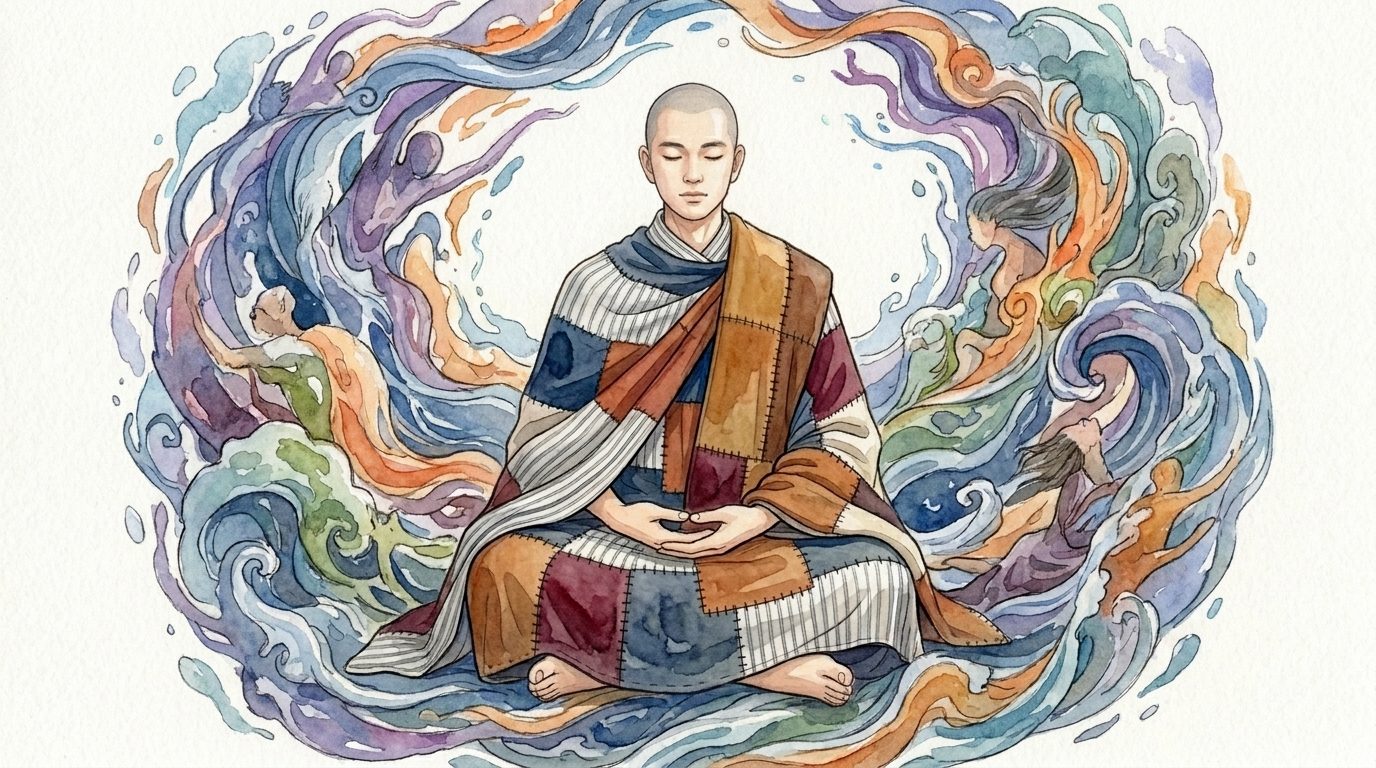
Theravāda distinguishes two kinds of Nibbāna in a very practical way:
Nibbāna with remainder (sa-upādisesa-nibbāna) — Nibbāna “with residue remaining” — is the state an Arahant (fully awakened person) experiences during their current lifetime. Greed, hatred, and delusion have completely ceased in the mind — but the physical body remains, still susceptible to pain, aging, and illness. After the Buddha’s awakening, he lived for another 45 years teaching the Dhamma — he still experienced back pain, still became ill in old age. But the mind no longer suffered because of these things.
Nibbāna without remainder (anupādisesa-nibbāna) — Nibbāna “without residue” — is the state after the Arahant’s physical body ceases at death. No further rebirth, no continuation of the cycle of becoming. The Buddha called this parinibbāna — the Great Nibbāna — what occurred when he passed away at Kushinagar.
This distinction matters because it answers the question: “Can Nibbāna be attained while still alive?” — The answer is yes. Nibbāna with remainder is something that can be experienced in this very life, with this very body, without waiting until death.
How Nibbāna Differs from “The Pure Land” or “Buddha-Realm”
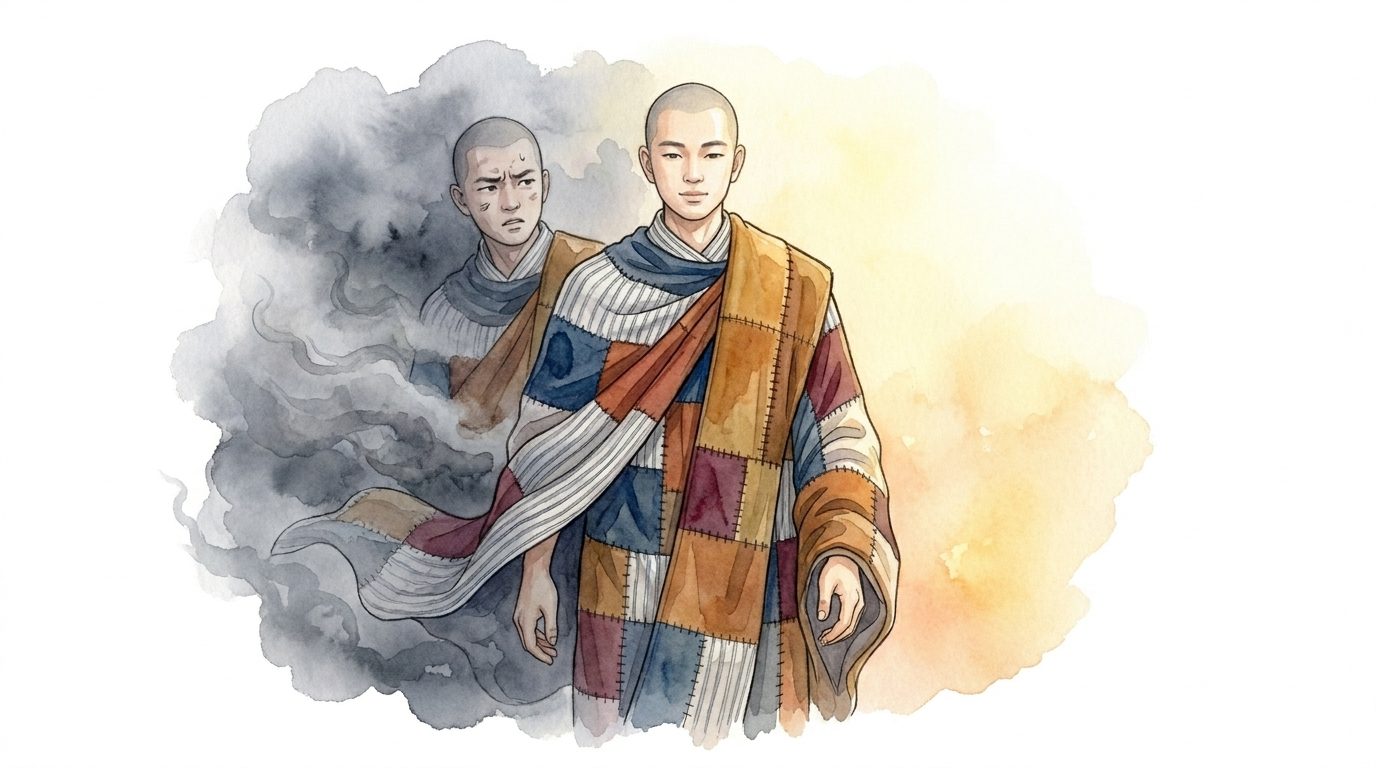
This is a point that needs to be clearly distinguished for Vietnamese readers, because these two concepts are often conflated in popular Buddhist culture.
The Western Pure Land (Sukhāvatī) or Amitābha’s Buddha-Realm is a concept belonging to Pure Land Buddhism — a school within Mahāyāna. According to this tradition, someone who recites Amitābha Buddha’s name with sincere heart will be received by Amitābha at death into the Pure Land — a blessed realm in which to continue practice.
Nibbāna in Theravāda Buddhism is entirely different: not a geographical realm “in the west,” not a place, not a post-death waiting state. This is a psychological transformation within this very life — the cessation of greed, hatred, and delusion.
No Buddha “receives” anyone into Nibbāna in the Nikāya sense. Nibbāna is reached through each person’s own practice — no one can “give” or “grant” Nibbāna to another, regardless of their power or attainment.
Is Nibbāna “Nothingness”?
Some people understand Nibbāna as complete annihilation — a kind of Buddhist nihilism: death is the end, nothing continues. But the Buddha also rejected this view.
When asked “after entering Nibbāna, does the Buddha still exist or not?”, he declined to answer — not because the question was too difficult, but because the question rests on a wrong framework. The concepts of “existing” and “not existing” as we understand them simply do not apply to that state.
The Buddha used an analogy: when a flame goes out, to ask “where did the fire go?” is a question with no meaningful answer, because “where did the fire go” is not the right way to ask about the extinguishing of a flame. Similarly, asking whether an Arahant exists or does not exist after passing is a question that does not fit.
What the Buddha said about Nibbāna is not nothingness — it is a state beyond the familiar categories of ordinary language and thought.
The Four Stages of Liberation
Theravāda describes the path to liberation through four progressive stages — not something that happens all at once suddenly, but a process of transforming the mind layer by layer:
Stream-entry (sotāpanna) — “entering the stream”: someone who has directly witnessed Nibbāna for the first time, even briefly. Three fetters are cut: wrong view, doubt, and clinging to rites and rituals without wisdom. The stream-entrant can no longer be reborn in lower realms, and will attain complete liberation within at most seven lifetimes.
Once-return (sakadāgāmin) — “returning once”: greed and aversion are substantially reduced but not yet eliminated. The once-returner will return to the human realm one more time before attaining complete liberation.
Non-return (anāgāmin) — “not returning”: sensual craving and aversion are completely ended. The non-returner, after death, will not be reborn in the human realm or in any sensual plane — they will continue practicing in higher realms and attain Arahantship from there.
Arahantship (arahant) — “fully awakened one”: all ten fetters are severed, including the most subtle — conceit, restlessness, and fundamental ignorance. The Arahant lives in Nibbāna with remainder in this very life — the mind completely free, no longer burned by any fire.
Thay Minh Tue and Nibbāna
One important thing to say about how Thay Minh Tue approaches this subject: he never claims to have attained any stage of liberation whatsoever.
When asked directly — “Have you attained the Path?” — he answers very simply and consistently: he is simply someone practicing according to the Buddha’s teaching, not knowing where he is on the path. He doesn’t know.
This is the sign of someone genuinely practicing according to the scriptural tradition. In Theravāda, there is an important Vinaya rule: a false claim of attainment is one of the most serious precept violations. Someone who genuinely practices understands this — and someone who has genuinely reached stages of liberation typically has no need to confirm it to anyone.
That humility — “I am only walking the path, not knowing how far I have come” — itself says more than any claim ever could.
What is observable from Thay’s journey — equanimity of mind across every circumstance, not being moved by praise or criticism, not clinging to anything — is consistent with someone moving in the direction of Nibbāna. But that is all that can be said, and nothing more needs to be added.
What Does Nibbāna Have to Do with Daily Life?
The practical question: if Nibbāna is something only an Arahant attains, what does it have to do with ordinary people in busy modern lives?
The Buddha’s answer was not “give up everything and go to the forest.” He taught that the stages of liberation are accumulated gradually through practice — each step of stream-entry, once-return, and non-return is a destination reachable within ordinary life.
And even before reaching those stages, every moment of practicing the four foundations of mindfulness, every moment of releasing a little more clinging, every moment the mind does not automatically react with greed, hatred, or delusion — these are momentary glimpses of Nibbāna within ordinary experience. Not complete, not permanent — but real.
A journey of a thousand miles begins with a single step. And that first step is not different from the step happening right now.
Learn more: who is Thầy Minh Tuệ?Biography, the dhutanga practice and the walking pilgrimage.Read more →