Try sitting alone in a cemetery at midnight.
No lights. No one else. Only darkness, the sound of wind, and the silent graves surrounding you.
Most of us could not do it — not because anything is genuinely dangerous, but because the human brain responds to a dark nighttime cemetery with something very primal and very deep. A fear we rarely think about, rarely name, but which is there — waiting for darkness deep enough to emerge.
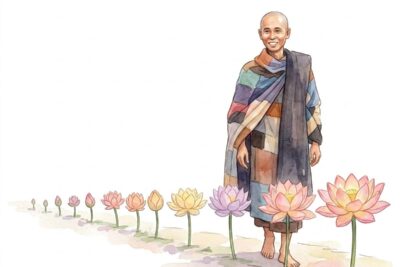
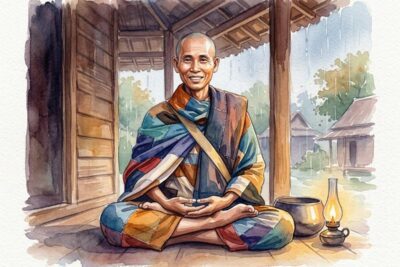
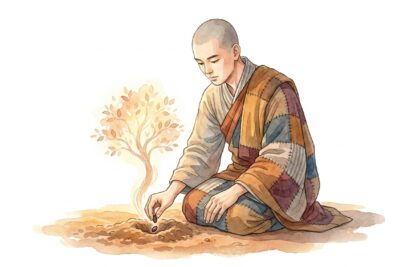
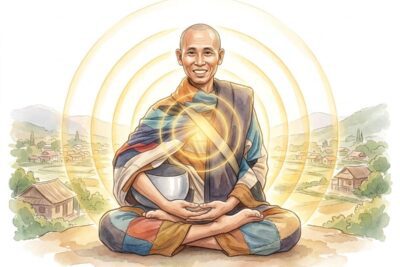
Thay Minh Tue slept in cemeteries for many years. Alone. Peacefully.
This is not courage in the ordinary sense. This is the result of Sosānika — the cemetery-dwelling practice — one of the most profound and least-known meditation practices in Theravāda Buddhism.
What Is Sosanika?
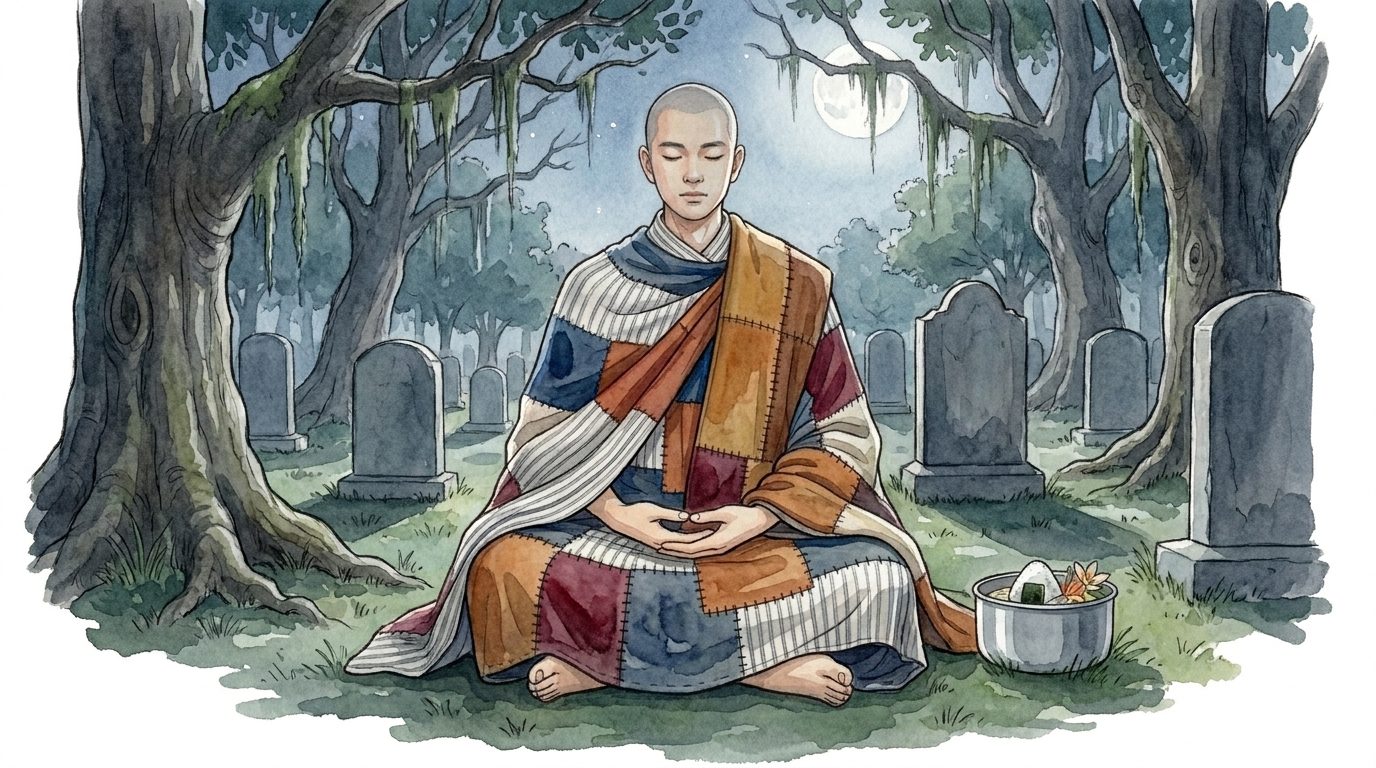
Sosānika in Pali means “one who dwells at the cemetery” — the practitioner of this dhutanga lives, sleeps, and meditates at or near a cemetery rather than in ordinary lodgings.
This is the tenth of the 13 Dhutanga practices in Theravāda Buddhism. Like the other dhutangas, it is voluntary — not required of all monastics, but praised by the Buddha as a particularly effective means of developing concentration and wisdom.
The Pali Vinaya specifies appropriate locations: places of cremation, places of burial, or anywhere that bodies are brought. The purpose is not to prove bravery but to place the mind in an environment that forces it to directly confront impermanence and death.
Maranasati – Contemplation of Death
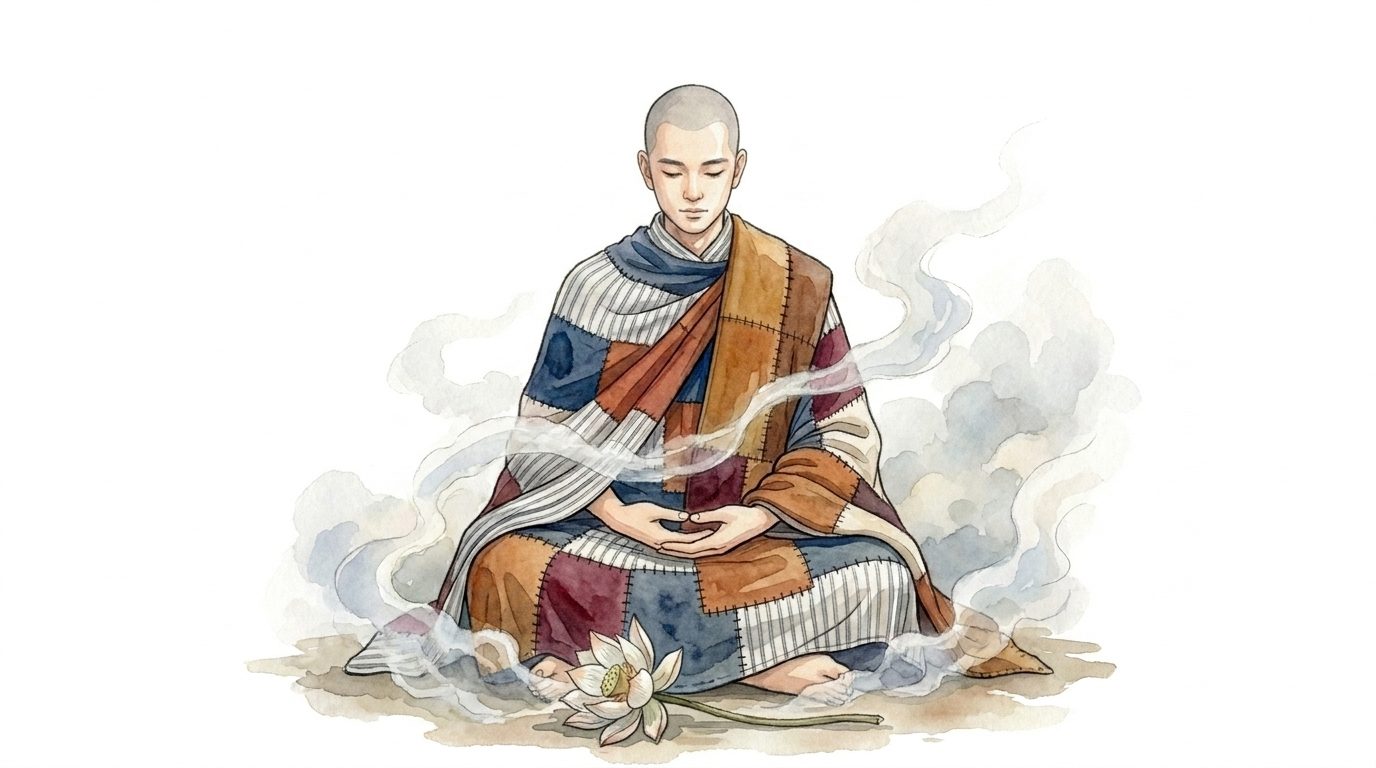
Sosanika is deeply connected to Maraṇasati — mindfulness of death — one of the most important meditation practices in Theravāda Buddhism.
The Buddha taught Maraṇasati in many suttas. In the Aṅguttara Nikaya, he describes the practice:
“Monks, practice Maraṇasati — mindfulness of death. Let the mind dwell on: ‘I could die today. I could die this morning. I could die before the next breath comes.’ One who practices this way lives with alertness and diligent effort.”
Contemplation of death is not meant to make one gloomy or pessimistic about life. On the contrary — it makes each moment clearer and more valuable. When the impermanence of this body is genuinely recognized, the things we worry about daily naturally become less heavy — and what is truly important becomes clearer.
The Theravada tradition also includes a practice called Asubha-bhavana — contemplation of the unattractive aspects of the body, including the stages of decomposition. This is a particularly powerful practice for dissolving the illusion of the body as beautiful and permanent, thereby reducing sensual attachment.
Why Are We Afraid of Cemeteries?
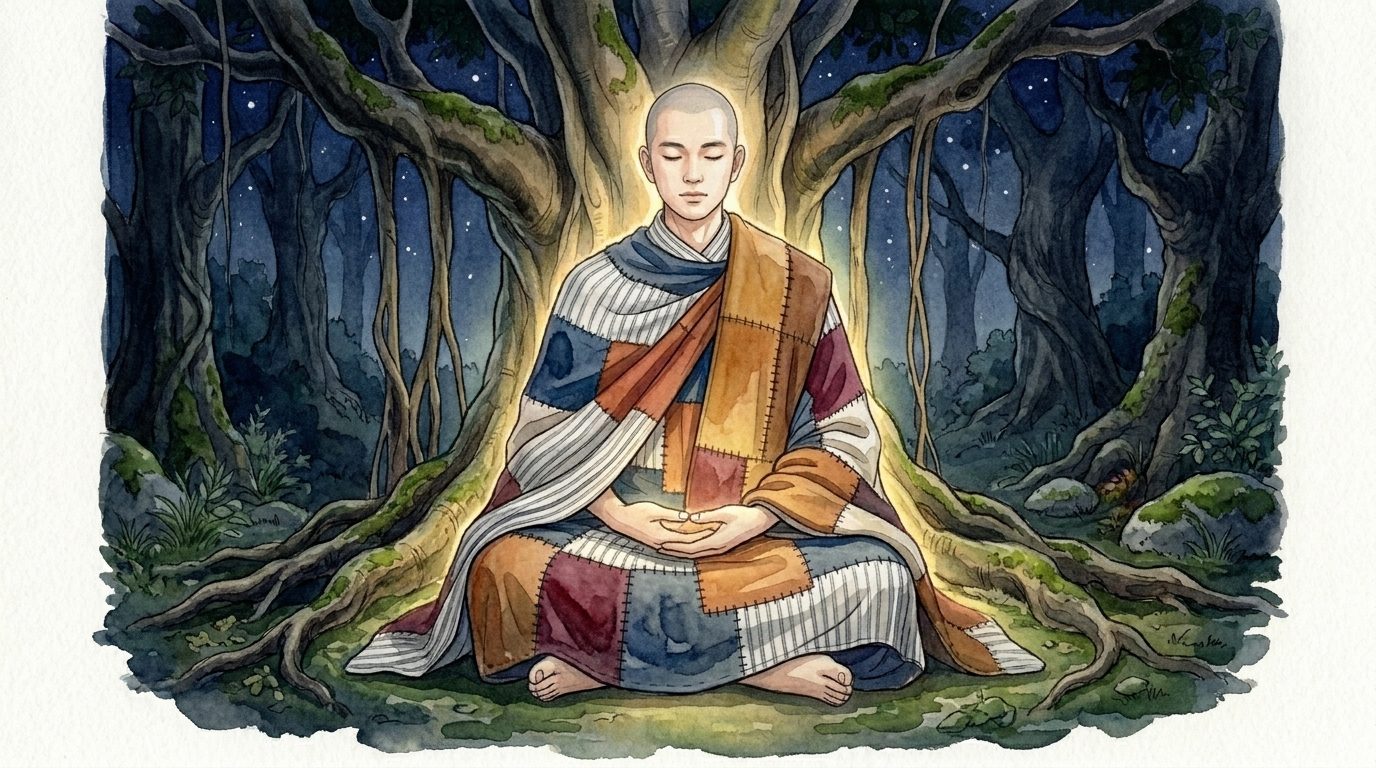
To understand why the Sosanika practice has such profound spiritual effects, it helps to understand what the fear of cemeteries actually is.
That fear is not simply fear of ghosts in the cultural folk-religion sense. At a deeper level, it is fear of the ending of the self.
A cemetery is a place that directly reminds us that what we call “I” — with all its plans, desires, worries, and reputation — will end. The body will decay. Everything we are clinging to will be gone.
The human brain avoids this reality automatically and continuously. We fill days with activity, sound, and social connection — partly to avoid having to face that fundamental truth.
A cemetery at night — especially in darkness — strips away all those protective layers. The mind has nowhere to hide.
This is exactly why the Sosānika practice exists: not to escape from reality but to stand upright within it.
Thay Minh Tue – Many Years Alone in Cemeteries
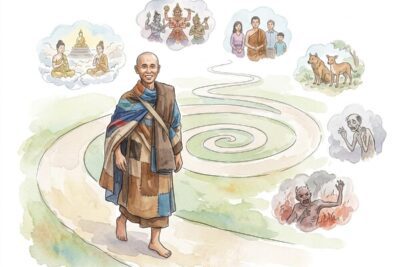
During the early years of his practice journey — from approximately 2018 to 2024 in Vietnam — Thay Minh Tue practiced Sosanika for extended periods.
He has confirmed this in multiple conversations with those who inquired: he slept at cemeteries, alone, for many nights. Not as a single experiment — but as a sustained practice over time, as a core part of the life of contemplative walking.
When asked what it was like, he answered with characteristic simplicity: nothing special. He slept normally.
That brief answer says a great deal.
Sosanika as evidence of genuine concentration
Cemetery dwelling cannot be faked. Cannot be purchased with money or reputation. Cannot be acquired through theory.
Being able to sleep alone in a dark cemetery — calmly, without anxiety, without the mind generating images and sounds from its fears — can only be the result of a mind that has been genuinely trained. A mind no longer tormented by the images, sounds, and fears the ordinary brain automatically generates.
This, combined with the sitting-sleep practice (Nesajjika) and the other Dhutanga practices, paints a picture of concentration built through many years of genuine practice — not performance.
How to Practice Death Contemplation in Daily Life
No one needs to sleep in a cemetery to learn from this practice.
What Sosanika and Maraṇasati teach can be brought into ordinary life in less extreme but still genuine ways:
Daily contemplation of impermanence — each morning, spend one minute reminding yourself: today is an uncertain day. Not to create anxiety — but to remember that time is finite, and what matters needs to be lived today.
Visiting a cemetery — not to feel afraid, but to sit quietly and reflect. This is a practice used across many cultures, not only Buddhism, to create depth of awareness.
Facing small fears — every time we avoid something from fear, we feed that fear. Each small, deliberate step of facing ordinary fears — fear of failure, rejection, or judgment — is a way of practicing the spirit of Sosānika in modern life.
Death is not an enemy to be avoided. For the Buddhist practitioner, death is the most honest teacher — always reminding us of what truly matters.
Learn more: who is Thầy Minh Tuệ?Biography, the dhutanga practice and the walking pilgrimage.Read more →