In the Dhammapada, verse 354, the Buddha says a short but weighty sentence:
“Sabbadānaṃ dhammadānaṃ jināti”
“The gift of Dhamma surpasses every gift.”
Why is this so? Giving food saves someone from hunger. Giving money saves someone from poverty. Giving blood saves a life. Each is precious. So why is the gift of Dhamma — an abstract thing, without form or weight — placed above all others?
This article explains the three kinds of giving, the special meaning of the gift of Dhamma (dhammadāna), the conditions that give it real value, and how it is practiced in the digital age.
Three Kinds of Giving
The Buddhist tradition distinguishes three kinds of giving, in ascending order of value.
1. Āmisa-dāna — the gift of material things. Giving food, robes, medicine, money, or means of transport. This is the easiest and most common form. It relieves suffering at the level of basic need.
2. Abhaya-dāna — the gift of fearlessness. Protecting someone from danger. Forgiving one who has harmed you. The precept against killing is a gift of safety to all beings. This is giving at the level of security of mind.
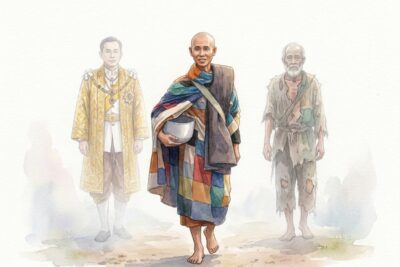
3. Dhamma-dāna — the gift of Dhamma. Giving the teaching. Sharing the truth. Pointing the way for those who are lost. This is giving at the level of liberation.
These three tiers correspond to the three levels of human need: existence, safety, and freedom from suffering. The material gift helps a person through the day. The gift of fearlessness helps a person live in peace. The gift of Dhamma helps a person step out of the round of suffering altogether.
Why Is the Gift of Dhamma the Highest?
The tradition offers several reasons.
First: it heals at the root. Giving food solves today’s hunger; tomorrow it returns. Giving money runs out. But a single line of Dhamma, understood, gives the receiver the tool to work with his own suffering for the rest of his life. Not a fish, but the fishing rod.
Second: no one loses. Giving money — the giver has less. Giving food — the giver has spent that item. Giving Dhamma — the giver still has the Dhamma, and the receiver has it too. It is a multiplying gift, not a dividing one.
Third: it carries across lives. Wealth given can be lost in this life. But a line of Dhamma that touches a mind may go with that person across many lives — for the wholesome karma of receiving the Dhamma is not destroyed by the death of the body.
Fourth: it is the root of other kinds of giving. One who understands the Dhamma knows how to give — to the right person, at the right time, in the right way. The gift of Dhamma produces those who know how to give rightly.
This is why later Theravāda commentators — notably Buddhaghosa in the Dhammapada-aṭṭhakathā (commentary on the Dhammapada) — have stressed that the Buddha’s placing of the gift of Dhamma above the other two is not to diminish material giving, but to point out an inner order of value among the three tiers.
The Verse in Dhammapada 354
The full verse reads:
“The gift of Dhamma surpasses every gift,
the flavor of Dhamma surpasses every flavor,
the delight of Dhamma surpasses every delight,
the ending of craving overcomes all suffering.”
In the Pāli:
“Sabbadānaṃ dhammadānaṃ jināti,
sabbarasaṃ dhammaraso jināti,
sabbaratiṃ dhammarati jināti,
taṇhakkhayo sabbadukkhaṃ jināti.”
The verse belongs to Chapter 24 — Taṇhāvagga (Craving). The setting: Sakka, king of the devas, asks the Buddha four questions — which gift is highest, which flavor is best, which delight is greatest, and what conquers all suffering. The Buddha answers with these four lines.
Who Can Give the Dhamma?
A common misconception: only monastics or scholars can offer the gift of Dhamma.
This is not true. The gift of Dhamma has many levels.
The level of teaching. Those with knowledge of the Dhamma can teach others directly — sermons, discourses, books.
The level of sharing. A newer student who cannot yet teach can still share a line of Dhamma he has understood, a sutta he has just read. Not as a teacher, but as a fellow traveler: “I found this helpful; sharing it with you.”
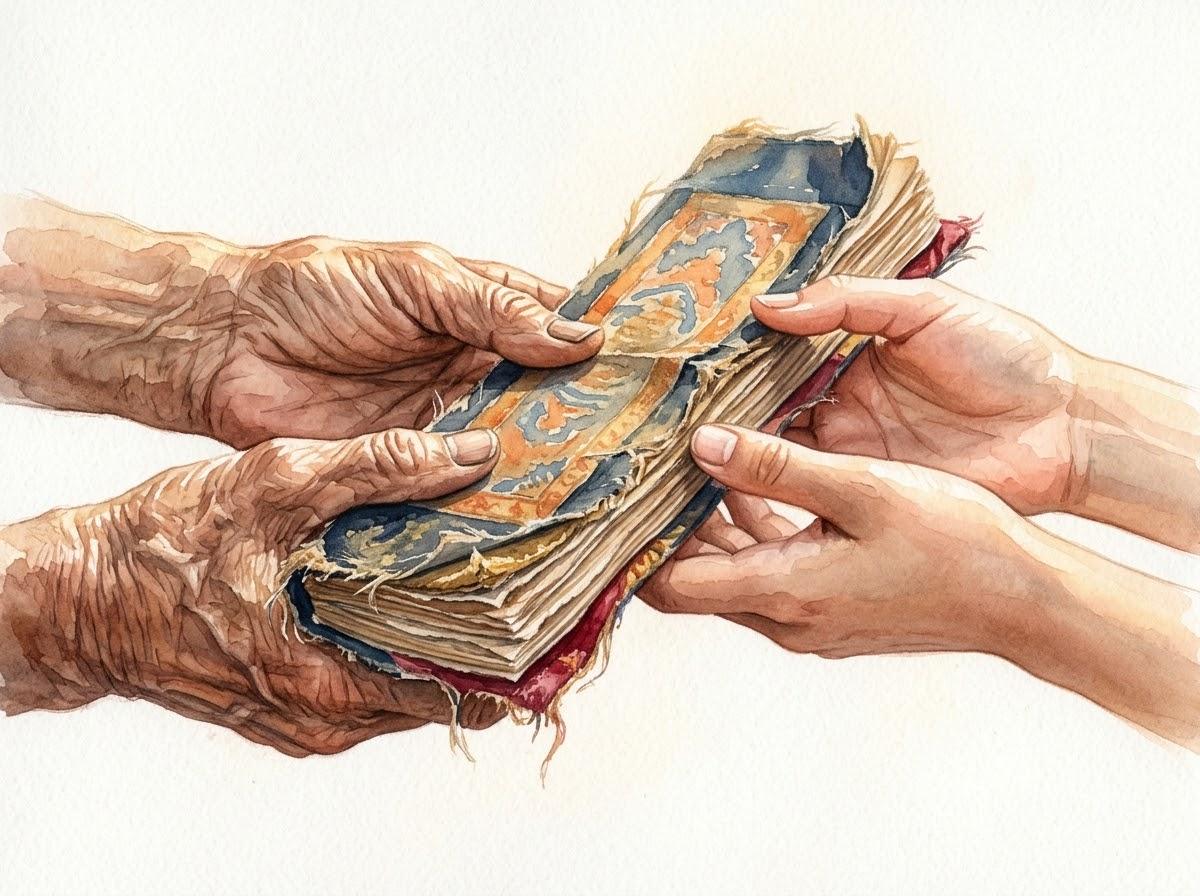
The level of making possible. Those who cannot teach can still print scripture, support the printing of texts at temples, help maintain a Dhamma website, translate books. This is indirect dāna of the Dhamma — helping the teaching reach others.
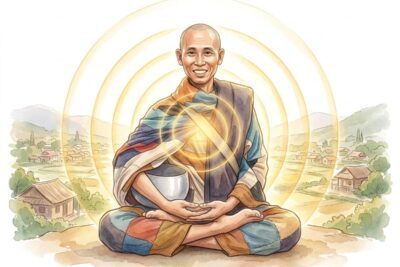
The level of example. This is the deepest and the quietest. One who lives the Dhamma truthfully causes those around him to learn — without a word being spoken. This is the gift of Dhamma through one’s own life.
The precondition for every level: the content shared must be true Dhamma. If one invents, embellishes, or distorts, it is no longer a gift of Dhamma but the making of unwholesome karma. The Buddha in many discourses warned against “putting teeth into the mouth of the Tathāgata” — attributing to him words he did not speak.
The Gift of Dhamma in the Digital Age
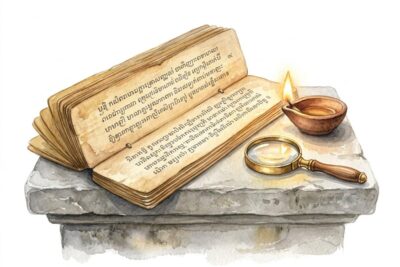
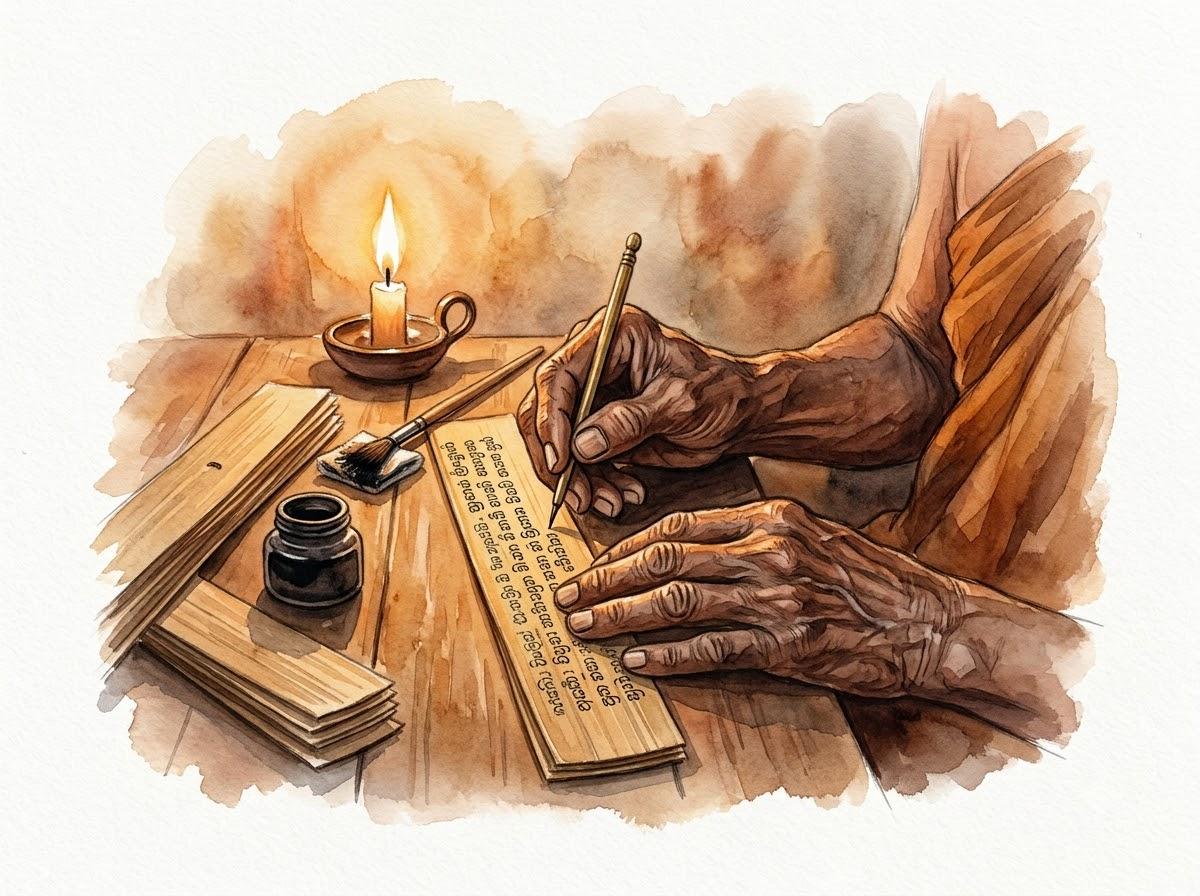
Twenty-five hundred years ago, dhammadāna meant inscribing suttas on palm leaves, reciting them for listeners, teaching in person. Today the means are different — but the spirit is one.
Buddhist websites — such as thayminhtue.com/ — are one form of the gift of Dhamma. Readers pay nothing, come at any hour, and can pass the material on.
Dhamma videos on YouTube. A single talk can reach thousands, across many countries, without time limit.
Podcasts and audio suttas for those who are busy, commuting, or visually impaired.
New-language translations of the suttas. One who translates a sutta not yet available in a language becomes a bridge for millions.
Honest sharing of one’s practice. A sincere account of how you have applied a teaching to your own life can move a reader as much as any theoretical lecture.
But the digital age has its own hazards. Viral content tends toward the sensational. Those who share Dhamma online can slip into measuring success by view counts, tilting content toward clickbait and gossip. That is no longer a gift of Dhamma — it is using the name of Dhamma to seek attention.
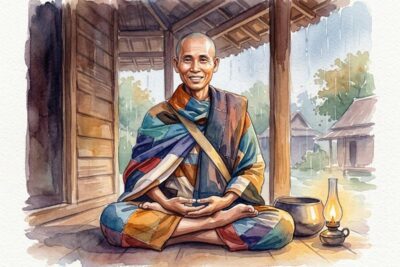
Master Minh Tuệ – Each Step a Living Gift of Dhamma
Note: This analysis is based on observable behavior, not Master Minh Tuệ’s own words about his inner experience.
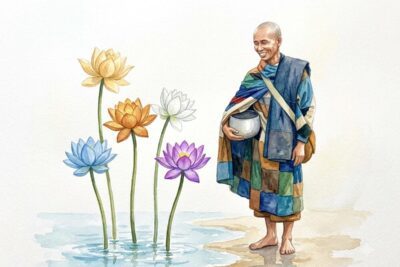
Master Minh Tuệ hardly ever teaches Dhamma in the classical sense. No pulpit. No sutta commentary. No published books.
Yet it is not an exaggeration to say that in recent years, few in Vietnam have led as many people to Buddhism — to reading the suttas, learning about ascetic practice, taking an interest in the Vinaya — as he has.
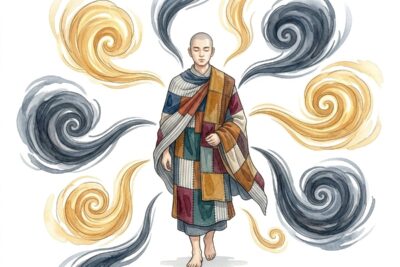
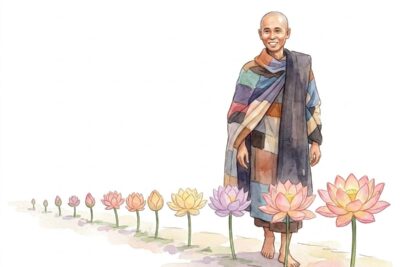
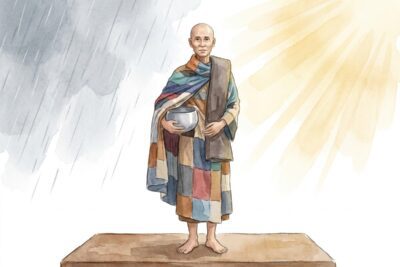
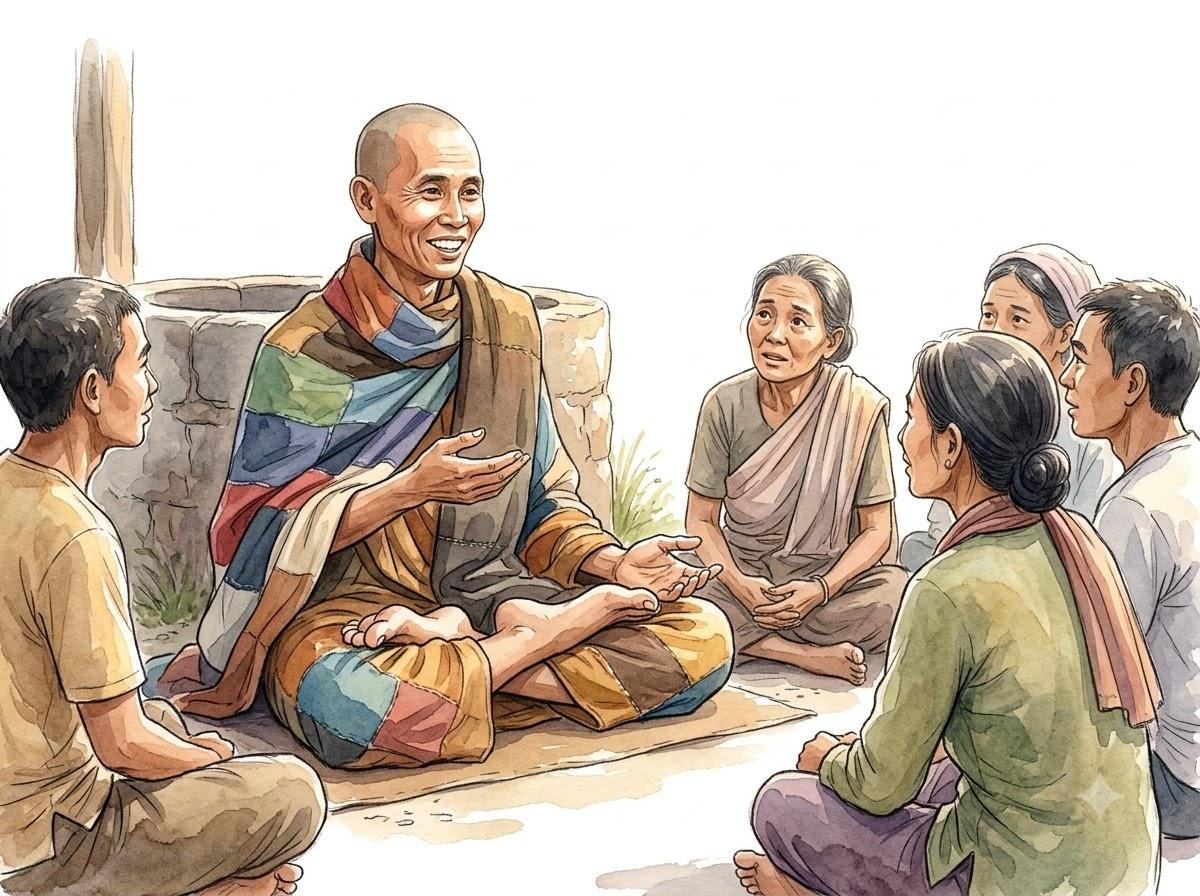
This is the gift of Dhamma through life itself. The presence of one who lives the Buddha’s word to such a radical degree — no money, no house, one meal a day, rag-robes, walking — makes others ask questions. Questions lead to inquiry. Inquiry leads to meeting the Dhamma.
Many who had no interest in Buddhism, upon seeing his image, opened a Buddhist text for the first time in their lives. Searches for Buddhist topics rose noticeably during the periods of his walking. This is the fruit of a wordless gift of Dhamma — and a strong one.
He also reminds people of an important point: do not follow him, do not listen to him — read the Buddha’s word directly, verify for yourself. This is precisely the spirit of right faith (saddhā) that the Buddha taught in the Kālāma Sutta — the gift of Dhamma is not pulling people to oneself, but pointing them back to the source.
Conditions for a Real Gift of Dhamma
The gift of Dhamma can decay into mere form when three conditions are missing.
Accuracy. The content must be true Dhamma. Do not add, do not alter, do not distort. If uncertain, better to remain silent.
The right recipient. Not everyone is ready to hear. Forcing an unready mind to listen can backfire. The Buddha taught his monks to assess capacity — who is ready for what.
Freedom from self. If one gives Dhamma to be praised, to be known, to be seen as “one who understands” — the gift is already skewed. The more one teaches while the ego grows, the further from the Dhamma one stands.
These three conditions are hard — which is why the true gift of Dhamma is precious.
Textual Sources
The central verse is Dhammapada 354 (chapter 24 — Taṇhāvagga). On the three kinds of giving, see the Aṅguttara Nikāya 9.20 (Velāma Sutta) — where the Buddha tells of the householder Velāma whose vast giving was surpassed in merit by the taking of refuge in the Triple Gem, and the taking of refuge surpassed by the practice of loving-kindness for the time of a finger-snap.
Commentary in the Dhammapada Aṭṭhakathā. See also our articles on Dāna (Generosity).
Frequently Asked Questions
1. I do not yet understand the Dhamma deeply. May I still share?
Yes — provided you share only what you have understood clearly, without exaggeration or invention. Speak humbly: “This is how I understand it; I may be mistaken; check the suttas yourself.”
2. Is printing sutta books a form of dhammadāna?
Yes. This is a traditional form of indirect gift of Dhamma with great merit. The condition is that the text be accurate and the translation reliable.
3. Does sharing a Buddhist article on social media count?
Yes, if the content you share is true Dhamma and you share with the wish for others to benefit. If you share to display your knowledge, the value diminishes.
4. Is it wrong to sell Buddhist books?
Nothing is wrong if books are sold at a fair price to cover printing. Tradition prefers free distribution, but printing has real costs — charging enough to reinvest in further printing is a sustainable path.
5. Can someone who has not taken refuge offer the gift of Dhamma?
Yes. There is no rule that only formal Buddhists may share the teaching. Anyone who understands something correctly and shares with a wholesome heart practices the gift of Dhamma — even if they have not yet taken formal refuge.
Learn more: who is Thầy Minh Tuệ?Biography, the dhutanga practice and the walking pilgrimage.Read more →