The word “renunciation” makes many people think first of loss. Leaving home, leaving work, leaving loved ones, leaving property. A cold, austere picture.
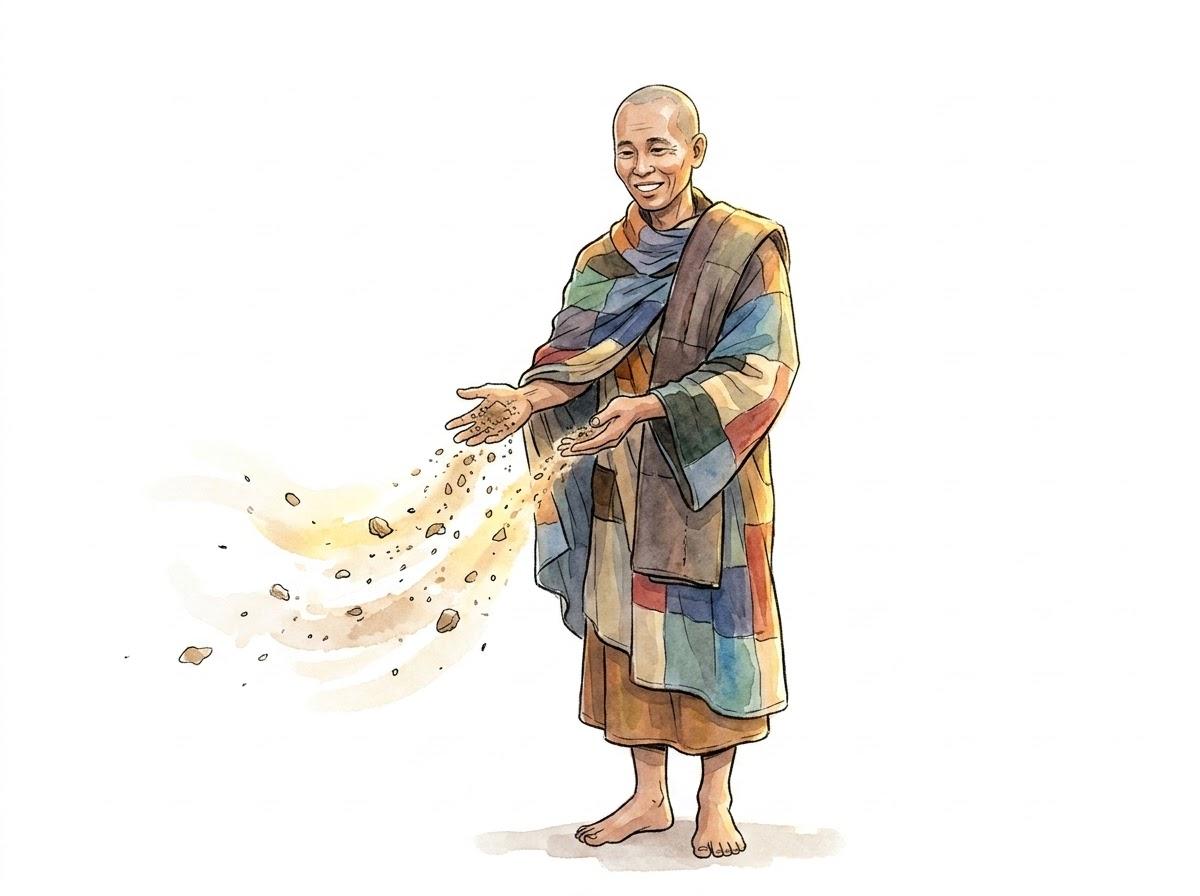
But in Buddhism, nekkhamma — renunciation — carries an entirely different spirit. It is not loss. It is actively setting down what binds us in order to step into a wider space.
And here is a point that easily causes confusion: renunciation (nekkhamma), letting go (cāga), and equanimity (upekkhā) — three English words that sound similar, three Pāli concepts that name distinct states of mind, sometimes belonging to different stages of the path.
This article distinguishes the three, introduces the three layers of renunciation, and reflects on radical renunciation as seen in the life of Master Minh Tuệ.
What Is Nekkhamma?
The Pāli word nekkhamma literally means “going out”, “leaving”, “going forth”. It shares a root with the verb nikkhamati — to step outside.
In the Buddhist context, nekkhamma refers to the voluntary act of leaving behind sensual pleasure — leaving lay life, or leaving the mind’s grasping upon the five strands of sense pleasure. It is one of the three kinds of right thought in the Noble Eightfold Path (together with the thought of non-ill-will and the thought of non-cruelty).
The essential point: nekkhamma is not something taken from us but something we willingly put down. A person who loses his job is not thereby practicing renunciation. A person who voluntarily declines a promotion because he sees it pulling him away from a pure life — that is renunciation.
Nekkhamma Is Not Cāga, and Not Upekkhā
Three English words sound close, three Pāli terms are distinct.
Nekkhamma — Renunciation. The act of turning away from sensual pleasure. It leans toward action and thought. It can be observed from the outside. Monastic ordination is its clearest expression, but laypeople too can practice nekkhamma at their own measure — buying less, celebrating less, giving time to practice.
Cāga / Pariccāga — Letting go. The giving up of some specific thing. Letting go of anger. Letting go of clinging to an opinion. Letting go of a harmful relationship. This leans toward inner attitude in a given situation.
Upekkhā — Equanimity. A balanced state of mind, neither leaning toward liking nor toward aversion. This is the result of long practice, not an action. It belongs to the four divine abidings (brahmavihāra) together with loving-kindness, compassion, and sympathetic joy. It is also one of the seven factors of awakening. Its summit is the upekkhā of the fourth jhāna — unmoved by praise or blame.
These need to be kept apart to avoid confusion:
To tell an angry person to “renounce” is a misuse of the word — what they need is to let go of the anger, not to leave lay life.
To tell a layperson to “develop upekkhā before practicing nekkhamma” is also mistaken — in practice, nekkhamma is the earlier step, while mature upekkhā comes as a fruit later on.
Three Layers of Renunciation
The tradition divides nekkhamma into three layers, from surface to depth.
Layer 1: Renunciation of material things. Setting down unnecessary property, simplifying life. The monastic leaves house, money, and lay clothes. The layperson simplifies possessions and does not hoard out of craving. This is the most visible layer — but also the easiest to reduce to mere form.
Layer 2: Renunciation of binding relationships. Setting down relationships built on clinging, calculation, and possession. Not abandoning family — but leaving behind the possessive style of love, replacing it with unconditional care. The monastic leaves home. The layperson stays with family but changes the mode of relating — loving without owning, caring without controlling.
Layer 3: Renunciation of self and views. This is the deepest layer. Letting go of clinging to “I”, “mine”, “my view”. Letting go even of attachment to one’s own path of practice. This is the renunciation of the mature — it cannot be faked, cannot be performed.
Renunciation of form without reaching the third layer is half-hearted renunciation. Outwardly beautiful, inwardly still proud: “I have let go, and that person has not.”
Nekkhamma as the Third Perfection
In the list of Ten Perfections (pāramīs) in the Theravāda tradition, nekkhamma stands third — after giving (dāna) and virtue (sīla), before wisdom (paññā).
The order is meaningful. Giving and virtue can be practiced within lay life. Renunciation begins where these two turn into a way of living. Practicing the perfection of renunciation does not require formal ordination — it begins wherever a person starts turning from sensual pleasure through daily choices.
In the Cariyāpiṭaka, the birth stories of the future Buddha recount many lives in which the Bodhisatta renounced kingship, family, and pleasure — not once, but again and again across countless lives. This is how the perfection is accumulated.
Master Minh Tuệ – A Living Example of Radical Renunciation
Note: This analysis is based on observable behavior, not Master Minh Tuệ’s own words about his inner experience.
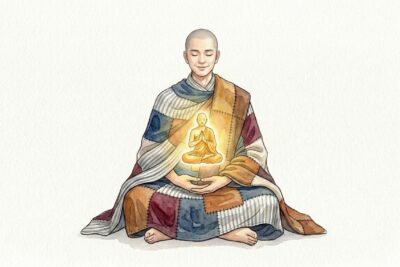
Looking at Master Minh Tuệ, one can see all three layers of renunciation at once.
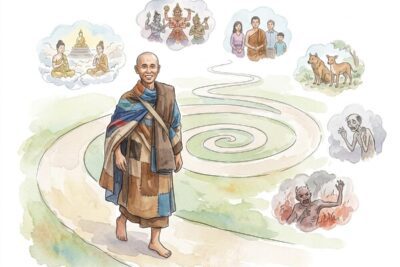
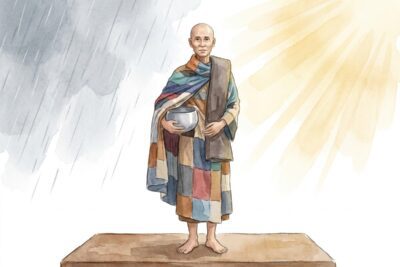
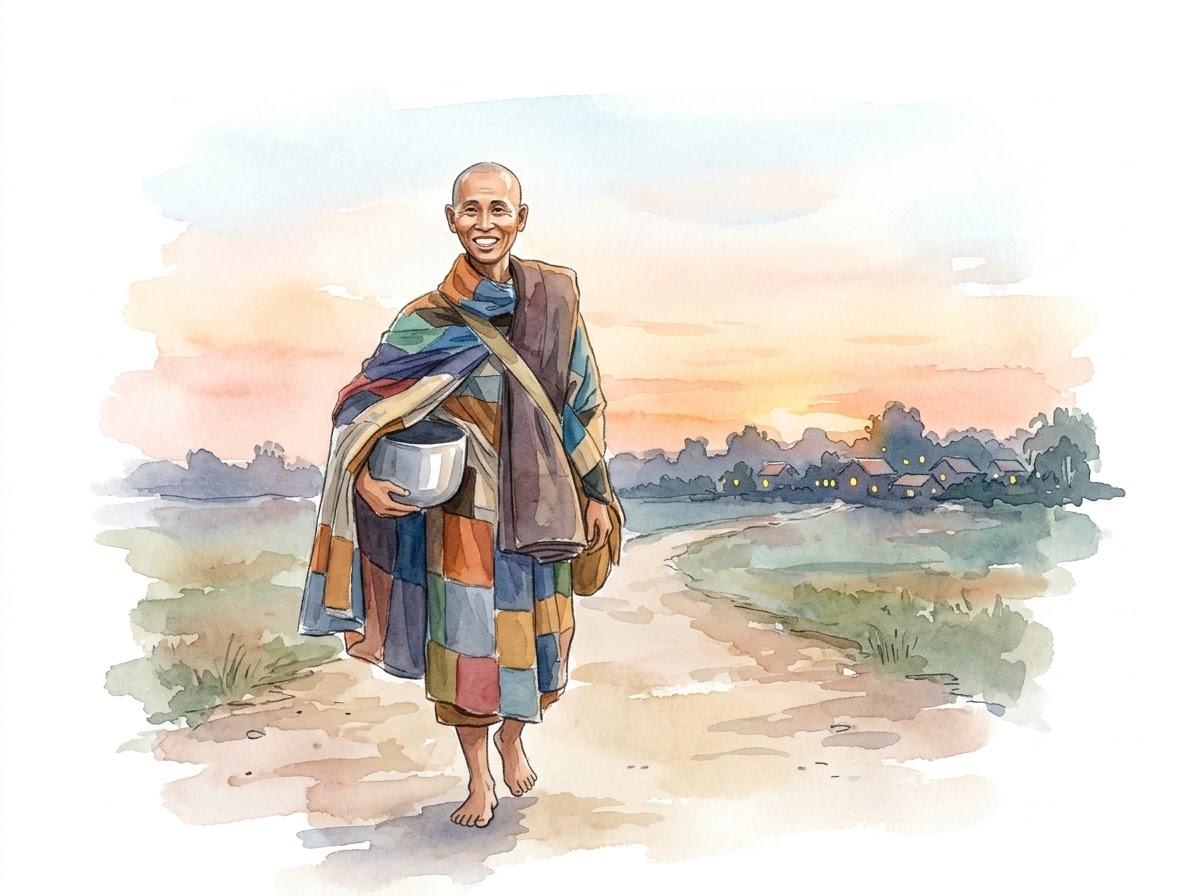
The material layer is unmistakable. No house, no property, no money, no transport, no bed. His maximum possessions: a set of rag-robes, the inner shell of a rice cooker used as an alms bowl, a piece of cloth against sun and rain.
The relational layer is also visible. He has left his family to walk. He does not keep a private group of disciples in any hierarchical sense. He does not accept the title “master” in a devotional mode. Those who walk with him come and go; he does not hold anyone.
The layer of self-view is harder to see but still observable. He repeatedly refuses elevated titles. He does not claim to be anything. He calls himself only “a child” who is learning. When insulted, he does not react — a sign that contentment (santuṭṭhi) has reached into the very sense of self.
One important point: his renunciation does not carry the look of austerity or gloom. Those who have met him describe a face at peace, at times smiling. This is precisely the sign of true renunciation — not a state of loss, but a state of freedom.
The lesson does not demand that laypeople abandon everything. But it shows us: radical renunciation does not lead to suffering. If we let go rightly, each layer removed is another layer of freedom added.
How Can Laypeople Practice Renunciation?
Ordination is not the only door. Some concrete practices for laypeople:
Renunciation of surplus property. Regularly clear the house, give away what you no longer use. Do not hoard from fear of scarcity. Live somewhat below your financial capacity — not for the sake of hardship, but so the mind is not enslaved to endless earning.
Renunciation of time. One session each week: no phone, no shopping, no entertainment. Time given over to meditation, reading the suttas, walking. Time renounced from consumption is time given back to the mind.
Renunciation of views. In every argument, practice letting go of the need to win. Listen through, do not interrupt. You may still hold your view — but do not cling to it as though it were the self.
Renunciation of unwholesome pleasures. Decline a pointless drinking session. Decline an illicit relationship. Decline an unethical promotion. Each refusal is a small act of renunciation.
Renunciation is not one large event that happens once, but a way of life built gradually through small daily decisions.
Textual Sources
Nekkhamma is presented in Aṅguttara Nikāya 6.63 (Nibbedhika Sutta) as one of the three kinds of right thought. In the Sutta Nipāta, the opening verses (e.g. the Uraga Sutta) describe the one who has renounced as “a snake shedding its old skin”.
On renunciation as a perfection, see the Cariyāpiṭaka and the Buddhavaṃsa. For the distinction from upekkhā, see the Visuddhimagga, chapter IX.
See also our articles on Letting Go and Contentment.
Frequently Asked Questions
1. Does renunciation mean I have to become a monastic?
Not necessarily. Ordination is the clearest form of renunciation, but laypeople can practice nekkhamma at their own measure — simplifying, being content, reducing sensual pursuit.
2. If I have a family to care for, does renunciation mean abandoning them?
No. Renunciation is not fleeing from responsibility. Caring for one’s family is a duty. What is to be renounced is the manner of caring — care with loving-kindness rather than with clinging, care without forcing others to your will.
3. Are renunciation and depression the same?
No. Depression drains energy and dulls feeling, often carrying despair. Right renunciation increases energy and peace. If your practice leaves you flat and gray, look again.
4. Can wealthy people practice renunciation?
Yes. Anāthapiṇḍika and Visākhā, the two greatest lay donors of the Buddha’s time, both attained stream-entry. Renunciation lies in the mind’s non-attachment, not in the number in the account.
5. How do I know if I have renounced something, or only avoided it?
Renunciation comes with peace, freedom, and increased kindness. Avoidance comes with fear, suppression, and hidden anger. If you have set something down but still think of it with strong emotion — you have not renounced it; you have only pressed it down.
Learn more: who is Thầy Minh Tuệ?Biography, the dhutanga practice and the walking pilgrimage.Read more →