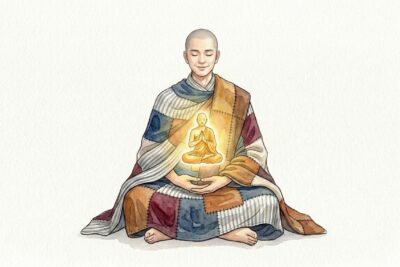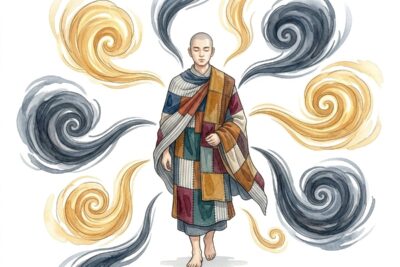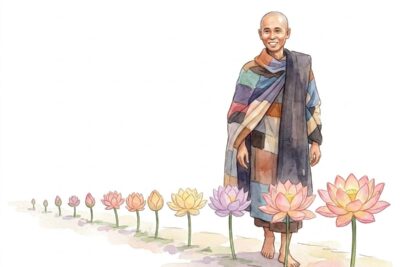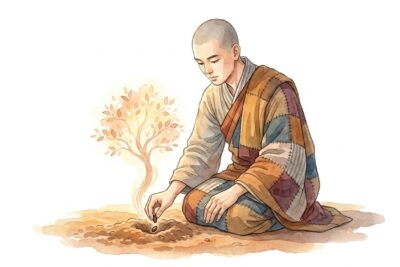
There is one meditation the Buddha taught to everyone — regardless of level, without requiring a specialized teacher, without any tool.
It is loving-kindness meditation (mettā bhāvanā).
It sounds simple: radiate kindness toward all beings. But in real practice, it reveals itself as one of the deepest and hardest methods — because it goes straight to what everyone needs to heal: the mind of anger and ill will.
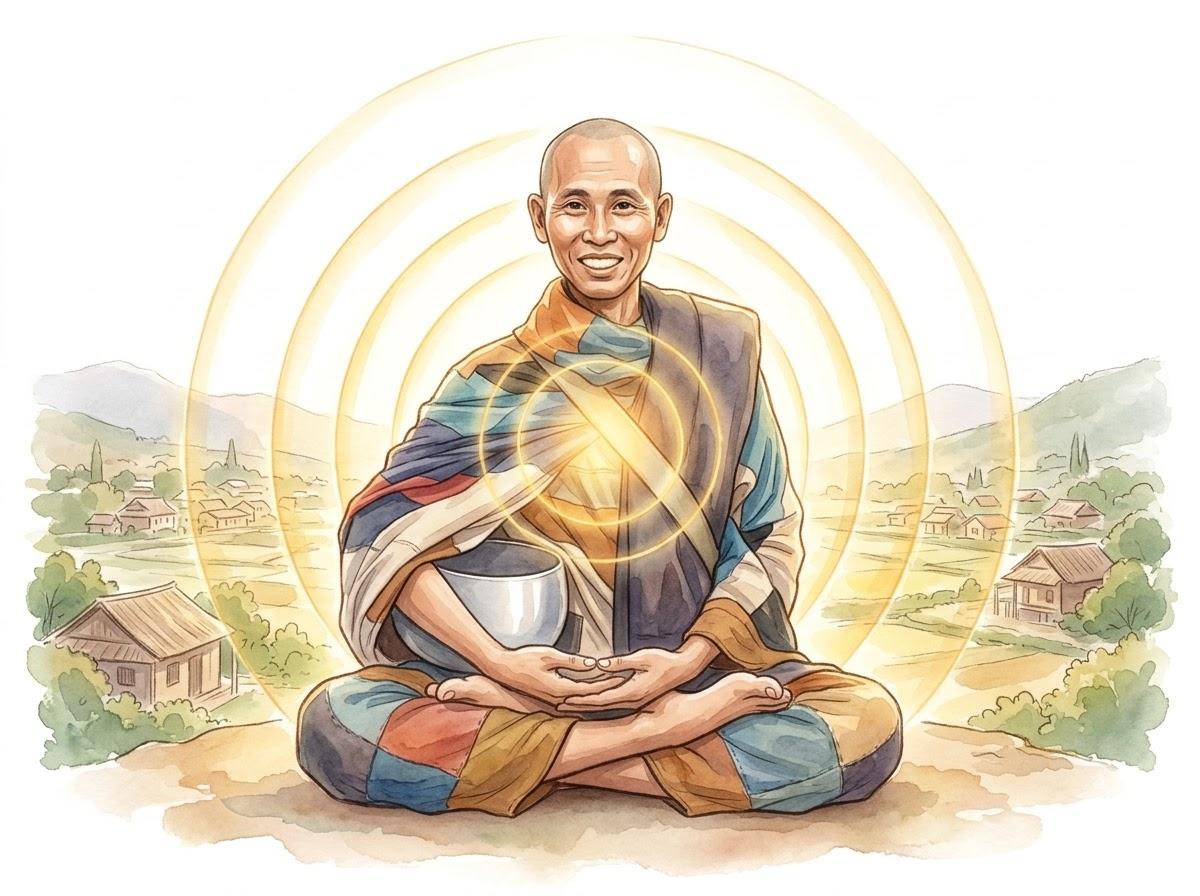
What Is Mettā Bhāvanā?
In Pāli, mettā means friendliness, unconditional loving-care. Bhāvanā means cultivation, development through practice.
This is not prayer. It is not autosuggestion. It is a method of training the mind so that kindness becomes its natural state — not only when everything is going well, but even when insulted, misunderstood, or treated unjustly.
Mettā differs from ordinary affection in three ways:
Unconditional — not because the other person is attractive, kind, or useful.
Non-discriminating — extended to loved ones, neutral persons, disliked persons, and all beings.
Non-clinging — no expectation of return, no demand for a response, no possession.
The Karaṇīya Mettā Sutta
The foundational text on mettā practice is found in the Khuddaka Nikāya, in the Suttanipāta (Sn 1.8), known as the Karaṇīya Mettā Sutta — the Discourse on Loving-Kindness.
The sutta is short, only about ten verses, yet it contains the entire spirit of mettā. One of its most important lines:
“Mātā yathā niyaṃ puttaṃ āyusā ekaputtamanurakkhe;
Evampi sabbabhūtesu, mānasaṃ bhāvaye aparimāṇaṃ.”
Roughly: “Just as a mother would protect her only child at the risk of her own life — so too, let one cultivate boundless loving-kindness toward all beings.”
That is the measure of mettā — not a little affection here and there, but love as a mother loves her child.
The Five Groups of Radiating
The traditional method radiates mettā through five groups of recipients, from easiest to most difficult.
Stage 1: Toward Yourself
Many are surprised that one begins with oneself. The reason is simple: you cannot give what you do not have. A person who blames themselves and dislikes themselves cannot genuinely love another.
Sit quietly, hand on the chest. Recite four phrases (detailed below):
“May I be safe. May I have no enemies. May I have no suffering. May I be happy.”
Notice whether warmth arises in the chest. If not, do not worry — continue.
A practical way to begin: sit for five minutes only. Close the eyes softly. Bring to mind an image of yourself as a small child — perhaps a photograph you remember, or simply the sense of the young person you once were. Send the four phrases to that child. Many practitioners find that self-mettā flows more easily when it begins with the vulnerable, younger self rather than the current adult burdened with self-judgment. Once warmth arises for that image, extend it to the present self.
Stage 2: Toward a Loved One
Choose someone you truly love — a parent, a teacher, a close friend. Picture their face. Send the four phrases to them.
At this stage, the mind opens easily. This is the recharging step for the harder stages to come.
Stage 3: Toward a Neutral Person
Choose someone you neither love nor dislike — a shopkeeper you often see, a distant colleague, a neighbor. Send the four phrases.
This stage is harder because there is no strong feeling. Yet this is where mettā truly matures — loving someone without a “reason” to love them.
Stage 4: Toward a Difficult Person — Even One You Dislike
This is the hardest stage. Choose someone who has hurt you, someone you have conflict with, or — if you are ready — someone you consider an “enemy.”
Do not rush. Start with someone “somewhat difficult,” not the hardest case. Send the four phrases.
If the mind reacts — anger rising, resistance — do not force it. Return to Stage 1, radiate to yourself, and try again later.
A useful reflection at this stage: consider that the person who hurt you was themselves acting from suffering. No one truly at peace goes out of their way to cause harm. This is not an excuse for their conduct, but it loosens the grip of resentment enough to let the phrases land. Some traditions add a preparatory contemplation here — recalling that the difficult person, like you, wishes to be happy and wishes to avoid suffering; that they, like you, have known loss.
Stage 5: Toward All Beings
After moving through the four groups, expand without limit: all beings in the east, west, south, north; above, below, in the four intermediate directions; visible and invisible; large and small; already born and yet to be born.
This is mettā appamāṇā — boundless loving-kindness without frontiers.
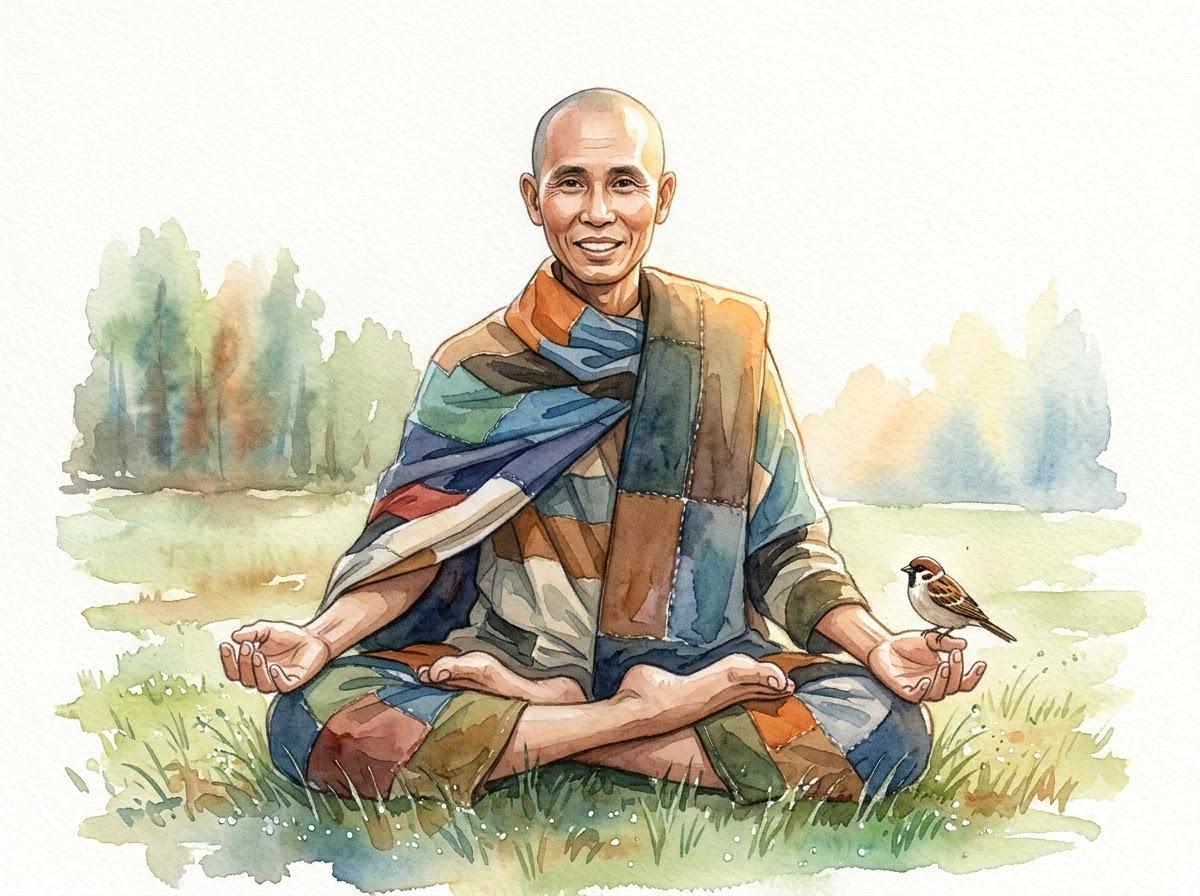
The Four Standard Phrases
The tradition uses four short phrases to direct the mind. The Pāli and a common English rendering:
“Ahaṃ avero homi” — May I be free from enmity.
“Abyāpajjho homi” — May I be free from ill will.
“Anīgho homi” — May I be free from suffering.
“Sukhī attānaṃ pariharāmi” — May I keep myself in happiness.
When radiating to another, change “I” to “you”:
“May you be free from enmity. May you be free from ill will. May you be free from suffering. May you keep yourself in happiness.”
The four phrases are short, easily memorized, and can be repeated to the rhythm of natural breathing. No need to speak aloud — silent repetition in the mind is enough.
Each phrase addresses a specific dimension of well-being. The first — freedom from enmity — protects the mind from external hostility, both received and generated. The second — freedom from ill will (byāpāda) — reaches into the subtler inner mood of aversion, resentment, or grudge, states that poison the mind even when no outward conflict exists. The third — freedom from suffering (dukkha) — encompasses physical pain, mental distress, and the deeper dissatisfaction the Buddha named as the first noble truth. The fourth — keeping oneself in happiness (sukha) — is the positive counterpart, the ability to safeguard and sustain wholesome states of mind through one’s own effort.
Together, the four phrases form a complete arc: from removing external threats, to removing internal negativity, to removing suffering, to establishing well-being. Some practitioners find it useful to pause on whichever phrase resonates most on a given day and stay with it, rather than rushing through all four.
Common Mistakes
1. Reciting without feeling. Repeating the phrases like a machine is not mettā. Real warmth must arise in the chest. If it does not, pause on one phrase, one person, until the warmth comes.
2. Forcing love for an enemy immediately. Many try to “compete” by choosing the hardest person first. The result: the mind reacts, and anger arises at the meditation itself. Follow the sequence — easy first, hard later.
3. Confusing mettā with clinging affection. If radiating to a loved one gives rise to longing, craving, or possessiveness — that is not mettā, that is attachment. Mettā is pure benevolence without demand.
4. Skipping the self stage. Those prone to self-blame often want to skip Stage 1. But it is the foundation — without it, later stages wobble.
5. Expecting “no more anger in a week.” Mettā is a process of months and years. Some days flow easily, some do not. Simply continue — without measuring.
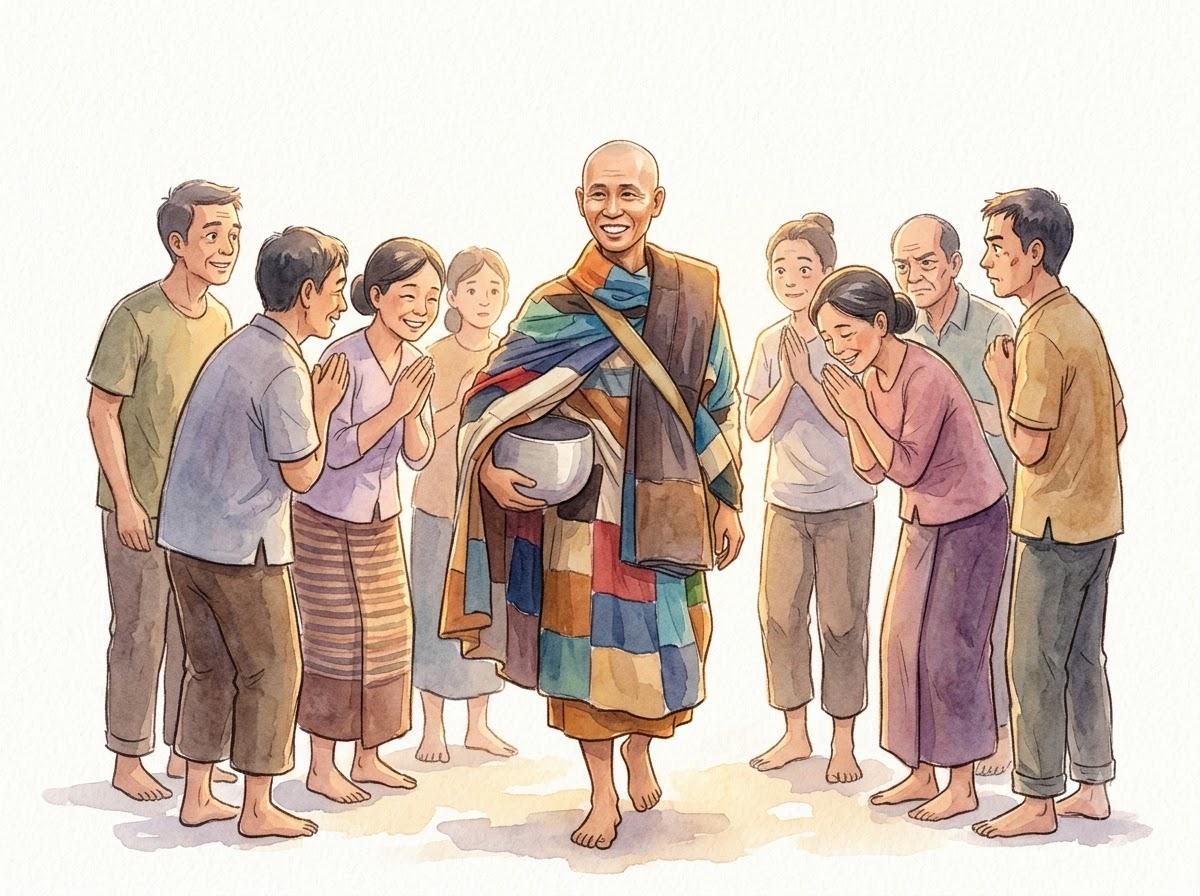
Master Minh Tuệ – Silence Before Insult
Since rising to fame, he has garnered a great many admirers, yet he has also faced numerous detractors—some fabricating stories on social media, others hurling insults for hours on end.
His response to these detractors is silence. No rebuttals. No arguments. This reflects a deeply ingrained patience (Pāli: khanti). If he does speak, it is only to offer a few gentle words—devoid of anger or defensiveness.
This is close to the expression of mettā at a mature level. A person still holding anger will react, however subtly — the face tightens, the voice rises, the eyes change. But a person who has radiated mettā for years has nothing in the mind to react with.
Note: This analysis is based on observable behavior, not Master Minh Tuệ’s own words about his inner experience.
What is worth learning here: mettā is not something to be spoken aloud but something present in how one responds under attack. A practitioner who radiates mettā daily for years, when insulted, does not need to “try” to stay calm — because nothing inside remains to flare up.
Mettā in Everyday Life
Beyond formal sitting, mettā can be radiated throughout the day:
Morning, before opening your eyes: repeat the four phrases for yourself. Just thirty seconds. The whole day feels different.
Stuck in traffic: instead of resenting the person in front of you, send mettā to them — “May you be safe.” The mind lightens at once.
In an argument: before responding, send one phrase to the person you are speaking with. Your response will be different — less sharp, more clear.
Before sleep: radiate to all beings. Deeper sleep, fewer dreams.
The Mettānisaṃsa Sutta (AN 11.16) lists eleven benefits of mettā: (1) sleeping well, (2) waking well, (3) no bad dreams, (4) being loved by humans, (5) being loved by non-humans, (6) protection by devas, (7) not harmed by fire, (8) not harmed by poison, (9) not harmed by weapons, (10) easier concentration, (11) a bright countenance — and dying without confusion, with rebirth in the Brahma realm if higher fruit has not yet been attained.
Frequently Asked Questions
Is radiating mettā a form of prayer?
No. Prayer asks an external being to grant something. Radiating mettā is cultivating a state of mind in oneself. There is no “recipient” in a metaphysical sense — but the person to whom you radiate will feel the difference in how you treat them.
How long until results appear?
Results appear from the first session — the mind softens during meditation itself. But for mettā to become an automatic reflex (kindness without needing to “try”), it usually takes months to years of regular practice. Do not measure — just practice. For a broader look, see our article on the Four Immeasurables.
Can I radiate to someone who has passed away?
Yes, and it is highly recommended. Radiating mettā to the deceased helps release both grief and remorse (if any) in your own heart. Some Buddhist traditions hold that beings in certain realms can perceive this kindness and benefit from it.
Are there any dangers in practicing mettā?
Side effects are rare, unlike some other meditations. One caution: if radiating to someone of the opposite sex gives rise to attachment or infatuation, adjust — choose someone of the same sex, or radiate to a wide group rather than an individual.
Can children practice this?
Very much so. Children often receive mettā more naturally than adults — their minds have fewer layers of defense. You can teach a child a short phrase: “May I be happy. May everyone be happy,” before sleep. Simple and effective.