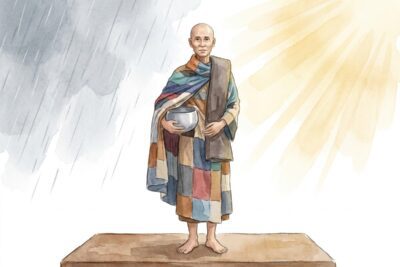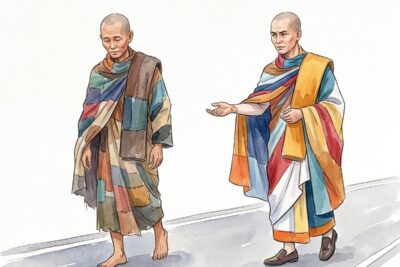
When Vietnamese Buddhists hear the word “pāramī” (perfection), many think first of the six perfections of the Mahāyāna tradition: generosity, virtue, patience, energy, meditation, wisdom.
But in Theravāda Buddhism — the tradition Master Minh Tuệ practices — the number is not six but ten.
The Ten Perfections (dasa pāramī) are ten qualities a Bodhisatta must bring to fullness across many lifetimes before attaining Buddhahood. Yet their meaning is not confined to a distant ideal — they serve as ten measures for anyone walking the path today.
Note on tradition: This article presents the Theravāda list of ten, not the Mahāyāna list of six. Both systems describe the same path from different angles.
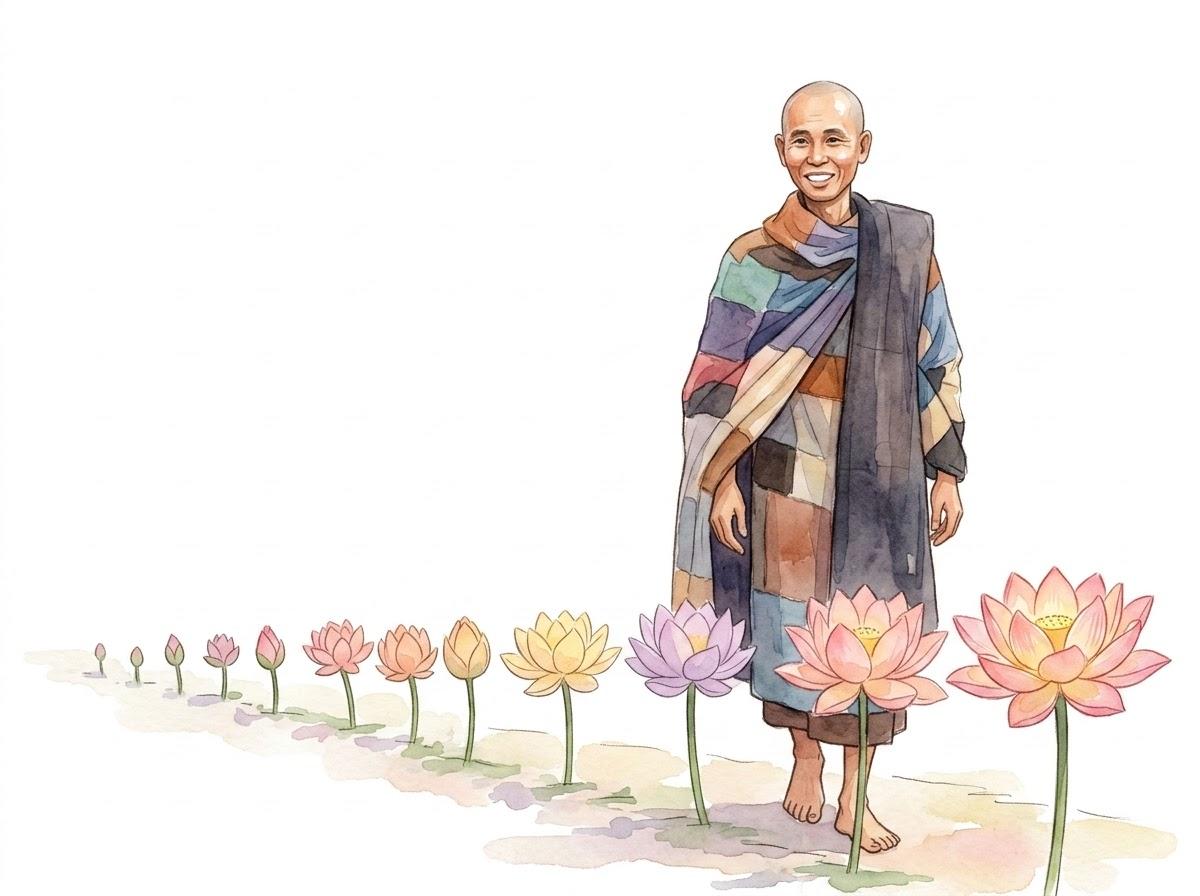
What Is a Pāramī?
The Pāli word pāramī (Sanskrit: pāramitā) is often translated as “reaching the far shore.” A more accurate rendering is: pāramī is a quality brought to fullness — refined until no blemish remains.
Not mere generosity, but generosity taken so far that no clinging remains to the gift, the recipient, or the “self who is giving.”
Not mere patience, but patience taken so far that no seed of anger remains in the mind.
A pāramī is the process of purifying a quality through long time, difficult circumstances, and repeated testing.
Theravāda’s Ten Versus Mahāyāna’s Six
An important distinction to keep clear:
Mahāyāna (six perfections): generosity (dāna), virtue (śīla), patience (kṣānti), energy (vīrya), meditation (dhyāna), wisdom (prajñā). Presented in the Prajñāpāramitā sutras.
Theravāda (ten perfections): generosity (dāna), virtue (sīla), renunciation (nekkhamma), wisdom (paññā), energy (viriya), patience (khanti), truthfulness (sacca), determination (adhiṭṭhāna), loving-kindness (mettā), equanimity (upekkhā). Presented in the Cariyāpiṭaka and Buddhavaṃsa, both belonging to the Khuddaka Nikāya.
The two systems are not in conflict — they view the same path from two angles. Mahāyāna groups certain qualities together; Theravāda separates them into finer categories. In the Theravāda list, “meditation” is not listed separately because it is contained within “energy” and “determination.” “Patience” overlaps partly with “equanimity.”
This article presents the ten pāramīs of the Theravāda tradition.
Group 1 — Foundational Perfections: Generosity, Virtue, Renunciation, Patience
The first four pāramīs lay the ground for the whole path: learning to release (generosity), learning to hold (virtue), learning to step away (renunciation), and learning to endure (patience). Without this foundation, the later pāramīs have little to stand on.
1. Dāna – Generosity
The first perfection. Giving — not only material things, but also time, effort, knowledge, and the gift of one’s steady presence.
The perfection of giving lies not in the value of the gift, but in the state of mind while giving. Giving without expectation of return. Giving without comparison. Giving without attachment to “having given.”
In the Dāna Vagga (AN 4.51), the Buddha teaches three levels of giving graded by the purity of giver, recipient, and gift. The highest is when all three are pure.
2. Sīla – Virtue
Keeping precepts is not for merit points, but so the mind is not shaken by remorse.
Lay Buddhists keep five precepts; novices keep ten; fully ordained monks keep 227. The perfection of virtue is not “keeping many precepts” but keeping them with a natural, unforced mind, without display.
A person who keeps precepts to the point of not needing daily reminders — because virtue has become their nature — has arrived at sīla-pāramī.
3. Nekkhamma – Renunciation
This pāramī is rarely discussed in ordinary conversation, yet it is essential.
Renunciation is actively letting go of attachment. Not loss, but release. Not avoidance, but clear-eyed voluntary departure.
Renunciation has three depths: letting go of gross sense pleasures (excessive food, entertainment); letting go of subtle sense pleasures (reputation, being loved); and letting go of attachment even to the idea of “I am practicing.”
4. Khanti – Patience
Patience has three objects: patience with external difficulty (heat, cold, hunger, illness); patience with others’ behavior (insults, misunderstandings); and patience with the slowness of one’s own inner progress.
The Buddha praised khanti as the highest austerity (khantī paramaṃ tapo titikkhā — Dhammapada 184).
Group 2 — Wisdom and Energy Perfections: Wisdom, Energy, Truthfulness, Determination
These four pāramīs are the inner engine: seeing clearly so one walks the right way (wisdom), keeping momentum on the path (energy), living truthfully with oneself (truthfulness), and not turning back midway (determination).
5. Paññā – Wisdom
Not intellectual knowledge from books, but insight that sees the true nature of things — impermanence (anicca), unsatisfactoriness (dukkha), non-self (anattā).
The perfection of wisdom has three levels: suta-mayā-paññā (wisdom from hearing or reading), cintā-mayā-paññā (wisdom from reflection), and bhāvanā-mayā-paññā (wisdom from direct meditative insight). Only the third is the perfected pāramī.
6. Viriya – Energy
Right effort, sustained, tireless. Not straining, but maintained steadily through many years and seasons.
The perfection of energy is like a slow, continuous stream — wearing down even stone — not a short-lived flood.
7. Sacca – Truthfulness
Not lying, not being double-tongued, not exaggerating. But at the level of pāramī, sacca goes further: living truthfully with oneself.
Not deceiving oneself about one’s level of practice. Not playing the part of an advanced practitioner while greed and anger still stir within. Sacca-pāramī demands radical humility.
8. Adhiṭṭhāna – Determination
Firm resolve, unshaken. Once the path is chosen, no turning back due to hardship or temptation.
Adhiṭṭhāna is like the rudder of a ship. Waves may rock the hull, but the rudder holds the course. This pāramī allows a practitioner to hold the path across a lifetime.
Group 3 — Loving-Kindness and Equanimity Perfections: Loving-Kindness, Equanimity
The last two pāramīs concern the mind’s stance toward beings and toward circumstances: unconditional warmth of heart, and unshakable balance amid gain and loss, praise and blame.
9. Mettā – Loving-Kindness
Unconditional friendliness. Not love because someone is close, beautiful, or useful — but care because all beings are subject to suffering.
The perfection of mettā extends even to those we dislike, to enemies, to those who have wounded us. Not straining to love — but a mind that naturally gives rise to kindness toward anyone it meets.
10. Upekkhā – Equanimity
This is the highest pāramī, and the hardest.
Equanimity is not coldness or indifference. It is balance of mind — not lifted by gain, not lowered by loss; not excited by praise, not wounded by blame.
The perfection of upekkhā allows the practitioner to face everything without tilting — even the most unpleasant scenes, even seemingly unbearable failures.
Master Minh Tuệ and the Ten Pāramīs on the Walking Path
There is no need to invent stories. Simply look at what the public has observed over years of his walking journey:
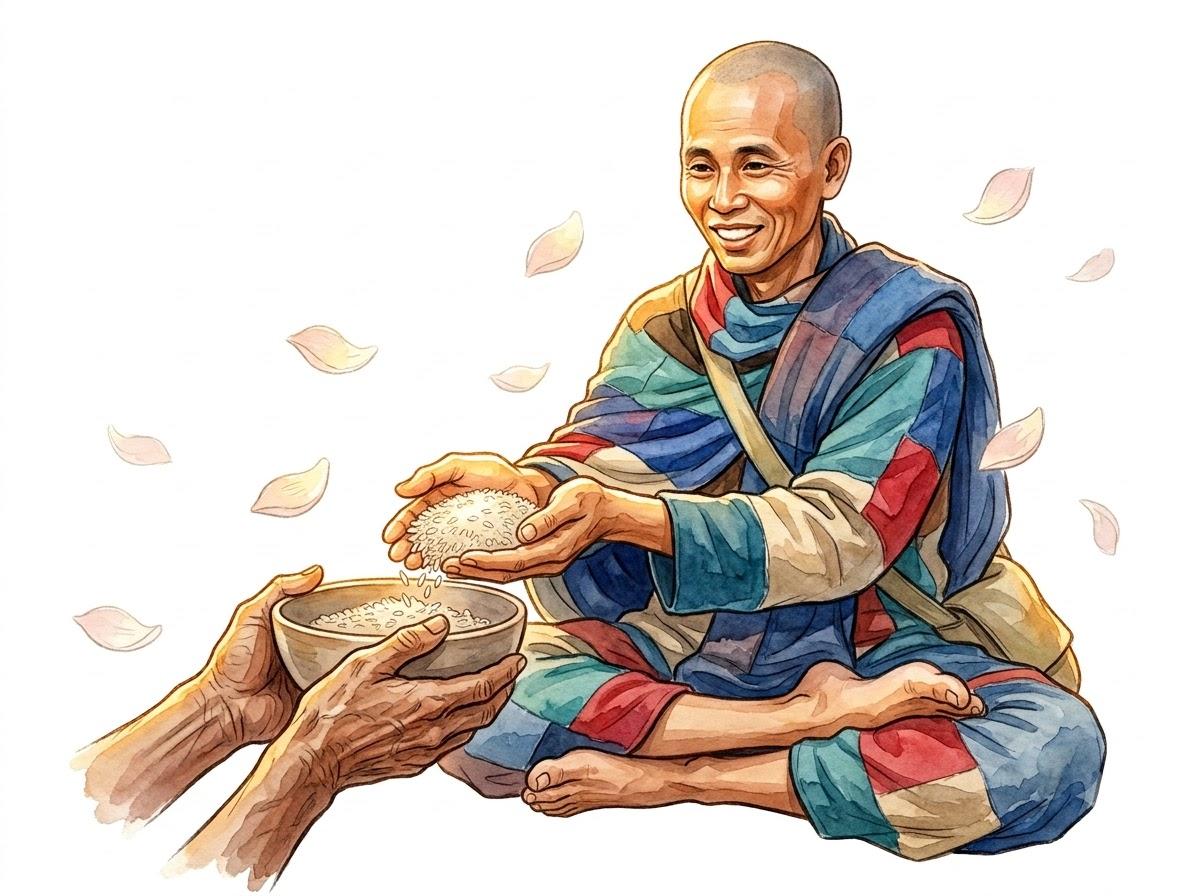
Dāna (generosity): He holds no money and stores nothing. Yet when someone asks for a bowl of rice or a piece of rag-cloth, he readily shares. Generosity here is not “giving much” but keeping nothing in reserve.
Sīla (virtue): He keeps monastic precepts though he belongs to no formal saṅgha. No money, no vehicles, one meal a day, sleeping in wild places.
Nekkhamma (renunciation): Letting go of household life, family, possessions. Refusing even small comforts — phones, cushioned bedding, tasty food.
Paññā (wisdom): Expressed in the way he lives — not accepting scarcity from ignorance, but from clearly understanding that simplicity is freedom.
Viriya (energy): Many years of walking without long interruption. Sun or rain, familiar or unfamiliar roads — the journey continues.
Khanti (patience): Enduring heat, hunger, jostling crowds, and even harsh online criticism — with no visible reaction of resistance.
Sacca (truthfulness): Claiming no elevated title, referring to himself humbly, addressing all others with respectful familial terms. No performance.
Adhiṭṭhāna (determination): Choosing the walking-almsround path and keeping to it for years, including periods of retreat and rest.
Mettā (loving-kindness): A gentle attitude toward all — followers, the curious, and those who harass him.
Upekkhā (equanimity): Remaining calm before both praise and slander — the two strongest of the eight worldly winds.
Note: This analysis is based on observable behavior, not Master Minh Tuệ’s own words about his inner experience. The true fullness of any pāramī is known only to the practitioner and to the awakened.

Can Lay Practitioners Cultivate the Pāramīs?
Yes. And they should.
In the Cariyāpiṭaka, the Buddha recounts past lives in which he practiced the pāramīs — not always as a monk. In some lives he was an elephant, a monkey, a merchant, a king, an orphaned child.
Generosity — laypeople can practice daily. Virtue — the five precepts at home are a start. Patience with a difficult boss, an unruly child, or heavy traffic — everyone must learn it. Loving-kindness and equanimity — arguably more needed at home than in a monastery.
The one distinction: those who leave home have easier conditions to practice nekkhamma (renunciation) at its deepest level. But the other nine pāramīs can be fully developed by anyone.
How the Ten Pāramīs Support One Another
The ten are not a checklist of independent virtues. They ripen together, and each depends on the others.
Dāna without sīla becomes ostentation — giving for reputation. Sīla without khanti collapses at the first provocation — precepts break because the mind cannot bear discomfort. Viriya without paññā becomes strain — hard practice pointed at the wrong target. Paññā without mettā becomes cold cleverness — insight that isolates rather than heals. Adhiṭṭhāna without sacca becomes stubbornness — holding a course one no longer honestly believes in.
This is why the traditional list places upekkhā last: equanimity is the quality that keeps all the others in balance, preventing each from tipping into its shadow. A generous person without equanimity is exhausted by their giving; a patient person without equanimity secretly resents what they endure. When equanimity is present, the other pāramīs stop costing what they used to cost — they become the natural expression of a settled mind rather than acts of will.
For the lay practitioner, this interdependence is good news. One need not master the pāramīs in sequence. Working sincerely on any one — say, patience with a difficult family member — quietly strengthens virtue, truthfulness, loving-kindness, and equanimity in the same act. The path is not ten separate ladders but ten strands of a single rope.
Frequently Asked Questions
How do the ten pāramīs differ from the six?
The ten pāramīs belong to Theravāda Buddhism, presented in the Cariyāpiṭaka and Buddhavaṃsa. The six pāramitās belong to Mahāyāna, presented in the Prajñāpāramitā sutras. The two are not contradictory — only different groupings of the same path.
How long must one cultivate the pāramīs?
The scriptures describe Bodhisattas practicing pāramīs across many lifetimes — from four incalculable aeons upward — before Buddhahood. But laypeople need not wait for future lives: every act of generosity, precept-keeping, and patience is a pāramī seed today.
Must all ten be perfected to attain the fruit?
For one aspiring to the Bodhisatta path leading to Buddhahood, all ten must be brought to fullness. For one following the Arahant path, sufficient foundation to attain the fruit in this life is enough — not full perfection of all ten highest levels.
Which pāramī is most important?
The scriptures do not rank them rigidly, but they hint: upekkhā (equanimity) is considered the highest because it contains the ripening of all the others. Without equanimity, the other pāramīs risk becoming new forms of clinging.
Where should one begin practicing the pāramīs?
Begin with the foundational group — generosity and virtue. These are the two pāramīs a lay practitioner can practice immediately in daily life, without any special conditions. Once these two are steady, the other pāramīs (patience, energy, loving-kindness…) find a place to grow. Trying to leap straight into equanimity or the perfection of wisdom while generosity and virtue are still weak rarely holds.