One morning you wake up and everything seems as it always is. Work, family, habits, plans. You feel you know how this day will go.
Then a phone call. A message. A test result. A decision someone else has made. And everything changes.
No one was warned in advance. No one was fully prepared. And in that moment, what hurts most is often not the change itself — but the feeling: “How could this happen? I didn’t want this.”
The Buddha saw this clearly 2,500 years ago. And he gave it a name: impermanence.
What Is Impermanence?
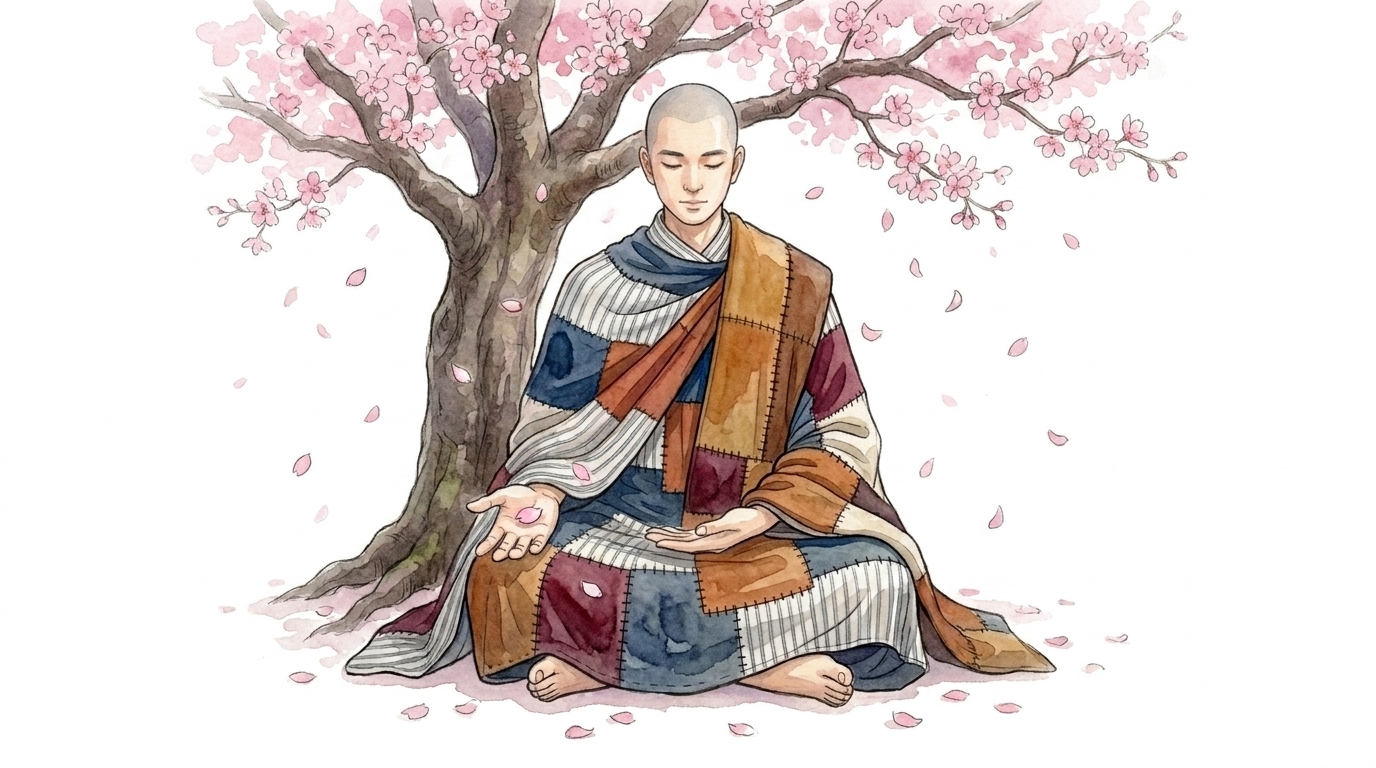
Anicca in Pali is one of the three universal characteristics of all phenomena — characteristics present in everything that exists, without exception.
Those three characteristics are:
- Impermanence (anicca): everything changes, nothing lasts
- Suffering (dukkha): all conditioned things contain some degree of unsatisfactoriness
- Non-self (anattā): there is no fixed, unchanging self
These three are not independent — they explain one another. Because all things are impermanent, clinging to them inevitably leads to suffering. Because nothing is truly and permanently “mine,” grasping is holding onto an illusion.
This article focuses on impermanence — the foundation from which the other two characteristics become understandable.
At What Levels Does Impermanence Operate?
When people hear “impermanence,” they often think of large events: death, accidents, breakups, job losses. But impermanence operates at many levels, from obvious to very subtle.
The gross level — changes we can see
Spring passes into summer. Children grow up. Loved ones age. Companies close. Relationships end. This is the impermanence everyone can see — but not everyone accepts.
The middle level — changes we rarely notice
Moods shift hourly. The friend you cherish today may be different tomorrow. The work that gives you meaning now may feel hollow in a few years. The views you held with certainty at twenty, you may no longer hold at thirty. This is impermanence unfolding continuously but so familiar that we stop noticing.
The subtle level — changes moment to moment
Buddhism describes body and mind changing each moment, each fraction of a second. Cells in the body continuously die and are replaced. Each in-breath is different from the last. Even sitting quietly reading this, you of a second ago are not quite the same as you of now.
Understanding the subtle level is not meant to cause anxiety — but to recognize that there is no fixed point to hold onto. And that, if we have the courage to look at it honestly, is liberating.
Why Does Impermanence Cause Suffering?
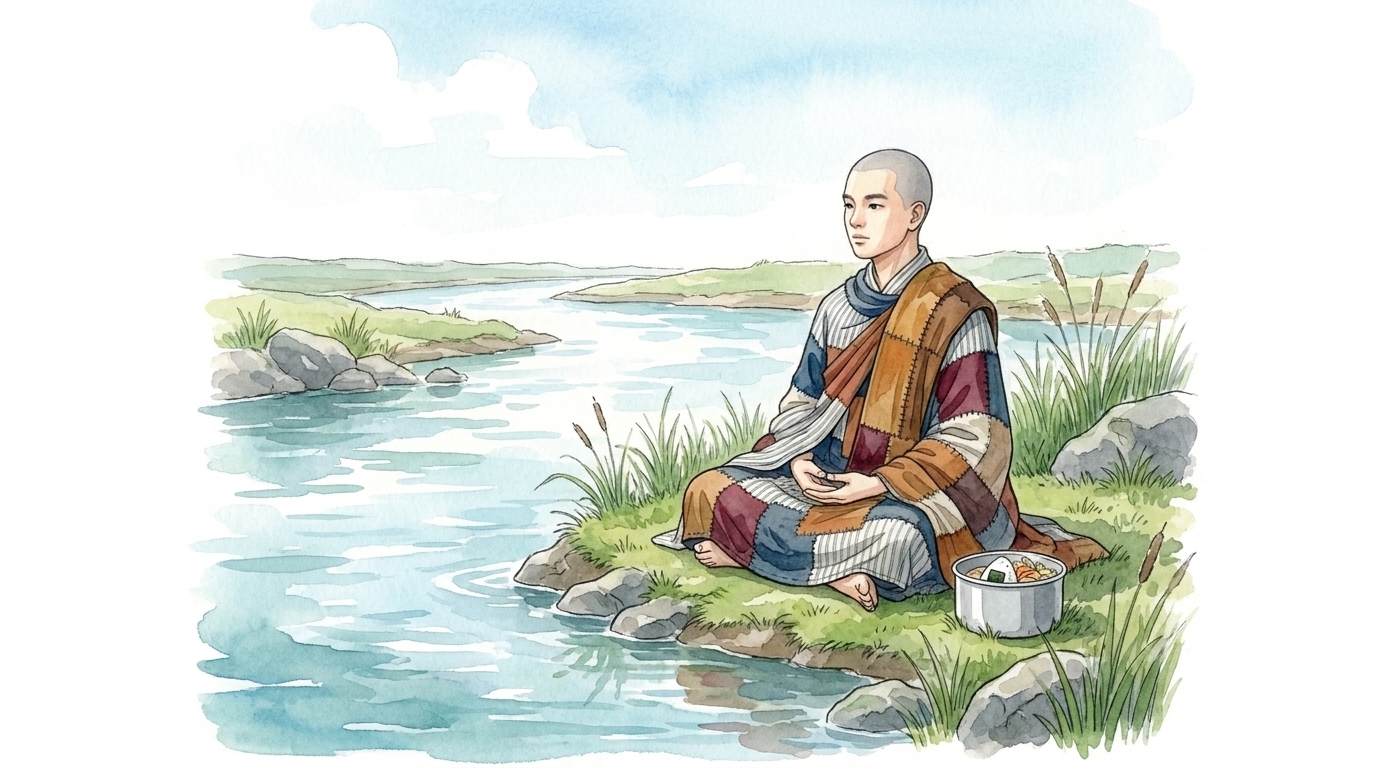
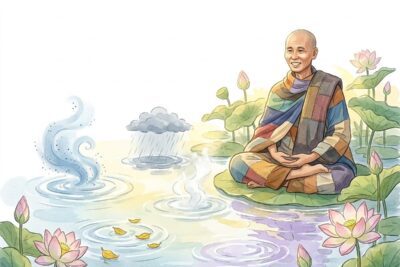
Impermanence itself is not suffering. Impermanence is simply reality — as neutral as the sky or the ground.
Suffering arises when we do not accept impermanence. When we want good things to last forever. When we don’t want difficult things to end. When we build our entire life on the assumption that “this will always be here” — then panic when that assumption is shaken.
A familiar example: you have a favorite cup. If from the beginning you looked at it and thought “one day this will break,” you would still treasure it and use it, but when it fell and shattered — you would not be devastated. Because that possibility was already part of your understanding.
But if you thought “this cup will be with me forever” — then when it breaks, you lose not just a cup. You lose the illusion of permanence you had attached to it.
The Buddha is not asking you to be indifferent to your cup. He is asking you to treasure it in accordance with its true nature — as something temporary, beautiful in the moments it is here.
What Does Accepting Impermanence Look Like in Practice?
Accepting impermanence does not mean becoming indifferent, cold, or unable to love anything. This is a point many people misunderstand when first encountering Buddhism.
Accepting impermanence means: Loving someone deeply and, at the same time, knowing that one day separation will come. Treasuring the present moment without clenching it tightly.
Accepting impermanence means: Doing today’s work well without clinging to the outcome — without letting your sense of self depend entirely on success or failure.
Accepting impermanence means: When something painful arrives, knowing “this will pass” — not to push away the pain, but so you don’t sink into it as though it will last forever.
Accepting impermanence means: When something joyful arrives, enjoying it fully — without needing to hold it in place or fearing when it will go.
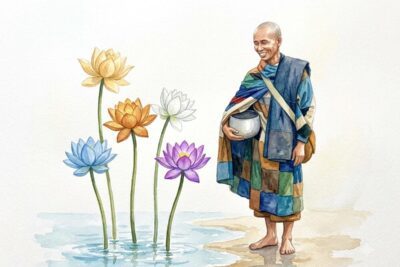
Thich Nhat Hanh once wrote: “Because of impermanence, everything is possible.” Flowers wilt and bloom again. Night darkens and becomes light. A suffering person can find peace. Someone who has erred can change. If everything were fixed, impermanence itself is what allows all transformation to be possible.
Thay Minh Tue – Living Inside Impermanence
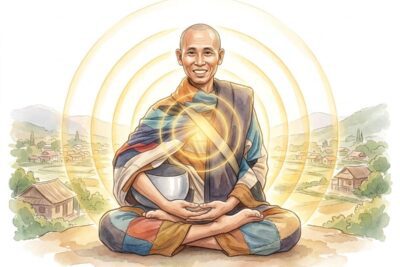
Few people in modern life encounter impermanence as directly and continuously as Thay Minh Tue does on his pilgrimage.
Every day, he sets foot in a new place. No location is “his.” No road ahead is known in advance. Where he sleeps tonight — a tree root, a pavement, a doorstep overhang — will not be there tomorrow. People met today will be left behind as he walks further. Weather, terrain, circumstances — all continuously changing.
In those conditions, nothing can be clung to. Not because Thay lacks the capacity for connection, but because the nature of the journey does not allow any attachment to persist for long. And rather than resist that, he has chosen to move with it.
This is most visible in how he responds to unexpected changes. When visa limits forced him to use motorized transport. When the volume of followers made his original route through Vietnam impractical. When each country’s laws and conditions required him to adjust his practice. In those moments, Thay does not argue with reality — he adjusts and continues.
That is not passivity or lack of will. It is the expression of someone who has genuinely understood impermanence — not just intellectually, but through living: what comes, comes; what goes, goes; and the mind holds its direction.
One Small Step to Begin
You do not need to walk a pilgrimage or give up your possessions to begin practicing with impermanence. Just one small thing:
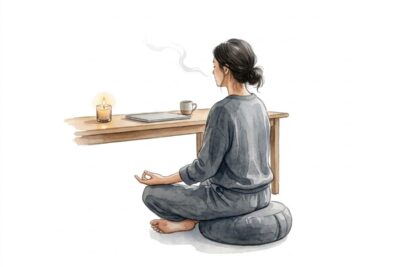
Today, when you pick up something you value — your phone, your morning coffee, or simply looking at the face of someone you love — pause for a moment and think: “This is here now. And one day it will no longer be this way.”
Not to become sad. But to truly treasure it — the way someone treasures who knows this moment is finite and does not want to waste it through carelessness or habit.
That is the first step of impermanence entering real life.
Learn more: who is Thầy Minh Tuệ?Biography, the dhutanga practice and the walking pilgrimage.Read more →