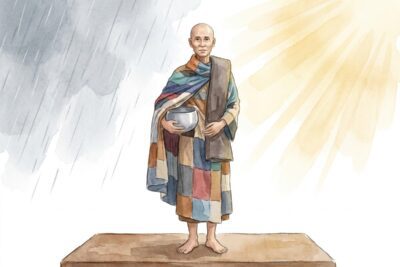
Every religious tradition has a founding moment. In Buddhism, that moment is a quiet afternoon in a deer park near Varanasi, where a newly awakened teacher speaks to five former companions. The talk lasts perhaps an hour. Its title in the Pāli canon is the Dhammacakkappavattana Sutta — the Discourse on Setting the Wheel of Dhamma in Motion (SN 56.11).
It is the first time the Four Noble Truths (cattāri ariya-saccāni) are taught. It is the first time the Middle Way (majjhimā paṭipadā) is named. It is the moment Buddhism, as a lived path, begins.
To understand this discourse is to understand the shape of the entire Buddhist path.
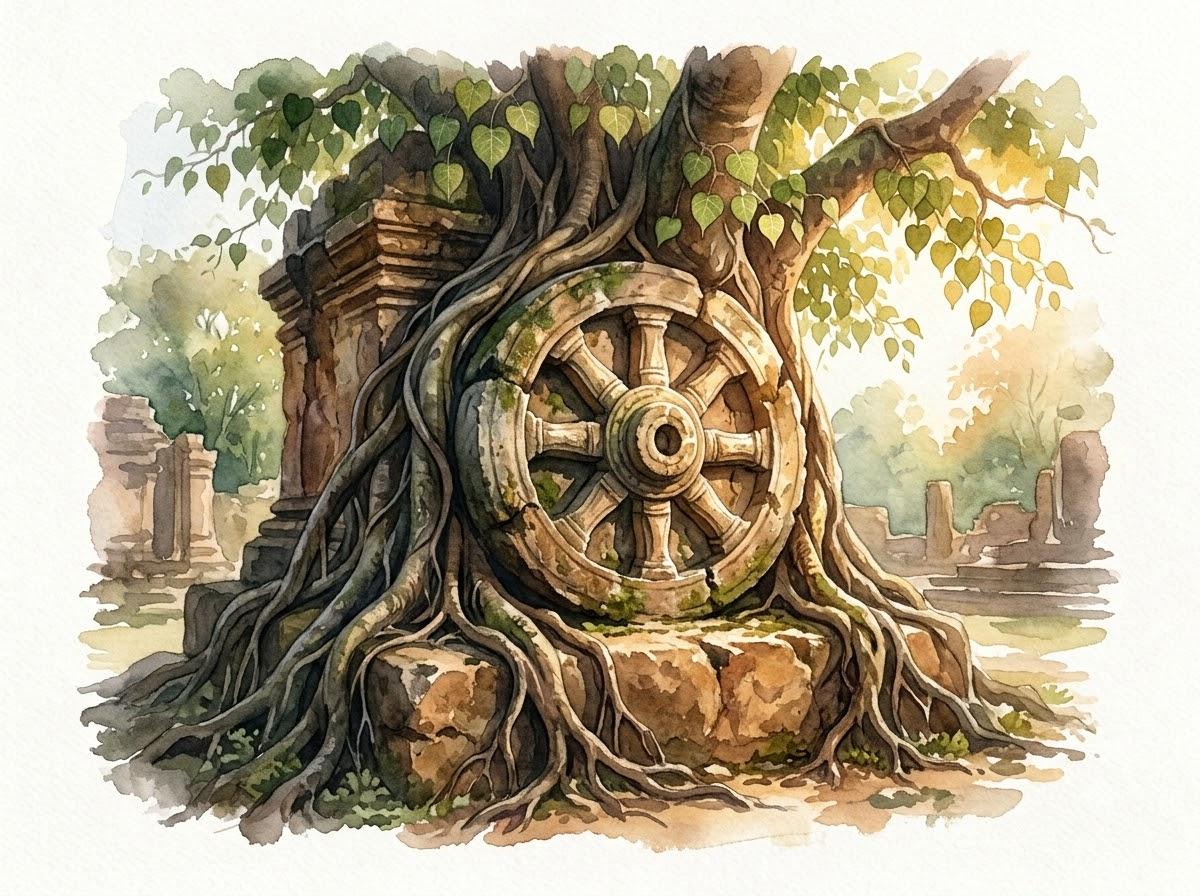
The Setting: The Buddha After Awakening
After his awakening under the Bodhi tree, the Buddha spent several weeks in silent contemplation. The tradition records his hesitation: what he had realized was so subtle, so counter to the current of ordinary desire, that he wondered whether anyone would understand it.
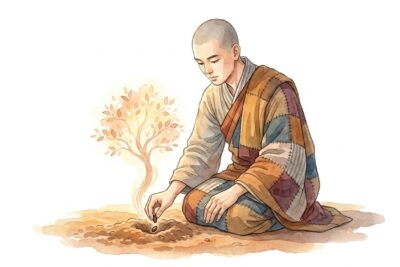
He then considered whom to teach first. His former teachers had already died. He thought of the five ascetics (pañcavaggiyā) who had shared six years of extreme austerities with him before leaving in disappointment when he abandoned self-mortification and accepted a meal of rice-milk. They were at Isipatana, the Deer Park near Varanasi.
The Deer Park (Isipatana) and the Five Ascetics
The five — Kondañña, Vappa, Bhaddiya, Mahānāma, and Assaji — saw the Buddha approaching from a distance. They had agreed not to receive him with respect, since in their view he had “returned to a life of ease.” But as he drew closer, their agreement collapsed. One prepared a seat, another water for washing his feet. Something in his presence had changed.
Isipatana, “the resort of the seers,” was already a place of ascetic retreat. That it became the birthplace of the Dhamma’s first teaching is fitting: the message was addressed first to those most serious about the search for liberation.
The Middle Way – Neither Indulgence Nor Self-Mortification
The Buddha opens the discourse by naming two extremes to be avoided:
The pursuit of sensual pleasure (kāma-sukhallikānuyoga) — “low, common, vulgar, unworthy, and unprofitable.” The extreme of indulgence.
The pursuit of self-mortification (atta-kilamathānuyoga) — “painful, unworthy, and unprofitable.” The extreme he himself had lived for six years, until his body was skeletal and his mind no clearer.
Between these two, he says, is the Middle Way — a path that “gives vision, gives knowledge, and leads to peace, to direct knowledge, to enlightenment, to Nibbana.” This Middle Way is then identified as the Noble Eightfold Path: right view, right intention, right speech, right action, right livelihood, right effort, right mindfulness, and right concentration.
The Middle Way is not a compromise between two errors. It is a different kind of path altogether — one that trains the mind rather than either feeding or attacking the body.
The Four Noble Truths Taught for the First Time
Having named the Middle Way, the Buddha then unfolds the Four Noble Truths.
1. The Noble Truth of Suffering (dukkha-sacca). Birth is suffering, aging is suffering, sickness is suffering, death is suffering; union with the unpleasant is suffering, separation from the pleasant is suffering, not getting what one wants is suffering. In short, the five clinging-aggregates (pañc’upādāna-kkhandhā) are suffering.
2. The Noble Truth of the Origin of Suffering (samudaya-sacca). The cause is craving (taṇhā) — craving for sensual pleasure, craving for existence, craving for non-existence.
3. The Noble Truth of the Cessation of Suffering (nirodha-sacca). The complete fading away and cessation of that craving is the end of suffering.
4. The Noble Truth of the Path to the Cessation of Suffering (magga-sacca). The Noble Eightfold Path.
He then adds a crucial teaching: each truth carries a specific task. Suffering is to be understood. Its origin is to be abandoned. Its cessation is to be realized. The path is to be developed. Twelve aspects in total — four truths, three phases each. Only when all twelve had become clear to him, the Buddha says, did he claim to have attained unsurpassed awakening.
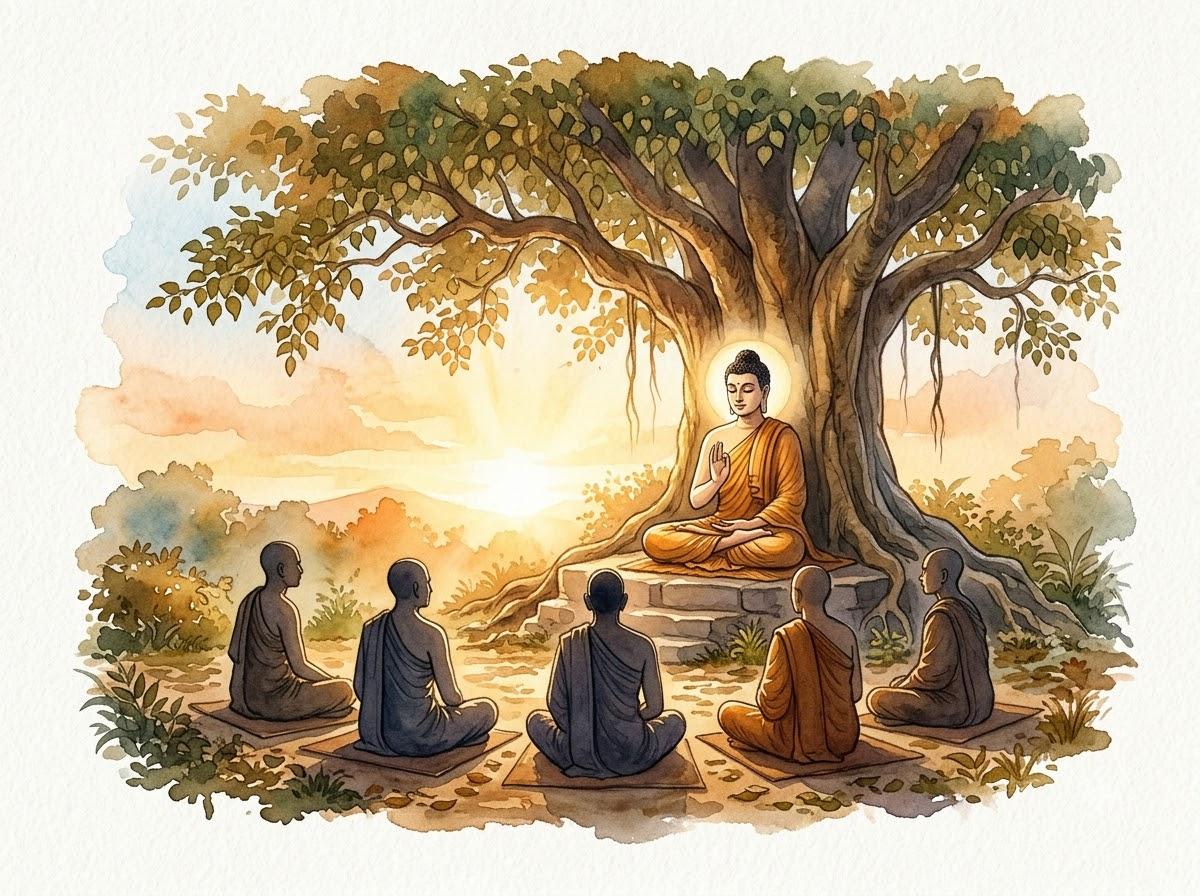
What Does “Turning the Wheel of Dhamma” Mean?
The wheel (cakka) in Indian tradition was the emblem of a universal monarch (cakkavattī) — a king whose rule turns unopposed across the world. By calling his teaching a “wheel,” the Buddha claimed that the Dhamma has its own sovereignty — not political, but the sovereignty of truth.
To “set the wheel in motion” (dhamma-cakka-pavattana) means to inaugurate a teaching that will roll onward through history, unstoppable by anyone who does not accept it. It is not a metaphor for a debate won. It is the beginning of a lineage that continues to this day.
The Result Immediately After the Discourse
As the Buddha finished, Kondañña — the eldest of the five — experienced a moment of insight. The text records the Buddha’s exclamation: Aññāsi vata bho Koṇḍañño — “Kondañña has understood, Kondañña has understood.” From that moment he was called Aññā-Kondañña — “Kondañña Who Knew.” He became the first person to attain stream-entry (sotāpatti), the first member of the Sangha in the technical sense.
The other four attained the same insight in the days that followed. The Sangha of noble ones (ariya-saṅgha) had come into existence.
Master Minh Tuệ on the Middle Way
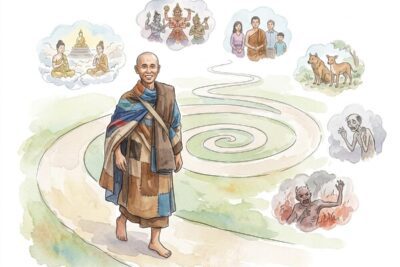
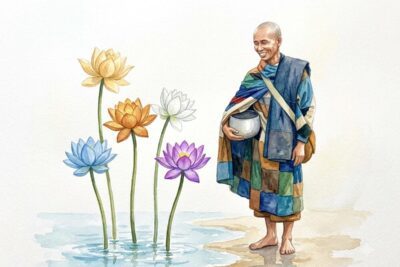
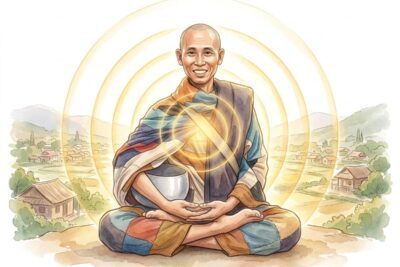
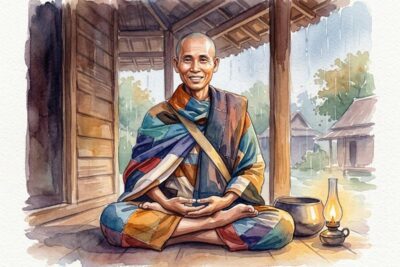
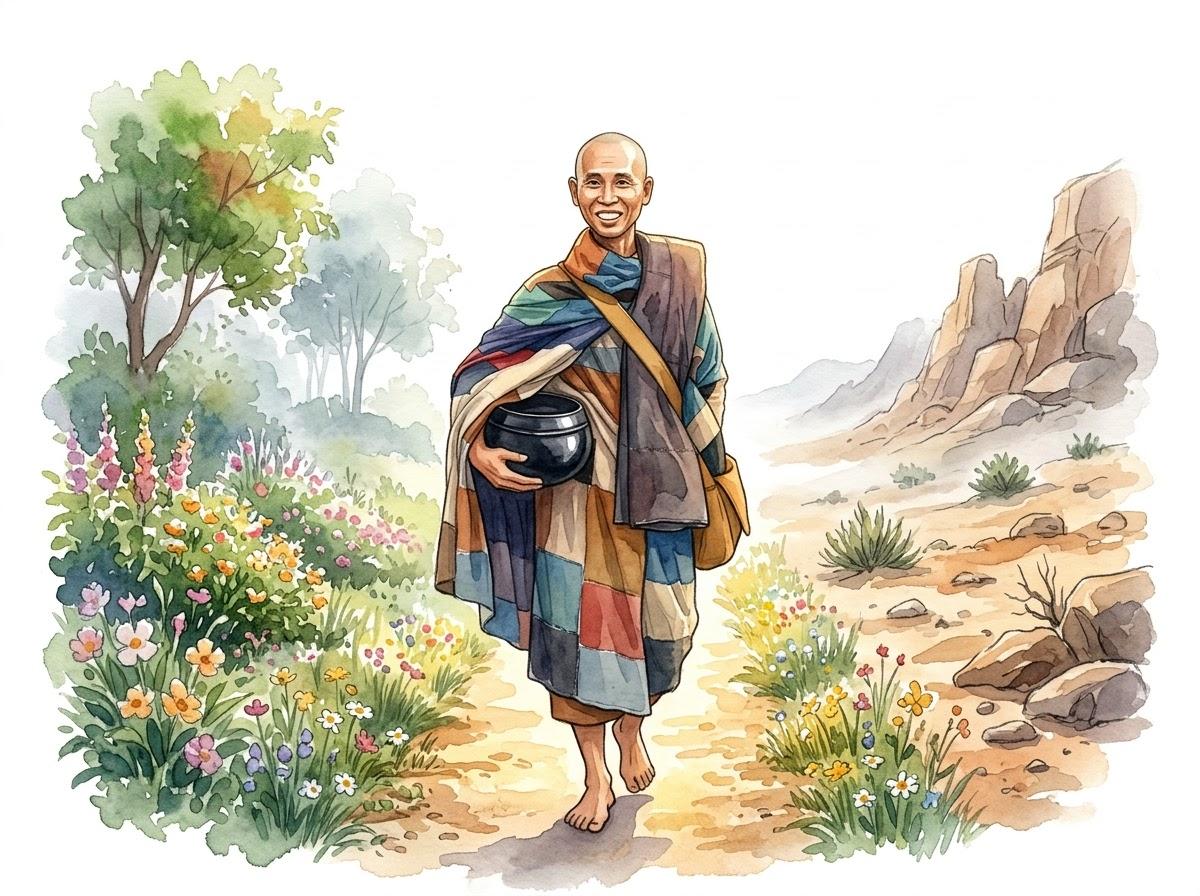
Observers sometimes assume that Master Minh Tuệ, because he keeps ascetic practices (dhutaṅga) — one meal a day, alms only, walking barefoot, no accumulation — is practicing the extreme of self-mortification the Buddha rejected. This misreads the Middle Way.
The self-mortification the Buddha rejected was the belief that tormenting the body is the path — fasting to the point of collapse, holding the breath until unconsciousness, standing on one leg for days. The dhutaṅga practices are different in aim: they are voluntary simplifications that reduce craving and dependency, not attempts to purify through pain.
Master Minh Tuệ eats one meal a day — but he eats. He walks barefoot — but he walks at the pace his body allows. He accepts food from anyone regardless of quality — but he does not refuse to eat. What can be observed is a discipline that reduces the pull of comfort without attacking the body itself.
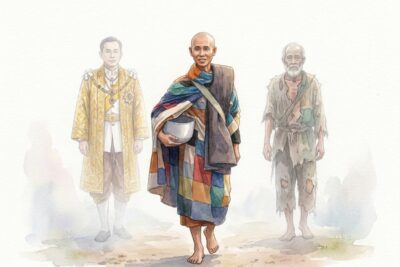
This is closer to the Middle Way as the Buddha described it than a life of neither indulgence nor discipline. The Middle Way is not the middle between hardship and comfort; it is a training path oriented by the Eightfold Path.
Note: This analysis is based on observable behavior, not Master Minh Tuệ’s own words about his inner experience. The actual depth of his inner development is something only the practitioner himself can know.
Historical Meaning and Application Today
The Dhammacakkappavattana Sutta is short — a few pages in translation — but it contains the architecture of the entire path: the diagnosis (suffering), the cause (craving), the healing (cessation), the medicine (the Eightfold Path). Every later discourse can be read as an expansion of one of these four points.
For contemporary practitioners, the discourse offers a test: any teaching that promises liberation without addressing craving, or that claims a shortcut around the Eightfold Path, is departing from the first turning of the wheel. The Buddha did not add anything essential in later teachings — he unfolded what was already present here.
Related: The Four Noble Truths, The Noble Eightfold Path, 37 Aids to Awakening.
Frequently Asked Questions
Q1. Where can I read the First Discourse?
It is found in the Pāli canon at Saṃyutta Nikāya 56.11 and Vinaya Mahāvagga I.6. Reliable English translations by Bhikkhu Bodhi and Thanissaro Bhikkhu are widely available.
Q2. Why did the Buddha teach this to ascetics rather than kings or scholars?
The five ascetics had already renounced ordinary life and were prepared to hear a teaching about the end of craving. Their minds were ripe. The Buddha taught according to the readiness of his audience.
Q3. Is the Middle Way a compromise?
No. It is a distinct path — the Eightfold Path — that neither indulges the senses nor attacks the body. It replaces both extremes with training of mind and conduct.
Q4. What is the significance of the wheel image?
The wheel signified universal sovereignty in Indian culture. Applied to Dhamma, it means the teaching rolls forward under its own truth, not by force.
Q5. Did anyone become enlightened during this discourse?
Kondañña attained stream-entry, the first stage of awakening. The other four ascetics reached the same insight in the days that followed and were fully ordained.