Medical disclaimer: This article shares knowledge for reflection and is not a substitute for professional care by a psychiatrist, psychologist, or licensed therapist. If you are experiencing persistent anxiety, prolonged depression, thoughts of self-harm, or any serious psychological difficulty, please seek professional help first.
Something interesting has been unfolding in Western psychology over the past few decades.
Scientists — long accustomed to controlled experiments, quantitative data, and functional MRI scans — have turned their attention to a twenty-five-century-old tradition rooted in Asia.
They have turned toward Buddhism. More specifically, toward mindfulness (sati).
Why? Because they discovered that modern therapies — however sophisticated — were missing something. And what they were missing, the Buddha had taught long ago.
Why Western Psychology Turned to Buddhism
By the end of the twentieth century, clinical psychology encountered a wall. Antidepressants and cognitive-behavioral therapy (CBT) helped many people, but a stubborn group of patients kept relapsing.
The problem: most traditional therapies focused on the content of thoughts — replacing negative thoughts with positive ones, correcting distorted beliefs, arguing with oneself.
Yet a deeper layer remained untouched: the relationship with thoughts. A depressed person is not just having negative thoughts — they are fused with them, identifying with them, believing “I am those thoughts.”
Buddhism offers a different view. In the Satipaṭṭhāna Sutta (MN 10), the Buddha teaches observation of the mind as one might observe a flowing stream: notice a thought arise, know it has arisen; notice it pass, know it has passed. No identification, no argument, no suppression.
This exact insight — observation without attachment — became the bridge between Buddhism and modern psychology.
Jon Kabat-Zinn and MBSR
In 1979, Jon Kabat-Zinn — a molecular biologist at the University of Massachusetts — founded Mindfulness-Based Stress Reduction (MBSR). He had practiced Vipassanā and Zen meditation for years, and he wondered: if we strip away the religious language and keep the method, could mindfulness enter the hospital?
MBSR is an eight-week course, one session per week, with daily home practice. Participants learn:
Body scan — moving attention through each region of the body, clearly noting sensations (a first step of the Four Foundations of Mindfulness — contemplation of the body, kāyānupassanā).
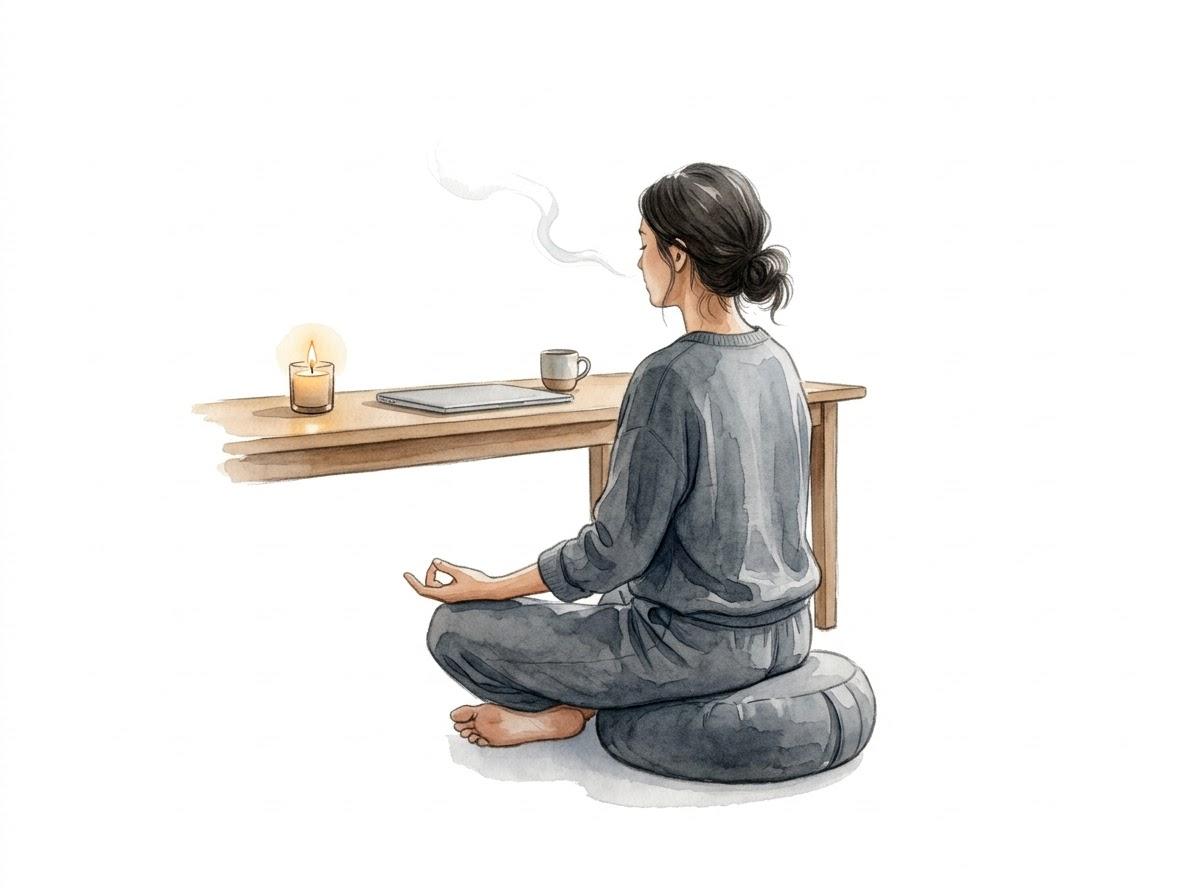
Breath meditation — observing the in-breath and out-breath, noticing when the mind wanders and gently returning (this is ānāpānasati).
Walking meditation — clearly knowing each footstep (this is caṅkama).
Mindfulness in daily life — eating knowing you are eating, washing dishes knowing you are washing dishes.
After four decades, MBSR has been studied in thousands of clinical trials. The results are consistent: reduced stress, reduced anxiety, reduced chronic pain, improved sleep.
ACT and DBT – Third-Wave Therapies
After MBSR, psychologists developed further models — collectively called “third-wave cognitive-behavioral therapies” — all of which integrate mindfulness.
ACT (Acceptance and Commitment Therapy) — developed by Steven Hayes. Its core message: do not battle difficult thoughts and feelings; accept them as part of experience and keep acting according to your chosen values. This resonates deeply with the spirit of upekkhā (equanimity) in Buddhism.
DBT (Dialectical Behavior Therapy) — developed by Marsha Linehan, originally for borderline personality disorder. DBT has four skill groups, with mindfulness as the foundation. Linehan openly acknowledged that this skill set comes from Zen and Vipassanā.
MBCT (Mindfulness-Based Cognitive Therapy) — combines traditional CBT with mindfulness. Research shows MBCT reduces relapse rates by 40–50% in patients with recurrent major depression.
A concrete example clarifies how ACT works in practice. A person with social anxiety may spend years trying to argue their fearful thoughts away — “no one is really watching me,” “the presentation went fine.” ACT changes the target: rather than winning the argument, the practitioner learns to notice the thought “everyone will judge me” arise, label it as a thought (not a fact), and continue with the valued action — giving the presentation — while the thought is still present. The fear does not vanish; it stops being a veto. This maps closely onto sati-sampajañña (mindful awareness and clear comprehension) in Buddhist practice, where an unpleasant mental state is neither denied nor obeyed.
Mindfulness at Work and at School
For office workers and students — groups where sustained attention is the working currency — mindfulness offers practical, low-cost tools that fit inside an ordinary day.
Before opening the laptop or first class. Three breaths. Notice the body seated in the chair, the feet on the floor, the shoulders. This thirty-second pause interrupts the automatic momentum of stress that carries over from the commute.
Between tasks. When finishing one email or one assignment and about to open the next, pause for one full breath. This tiny transition — what teachers call a “reset breath” — reduces the cognitive spillover in which unfinished thoughts from the previous task bleed into the next.
During a difficult conversation or exam. Feel the feet on the floor. This physical anchor pulls attention out of the anxious narrative and back into the present moment where actual capability lives.
Walking between meetings or classrooms. Instead of scrolling, walk knowing you are walking. Even sixty seconds of mindful walking measurably lowers heart rate and clears mental fog before the next demand.
Several universities and companies have piloted eight-week mindfulness programs derived from MBSR, adapted to twenty-minute weekday sessions. Reported outcomes include improved focus, better sleep, and reduced burnout scores. The application is secular; the roots remain in the Buddha’s teaching on sati.
What the Dhamma Explains That Science Has Not Reached
Modern therapies stop at symptom reduction: less anxiety, less depression, more stable functioning. That is a valid and useful goal.
But Buddhism goes further. The Buddha did not only teach the reduction of suffering — he taught the ending of suffering.
In the Four Noble Truths (cattāri ariyasaccāni), suffering (dukkha) is not merely anxiety and depression. It includes the suffering of birth, aging, illness, and death; the pain of separation from loved ones; the pain of contact with what we dislike; the pain of not getting what we want. Deepest of all is the suffering of clinging to a “self” that is in fact only five aggregates (pañcakkhandhā) arising and passing continuously.
Mindfulness in MBSR helps you observe a wave of anxiety without becoming it. Mindfulness in Buddhism — when practiced deeply — helps you see that there is no fixed “self” being anxious; there are only phenomena arising and passing.
Science has not stepped into this territory yet — because it is not something fMRI can verify, but something realized through direct experience over long practice.
Master Minh Tuệ and a Living Portrait of a Stable Mind
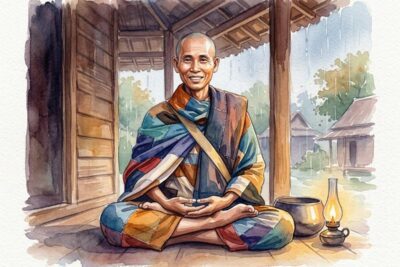
If you want to see what a stable mind looks like outside a laboratory, watch the walking journey of Master Minh Tuệ.
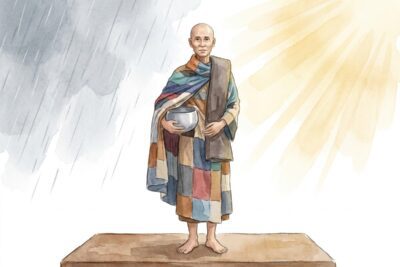
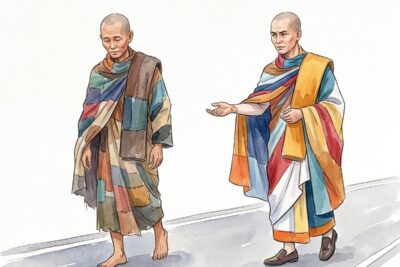
He has walked for years through blazing sun, heavy rain, unfamiliar roads, sometimes surrounded by crowds of thousands. At times he has been celebrated; at other times he has been harshly criticized on social media. He has been welcomed warmly and refused rudely; treated with reverence and with harassment.
What stands out: his face has largely retained an unshaken calm. No elation at praise, no collapse under blame. His speech is slow, brief, without defensiveness.
In the language of psychology, this is emotional regulation at a very high level — the ability to regulate feelings without suppression and without avoidance. In the language of Buddhism, this is upekkhā — equanimity — standing before the eight worldly winds (gain and loss, praise and blame, fame and disrepute, pleasure and pain, aṭṭha lokadhammā) without tilting.
Note: This analysis is based on observable behavior, not Master Minh Tuệ’s own words about his inner experience.
What is worth learning here is not “go walk like the master.” What is worth learning is this: a stable mind is the result of a way of life, not a short-term technique. No one reads a book and receives that calm. It comes from years of virtue (sīla), meditation (bhāvanā), and letting go.
Applying Mindfulness to Mild Anxiety and Low Mood
If you have mild anxiety or low mood — not yet at the level requiring medication — mindfulness can be a useful tool. A few simple steps:
1. Name the emotion. When anxiety arises, do not say “I am so anxious.” Say (mentally): “Anxiety is present.” The small distance between “I” and “the emotion” keeps you from being swept away.
2. Return to the breath. No need to control it — just know it is coming in, going out. Two or three minutes is enough to soften the mind.
3. Scan the body. Notice where the anxiety appears — tightness in the belly? Heaviness in the chest? A headache? Simply notice, do not fix. Sensations often shift on their own when fully acknowledged.
4. Walking meditation. Walk slowly, knowing each step. This is how Master Minh Tuệ practices — and anyone can do it, even in a courtyard or a hallway.
5. Do not aim to “get rid of it.” This is the hardest point. Mindfulness is not a technique to eliminate anxiety. It is a way of living alongside what is present without being ruled by it.

When to See a Professional
Mindfulness is not a universal remedy. Some situations require professional care:
Thoughts of self-harm or suicide. This is an emergency signal — call a crisis line or go to a hospital immediately.
Depression lasting more than two weeks, accompanied by insomnia, loss of appetite, and inability to function.
Recurring panic attacks, especially when they affect work and relationships.
A history of serious mental illness — such as bipolar disorder, schizophrenia, or severe PTSD. In such cases, intensive meditation (long retreats) can sometimes trigger symptoms — medical supervision is essential.
Currently on medication. Do not stop medication because meditation “feels like it’s helping.” Speak with your doctor first.
Buddhism does not stand against modern medicine. The Buddha called himself bhisakko — a physician of suffering. He always encouraged using the right method for the right problem. Take medicine when medicine is needed. See a specialist when a specialist is needed. And practice mindfulness as a long-term foundation for the whole of life. For a broader look at the path, see our article on the Noble Eightfold Path.
Frequently Asked Questions
Can meditation cure depression?
For mild to moderate depression, research on MBCT shows that mindfulness meditation can reduce symptoms and lower relapse rates. For severe depression, meditation does not replace medication and therapy — but it can be a supportive tool under professional supervision.
Can meditation replace antidepressants?
No. Especially for conditions with a clear biological basis (bipolar disorder, severe depression), medication is necessary. Never stop medication on your own. Meditation is a complement, not a replacement.
Is meditation safe for people with mental illness?
Not always. For those with a history of severe trauma, schizophrenia, or bipolar disorder, long intensive retreats can sometimes trigger symptom flare-ups. If you belong to this group, practice briefly under an experienced teacher and consult your doctor.
How long until I see results?
Studies on MBSR (an eight-week course, 30–45 minutes daily) show clear effects after about two months of regular practice. But the real benefit arrives when mindfulness becomes a way of life, not a short-term exercise.
Do I need to be Buddhist to practice?
No. MBSR and secular methods derived from Buddhism are designed for everyone and require no religious belief. You can practice mindfulness as a skill — and if you wish to explore its origins, the door of the Dhamma is always open.