There are thousands of suttas, hundreds of schools, and countless interpretations of the Buddha’s teaching. How do you know which ones are genuinely aligned with what he taught?
The Buddha left a simple test: three marks. Any teaching that bears all three — even if not found in the canon — is consistent with the Dhamma. Any teaching that lacks one — even if attributed to the Buddha — should be reconsidered.
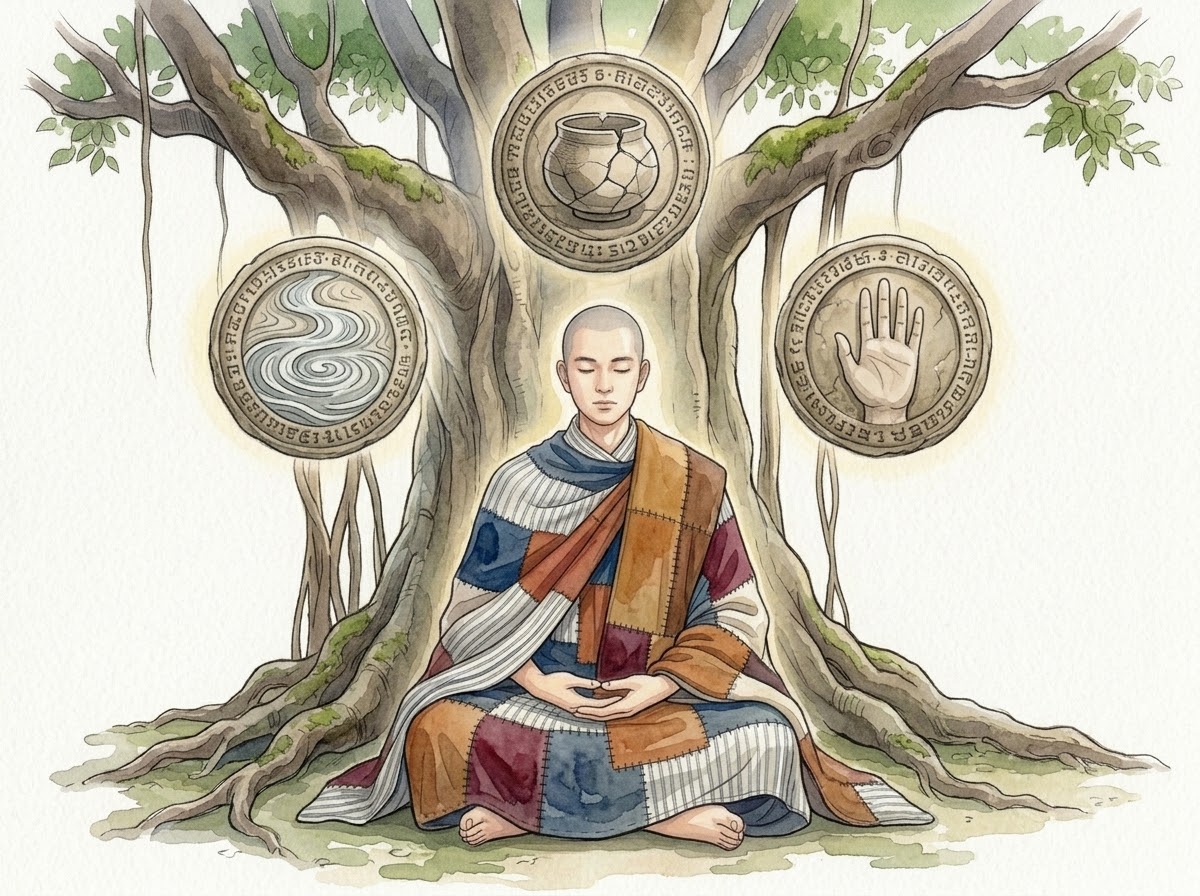
These three marks are called the Three Marks of Existence (Tilakkhaṇa): Impermanence, Suffering, and Non-self.
The Three Marks
1. Impermanence (Anicca)
Everything changes. No exceptions.
The body changes every second. The mind changes every moment. Relationships change. Health changes. Even what seems most permanent — mountains, oceans, the sun — is changing, only more slowly.
Impermanence is not pessimism. It is reality. And when we look squarely at it, we cling less — we appreciate more fully what is here, and hurt less when it goes.
2. Suffering (Dukkha)
“Suffering” in Buddhism does not only mean pain. Dukkha carries a broader meaning: unsatisfactoriness, incompleteness, instability.
Even when happy, happiness does not last. Even when healthy, we know illness will come. Even when we have everything, we still want more.
The Buddha did not say life is nothing but suffering. He said: in any experience that depends on external conditions, there is always the potential for unsatisfactoriness — because external conditions always change. This insight forms the foundation of the Four Noble Truths.
3. Non-self (Anattā)
There is no fixed, unchanging, independent “self” residing within a person.
This does not mean “nothing exists.” It means: what you call “I” is a continuous stream of body-mind phenomena — the five aggregates — constantly changing, with no part permanently being “me.”
Non-self is the hardest mark to grasp and also the most profound. It does not ask us to deny ourselves — it asks us to look more carefully at what we assume ourselves to be.
How the Three Marks Connect
Because everything is impermanent → nothing can provide lasting satisfaction → that is suffering.
Because everything is constantly changing → no fixed entity called “I” exists → that is non-self.
Because there is no fixed “I” → clinging to anything leads to suffering → the circle returns.
Understand one, and you begin to understand all three. See all three clearly, and you begin to let go. And letting go, according to the Buddha, is the path to liberation.
The Three Marks in the Canon
In the Aṅguttara Nikāya (AN 3.136), the Buddha taught: “All conditioned phenomena are impermanent. All conditioned phenomena are suffering. All phenomena are non-self.”
The third statement is particularly significant: the first two marks apply to conditioned phenomena. But non-self applies to all phenomena — including Nibbāna.
The Three Marks also serve as the standard the Buddha gave his disciples for verification: if someone claims to teach the Buddha’s words, check whether the teaching accords with the three marks. If it does, accept it; if not, set it aside.
Master Minh Tuệ — Living Amid the Three Marks
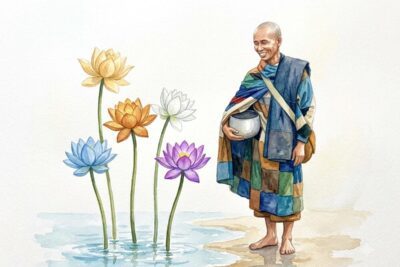
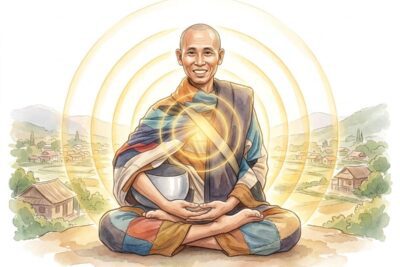
The Buddha taught that the three marks are not beliefs to hold — they are truths to see. And the clearest way to see them is to live within them. Looking at Master Minh Tuệ’s journey, all three marks are present in each day he lives — not as quoted doctrine, but as lived reality.
Impermanence (anicca): Each day he is somewhere different. No fixed address, no schedule, no permanent possessions. Weather changes, roads change, people change — and he resists none of it. Most of us know everything is impermanent yet live as though things will stay — building houses, accumulating wealth, clinging to relationships. Master Minh Tuệ lives the opposite way: with nothing fixed to lose, impermanence is not a threat but a companion. When the Buddha taught “all conditioned phenomena are impermanent” (AN 3.136), it was not a sorrowful statement — it was an invitation to let go. And he has let go.
Suffering (dukkha): He does not flee from suffering. Hunger, fatigue, heat, cold, loneliness, misunderstanding — all are present on the road. But there is a crucial point: the Buddha did not simply say “life is suffering.” He said: clinging to the five aggregates is suffering (upādānakkhandha dukkha). Suffering does not lie in pain itself — it lies in clinging to the desire for pain to stop. Master Minh Tuệ’s way of facing hardship differs from ordinary people: no resentment, no desperate attempts to eliminate discomfort, no making bodily comfort a condition for continuing. He sees suffering as it is — a phenomenon that is present, that will pass — and continues walking.
Non-self (anattā): This is the deepest mark — and where Master Minh Tuệ’s expression is clearest. Millions call him “Master,” thousands revere him, media assigns him every possible title — yet he does not claim to be anything. He refers to himself as “con” (a humble Vietnamese pronoun), saying he is merely “someone trying to practice.” In the Anattalakkhaṇa Sutta (SN 22.59) — the Buddha’s second discourse — the Buddha pointed out that no aggregate is “self,” nothing in experience is “mine.” When a person lives without clinging to titles, without fearing being forgotten, without constructing an image of themselves — the “I” naturally grows lighter, because it has nowhere left to take root.
Note: This is an interpretation based on observable actions, not Master Minh Tuệ’s own description of his inner experience.
The Three Marks Across Buddhist Traditions
The Three Marks are recognized by both Theravāda and Mahāyāna traditions, though their interpretations vary.
In Theravāda, the three marks serve as the standard for verifying teachings — any teaching that reflects impermanence, suffering, and non-self is consistent with the Dhamma. This tradition emphasizes direct observation of the three marks through Vipassanā meditation.
In Mahāyāna, the three marks are sometimes expanded into the Four Dharma Seals — adding “Nirvāṇa is peace.” Though the form differs, the essence remains unified: all conditioned phenomena are impermanent, unsatisfactory, and without self.
What matters is that the Three Marks are not articles of faith — they are verifiable truths. You do not need to believe in impermanence — you only need to observe long enough to see that everything around you is actually changing.
Common Misconceptions
“Impermanence means pessimism”: Not at all. Impermanence has two sides: good things pass, but so do bad things. Understanding impermanence helps us appreciate the present and maintain hope during difficulties.
“Suffering means life is nothing but pain”: Dukkha is broader than “suffering” — it points to the inherent incompleteness of any experience dependent on changing conditions. The Buddha acknowledged happiness — but happiness dependent on external conditions is inherently unstable.
“Non-self means I don’t exist”: Non-self does not deny existence. It points out that what we think of as a fixed “self” is actually a continuous stream — present, but never permanent.
Applying the Three Marks in Daily Life
When facing loss: Remind yourself — impermanence. What was lost was never truly “yours.” Grief is natural, but clinging to what has passed only prolongs the pain.
When feeling disappointed: Remind yourself — dukkha. Life is not wrong — expectations were. When you understand that nothing external can provide permanent satisfaction, disappointment stings less.
When feeling inferior or superior: Remind yourself — non-self. The “I” you feel inferior or superior about is not fixed, not permanent, not the whole story. Seeing that, both inferiority and pride grow lighter.
The three marks are not three separate lessons. They are one way of seeing — and when that way of seeing becomes habitual, life naturally grows lighter.
The Three Marks in Meditation Practice
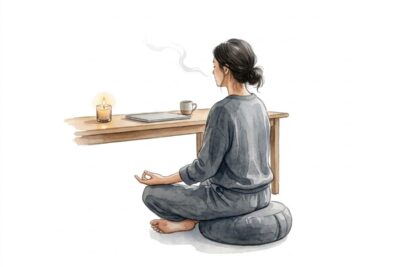
The Three Marks are not only philosophical concepts — they are the primary objects of insight meditation (Vipassanā) in the Theravāda tradition.
Contemplating impermanence: The meditator observes bodily sensations, thoughts, and feelings arise and pass away moment by moment. With sustained practice, even things that seemed solid — the body, the breath, the sense of self — reveal themselves as streams of rapidly changing events.
Contemplating suffering: By seeing how quickly pleasant experiences fade and how futile it is to hold onto them, the practitioner directly experiences dukkha — not as a belief, but as an observable fact.
Contemplating non-self: The deepest insight. Watching the entire field of experience — sensations, perceptions, thoughts, consciousness itself — the meditator searches for a “self” and finds only processes. No owner behind the experience, no experiencer behind the experiencing. Just phenomena arising and passing, conditioned by other phenomena.
The Buddha taught that seeing any one of the three marks deeply enough leads to seeing the other two, because they are three facets of the same reality. A practitioner who truly sees impermanence will inevitably see dukkha and anattā as well.
Frequently Asked Questions
What are the Three Marks of Existence in Buddhism?
The Three Marks (Tilakkhaṇa) are impermanence (anicca), suffering or unsatisfactoriness (dukkha), and non-self (anattā). They are the three fundamental characteristics that define all of conditioned reality.
Why does Buddhism say all life is suffering?
Buddhism does not say all life is only suffering. Dukkha means unsatisfactoriness — the inherent instability in anything that depends on changing conditions. The teaching points to the root cause of dissatisfaction, not to a blanket denial of happiness.
How are the Three Marks used to verify Buddhist teachings?
The Buddha instructed his disciples to test any teaching against the three marks. If a teaching reflects impermanence, suffering, and non-self, it is consistent with the Dhamma — regardless of its source.
How do the Three Marks relate to the Five Aggregates?
The Five Aggregates are the detailed analysis of what makes up a person, and all five bear the three marks: each aggregate is impermanent (constantly changing), unsatisfactory (cannot provide lasting fulfillment), and non-self (contains no fixed, unchanging entity). Examining the aggregates through the lens of the three marks is a core meditation practice.
Is non-self the same as having no soul?
Non-self (anattā) means there is no permanent, unchanging, independent entity within or behind the changing phenomena of experience. Rather than debating whether a “soul” exists, the Buddha focused on what can be directly observed: everything we can identify as “me” or “mine” is conditioned, changing, and not fully under our control.
Can understanding the Three Marks reduce anxiety?
Yes. Much anxiety comes from trying to hold on to what is changing (resisting impermanence), expecting permanent satisfaction from impermanent things (misunderstanding dukkha), and taking everything personally (overidentifying with a fixed self). Seeing the three marks clearly loosens these patterns and naturally brings greater ease.