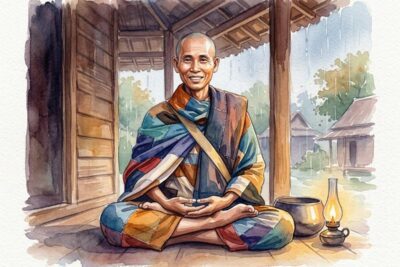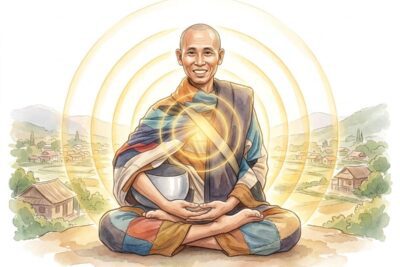
In Buddhism, the image of a monastic — shaved head, robes, alms bowl — carries a special power. It evokes respect, trust, and a willingness to give among Buddhist devotees.
But precisely because of that power, the monastic appearance is sometimes exploited. People who are not ordained wear robes, shave their heads, and pose as monastics to receive offerings, money, or reverence. This is known as sangha impersonation — or in Pali terms, the act of falsely assuming the appearance of one who has gone forth (pabbajita).
This is not merely an ordinary ethical issue. In Buddhist precepts and monastic discipline, this is a grave offense carrying heavy karmic consequences.
What Is Sangha Impersonation?
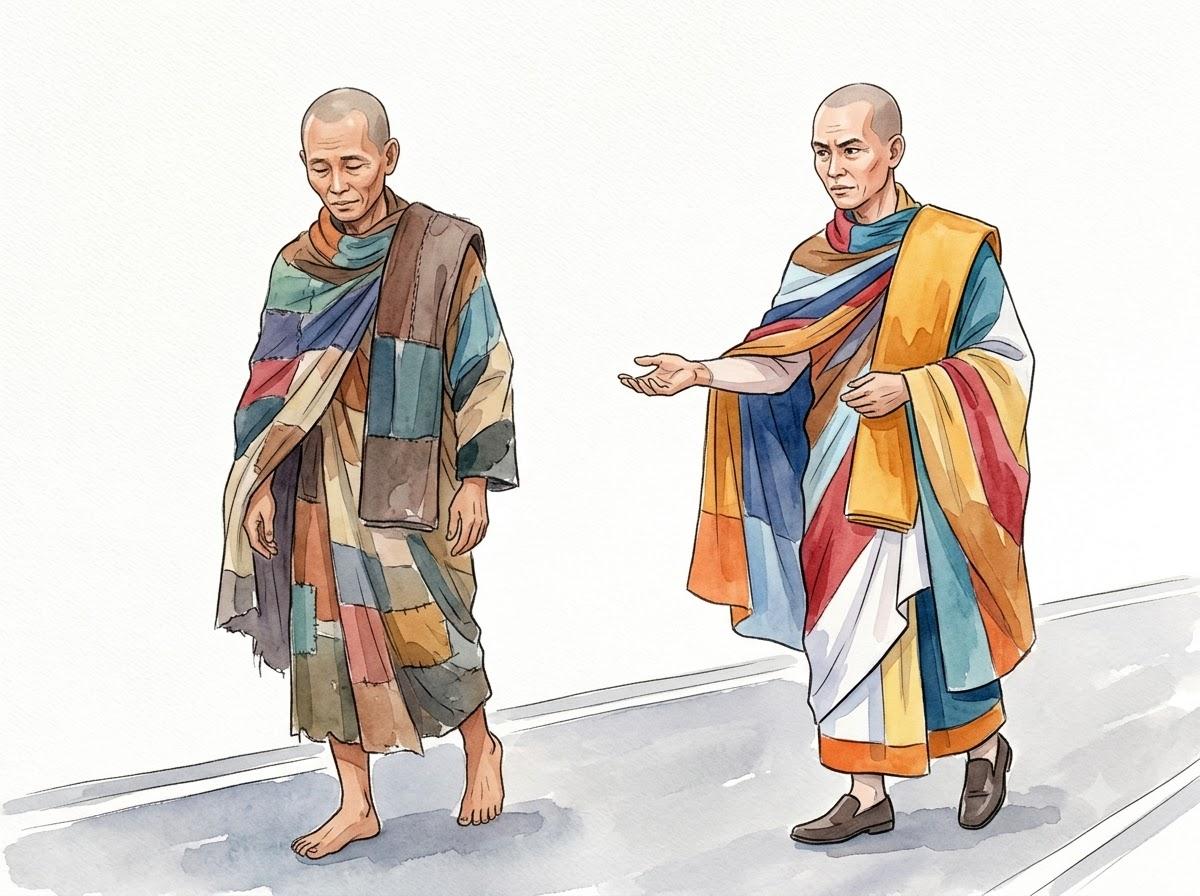
“Sangha appearance” refers to the outward form of a monastic: the robes, the shaved head, the alms bowl, and the dignified deportment of a bhikkhu or samanera (novice monk).
“Sangha impersonation” is the act of falsely claiming to be an ordained monastic when one is not — having never received ordination, never been accepted by a Sangha community, or having already disrobed yet continuing to wear robes for personal gain.
In the Vinaya Pitaka (the monastic code), the Buddha addressed this issue when laying down the conditions for valid ordination. A person only becomes a bhikkhu through higher ordination (upasampadā) performed correctly, before a Sangha of sufficient number, with a qualified preceptor (upajjhāya).
Anyone who wears robes and shaves their head without going through this process — regardless of their stated purpose — is not a Buddhist monastic in the formal sense.
Why Is Sangha Impersonation So Serious?
It destroys trust: When people discover that a “monk” they respected is actually an impostor, their faith in the Sangha and in Buddhism itself is damaged. A single case of fraud can cause hundreds of people to lose trust in all genuine practitioners.
It misappropriates offerings: Buddhist devotees make offerings to the Sangha with sincere devotion, believing merit (puñña) will arise. When offerings go to an impostor, the giver still earns merit through their sincere intention — but the receiver bears heavy kamma, having deceived others to receive what they do not deserve.
It contaminates the Sangha: If impostors infiltrate monastic communities, they bring unwholesome habits and impure motives into the practice environment, negatively affecting the entire community.
Sangha Impersonation in the Modern World
In many Buddhist countries, the problem of fake monks is far from rare:
Fake monks soliciting money: In major cities, especially tourist areas, people occasionally appear wearing robes and asking tourists for money. They belong to no temple or Sangha community.
Exploiting the monastic image on social media: Some individuals wear robes and post “Dhamma talks” online to attract followers and donations — while having no ordination and no genuine understanding of Buddhist teachings.
Identity fraud: Scams carried out in the name of monks — soliciting funds for temple construction or monastic offerings — have caused both material and spiritual harm to many Buddhists.
Master Minh Tuệ and the Question of Monastic Identity
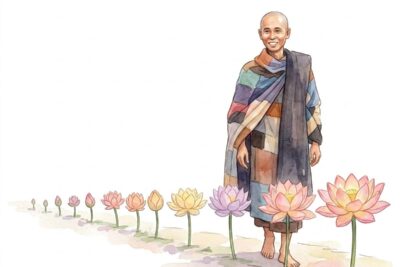
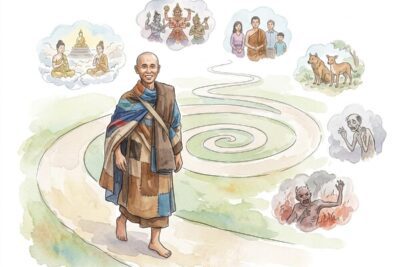
Master Minh Tuệ represents a unique case — and perhaps the one that has compelled Vietnamese Buddhists to rethink their assumptions most deeply — in the discussion of monastic identity. He does not belong to any temple or official Buddhist organization, and he has not received formal bhikkhu ordination through institutional channels. Yet he lives a life of practice far more rigorous than many who hold official monastic status.
He has never called himself a “monk” or claimed any title — these designations were given by the public out of respect. He refers to himself simply as “con” (a humble Vietnamese pronoun) and says he is merely “someone learning to practice.” This attitude removes the element of “impersonation” entirely — because a sangha impostor actively claims monastic status for personal gain, while Master Minh Tuệ actively refuses titles even as millions wish to bestow them.
His case raises a question that Buddhism has debated for over 2,500 years: what constitutes the true essence of “Sangha”? In the Vinaya Pitaka, the Buddha clearly defined the conditions for becoming a bhikkhu: ordination by a Sangha of at least five members, following a specific procedure. In formal terms, Master Minh Tuệ does not meet these criteria — and he has never claimed to be a bhikkhu.
Yet the Buddha also taught in the Dhammapada (verses 264–265): “Not by shaven head does one become an ascetic (samaṇa). One who lies and lives heedlessly — though bearing the ascetic’s form — is merely a worldly person.” And conversely: one who lives in accordance with the precepts and practices genuinely — their spiritual substance does not depend on outward form.
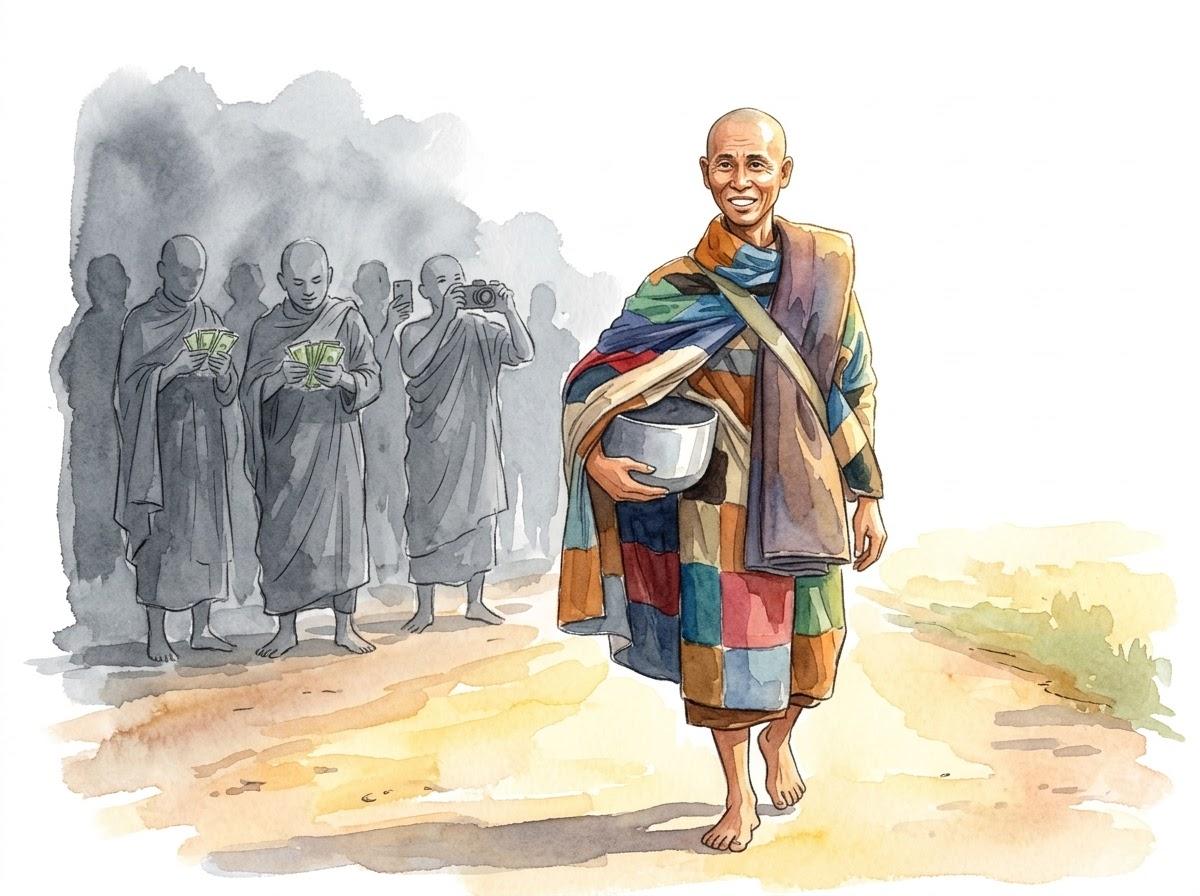
The question has no black-and-white answer. Both form and substance matter — but when they conflict, the substance of practice carries greater weight. Master Minh Tuệ, though belonging to no organization, has demonstrated through years of walking the barefoot alms-round path that he does not “steal” the monastic appearance — because he does not exploit it for gain. He accepts no money, takes no surplus material goods, and builds no reputation by design. He simply walks, living according to what he believes is the path the Buddha taught.
Note: This analysis is based on observable behavior, not Master Minh Tuệ’s own words about his inner experience. The question of anyone’s monastic status is complex and requires comprehensive consideration.
A More Subtle Form of Sangha Impersonation
When people hear “sangha impersonation,” most immediately picture fake monks on tourist sidewalks asking for money. That is the gross form — easy to identify, easy to condemn. But in the canon, there is a more subtle form — arguably far more damaging.
It is the case of a person who has received full ordination, holds credentials, holds titles — but does not keep the precepts, does not practice. In legal terms, they remain a bhikkhu. In spiritual terms, they are borrowing the monastic appearance to do things opposite to what that appearance represents.
By Dhammapada 264–265 (already cited in the definition above): the robe saves no one. The titles “Venerable,” “Elder,” “Most Venerable” save no one. Certificates of ordination save no one. Only real virtue and real practice determine the substance of a practitioner.
Signs of This Subtle Form
Spreading superstition: Some who wear monastic robes teach things not found in the canon — issuing extreme karmic threats to pressure donations, selling amulets, offering paid “spiritual liberation” rituals for the dead, promising to alter destiny through secret ceremonies. The Buddha explicitly forbade this in the Brahmajāla Sutta (DN 1), calling it “wrong livelihood” (micchā-ājīva).
Soliciting money and building empires: Constant appeals for donations, construction of extravagant temples, paid events, personal bank accounts for direct giving. While the bhikkhu code (Nissaggiya Pācittiya 18) explicitly forbids a monk from personally receiving, holding, or using gold and silver — let alone accumulating vast sums.
Living in luxury: Luxury vehicles, expensive watches, the latest phones, private quarters, elaborate meals. While the original image of the renunciant is three robes and one bowl, the rag robe, one meal a day, sleeping at the root of a tree.
Building a personal brand: Recording Dhamma videos for views, posting selfies, growing million-follower fan pages, selling “enlightenment” courses, functioning as religious KOLs. Attention and fame become the goal, replacing liberation as the aim of practice.
Using status to suppress: Invoking institutional authority or monastic rank to attack and silence critical voices — even when those voices are simply pointing back to what the Buddha himself taught.
Why This Form Is the Most Damaging
A fake monk on a sidewalk deceives a few passersby, taking small amounts. The damage is countable.
But a person with full credentials who does not keep the precepts causes damage that cannot be measured:
They collapse the faith of an entire generation. When a well-known “Venerable” is exposed in a financial or moral scandal, millions begin to doubt: “If he is like that, is anything in Buddhism real?” Many leave the religion. Many young people never come to it. In the Buddhist karmic framework, causing others to lose faith in the Dhamma — when it involves creating division within the Sangha — can approach Sangha schism (saṅghabheda), one of the five deeds of immediate consequence (anantariya-kamma), the heaviest category of unwholesome actions in the Theravāda canon.
They make life harder for genuine practitioners. Once the public grows numb to images of “fake practice under real robes,” those who practice sincerely are viewed with suspicion too. Real practitioners must now carry the burden of proving they are not “like those others” — a burden that should not exist.
They turn the Triple Gem into a marketplace. The Buddha, the Dhamma, and the Sangha were meant to be a refuge for the heart — they become products. Offering becomes the purchase of merit. Studying Dhamma becomes buying courses. Devotees become customers.
The Question Is Not “Who Is Right, Who Is Wrong”
This article does not name any specific individual. That falls within the scope of law, institutional Buddhism, and the private conscience of each person. Judging who is or is not a “subtle sangha impostor” is not the authority of the writer or the reader.
But there are two questions any Buddhist may ask when encountering anyone wearing the monastic appearance:
1. Is this person’s conduct consistent with what the Buddha taught in the Sutta and Vinaya Piṭakas? — Not consistent with what the institution declares, not with what admirers praise, but with the Buddha’s own recorded words.
2. Where is this person directing their followers? — Toward the followers’ own practice, toward comparing with the Buddha’s teaching, toward freedom from greed, hatred, and delusion? Or toward personal devotion to this teacher, dependence on secret rituals, and opening the wallet?
These two questions echo what the Buddha taught in the Kālāma Sutta (AN 3.65): do not believe because of tradition, do not believe because of scripture, do not believe because of a teacher, do not believe because of reasoning. Observe for yourself: when practiced, does this lead to less greed, less hatred, less delusion?
The Lesson from Master Minh Tuệ’s Emergence
The most striking thing about the Master Minh Tuệ phenomenon is not himself — it is the public’s reaction. Why did millions of Vietnamese, including those who had been indifferent to Buddhism, suddenly move to tears at the sight of one man walking on an alms round?
Perhaps because they had gone too long without seeing this image — the image of a practitioner living exactly as the canon describes. No luxury car. No phone. No money. No temple-building. No organization. No fundraising. No courses. No follower campaigns.
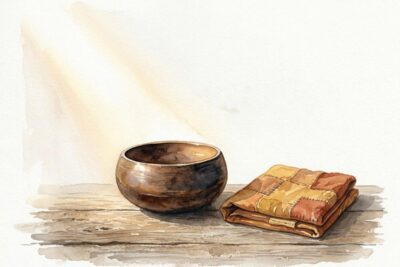
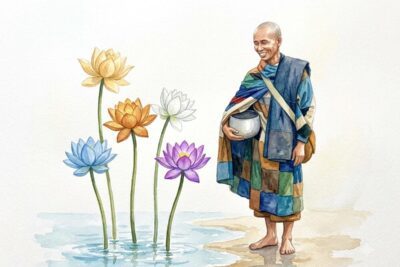
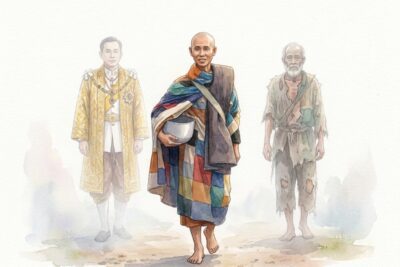
Only: a patched robe, one bowl, bare feet, and steady footsteps.
That simplicity — which was the standard of the renunciant for 2,500 years — became a phenomenon precisely because it had become rare. And what has become rare is often what was original, forgotten or replaced along the way.
Note: This is analysis from the standpoint of doctrine, based on Theravāda Buddhist scripture and public observation. It is not directed at any specific individual. Determining who keeps precepts and who does not falls within the scope of institutional Buddhism, the law, and each person’s conscience.
How to Recognize a Genuine Practitioner
The Buddha taught: “Look at conduct, not at appearance.”
Genuine practitioners typically display these signs:
They do not demand: Authentic monastics do not actively solicit money or material goods. They accept offerings when freely given, without creating pressure.
They live simply: Their life is plain and unadorned — no luxury, no ostentation.
They maintain dignified deportment: Their movement, speech, and manner are calm and composed — not theatrical, not attention-seeking.
They do not exploit their status: They do not use the monastic appearance for commercial promotion, selling products, or building a personal brand.
They have a verifiable practice community: They typically belong to a temple, a Sangha, or a practice tradition that can be confirmed.
Of course, not all genuine practitioners belong to an organization — as Master Minh Tuệ’s case demonstrates. But in most situations, these criteria serve as useful guidelines for discernment.
The Karmic Consequences of Sangha Impersonation
According to Buddhist scriptures, sangha impersonation carries heavy karmic consequences because it combines multiple unwholesome actions:
The kamma of false speech (musāvāda): Falsely claiming to be a monastic is lying at the highest level — deception concerning spiritual life.
The kamma of theft (adinnādāna): Misappropriating offerings that rightfully belong to the Triple Gem.
The kamma of undermining the Dhamma: Destroying people’s faith in Buddhism — causing harm to the spiritual path of countless beings.
In the Milindapañha (The Questions of King Milinda), King Milinda asks Venerable Nāgasena: what if an impostor monk still keeps the precepts? The Venerable replies: even if one keeps the precepts, the act of impersonation remains unwholesome — because it is built on deception, and deception never leads to liberation.
Protecting the Monastic Image
The responsibility does not lie solely with the impostors — it also belongs to the Buddhist community:
Investigate before offering: Know which temple or tradition the person you are supporting belongs to.
Do not blindly trust appearances: Robes do not make a monastic. Conduct is what matters.
Speak up when you discover fraud: Not to judge, but to protect the Dhamma and to protect genuine practitioners.
In the information age, protecting the monastic image also means protecting faith — and right faith is the foundation of every path of practice.
Frequently Asked Questions
What is sangha impersonation?
Sangha impersonation is the act of falsely posing as an ordained Buddhist monastic — shaving the head, wearing robes, carrying an alms bowl — when one is not actually a monk or nun. The purpose is typically to exploit the respect and offerings of Buddhist devotees.
Why is sangha impersonation considered such heavy kamma?
Because it combines multiple unwholesome actions: false speech (falsely claiming monastic status), theft (misappropriating offerings meant for the Sangha), and undermining the Dhamma (destroying faith in the monastic community). The consequences affect not only the impostor but the entire Buddhist community.
How can you distinguish a genuine practitioner from an impostor?
Look at conduct rather than appearance: genuine practitioners live simply, do not actively solicit money, maintain calm and dignified deportment, and do not exploit their status for personal gain. Where possible, verify which temple or practice tradition they belong to before making offerings.
If a monk has received full ordination but does not keep the precepts, is that also sangha impersonation?
Legally, such a person remains an ordained bhikkhu. But in the spirit of the canon — especially Dhammapada 264–265 (“Not by a shaven head does one become an ascetic. One without vows, speaking falsehood, filled with desire — how can he be an ascetic?”) — using the monastic appearance to spread superstition, solicit money, live in luxury, or build a personal brand is a subtle form of sangha impersonation. It is arguably more damaging than the gross form, because it collapses the entire Buddhist community’s trust in the Sangha itself.
If a Buddhist notices such signs in a monastic, what should they do?
Do not judge the individual — that falls within the scope of institutional Buddhism and the law. But every Buddhist has the right and the responsibility to: (1) withhold offerings from activities that clearly conflict with the Vinaya; (2) cross-check any teaching against the original canonical texts rather than accepting it on the strength of a title; (3) take refuge in the Buddha’s own word rather than in personal loyalty to any teacher. This is exactly the spirit of the Kālāma Sutta.