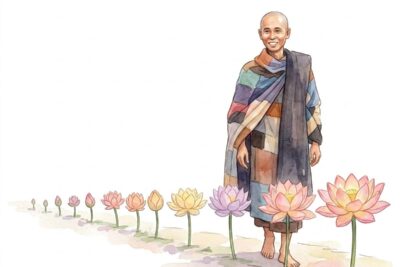
Most people understand effort as “try harder.” But the Buddha never taught blind effort. He taught effort with direction.
Effort in the wrong direction takes you further from the goal. Effort in the right direction makes every step count. To clarify which direction is right, the Buddha laid out four specific types of striving — called the Four Right Efforts (Sammappadhāna).
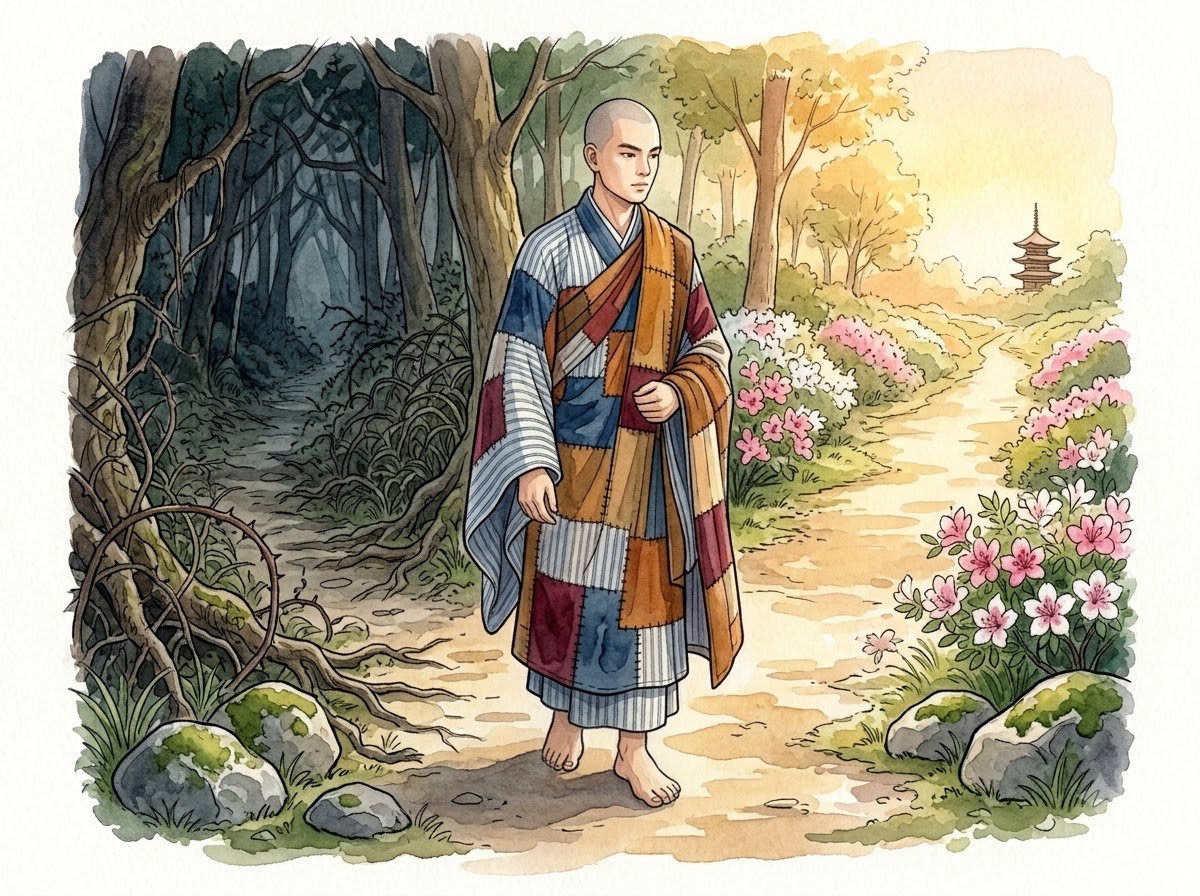
What Are the Four Right Efforts?
The Four Right Efforts belong to the 37 Aids to Awakening (Bodhipakkhiya-dhamma) — the complete training system the Buddha left behind. They also serve as the detailed content of Right Effort (Sammā-vāyāma), the sixth factor of the Noble Eightfold Path.
The four are:
1. Prevent unarisen unwholesome states (Saṃvara-padhāna) — Effort so that unwholesome mental states not yet present do not arise. Example: avoiding environments that trigger craving, anger, or delusion; guarding the sense doors when encountering objects likely to produce affliction.
2. Abandon arisen unwholesome states (Pahāna-padhāna) — When unwholesome states have already appeared — anger, jealousy, the intention to harm — effort to recognize them and let them go, rather than feeding them. Not suppression, but recognition and release.
3. Cultivate unarisen wholesome states (Bhāvanā-padhāna) — Creating conditions for wholesome qualities not yet present to arise: mindfulness, compassion, wisdom, equanimity. Not waiting for them to appear on their own — actively practicing so they have room to grow.
4. Maintain arisen wholesome states (Anurakkhaṇā-padhāna) — When wholesome qualities are present, effort to sustain and develop them, not letting them fade. Like a fire already lit — it needs fuel and shelter to keep burning.
Why All Four?
These four efforts cover two dimensions completely: removing the harmful and nourishing the beneficial, each at two stages: before it appears and after it appears.
If you only prevent harm but never cultivate good — the mind stays empty, with nothing to stand on.
If you only cultivate good but never address harm — wholesome and unwholesome mix together, and progress stalls.
If you develop good qualities but never maintain them — like pouring water into a cracked vessel, whatever you gain drains away.
The four work simultaneously, forming a closed loop: prevention → treatment → construction → maintenance.
The Four Right Efforts in Daily Life
These may sound abstract, but they are deeply practical:
Preventing unarisen unwholesome states: You know you get angry reading negative comments online — so don’t read them. You know shopping malls trigger craving — so visit less often. This is not avoidance — it is wisdom in choosing your environment.
Abandoning arisen unwholesome states: Mid-conversation, anger flares up. Instead of snapping back, pause. Notice: “Ah, anger is arising.” No judgment, no self-blame — just recognition, and letting it pass. Each time you manage this, the unwholesome weakens slightly.
Cultivating unarisen wholesome states: Each morning, sit quietly for five minutes. Send goodwill to loved ones, to people you dislike, to all beings. Compassion is not yet present — so create the conditions for it.
Maintaining arisen wholesome states: After a retreat, you feel peaceful and clear. But three days at home and it fades. Maintaining means: keep practicing daily, even just five minutes, so the good qualities do not disappear.
The Buddha on Right Effort
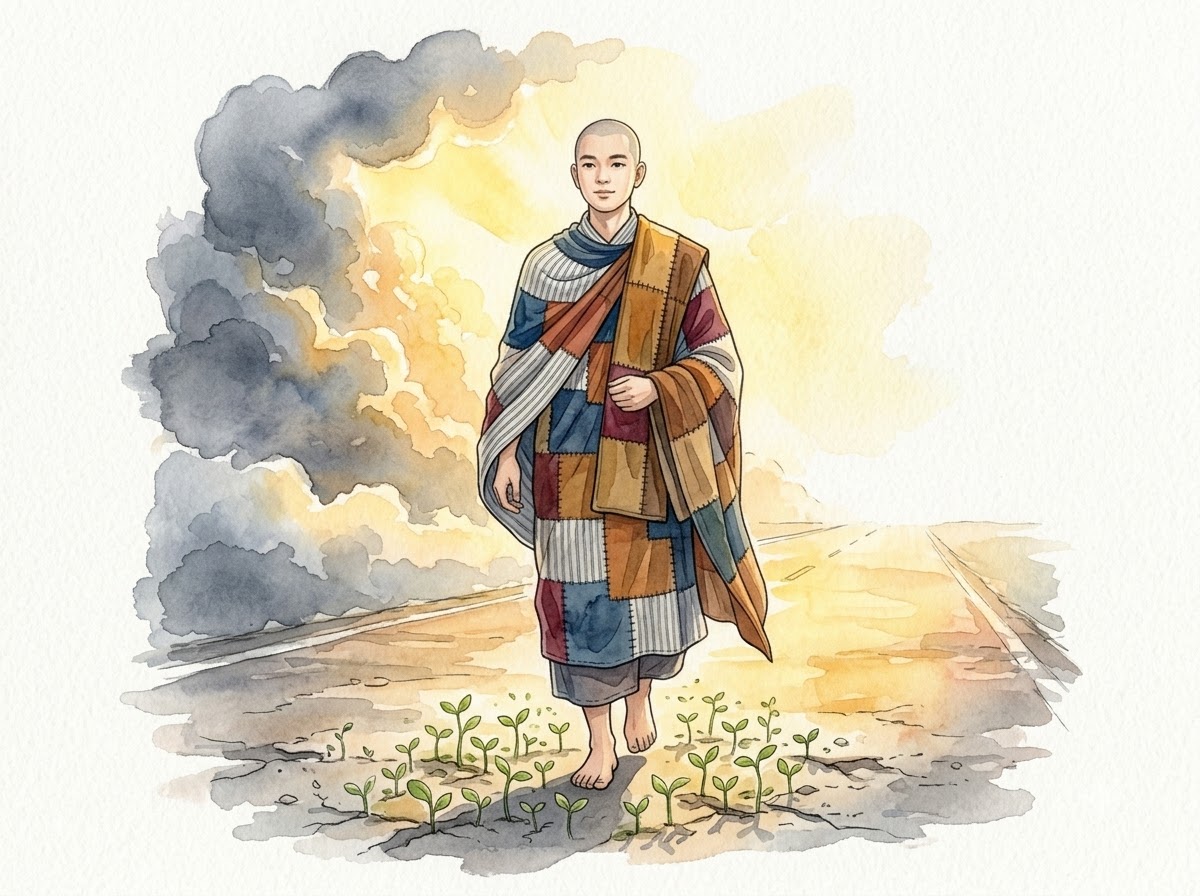
In the Saṃyutta Nikāya (SN 45.8), the Buddha describes Right Effort as precisely these Four Right Efforts — the detailed content of the sixth factor of the Noble Eightfold Path.
What is striking: the Buddha did not demand instant perfection. He did not say “never let an unwholesome state arise.” He said: when it arises, strive to abandon it. And when something wholesome arises, strive to maintain it.
This is a practical approach, not an idealized one: it acknowledges that unwholesome states will appear — but we have the power to choose not to feed them. Wholesome states will fade — but we can actively preserve them.
Master Minh Tue — The Four Right Efforts in Every Step
In the Saṃyutta Nikāya (SN 49.1-12), the Buddha taught that the Four Right Efforts are not blind striving — they are effort with direction and wisdom. Each effort comes paired with clear recognition: this is wholesome, this is unwholesome, this should be kept, this should be released. Looking at Master Minh Tuệ’s journey, these four efforts are not textbook doctrine — they are alive in each daily decision.
Preventing unarisen unwholesome states (saṃvara padhāna): He lives without possessions, without a phone, without social media. This is not deprivation — it is deliberately removing the conditions (paccaya) that give rise to craving, comparison, and mental affliction. The Buddha taught about guarding the sense doors (indriya saṃvara) — protecting eye, ear, nose, tongue, body, and mind from being pulled into unwholesome states by external objects. Without a phone to scroll, without social media to compare, without possessions to worry about — afflictions lose most of their “fuel.” When there is nothing to crave, craving struggles to arise. This is prevention at the level of life structure — far more effective than prevention through willpower alone.
Abandoning arisen unwholesome states (pahāna padhāna): Even with prevention, unwholesome states can still arise — because the mind carries deep-seated habits accumulated over a lifetime. Amid controversy, crowds, praise and criticism — if anger, pride, or anxiety arises in the mind, his response is silence and continued walking. No arguing, no blaming, no nurturing resentment. The Buddha taught several methods for abandoning unwholesome thoughts: replacing them with wholesome ones, reflecting on their danger, redirecting attention, or applying strong effort (Vitakkasaṇṭhāna Sutta, MN 20). Master Minh Tuệ’s silence in the face of controversy can be understood as redirecting attention — refusing to give unwholesome states more fuel by simply not engaging.
Cultivating unarisen wholesome states (bhāvanā padhāna): Each day keeping precepts, each day walking in meditation, each day living the alms-round life — this is how he creates favorable conditions for mindfulness, compassion, and wisdom to develop. The Buddha compared wholesome qualities to seeds: they need soil (virtue), water (effort), and sunlight (wisdom) to sprout. The walking alms-round life is the soil — a space where mindfulness, patience, and letting go can grow each day, uncrowded by worldly concerns.
Maintaining arisen wholesome states (anurakkhaṇā padhāna): This is the hardest effort — and where Master Minh Tuệ’s practice is most evident. There are periods of rest, including the annual rains retreat and times when circumstances prevent travel — but the spirit of practice is never interrupted. The Buddha taught that arisen wholesome states are easily lost — like a flame in the wind, needing constant protection. Master Minh Tuệ’s steadfastness lies not in never stopping, but in never leaving the path he has chosen — regardless of how external circumstances change. This is maintaining at the deepest level: maintaining the direction of the mind, not merely maintaining external actions.
Note: This analysis is an interpretation based on Master Minh Tuệ’s observable actions, not his own words about his inner experience.
Not Straining — But Knowing
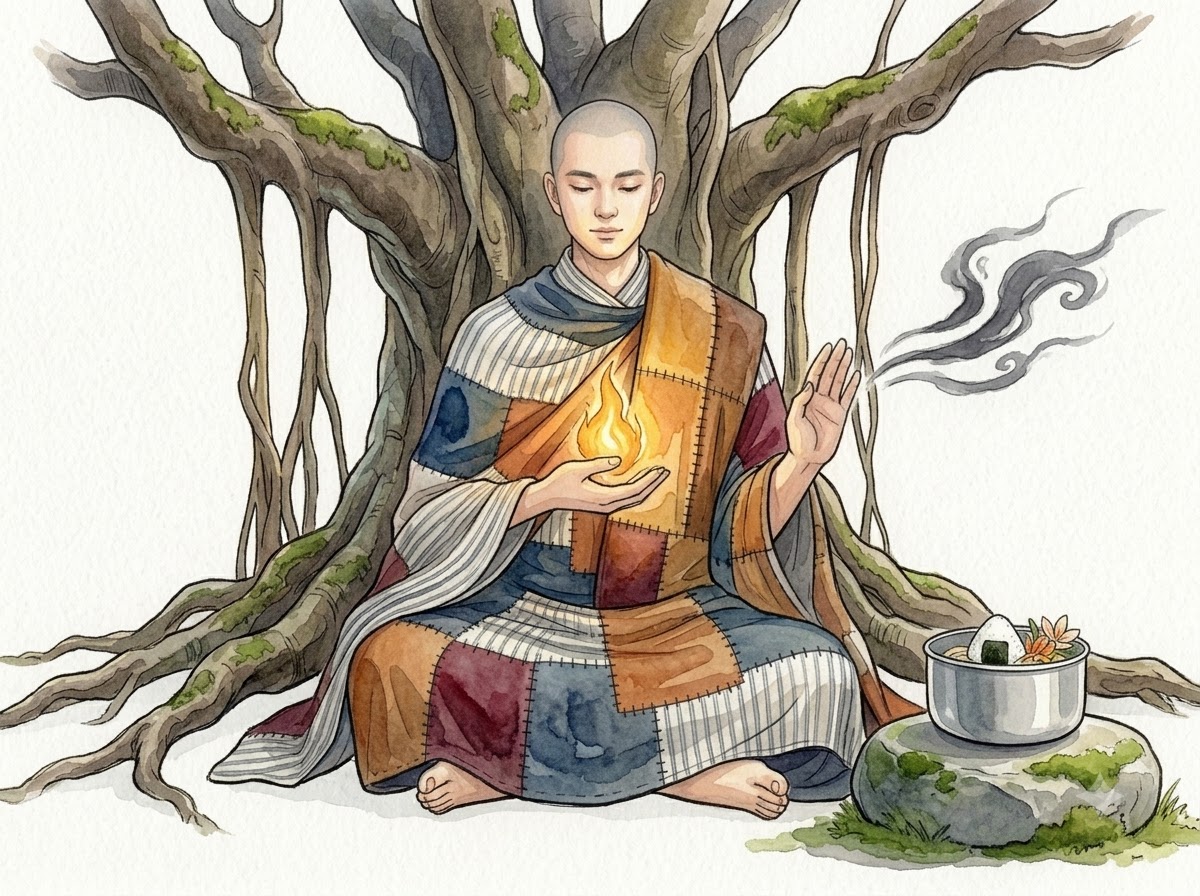
The most common misunderstanding about the Four Right Efforts is that they demand constant tension — always vigilant, always “trying.”
They do not.
What they demand is awareness — knowing what is happening in your own mind. With awareness, you naturally see unwholesome states wanting to arise — and prevent them. You see wholesome states present — and preserve them. No straining needed, just seeing.
And this awareness, like a muscle, grows stronger with practice. At first it requires conscious effort. Over time, it becomes a way of living.
The Four Right Efforts and Other Practices
The Four Right Efforts do not stand alone. They function together with other practices in the 37 Aids to Awakening.
With mindfulness: Without mindfulness, you cannot see unwholesome states arising in time to prevent them. Mindfulness is the light; the Four Right Efforts are the hands that act on what the light reveals.
With the Five Precepts: Keeping the precepts is a form of “preventing unarisen unwholesome states” and “abandoning arisen unwholesome states” at the level of action. The Four Right Efforts extend this to the level of the mind — not only refraining from harmful actions, but preventing harmful mental states from taking root.
With the Four Foundations of Mindfulness: Observing body, feeling, mind, and phenomena provides the foundation for recognizing when unwholesome states are arising or wholesome states are fading — and then applying the appropriate effort.
Common Mistakes in Practice
Being too hard on yourself: Many people blame themselves every time an unwholesome state arises. But the Buddha said “when it arises, strive to abandon it” — meaning he accepted that unwholesome states will arise. The task is not self-blame, but recognition and release.
Focusing only on prevention while neglecting cultivation: If you only remove the unwholesome without nurturing the wholesome, the mind remains empty and vulnerable to old patterns returning. Cultivating and maintaining wholesome states matters just as much.
Thinking practice happens only on the cushion: The Four Right Efforts operate throughout the entire day — in conversation, while browsing the internet, when facing workplace pressure. Every moment is an opportunity to practice.
Understanding these common pitfalls helps you practice more skillfully. The Four Right Efforts are not about perfection — they are about direction. As long as you are moving toward less unwholesome and more wholesome, you are practicing correctly.
You do not need to start with all four at once. Start with one: next time you notice anger about to flare — pause, and let it pass. That is the Four Right Efforts already at work.
Frequently Asked Questions
What are the Four Right Efforts in Buddhism?
The Four Right Efforts (Sammappadhāna) are: (1) prevent unwholesome states from arising, (2) abandon unwholesome states already present, (3) cultivate wholesome states not yet arisen, and (4) maintain wholesome states already present. They form the detailed practice of Right Effort in the Noble Eightfold Path.
How do the Four Right Efforts relate to the Eightfold Path?
The Four Right Efforts are the specific content of Right Effort (Sammā-vāyāma), the sixth factor of the Noble Eightfold Path. They explain exactly what “right effort” means in practice — directed striving toward removing the unwholesome and nurturing the wholesome.
How can I practice the Four Right Efforts daily?
Start small: choose environments that reduce unwholesome triggers, pause before reacting in anger, spend five minutes each morning cultivating goodwill, and maintain a brief daily practice so positive qualities do not fade.
What is the difference between the Four Right Efforts and ordinary effort?
Ordinary effort is striving in general — it can be directed correctly or incorrectly. The Four Right Efforts are specifically directed: toward removing unwholesome states and nurturing wholesome ones. Intense effort in the wrong direction can actually be counterproductive; the Four Right Efforts ensure that energy is always channeled toward liberation.
How do I know if I am practicing the Four Right Efforts correctly?
The simplest sign: you recognize unwholesome states faster when they arise in the mind, and wholesome qualities — peace, compassion, awareness — gradually become more stable in daily life. Progress is not about never having unwholesome states, but about shortening the time between their arising and your recognition of them.