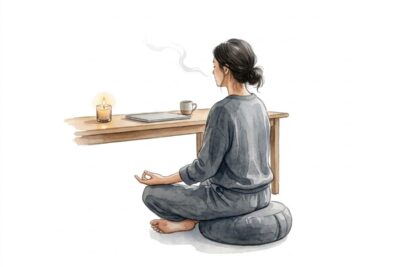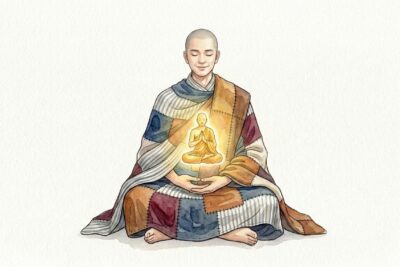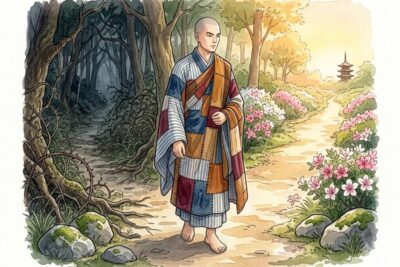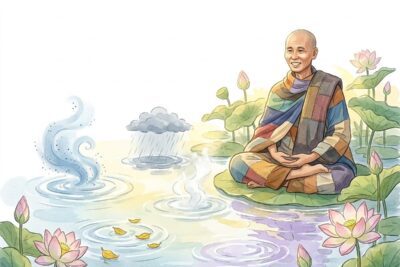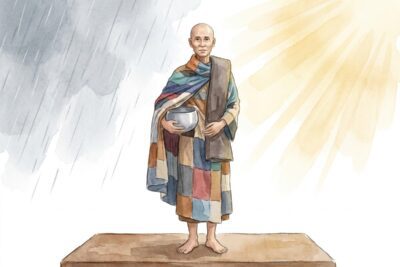
Each year, when the Indian monsoon arrives, the Buddhist monastic community stops walking.
Not just one or two monks, but the whole community. Not for a day or two, but for three months.
This tradition has continued for more than twenty-five centuries, since the time of the Buddha himself. Its name is vassa (Pāli for “rains”), often rendered in East Asian traditions as “the summer retreat.”
At first glance it may seem to be only about avoiding the rain. But beneath the surface lies a whole spirit of monastic life.
What Is Vassa?
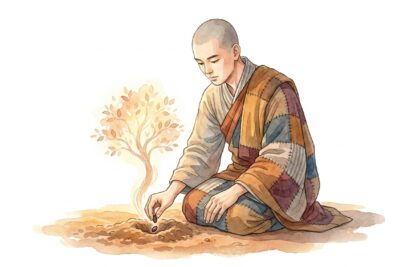
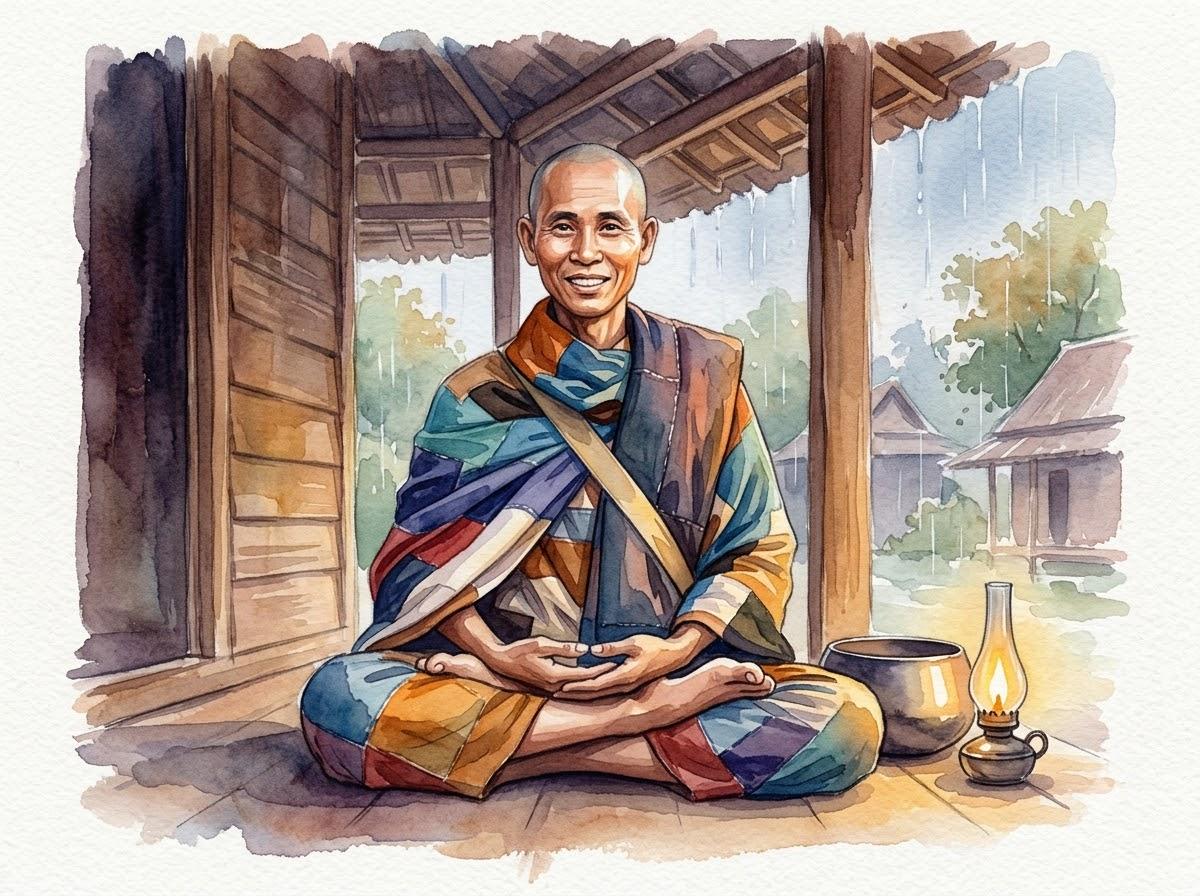
Vassa (vassāvāsa) is the annual tradition in which monastics halt their wandering for three months of the rainy season — traditionally from the day after the full moon of Āsāḷha (July) to the full moon of Assayuja (October) by the Theravāda calendar — and settle in one fixed residence for intensive practice.
The Vietnamese term “an cư kiết hạ” translates the same tradition as “sealing the summer” — pointing to the practitioner drawing inward, staying in one place, dedicating full time to meditation and study of the Dhamma.
During this period, monastics may not leave the residence for more than seven consecutive nights, except in cases the Vinaya explicitly allows (visiting seriously ill parents, or supporting a fellow practitioner in need).
Origins – Why the Buddha Established It
The Mahāvagga of the Vinaya Piṭaka (Mahāvagga III) records the specific reason.
In the early years after the Buddha founded the saṅgha, monks continued walking even during the rains. Laypeople complained: the monsoon is when plants, insects, and small creatures multiply. Wandering at that time crushed living beings and trampled newly planted crops.
Hearing this, the Buddha established the vassa rule. From then on, when the rains came, the community stopped.
The original reason was respect for life and respect for the surrounding community. Over time, vassa also became a precious opportunity for practitioners themselves — rest from constant travel, deepened concentration, close teacher-student transmission.
How the Three Months Unfold
On the first day, each monk must formally enter the vassa — declaring to the saṅgha the residence where he will spend the coming three months. This ritual is prescribed by Vinaya and cannot be skipped.
During the three months, life has several common features:
No absence beyond seven nights. If a legitimate reason requires longer travel, formal permission must be sought and the return must be within the allotted time.
Deepened schedule of practice. Many centers extend meditation hours, add evening Dhamma talks, and hold communal chanting.
Study of Sutta and Vinaya. This is the season when senior monastics transmit their experience to the younger. Many monks choose to memorize a full text in a single vassa.
Lay support. Laypeople have a tradition of offering food, robes, and medicine to the saṅgha throughout the three months, generating great merit (puñña) and strengthening the bond with the Dhamma.
Pavāraṇā and Kaṭhina at the End of the Season
The last day of vassa is called Pavāraṇā — the Invitation. It is a remarkable ceremony.
Each monk in turn stands before the saṅgha and requests: “If you have seen, heard, or suspected any fault in me during this rains retreat, please point it out, and I will make amends.”
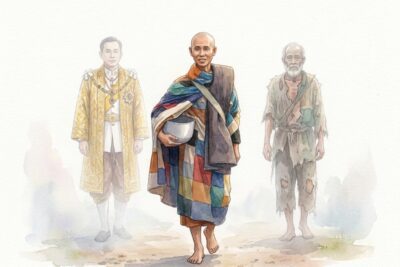
This is an act of opening oneself to correction — irrespective of rank or seniority. Even the eldest Elder invites correction from the youngest.
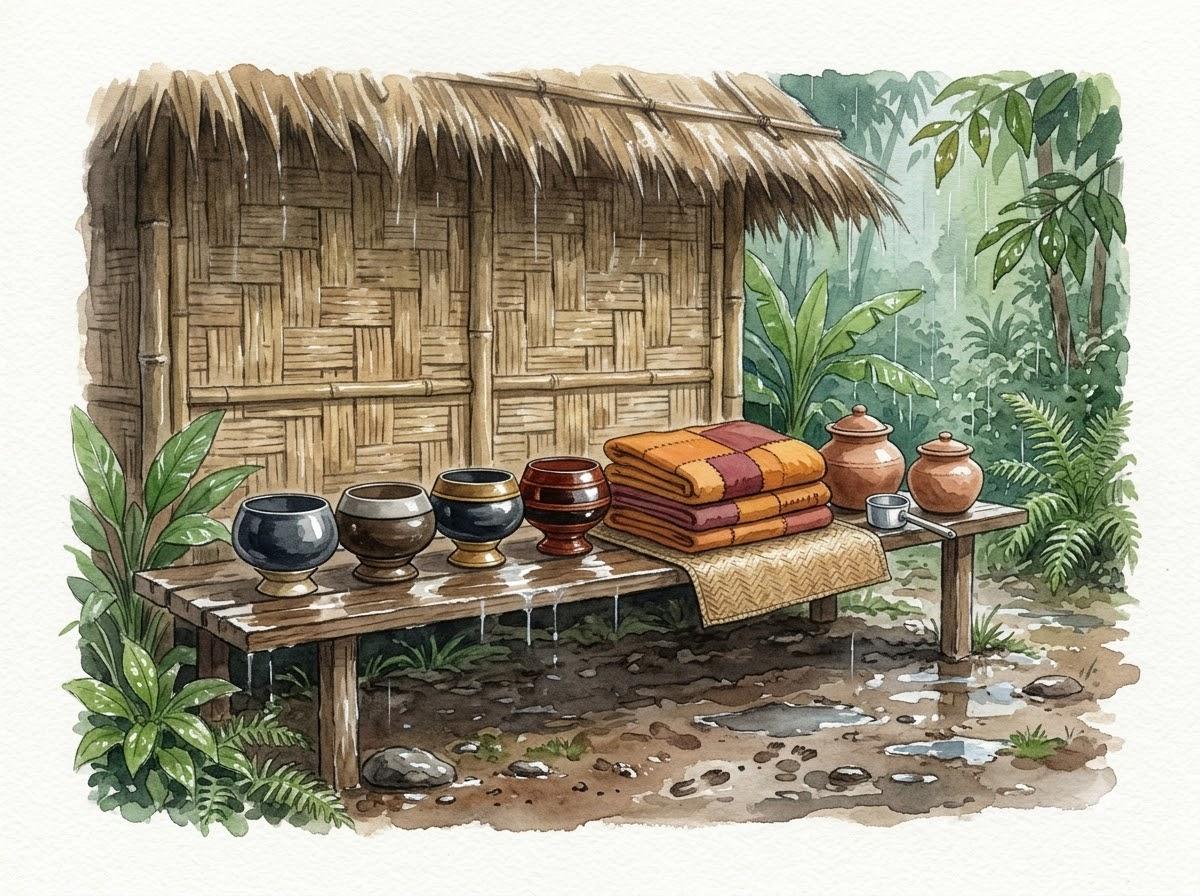
Within one month after Pavāraṇā comes Kaṭhina — the offering of robes. Laypeople present cloth, and the saṅgha collectively sews a robe in a single day, presenting it to a monk chosen by the community. Kaṭhina is considered one of the greatest opportunities for making merit in the year.
The Pavāraṇā ceremony carries a depth that is easy to miss. In ordinary community life, junior members hesitate to point out faults in seniors; social convention protects the elder. Pavāraṇā reverses this convention for one day: the elder actively invites the correction, and the junior is asked to speak honestly. In practice, the invitation is usually general rather than pointed, but the ritual itself dissolves the hierarchy of speech for a moment. It is a structural safeguard against the accumulation of unspoken grievance within a community that lives together for months.
Kaṭhina, similarly, is not merely a ceremony of gift-giving. The Vinaya specifies that once Kaṭhina cloth is received, certain everyday rules governing robes are relaxed for the recipient community for up to four months — a small privilege that concretely marks the completion of a successful vassa. The gesture is an acknowledgment from the laity: your three months of practice benefited us; here is the material support to carry you into the next season of walking.
Vassa in Vietnamese Buddhism
Vietnamese Buddhism has preserved the vassa tradition from early times, with adjustments to local climate and culture:
Northern (Mahāyāna) tradition observes vassa from the day after the full moon of the fourth lunar month to the full moon of the seventh — matching the rainy season of northern Vietnam. The end of the season coincides with Vu Lan (Ullambana), the festival honoring parents, associated with the story of Venerable Moggallāna saving his mother.
Southern (Theravāda) tradition keeps the original Indian calendar: from the sixteenth of the sixth lunar month to the fifteenth of the ninth. Many Theravāda temples in Vietnam still observe this schedule.
During the three months, “rains schools” (trường hạ) open at large temples. The saṅgha gathers to hear teachings, meditate together, and study Vinaya. Laypeople across the country offer support with food, medicine, and daily necessities.
Master Minh Tuệ and the Rains Season
For those following Master Minh Tuệ’s journey, a natural question arises: does he observe vassa?
First, some context: Master Minh Tuệ does not belong to any formal saṅgha and is not registered as an ordained monk at any specific monastery. The formal “entering of vassa” as ritualized by a saṅgha is therefore not something he can perform in the official sense.
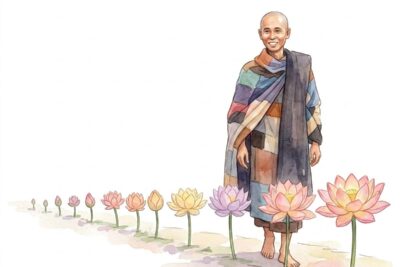
However, the spirit of vassa — stopping, drawing inward, remaining in one place through the three rainy months — can be observed in his own way.
From what has been publicly observed, his walking journey has included extended periods of stillness. There have been stretches when he remained in one area for weeks or months without continuing to travel. He has not formally declared these as “official vassa,” but the outward shape of monastic rains-retreat life resembles them.
Note: This analysis is based on observable behavior, not Master Minh Tuệ’s own words about his inner experience. Precise dates, places, and character of any stopping period during his journey should be checked against official information at the time.
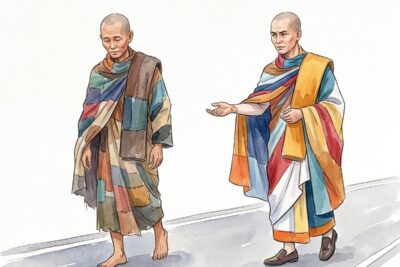
A point worth reflecting on: the vassa tradition arose from respect for beings (not crushing insects during the rains) and respect for the community (not damaging crops). Master Minh Tuệ has repeatedly displayed such respect in his own way — walking with slow steps, eyes lowered to the path, avoiding careless tread. It could be said: the spirit of vassa is being lived out in each step, not only during three fixed months.
Why Vassa Still Matters Today
One might ask: modern practitioners no longer crush countless insects underfoot, and no longer damage crops as often — so why keep vassa?
Because vassa’s meaning has grown beyond its original reason.
Vassa is a season of concentration. In a society where everyone — monastic and lay alike — is swept along by constant motion, constant information, and constant interaction, three months of stopping offer deep restoration that ordinary life cannot provide.
Vassa is a season of community. An entire community lives together, practices together, studies together. This is a spiritual nourishment no short retreat can replace.
Vassa is a season of humility. The closing Pavāraṇā reminds every participant: no one stands above the community’s correction. Even the eldest Elder bows to receive advice.
Can Laypeople Observe Vassa?
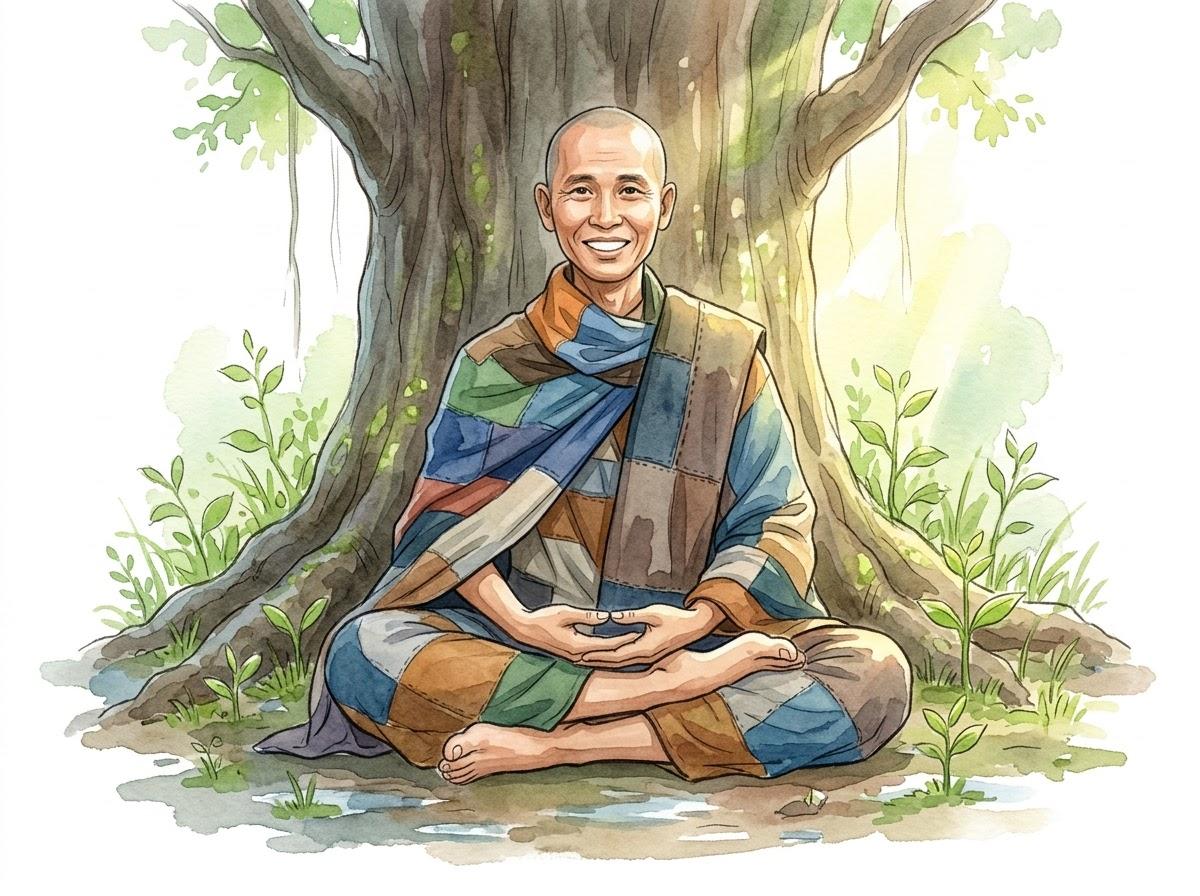
No rule requires it. But many lay Buddhists set themselves a form of vassa at home.
For the three months of the rainy season (by local calendar), they:
Keep the Eight Precepts on full-moon and new-moon days throughout the three months.
Devote more time to meditation — rising early, sitting for thirty minutes each morning.
Read Sutta, study Vinaya, learn one chapter of Abhidhamma each week.
Reduce social gatherings, social media, and shopping.
Support the saṅgha — offering food, medicine, and other necessities.
This is not “vassa” in the Vinaya sense, but it captures the spirit: stopping, drawing inward, intensifying practice. After three months, any lay practitioner can notice the difference in their own mind. To see how this fits within the broader path, see our article on the Noble Eightfold Path.
Frequently Asked Questions
Can laypeople observe vassa?
In terms of Vinaya, vassa is prescribed for ordained monastics. Laypeople have no obligation. However, many set themselves a form of “intensified practice” during the three rainy months — keeping precepts more strictly, meditating more, and supporting the saṅgha — following the spirit of vassa.
Is vassa a silent, sealed retreat?
No. Vassa does not require total silence. Monks still go on alms-round, still teach, still receive laypeople. What is “sealed” is the residence — not leaving for more than seven consecutive nights, meaning no long-distance walking. Community life continues, often more actively than during the rest of the year.
Is it a fault not to keep vassa?
For a monk within a formal saṅgha, failing to enter vassa without a legitimate reason is considered dukkaṭa (a minor offense of wrong-doing). For a practitioner outside any formal saṅgha (as with some solitary wanderers), the question does not apply within the same framework.
Why does Vu Lan fall at the end of vassa?
In the Mahāyāna tradition, the full moon of the seventh lunar month — coinciding with Pavāraṇā day — is regarded as the day of great joy for the Buddhas, because the saṅgha has practiced diligently for three months. On this occasion, the Buddha taught Venerable Moggallāna to offer to the saṅgha and dedicate the merit to save his mother — giving rise to the Ullambana (Vu Lan) festival of filial devotion.
Is Kaṭhina required after vassa?
Not required, but strongly encouraged. Kaṭhina can only be held within one month after Pavāraṇā, and each residence (each vassa community) may receive Kaṭhina only once per year. The suttas describe it as a rare occasion of great merit.