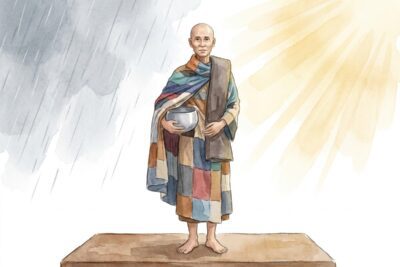
The English word “faith” carries centuries of theistic weight. It often means believing something because a scripture or an authority says so — belief that is prized precisely because it cannot be verified. When newcomers encounter the Buddhist term saddhā, they sometimes translate it back into that theistic sense and conclude that Buddhism, too, asks for blind belief.
It does not. Saddhā in the Pāli canon is a different quality altogether — closer to “confidence” or “trust that has been earned” than to “belief that resists evidence.” Understanding what saddhā actually is clarifies how the entire Buddhist path begins.

What Is Saddhā?
The Pāli word saddhā is often translated “faith,” but its etymology points elsewhere: saṃ (“together, well”) + dhā (“to place, to set”). Literally, it is the mind “placed well” upon something worthy of confidence.
The commentaries describe saddhā with three functions: it purifies the mind of doubt, it inspires effort, and it makes the practitioner willing to undertake what the path requires. It is the quality that gets a person to try — before results have been personally verified.
Crucially, saddhā is one of the Five Faculties (indriyāni) and, when strong, one of the Five Powers (balāni). It is a quality to be trained and matured, not a fixed possession.
The Kālāma Sutta – “Do Not Believe Because…”
No text illustrates the Buddhist attitude toward belief more directly than the Kālāma Sutta (AN 3.65). The Kālāmas were villagers visited by many teachers, each contradicting the last. They asked the Buddha: how do we know which one is right?
His answer, paraphrased from the Pāli:
“Do not go by oral tradition, by lineage of teaching, by hearsay, by the authority of scriptures, by logical conjecture, by inference, by reasoned reflection, by acceptance of a view after pondering it, by the seeming competence of a speaker, or because ‘the ascetic is our teacher.’ When you know for yourselves, ‘These things are unwholesome, blameworthy, criticized by the wise; when accepted and practiced, they lead to harm and suffering’ — then abandon them. When you know for yourselves the opposite — then accept and practice them.”
This is not license for whim. It is a demand for personal verification. The Buddha is not saying “believe nothing.” He is saying: test what you accept, and let the results in your own life be the evidence.
Four Foundations of Right Faith
Traditional presentations identify four objects worthy of confident trust:
1. Confidence in the Buddha (Buddhe pasāda) — trust that a human being can awaken, because one demonstrably did.
2. Confidence in the Dhamma (Dhamme pasāda) — trust that the teaching, when applied, produces the results it describes.
3. Confidence in the Saṅgha (Saṅghe pasāda) — trust in the community of noble practitioners who have realized the path, as evidence that the path is walkable.
Together with virtue (sīla), these are called the four factors of stream-entry (sotāpattiyaṅga). They are not private feelings; they are stable orientations that produce action.
Right Faith and Superstition
The Buddhist tradition draws a sharp line between right faith (sammā saddhā) and superstition (micchā saddhā — literally “wrong faith”).
Right faith is grounded in evidence: the Buddha’s example, the coherence of the teaching, the observable transformation of practitioners, and the practitioner’s own initial results. It leads to inquiry, not away from it.
Superstition, by contrast, is unmoored from evidence: fear of spirits, faith in charms, hope that a ritual will produce a result unrelated to its causes. The Buddha rejected these as distractions from the actual work of ending suffering. The Sigālovāda Sutta (DN 31) explicitly criticizes worship of the six directions as superstitious when done without ethical substance.
The test is simple: does the belief lead to greater clarity, non-clinging, and ethical conduct — or to more anxiety, more clinging, and more dependence on external forces?
Why the Buddha Praised Faith as the First Faculty
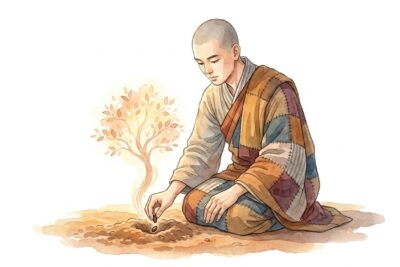
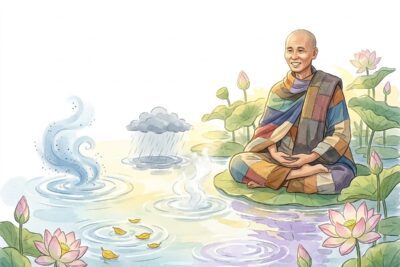
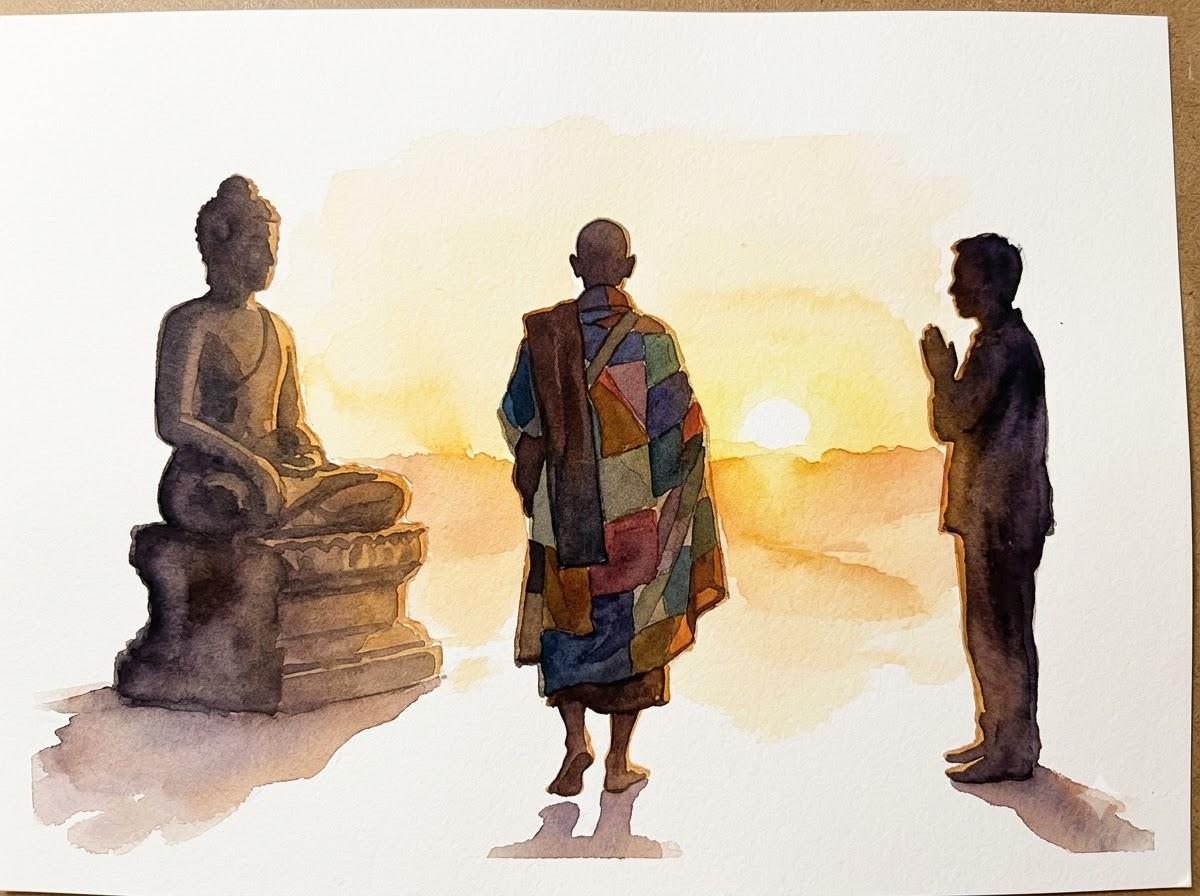
In the list of the Five Faculties, saddhā comes first. Why? Because without confidence that the path is worth walking, no one takes the first step. Wisdom (paññā) is the last faculty because it is the fruit — but faith is the seed. A seed does not need to already be a tree; it needs only to be planted in workable soil.
The Buddha describes faith as the “seed” (saddhā bījaṃ) in the Kasi Bhāradvāja Sutta — the seed from which the crop of the practitioner’s life grows. Effort is the rain, wisdom is the yoke, mindfulness is the plough. Without the seed, none of the rest matter.
Master Minh Tuệ: “Do Not Believe Me”
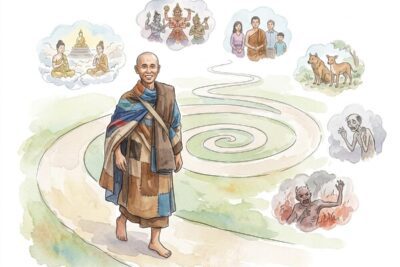
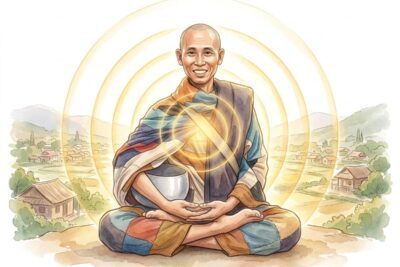
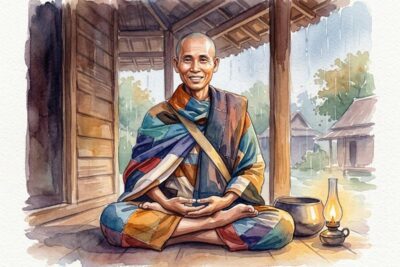
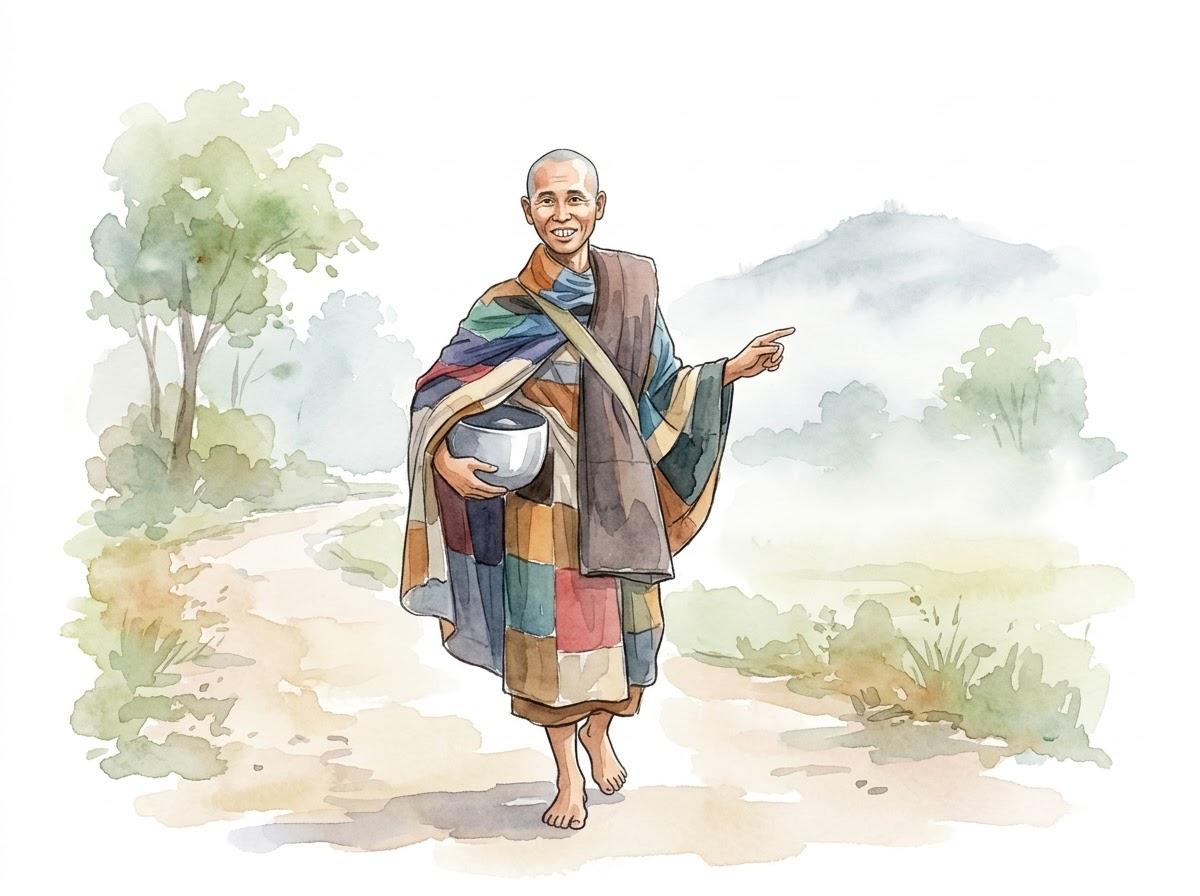
In publicly recorded exchanges, Master Minh Tuệ has more than once told those who venerate him some version of: do not simply believe what I say — read the sūtras yourself, examine, verify, practice, see whether it produces the fruit the Buddha described. He has not asked for followers. He has pointed people back to the Buddha’s teaching and to their own investigation.
This posture is entirely consistent with the Kālāma Sutta. A teacher who says “believe me because I am your teacher” is one the Buddha explicitly named as not sufficient grounds for belief. A teacher who says “do not believe me — check for yourself” is teaching in the Buddha’s own manner.
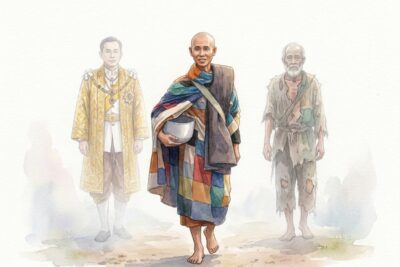
Observable behavior — refusing to found an organization, refusing to accept money, refusing the role of guru — is the same message expressed structurally rather than verbally.
Note: This analysis is based on observable behavior, not Master Minh Tuệ’s own words about his inner experience. The actual depth of his inner development is something only the practitioner himself can know.
Application: Testing Your Own Faith
A practical self-check based on the Kālāma Sutta:
1. When I hold this belief, does it lead to less craving, aversion, and confusion, or more?
2. Does it lead to more ethical action, or does it excuse unethical action?
3. Do wise, ethical people confirm the practice that follows from this belief?
4. When I apply the teaching, do I observe the results the Buddha described — even in small ways?
If the answers point one direction, the belief is worth keeping. If they point the other, it is worth reconsidering — regardless of how prestigious the source.
Related: The Five Faculties and Five Powers, The Four Noble Truths, The Noble Eightfold Path.
Frequently Asked Questions
Q1. Is Buddhism a religion without faith?
No. Buddhism has faith (saddhā), but it is confidence based on evidence and personal verification, not belief demanded despite evidence.
Q2. Does the Kālāma Sutta mean I should believe nothing?
No. It means do not accept any claim purely on the basis of authority or tradition. Test claims against the results they produce in one’s own life and the assessment of wise, ethical people.
Q3. What is the difference between faith and wisdom?
Faith is willingness to try; wisdom is what one comes to know through trying. Faith opens the door; wisdom walks through it.
Q4. Can I practice Buddhism without believing in rebirth?
The core practice — ethical conduct, mindfulness, wisdom — proceeds on its own merits. The Buddha in the Kālāma Sutta lists benefits available regardless of whether one accepts rebirth. Serious practice tends, over time, to change one’s view on such questions.
Q5. How do I know if my faith has become superstition?
Ask whether it leads to inquiry or away from it, to non-clinging or to more clinging, to ethical clarity or to dependence on external forces. Faith that closes the mind is not the saddhā the Buddha praised.