In Vietnamese culture, filial piety is almost instinctive. Providing for your parents — food, medicine, housing, comfort in old age — is the mark of a dutiful child. Anyone who does this well is praised by society.
The Buddha did not deny this. But he looked one step deeper.
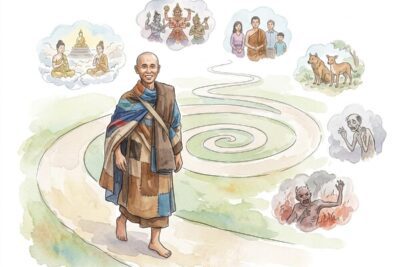
He asked: if a child gives their parents everything in the world — a grand house, wealth, status — but the parents still fear death, still suffer from greed, hatred, and delusion, still wander through the cycle of rebirth… is that care truly enough?
The answer, according to Buddhism, is no.
And from that insight, a concept emerged: great filial piety (đại hiếu).
Two Levels of Filial Piety in Buddhism
Buddhism distinguishes clearly between two levels of honoring one’s parents:
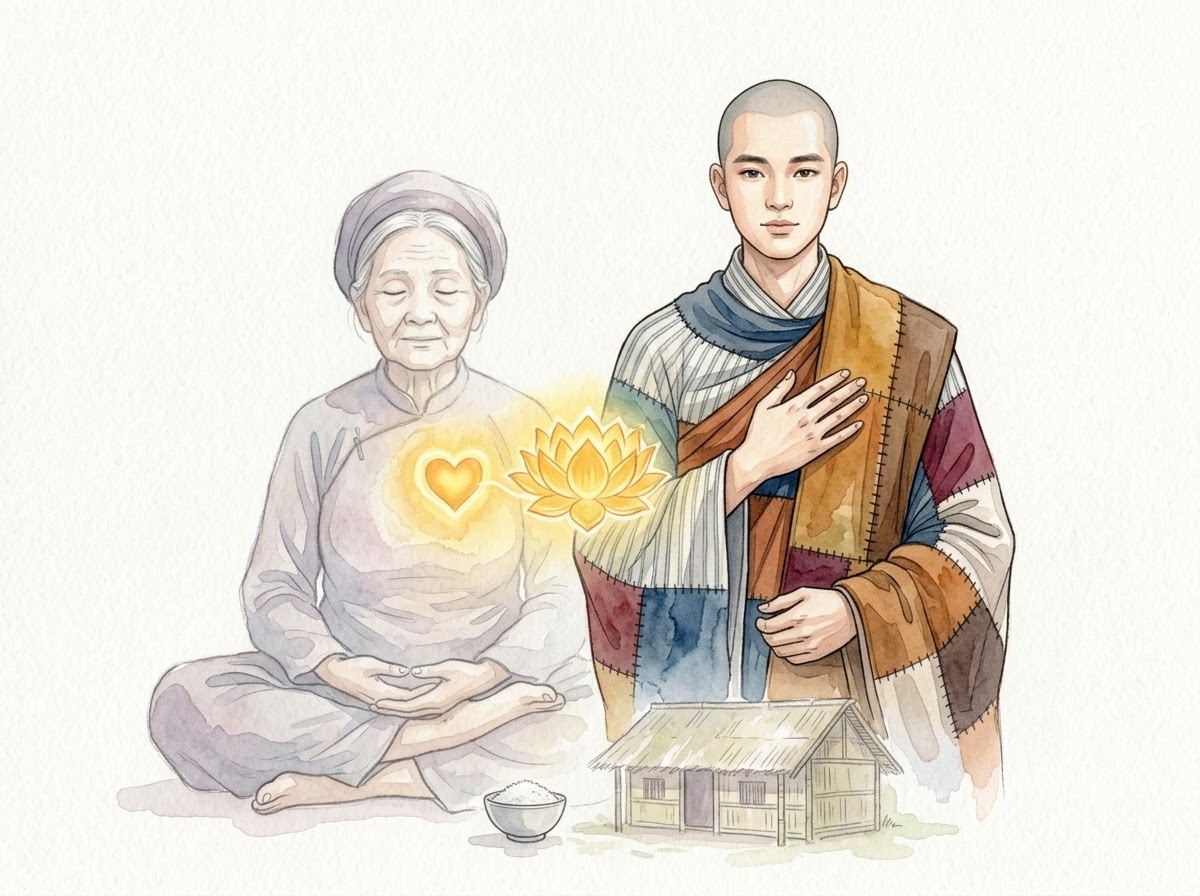
Lesser filial piety (tiểu hiếu) addresses the body: food, clothing, shelter, healthcare. This is the minimum obligation — a foundation that no one should neglect.
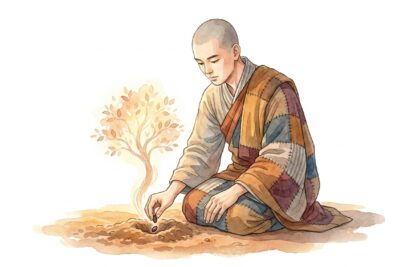
Great filial piety (đại hiếu) addresses the mind: helping parents understand the Dhamma, planting wholesome seeds with the Triple Gem, guiding them toward a path that reduces suffering — not only in this life, but in lives to come.
In the Aṅguttara Nikāya (AN 2.32), the Buddha taught in essence: even if a child were to carry their father on one shoulder and their mother on the other for a hundred years, bathing and attending to them with complete devotion — it would still not be enough to repay the debt of gratitude. But if a child helps their parents establish faith in the Dhamma, helps them abide in moral conduct, generosity, and wisdom — then that is truly repaying them in full.
This does not mean lesser filial piety has no value. It means: if we stop there, we have only addressed the surface of something much deeper.
Why Material Care Is Not Enough
This question can be uncomfortable. Everyone knows caring for parents is right — so why does Buddhism say “not enough”?
Because the Buddha looked at the problem from the angle of suffering.
Parents may have a large house — but still lie awake at night consumed by worry. Parents may receive attention from their children — but still suffer from comparison, jealousy, resentment, or fear of loss. Material provisions address physical needs but cannot touch the root of suffering — the greed, hatred, and delusion still operating within the mind.
Great filial piety, in the Buddhist sense, means giving parents something money cannot buy: a way of seeing life that generates less suffering. A peace of mind that does not depend on external circumstances.
Not by forcing parents to go to temples or chant suttas. But by living in a way that lets them see for themselves that the Dhamma path has genuine value.
Is Renunciation a Betrayal of Parents?
This is a question many people raise when they see a young person leave their family to practice — or when they see a practitioner like Thầy Minh Tuệ living a walking pilgrimage, far from his parents.
By worldly standards, being physically present and serving parents daily meals is filial duty. A person who ordains appears to have “abandoned” their parents.
But Buddhism sees it differently.
In the Theravāda tradition, the Buddha himself left his family — his father, his wife, his son — to seek the path of liberation. After his awakening, he returned to teach the Dhamma to his father King Suddhodana, to his aunt and foster mother Mahāpajāpatī Gotamī, and to his son Rāhula. He did not return with gold — he returned with the Dhamma.
And that was the highest form of filial piety.
According to the Pali commentaries, when King Suddhodana was gravely ill, the Buddha returned to his bedside and taught him the Dhamma — helping his father attain Arahantship before passing away. He did not bring wealth or worldly power — he brought the Dhamma, and that was the greatest gift a child could offer a parent.
A person who genuinely renounces does not abandon their parents. They choose a different form of devotion: instead of caring for the body for one lifetime, they practice so that parents — and all beings — may have the opportunity to touch the path of liberation. The Aṅguttara Nikāya records that if parents lack faith, a child should help them establish faith; if parents are stingy, help them develop generosity; if parents lack wisdom, help them cultivate wisdom — only then is the debt truly repaid.
Of course, this does not mean anyone who wants to renounce can simply leave without arranging care for their parents. Buddhism emphasizes both: mind and body both need to be looked after. But if one must choose a priority, the mind comes first.
Great Filial Piety Does Not Require Ordination
Not everyone becomes a monastic, and Buddhism does not demand it. Great filial piety can be practiced right within household life, through very concrete actions:
Living well each day. When children keep the precepts — not lying, not harming, not intoxicating themselves — parents feel at peace. That peace of mind is worth more than any material gift.
Sharing what you have learned. Not preaching to parents. But when they worry, gently offering a lighter perspective. When they cling to the past, finding ways to let go together.
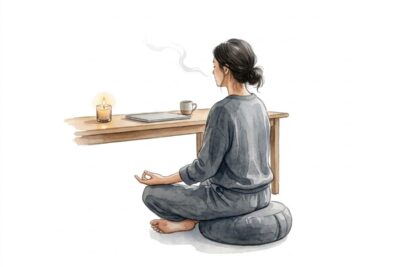
Creating wholesome connections. Taking parents to a temple if they wish. Reading them a passage from a sutta you found meaningful. Or simply sitting together in silence, needing nothing more.
Dedicating merit. In the Buddhist tradition, every wholesome act — from giving, to keeping precepts, to meditation — can have its merit dedicated to parents, including those who have already passed.
Great filial piety is not a single grand gesture. It is a way of living — living so that parents are not only fed and sheltered, but at peace.
Thầy Minh Tuệ – Filial Piety of a Walking Practitioner
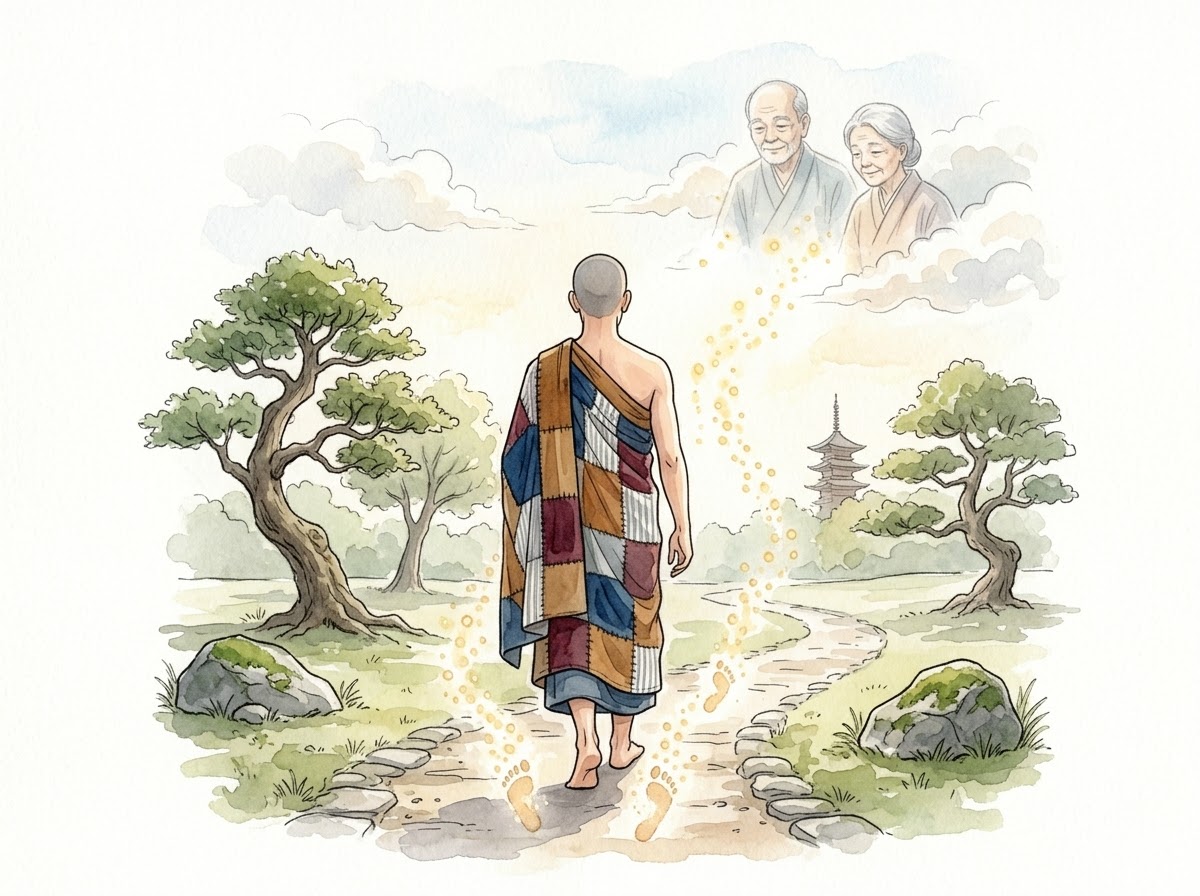
When people see Thầy Minh Tuệ walking thousands of kilometers alone in the sun and wind, some ask: does he miss his parents? Is he being filial, living like that?
The question is natural, but it uses worldly measures to judge a path that does not belong to the worldly realm.
Thầy Minh Tuệ does not build houses for his parents or send money home each month. But what he is doing, in the spirit of the Buddha’s teaching, is the highest form of filial devotion: genuine practice.
A person who keeps the precepts purely, who lives without harming, without craving, without hatred — that person creates merit for themselves and for all who share a connection with them, including their parents.
In the Theravāda tradition, when a person ordains and practices diligently, the merit from that practice is not limited to them alone. Parents, family, even strangers — all can benefit from the wholesome conditions a genuine practitioner creates.
This is not abstract theory. In reality: Thầy Minh Tuệ’s journey has helped millions of people learn about the Dhamma, return to studying the teachings, and live more wholesomely. If great filial piety means helping beings — including parents — draw closer to the Dhamma, then he is practicing it in the broadest sense.
When a Father Passes and the Son Does Not Return
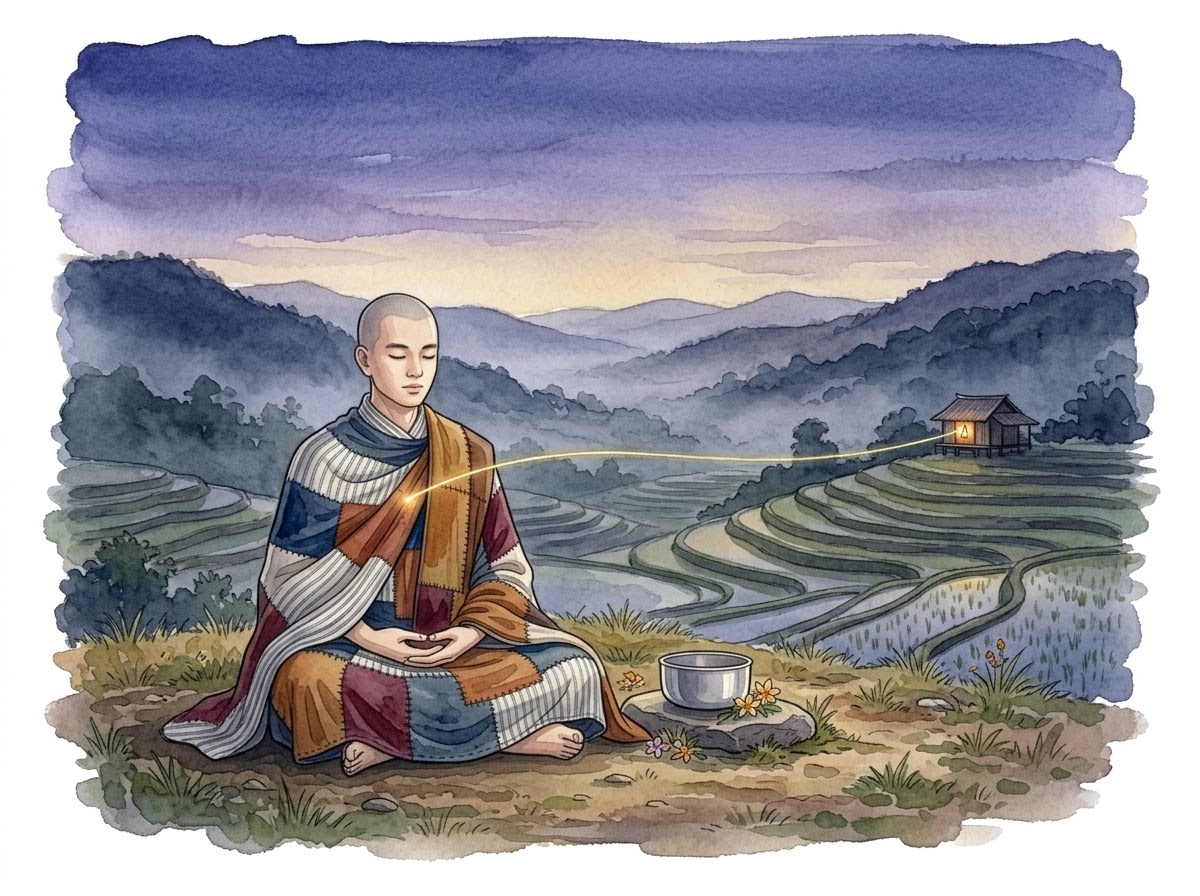
In 2026, Thầy Minh Tuệ’s father passed away. Thầy did not return home.
To worldly eyes, this may be difficult to accept. A father dies and the son does not come back for the funeral — many would call that unfilial, cold, a sign that spiritual practice has stripped away basic human feeling.
But if we pause for a moment and look through the lens this very article has been discussing, the story has another dimension.
Thầy is not someone who did not love his father. He is someone who chose a path where love is not expressed through physical presence. In the Theravāda tradition of practice, a renunciant places practice above all worldly ties — not because family bonds are worthless, but because the merit of genuine practice can be dedicated to the departed in ways that surpass any ceremony.
Thầy Minh Tuệ is not the Buddha. But the spirit is consistent: a genuine practitioner honors parents through liberation, not through ritual. Every step he walks, every day he keeps the precepts purely, every moment he lives without clinging — that is merit he is creating, and according to Buddhist faith, that merit can be dedicated to his father on the journey ahead.
Perhaps the most painful thing is not that Thầy did not return. It is that so many people look at his absence and rush to judge — without ever asking themselves: have I cared for the minds of my own parents, while they are still alive?
Reflecting on Your Own Filial Piety
Reading this far, you might ask yourself: what level of filial piety have I reached?
Not to judge yourself. But to expand how you understand it.
If you are providing material care for your parents — that is already good. If you live far away but still call and show concern — that is also good. But if you want to go deeper, try this:
Next time you sit beside your parents, instead of only asking “Do you need anything?” — ask also: “Is there anything weighing on your mind? Is there something we can find a way to let go of together?”
Filial piety begins with food and shelter. But it reaches its fullest depth when it touches the heart.
Frequently Asked Questions
What is great filial piety in Buddhism?
Great filial piety (đại hiếu) goes beyond material care. It means helping parents connect with the Dhamma — establishing faith, moral conduct, generosity, and wisdom — so they may find liberation from suffering, not only comfort in this life.
Is renunciation a betrayal of parents?
Not according to Buddhism. The Buddha himself left his family, then returned with the Dhamma — helping his father attain Arahantship. A genuine practitioner honors parents through the merit of practice, not through physical presence alone.
How can lay Buddhists practice great filial piety?
By living ethically (keeping the precepts), sharing Dhamma insights gently with parents, creating wholesome connections, and dedicating merit from good deeds to parents — including those who have passed away.