Today someone praises you — you feel good. Tomorrow someone criticizes you — you feel terrible. This month a promotion — elation. Next month a setback — despair. People love you — happiness. People turn away — anguish.
Life swings back and forth, and the mind swings with it — up and down, up and down, never truly still.
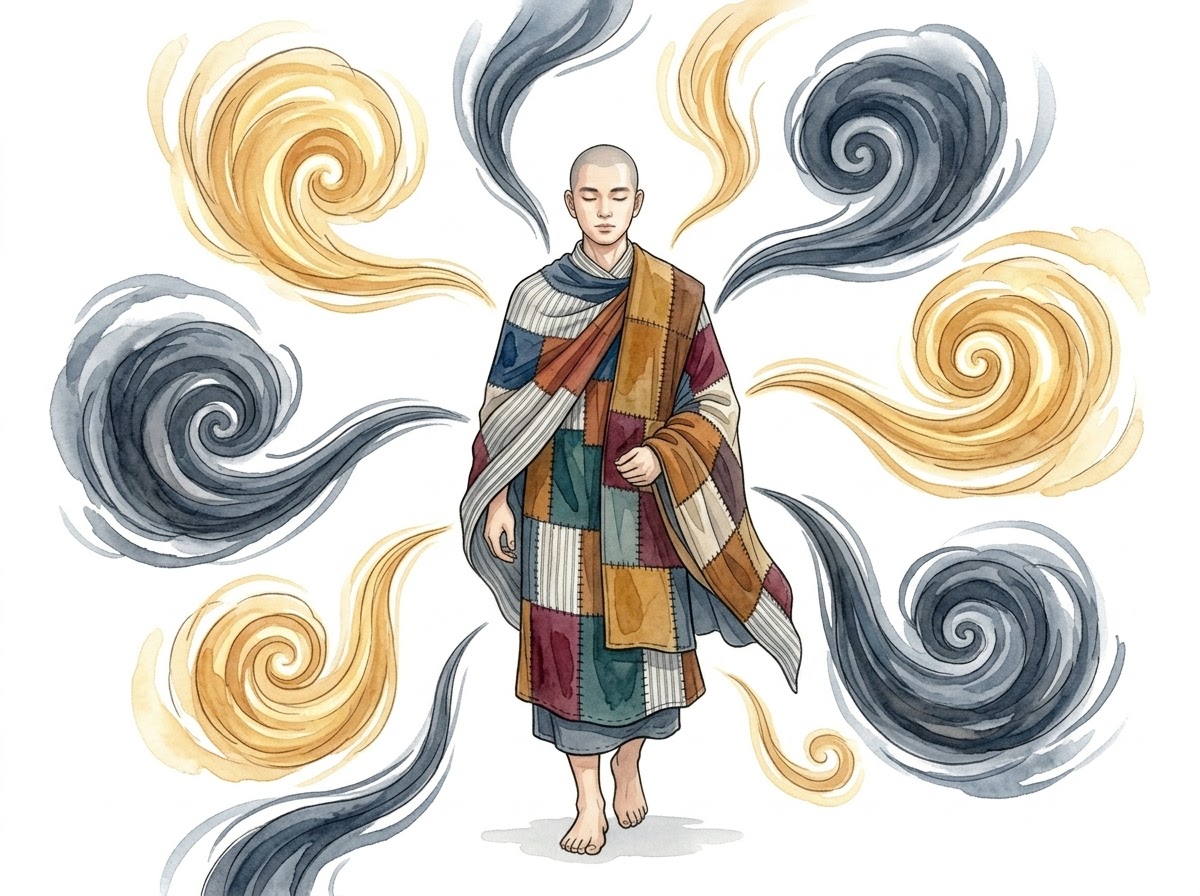
The Buddha called these forces the Eight Worldly Winds (Aṭṭha Lokadhamma) — eight conditions that blow through every person’s life, without exception.
What Are the Eight Worldly Winds?
They come in four opposing pairs:
1. Gain and Loss (Lābha – Alābha) — Gaining money, power, affection — then losing them. However much we gain, we fear losing it; once it is lost, we suffer. Both are winds.
2. Fame and Disgrace (Yasa – Ayasa) — Being known, respected, having status — then being forgotten, looked down upon. Fame comes and goes, and its collapse often hurts more than never having had it.
3. Praise and Blame (Pasaṃsā – Nindā) — People praise — the ego inflates. People blame — the ego deflates. The same action draws praise from one person and blame from another. Both are merely opinions — yet we let them dictate how we feel.
4. Pleasure and Pain (Sukha – Dukkha) — Moments of pleasure interspersed with moments of suffering — continuously, throughout life. Chasing pleasure, fleeing pain — but never holding pleasure forever.
Why “Winds”?
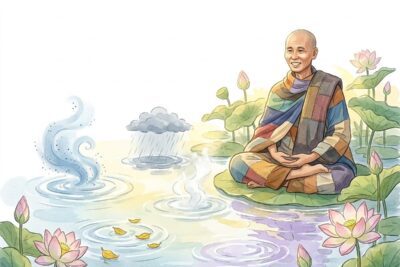
Because they share the nature of wind: they come and go, no one controls them, and they never blow in one direction forever.
In the Aṅguttara Nikāya (AN 8.6), the Buddha taught that these eight worldly conditions affect both ordinary people and the noble ones — the difference is: ordinary people are shaken by them; the noble ones are not.
Not that the noble ones never encounter praise or blame, gain or loss. But when they do, their minds do not waver.
Why the Eight Winds Are Hard to Overcome
Gain–Loss strikes at craving. We want more, fear losing what we have.
Fame–Disgrace strikes at pride. We want to be seen, fear being overlooked. Social media is the largest arena for this pair.
Praise–Blame strikes at our dependence on external validation. Instead of knowing for ourselves whether we are living rightly, we let others decide.
Pleasure–Pain strikes at sense-craving. We chase pleasant feelings and fear unpleasant ones — always running, never arriving.
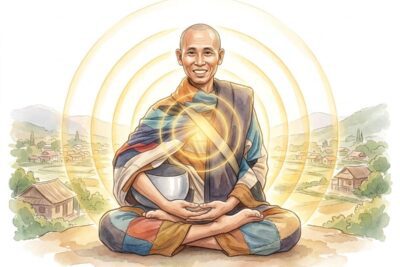
Master Minh Tuệ — Standing Still Among the Eight Winds
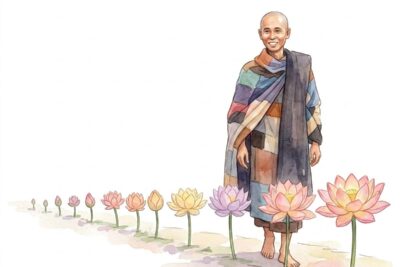
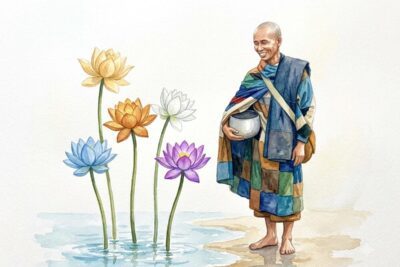
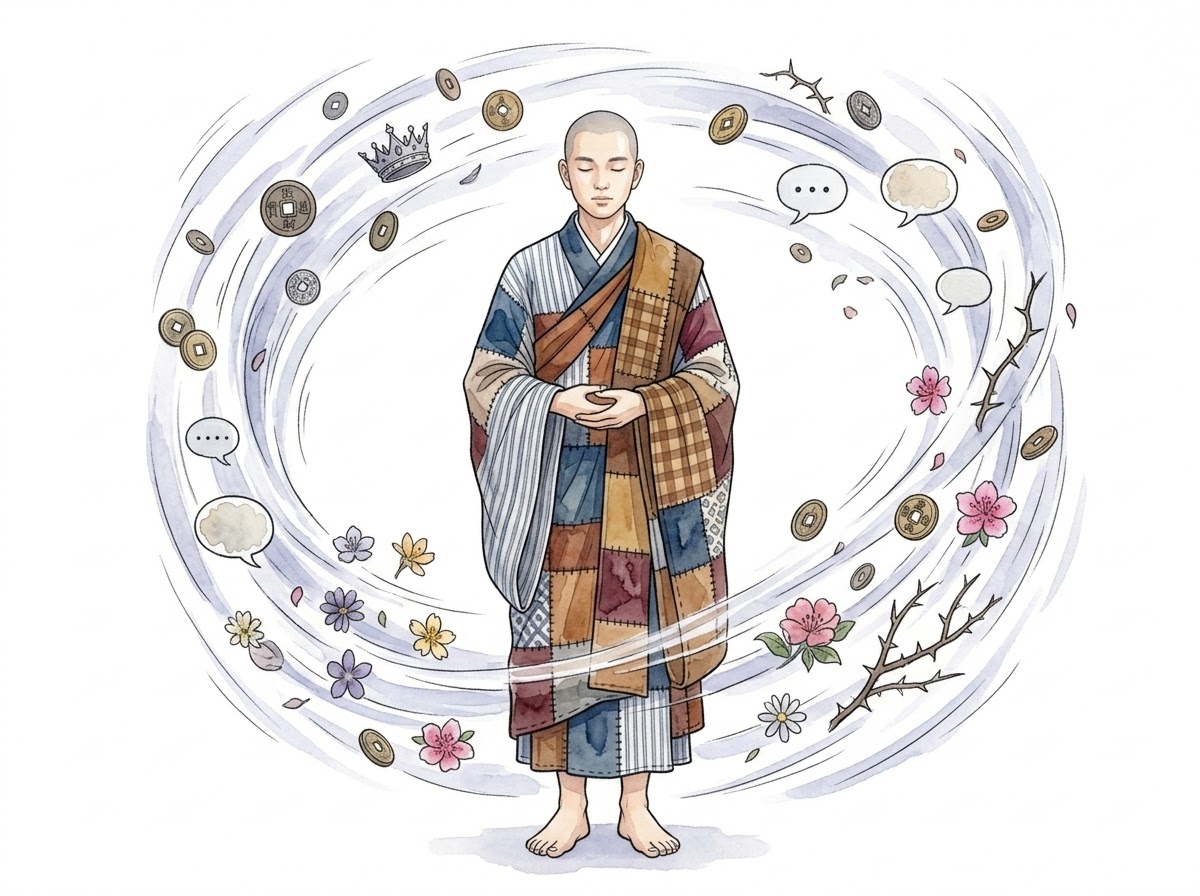
In the Aṅguttara Nikāya (AN 8.6), the Buddha taught that the difference between an ordinary person and a noble one is not whether they encounter the eight winds — but how they respond. The ordinary person is swept away; the noble one remains unshaken. Looking at Master Minh Tuệ’s journey, we see someone standing amid all eight winds — and moved by none of them.
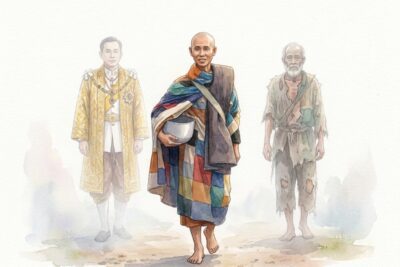
Gain–Loss (lābha–alābha): He owns nothing beyond his patched robes. Nothing to gain, nothing to lose. When offered food, he accepts just enough for one meal — no accumulation, no refusal. This is “receiving without clinging” — an attitude the Buddha described as living with material things without being ruled by them. Most of us live the opposite way: we accumulate to feel safe, but the more we accumulate, the more we fear loss. When there is nothing — the wind of gain and loss has nothing to blow against.
Fame–Disgrace (yasa–ayasa): Few practitioners in the 21st century have experienced the range of fame and disgrace that Master Minh Tuệ has. Millions know him, international media has covered his journey, society has celebrated him as a saint — then also obstructed, mischaracterized, and misunderstood him. Yet he responds to neither side. Fame comes — he walks. Disgrace comes — he walks. When fame does not quicken his step and disgrace does not slow it — that is a sign the mind is no longer ruled by ego.
Praise–Blame (pasaṃsā–nindā): Thousands praise him; others criticize. The Buddha once said: “There has never been, there will never be, anyone who is only praised or only blamed” (Dhammapada, verse 228). Master Minh Tuệ embodies this teaching fully: no explanations, no self-defense, no attempts to please. Praise and blame are others’ business — walking is his. This attitude is not arrogance — it is refusing to let self-worth depend on external evaluation.
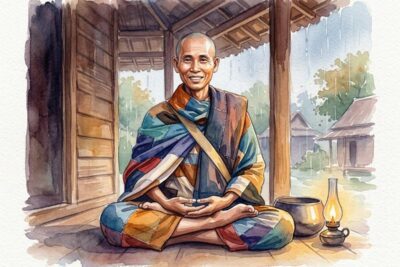
Pleasure–Pain (sukha–dukkha): Sun, rain, hunger, exhaustion, illness — all present on the road. But he does not chase comfort or resent hardship. In Buddhism, the ability to endure unpleasant feeling without generating mental affliction is called patient endurance (khanti) — one of the ten perfections (pāramī). Master Minh Tuệ does not endure by gritting his teeth — but by seeing clearly that a feeling is just a feeling, not “I am suffering.” The distance between those two perspectives is the distance between affliction and freedom.
That equanimity is not indifference. It is freedom — freedom from being shaken by what everyone encounters but few overcome.
Note: This analysis is based on observable behavior, not Master Minh Tuệ’s own words about his inner experience.
How to Face the Eight Winds
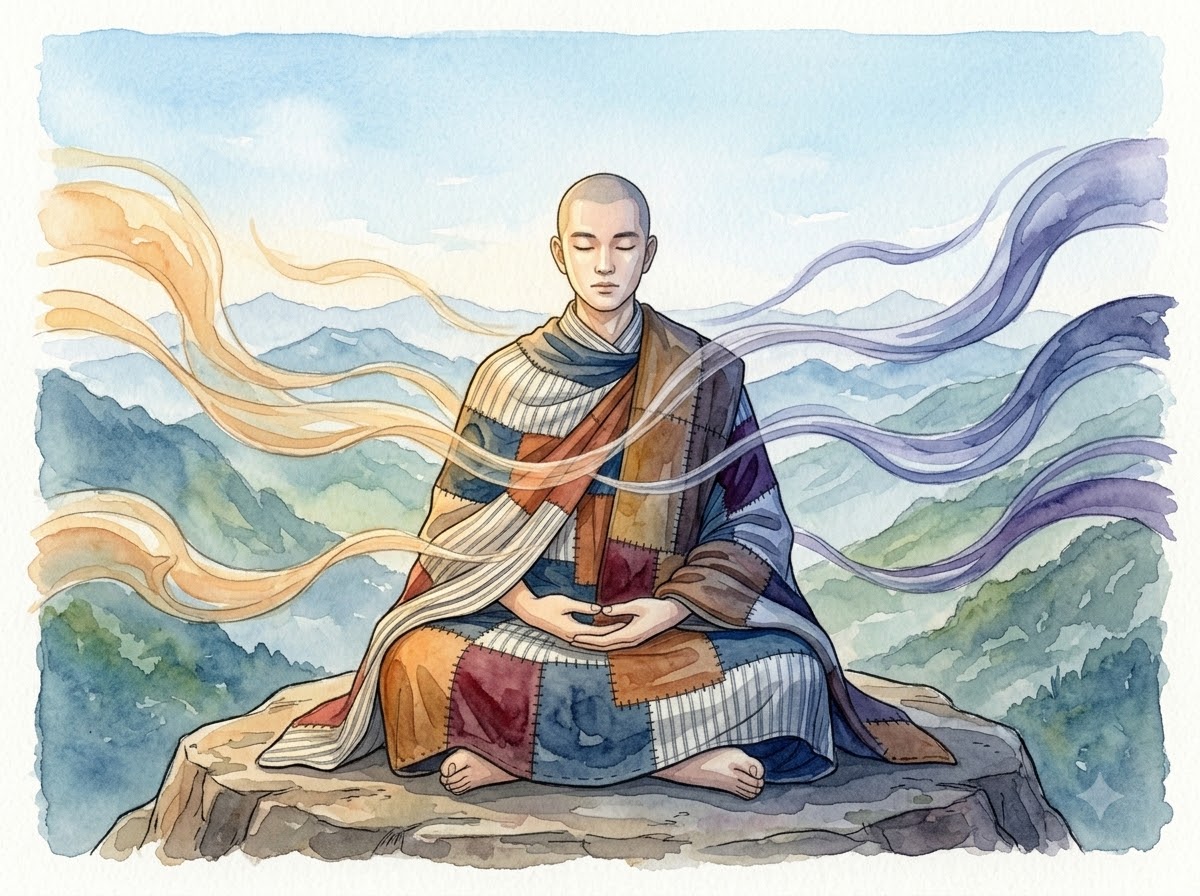
When praised: Pause and ask — what does this praise actually change? I am still the same person, praised or not. Enjoy it briefly — but do not let it define your worth.
When blamed: Is this blame accurate? If yes, it is a lesson. If not, it is someone else’s opinion — not a truth about you.
When gaining something: Recognize that what you just gained will not stay forever. Appreciate it, but do not cling.
When losing something: Recognize that what was lost was never truly “yours” — everything only passes through your life temporarily. This is where letting go shows its power.
Each time you notice the wind blowing and choose not to be swept away, your mind grows a little steadier.
Equanimity Is Not Numbness
Many people hear “not being shaken” and think it means “feeling nothing.” This is a complete misunderstanding.
Equanimity means feeling fully, but not being carried away. Still happy when good things happen. Still sad when there is loss. But happiness does not become greed, and sadness does not become hatred. Emotions come and go — like wind — and the mind remains where it is.
True equanimity requires courage — the courage to feel pain without running away, the courage to experience happiness without grasping. It is not weakness or apathy — it is inner strength.
Why the Eight Winds Are So Difficult to Overcome
The eight winds strike at our deepest attachments:
Gain and loss target craving. We want more and fear losing what we have.
Fame and disgrace target pride and identity. We want to be recognized, and we dread being overlooked or forgotten.
Praise and blame target our dependence on external validation. Instead of knowing whether we are living rightly, we let others decide for us.
Pleasure and pain target sensory attachment. We chase pleasant sensations and flee unpleasant ones — spending an entire life in a cycle of pursuit and avoidance.
The reason these winds are so difficult to overcome is that they are woven into our most basic conditioning. Overcoming them is not a single moment of insight, but a gradual process of seeing, understanding, and releasing — one gust at a time.
The good news: you do not need to master all eight at once. Start with the one that shakes you most. For some, it is praise and blame. For others, gain and loss. Whatever wind you are most vulnerable to — that is where your practice begins. And each time you stand steady instead of swaying, the next gust is a little easier to face.
The Eight Worldly Winds in the Age of Social Media
The Buddha taught about the eight winds over 2,500 years ago, but they have never blown harder than today.
Social media is the arena of praise and blame: A post gets many likes — the mind inflates. Criticism follows — the mind deflates. All day checking the phone, waiting for validation from strangers.
Fame and disgrace move fast: Today you are trending; tomorrow you are “cancelled.” The speed of rise and fall is faster than ever — and the mind’s oscillation grows more violent accordingly.
Gain and loss become abstract: Not just money, but followers, views, rankings on platforms. Invisible numbers that shake the mind as powerfully as any material possession.
Understanding the eight winds in a modern context reveals: the problem is not social media — it is clinging to others’ evaluations. Quitting social media does not necessarily solve the problem, but recognizing the wind is blowing and choosing not to be swept away — that is genuine practice.
The eight winds have always been part of human life. What has changed is the speed and intensity. Where once praise and blame came from people you knew, now they come from thousands of strangers — instantly, publicly, and permanently recorded. Developing equanimity in this environment is harder than ever, but also more valuable than ever.
That is the freedom the Buddha wanted to show us: not freedom from life, but freedom within life — standing steady amid the eight winds, continuing forward with a peaceful heart.
Frequently Asked Questions
What are the Eight Worldly Winds in Buddhism?
The Eight Worldly Winds (Aṭṭha Lokadhamma) are four pairs of conditions that affect everyone: gain and loss, fame and disgrace, praise and blame, pleasure and pain. The Buddha taught that ordinary people are shaken by them, while the wise remain balanced.
How can I stop being affected by praise and criticism?
Begin by noticing your reaction. When praised, ask whether the praise changes anything real. When blamed, ask whether it is accurate. The goal is not to stop feeling, but to stop letting others’ opinions control your emotional state.
Is equanimity the same as indifference?
No. Equanimity means feeling fully while remaining balanced — not suppressing emotions, but not being swept away by them. Indifference is disconnection; equanimity is presence without clinging.
How do the Eight Worldly Winds relate to the Three Marks?
The eight winds are concrete manifestations of the three marks: impermanence (gain turns to loss, praise turns to blame), suffering (clinging to what always changes), and non-self (one’s worth should not depend on external evaluations). Understanding the Three Marks helps you stand steadier against the eight winds.
Can you overcome the Eight Worldly Winds completely?
The Buddha taught that even awakened beings encounter the eight winds — they still receive praise and blame, experience pleasure and pain. The difference is that an awakened mind is not shaken by them. The goal is not to avoid these conditions, but to develop the inner stability that allows you to face them without losing your balance.