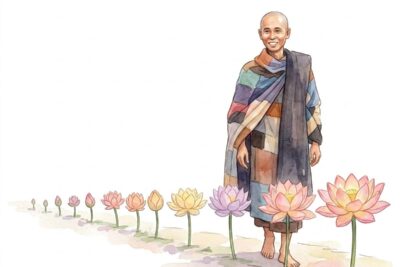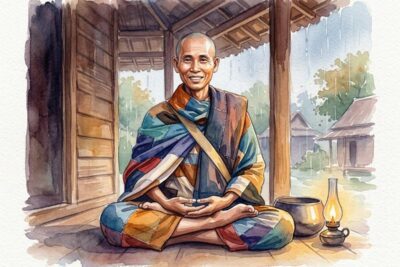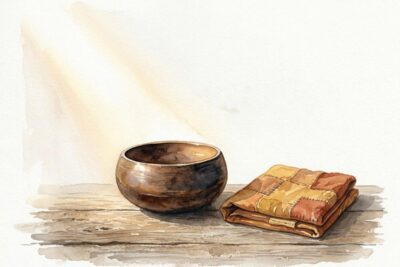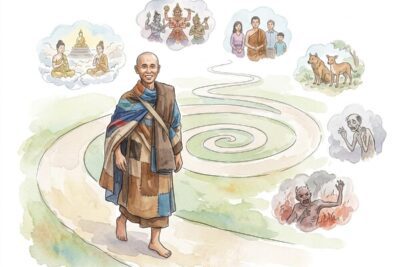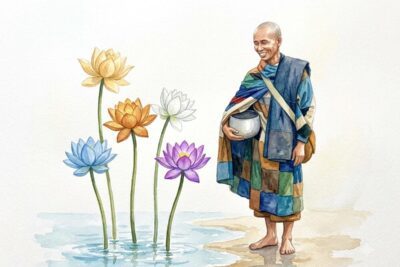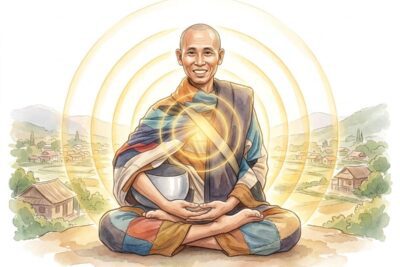
When people see Master Minh Tuệ walking barefoot, wearing a rag-robe stitched from discarded cloth, eating one meal a day from a single bowl — many ask: what practice is he following?
The answer lies in an ancient set of practices the Buddha permitted: the 13 Dhutanga (Dhutaṅga) — 13 methods of purification that help a practitioner live the life of fewness of desires and contentment at its highest level.
This is not extreme self-mortification. It is a conscious choice — letting go of what is unnecessary so the mind may be free.
What Are the 13 Dhutanga?
The word dhutaṅga means “shaking off” — shaking off defilements, shaking off attachment to material comfort. The 13 practices are recorded in the Visuddhimagga (The Path of Purification) by Venerable Buddhaghosa and in various Pali Vinaya texts.
The 13 practices fall into four groups:
ROBES (2 practices):
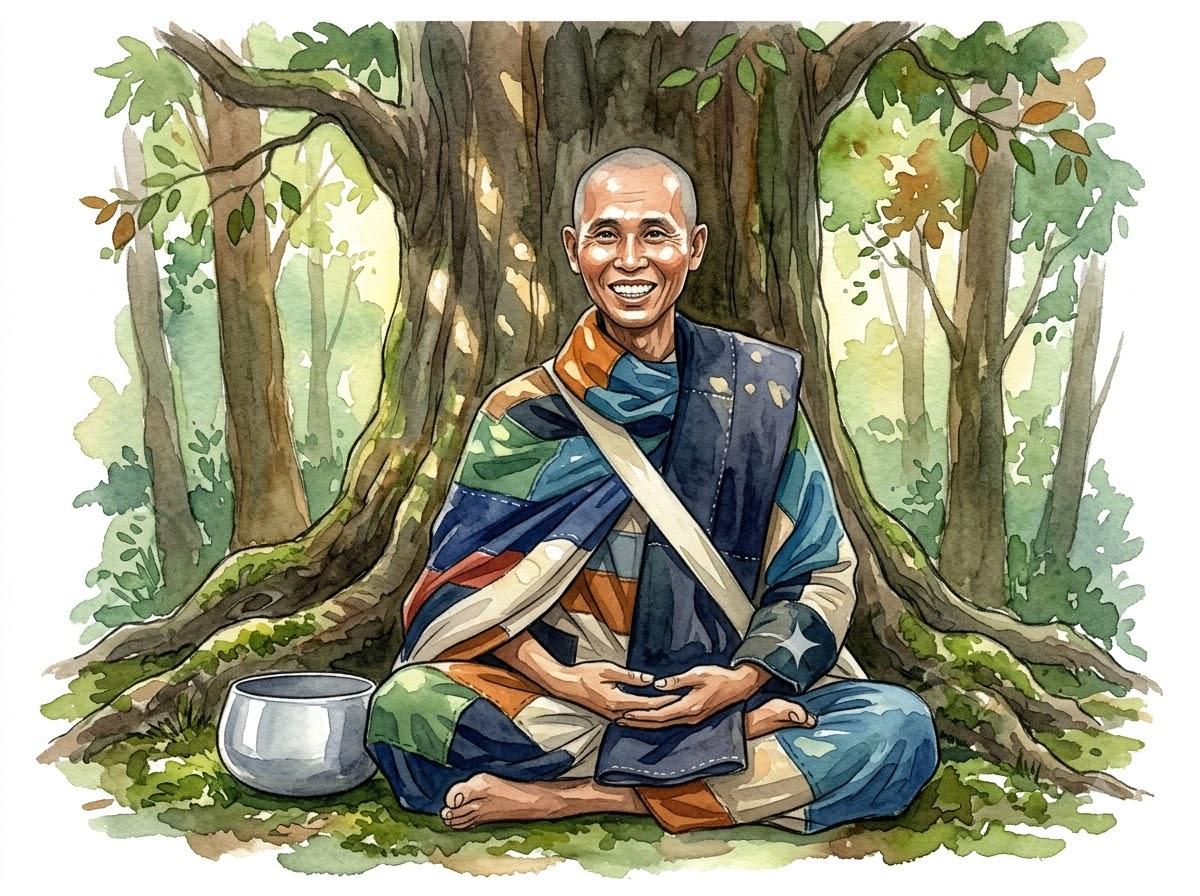
1. Wearing rag-robes (Paṃsukūlika) — Wearing robes made only from discarded cloth: fabric found at cemeteries, torn cloth, thrown-away material. Not accepting new robes offered by supporters. This practice cuts attachment to appearance.
2. Wearing only the triple robe (Tecīvarika) — Owning exactly three robes: the inner robe (antaravāsaka), the upper robe (uttarāsaṅga), and the double robe (saṅghāṭi). No additional cloth is stored.
FOOD (5 practices):
3. Alms-round only (Piṇḍapātika) — Eating only food received on the daily alms-round. Not accepting invitations to dine at a supporter’s home.
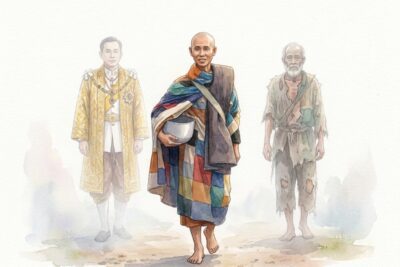
4. House-to-house alms-round (Sapadānacārika) — Going from one house to the next in order, without skipping the poor to seek out the wealthy. This practice eliminates discrimination and calculation.
5. One-session eating (Ekāsanika) — Once seated to eat, the meal is completed in that single sitting. After standing up, no more food is taken.
6. Bowl-food only (Pattapiṇḍika) — All food is placed in a single bowl; no separate plates or dishes are used.
7. No food after refusal (Khalupacchābhattika) — Once additional food has been declined, no more is accepted even if offered again.
DWELLING (5 practices):
8. Forest dwelling (Āraññika) — Living in the forest, away from populated areas and their noise and disturbance.
9. Tree-root dwelling (Rukkhamūlika) — Sleeping at the base of a tree, not inside a building or enclosed room.
10. Open-air dwelling (Abbhokāsika) — Sleeping outdoors with no roof overhead. More rigorous than tree-root dwelling.
11. Cemetery dwelling (Sosānika) — Living near a cemetery to continuously contemplate death and cut attachment to the body.
12. Accepting any assigned place (Yathāsanthatika) — Accepting whatever sleeping place is assigned, without requesting a better one.
EFFORT (1 practice):
13. Sitting, never lying down (Nesajjika) — Maintaining only three postures: walking, standing, and sitting. Never lying down, even to sleep.
Dhutanga Is Not Self-Mortification
This is the most essential point to understand: the 13 Dhutanga practices are not extreme self-mortification.
Self-mortification is the belief that tormenting the body leads to liberation — starving until collapse, lying on thorns, deliberately causing pain. The Buddha abandoned this approach after six years of practice and declared it futile.
Dhutanga is fundamentally different: the purpose is not to cause suffering to the body, but to reduce attachment to comfort. Not “the more suffering, the better,” but “the less dependence, the freer the mind.”
And crucially: dhutanga is voluntary. The Buddha did not require any monk to observe these practices. He simply permitted and praised them — recognizing that for certain practitioners, this way of life accelerates the purification of the mind.
Master Minh Tuệ – A Dhutanga Practitioner in the Modern Age
Among the very few practitioners still observing dhutanga in the 21st century, Master Minh Tuệ is the most widely known. What makes his practice remarkable is this: he does not observe dhutanga as a short-term exercise or personal challenge — he has lived within it for years, making it his daily way of life.
In the Visuddhimagga (The Path of Purification), Venerable Buddhaghosa explains that the purpose of dhutanga is to shake off defilements (dhuta — “shaken off”) by eliminating the conditions that nourish craving. Looking at Master Minh Tuệ’s daily life, one can recognize many of these practices being observed:
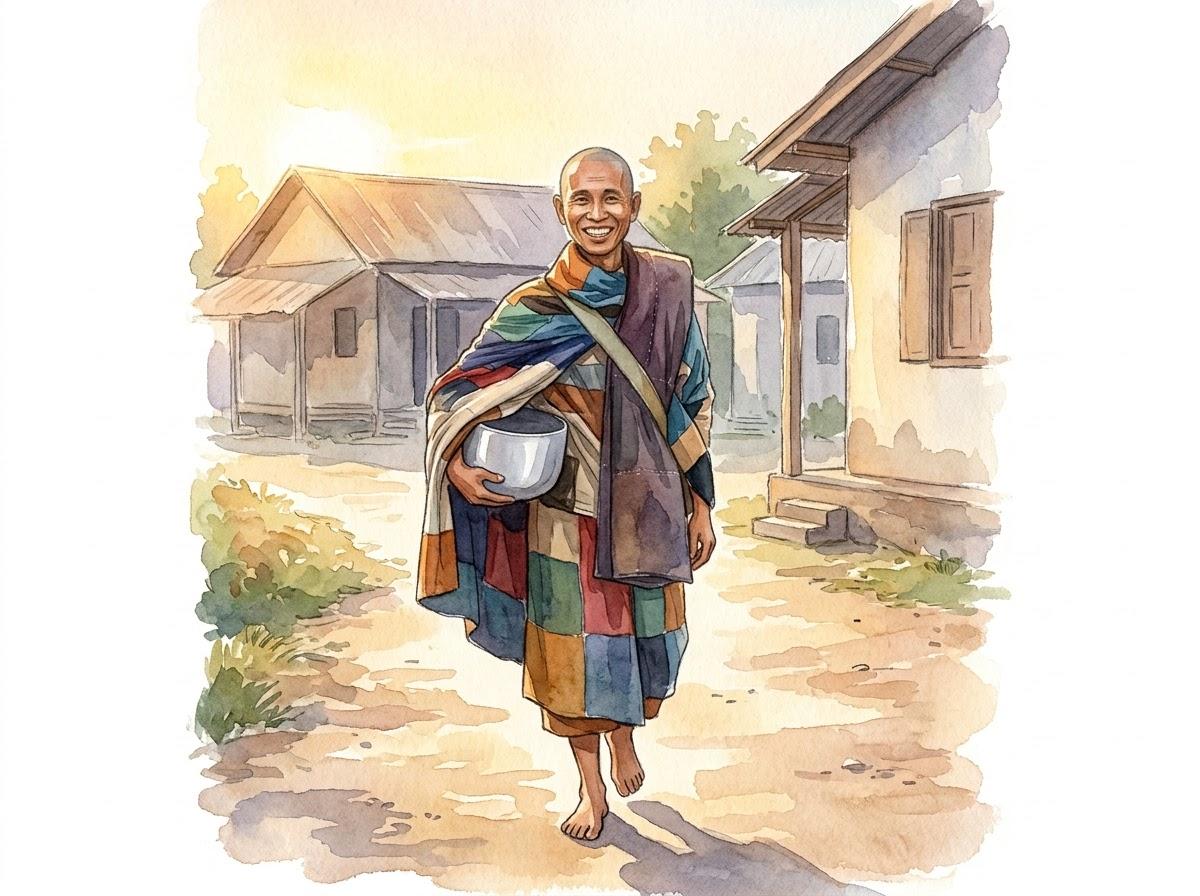
Rag-robe (paṃsukūlika): He wears robes patched together from pieces of discarded fabric — never accepting new robes from supporters. His heavily patched robe has become his most iconic image. In the Buddhist tradition, the rag-robe is not a punishment — it is a way of severing attachment to outward appearance. When one no longer cares what one wears, the mind sheds a substantial layer of affliction.
Triple robe (tecīvarika): He owns only what he wears — no extra garments or possessions stored away. The three robes in the Theravada tradition are the inner robe (antaravāsaka), the upper robe (uttarāsaṅga), and the double robe (saṅghāṭi). This practice is a reminder: a practitioner needs only enough to cover the body and shield against the weather — nothing more.
Alms-round (piṇḍapātika): Each day he receives food from the community, eating just one meal. Alms-round is not begging — in the Buddhist tradition, it is an opportunity for both sides: the giver creates merit, and the receiver practices letting go of control over food — eating whatever is offered, without choosing.
Bowl-food (pattapiṇḍika): All food goes into a single bowl — savory and sweet mixed together. This practice eliminates the distinction between “delicious” and “unpleasant,” training the mind to view food as fuel for the body, not as a source of pleasure.
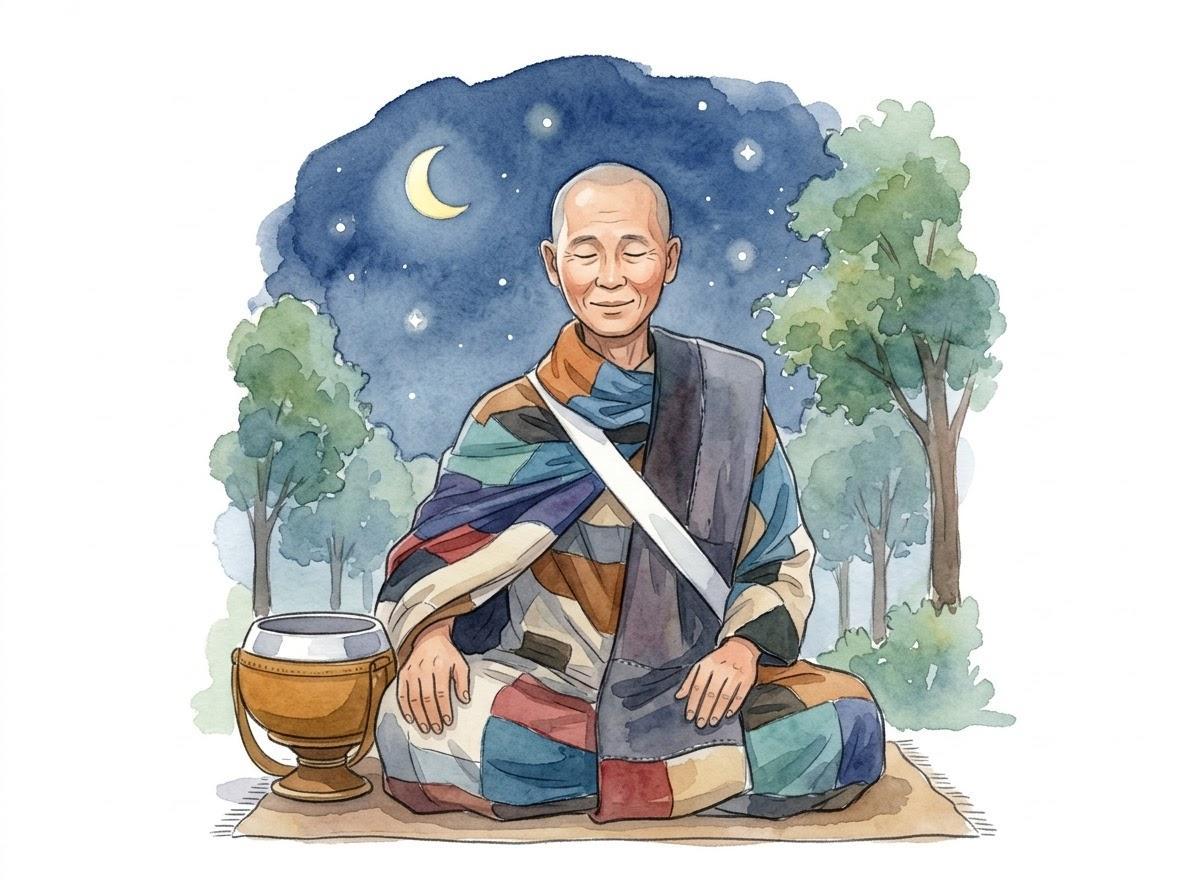
Open-air dwelling (abbhokāsika): He sleeps by the roadside, beneath trees, in the open — not in houses or temples. Without a fixed roof, the practitioner must face impermanence directly each night: changing weather, insects, noise — all become objects of contemplation.
Sitting, never lying down (nesajjika): According to many witnesses, he typically sits to rest rather than lying down. This is the most demanding of the 13 practices — requiring continuous diligence, since the mind must remain sufficiently alert to avoid sinking into dullness even during rest.
Master Minh Tuệ’s dhutanga practice is not a performance — it is a way of life. What distinguishes him from those who “try living simply” is time and consistency: eight continuous years, without turning back, without changing course when conditions became harsh. And it is precisely this way of living that leads millions to look and ask themselves: how much do we truly need to be happy?
Note: This analysis is based on observable behavior, not Master Minh Tuệ’s own words about his inner experience. The dhutanga practices listed here are identified from external observation, not from any formal declaration by Master Minh Tuệ about which practices he observes.
Mahā Kassapa – The Foremost Disciple in Dhutanga
In the Buddha’s time, Venerable Mahā Kassapa was honored as “foremost in dhutanga practice”. He maintained dhutanga observances throughout his life, even when the Buddha himself suggested he rest due to his advanced age.
Venerable Mahā Kassapa replied: the dhutanga practices benefit not only himself, but serve as an example for future generations — so that those who come after would know that a life of fewness of desires and contentment is possible, and worthy of respect.
That answer, more than 2,500 years later, is still being embodied by Master Minh Tuệ with every step he takes.
Lessons from Dhutanga for Laypeople
You do not need to observe all 13 dhutanga practices to learn from the dhutanga spirit. In everyday life:
Eat just enough: You need not eat only once a day, but eating just enough — not eating out of boredom or habit — embodies the spirit of “bowl-food.”
Live with less: Clear out your wardrobe. Let go of what you no longer use. Each item released is an attachment severed.
Do not demand perfect lodging: When traveling, when moving — accept a place that is “good enough” rather than always insisting on the best. That is the spirit of “accepting any assigned place.”
Reduce dependence on others: Cook for yourself, fix things yourself, do your own laundry — each act of self-reliance is one less thread of dependence, one less attachment.
The core spirit of dhutanga is this: need less, be freer. You can apply it right now — in your kitchen, in your wardrobe, in the way you let go each day.
Dhutanga Across Buddhist Traditions
Dhutanga practice is primarily found in the Theravada tradition — especially prominent in Thailand’s Forest Tradition (Kammaṭṭhāna), represented by renowned meditation masters such as Ajahn Mun and Ajahn Chah.
In Vietnam, dhutanga practice is less common but not unfamiliar. Master Minh Tuệ has brought dhutanga back into the awareness of the Vietnamese Buddhist community — reminding people that this way of life exists not only in ancient texts, but can still be practiced in the modern age.
Some Mahayana traditions have similar practices, though they may not use the term “dhutanga.” But the core spirit — fewness of desires, contentment, releasing the material to free the mind — is shared across all schools of Buddhism.
Frequently Asked Questions
What are the 13 Dhutanga practices?
The 13 Dhutanga (Dhutaṅga) are 13 methods of purification that the Buddha permitted monks to observe voluntarily. They include rules regarding robes (wearing rag-robes, owning only three robes), food (alms-round only, one meal, bowl-food), dwelling (forest, tree-root, open-air), and effort (sitting without lying down).
Are the Dhutanga practices mandatory?
No. The Buddha did not require anyone to observe dhutanga. These are voluntary practices for practitioners who wish to live the life of fewness of desires and contentment at its highest level.
Are the Dhutanga practices the same as extreme self-mortification?
Entirely different. Extreme self-mortification aims to torment the body in the belief that pain leads to liberation — the Buddha rejected this approach. Dhutanga aims to reduce attachment to material comfort, helping the mind become purified. The goal is inner freedom, not physical suffering.