Who do you think you are?
Most of us have a ready answer: I am this name, this job, this personality, this body. And all of that together forms a “self” — solid, continuous, mine.
The Buddha looked at exactly that and said: no.
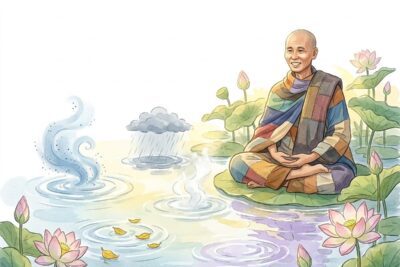
What we call “I” is actually five groups of temporary phenomena coming together — none of them is “I,” and their sum is not “I” either. The Buddha called these five groups the Five Aggregates (Pañcakkhandha).
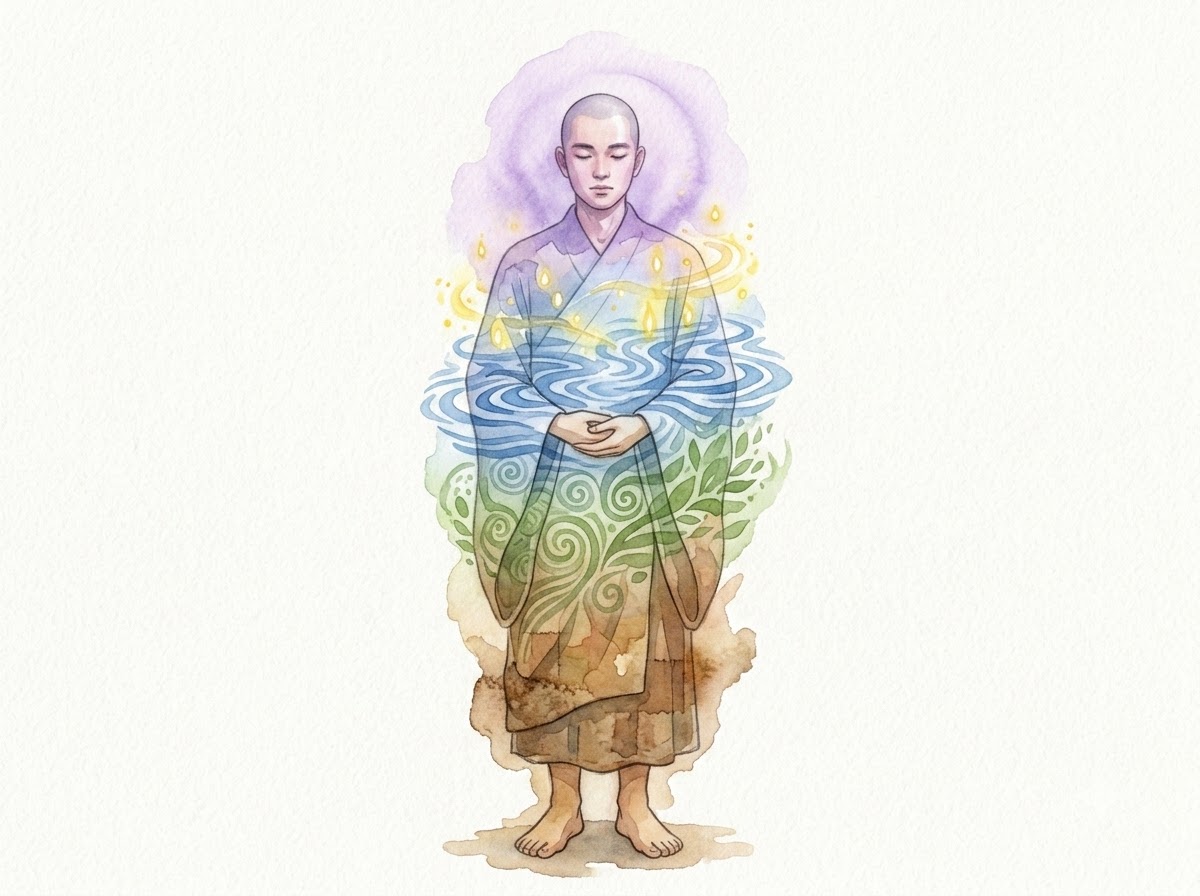
What Are the Five Aggregates?
The Five Aggregates are five groups (khandha — literally “heap” or “mass”) the Buddha used to analyze all of human experience:
1. Form (Rūpa) — The material group. This includes the body and the entire physical world we interact with. Form is the most “solid” and easiest to recognize — yet also deeply impermanent.
2. Feeling (Vedanā) — Not complex emotions, but the first reaction upon contact with an object: pleasant, unpleasant, or neutral.
3. Perception (Saññā) — Recognition, labeling. The ability to identify objects. Perception is the filter that helps us categorize the world — but it also creates bias.
4. Volitional formations (Saṅkhāra) — Mental constructions, intentions, tendencies. This is the most complex group: it includes intentions, decisions, habits, reactions. Formations are the driving force that creates kamma.
5. Consciousness (Viññāṇa) — Awareness, knowing. The capacity to know that one is experiencing. Consciousness is not a “soul” — it is simply the function of awareness, arising when conditions are sufficient and ceasing when conditions end.
Where Is the “Self” in These Five?
This is the crucial question — and what the Buddha wanted each person to discover for themselves.
If “I” is the body — then when the body changes, does “I” disappear? If “I” is feeling — then the “I” that feels pleasant and the “I” that feels unpleasant are two different people? If “I” is consciousness — then the “I” asleep and the “I” awake are two different selves?
No group contains a fixed self. And combining all five does not produce one either — because each group is continuously changing, arising and passing away moment by moment.
This is the teaching of non-self (anattā) — not “nothing exists,” but “no fixed entity called ‘I’ exists.”
Why Understanding the Five Aggregates Matters
Because most suffering originates from clinging to the aggregates — grasping at what is always changing and believing it is “me.”
In the Dhammacakkappavattana Sutta (SN 56.11), the Buddha declared: “In brief, clinging to the five aggregates is suffering.”
Clinging to the body — suffering when it ages and falls ill. Clinging to pleasant feeling — suffering when it fades. Clinging to desires — suffering when things do not go your way. Clinging to consciousness — suffering from fear of death.
Understanding the aggregates is not about becoming cold or detached. It is about seeing clearly — seeing that what we grasp never belonged to us, so releasing it is not loss but freedom. As the Buddha taught about letting go — true freedom comes from releasing what was never ours.
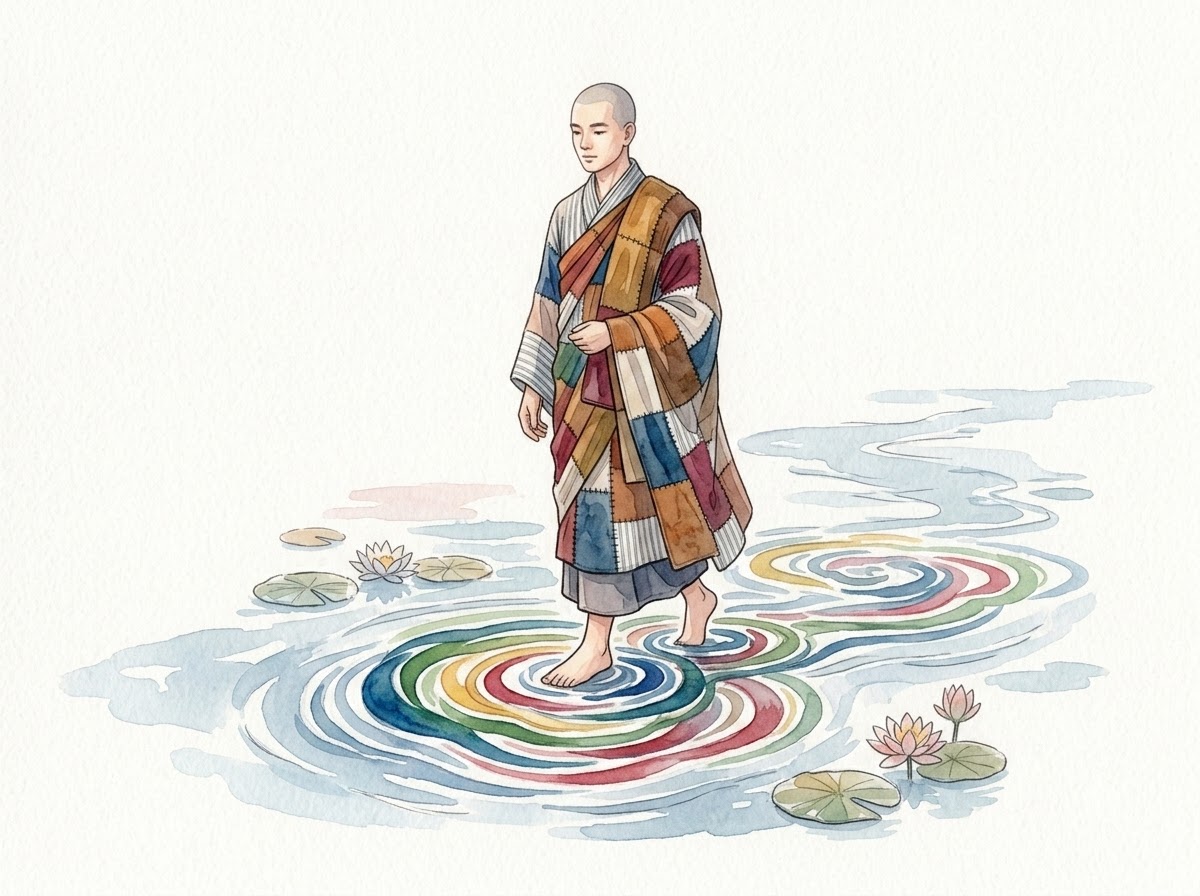
Master Minh Tue — Letting Go of Clinging to the Aggregates
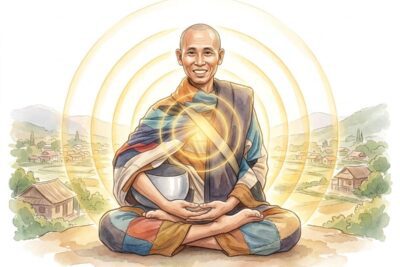
In the Khandha Sutta (SN 22.48), the Buddha taught that suffering does not lie in the five aggregates themselves, but in clinging to them — upādānakkhandha. Looking at how Master Minh Tuệ has lived since 2018, we can see a vivid example of practicing the release of that clinging — not through theory, but through each day lived.
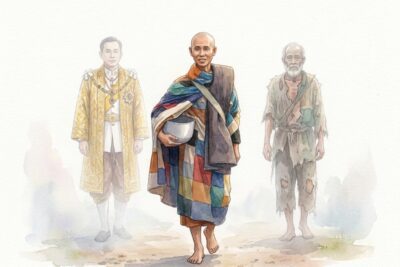
Releasing form (rūpa): Most people spend their entire lives serving the body — eating well, sleeping comfortably, maintaining health, caring for appearance. Master Minh Tuệ goes the opposite way: no house, no bed, no possessions, eating one meal a day from whatever is offered. His body endures sun, rain, hunger, and exhaustion — yet he does not make bodily comfort a condition for continuing on his path. This is not self-mortification — it is the attitude of not letting the body be the master. When form is no longer the master, it returns to its true nature: a material phenomenon arising and passing according to conditions, not “me.”
Releasing feeling (vedanā): The Buddha taught that it is at the point of feeling — pleasant, unpleasant, neutral — that craving arises (vedanā paccayā taṇhā, Dependent Origination). Ordinary people cling to pleasant feeling and flee from unpleasant feeling. Master Minh Tuệ lives amid praise and blame, scorching sun and cold rain — yet observably, he does not chase comfort or resent hardship. Sun is sun, rain is rain — feeling comes and goes, and he does not let it determine his direction. This is the practice of breaking the link from feeling to craving — the most critical junction in Dependent Origination.
Releasing perception (saññā): Perception is the function of recognition and labeling — “I am a teacher,” “I am a practitioner,” “I am a holy person.” Most of us live by labels: profession, role, title. Master Minh Tuệ demonstrates the release of perception most clearly by refusing to accept any identity — he does not claim to be a master, a monk, or anything that millions have called him. When perception no longer constructs a “self” through labels, the ego loses its foothold — and a person becomes far freer.
Releasing formations (saṅkhāra): The aggregate of formations contains will, intention, habits, reactions — the driving force that creates kamma. Ordinary people live by plans: where to be tomorrow, what to achieve next year, how the future should look. Master Minh Tuệ lives without long-term plans, without accumulation, without worldly goals. Each day of walking is simply that day — the road ahead is not a destination but the practice itself. This suggests a mind that is gradually reducing fabrication — not through passivity, but through directing intention toward letting go rather than accumulating.
Releasing consciousness (viññāṇa): Consciousness is the function of knowing. But at a deeper level, consciousness is also the final refuge of the ego: “I am the one who knows, who experiences, who exists.” In the Khemaka Sutta (SN 22.89), the Buddha compared this to fragrance lingering on a cloth that has already been washed — even after releasing the other four aggregates, the subtle sense of “I am here” may remain. When Master Minh Tuệ does not cling to titles, does not fear being forgotten, does not seek to persist in others’ memory — this can be understood as signs of a mind gradually releasing even the sense of a separate “I.” This is the deepest layer of letting go — and the hardest to perceive from the outside.
Note: The analysis above is an interpretation based on Master Minh Tuệ’s observable actions, not his own words about his inner experience. Only the practitioner truly knows the depth of their own release.
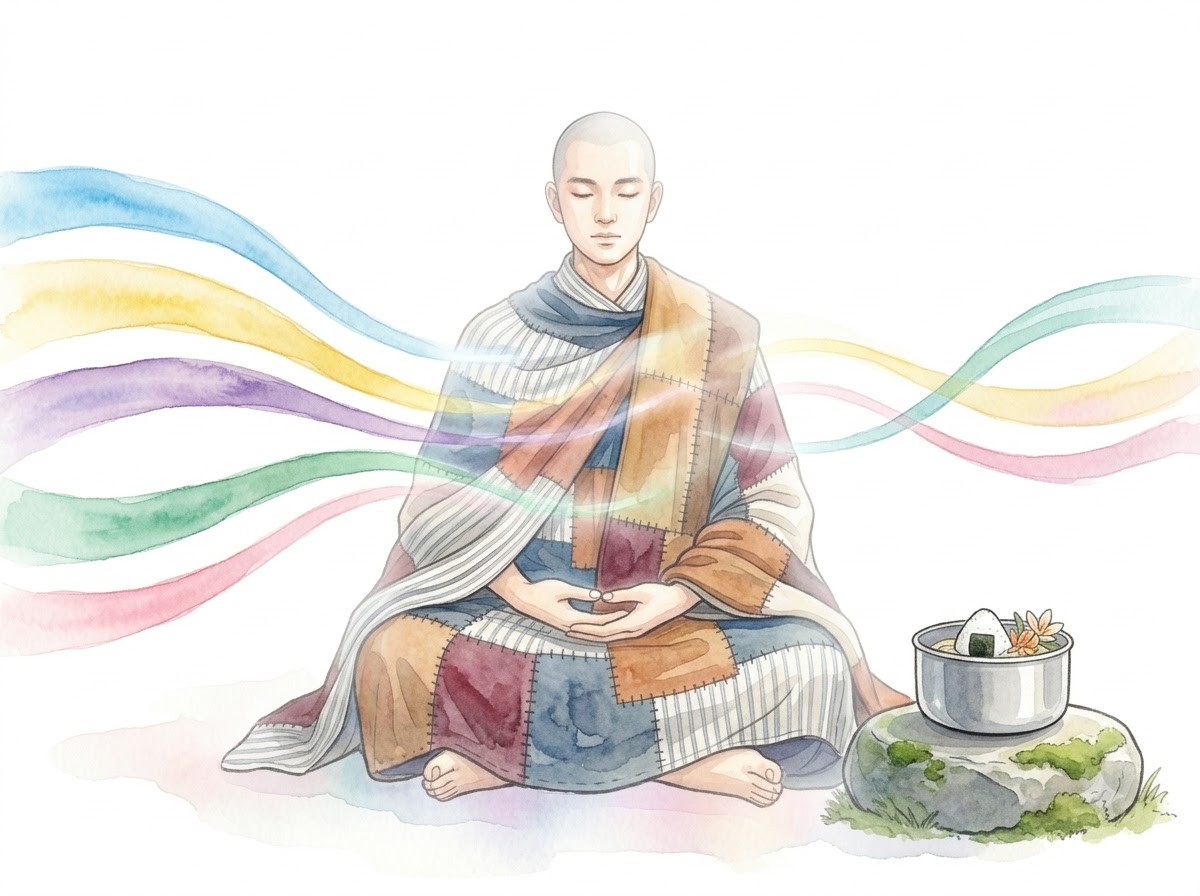
The Five Aggregates and Related Teachings
The Five Aggregates connect to many other Buddhist teachings:
With Dependent Origination: The five aggregates do not exist independently. They arise due to conditions: the body needs food, feeling needs contact, consciousness needs an object. Understanding the aggregates is understanding dependent origination at a personal level — nothing in “me” exists on its own.
With the Four Noble Truths: The First Truth — the truth of suffering — is summarized by the Buddha as “clinging to the five aggregates is suffering.” Understanding the aggregates is understanding the nature of suffering, and from there, seeing clearly the path to freedom.
With meditation: Many Theravāda meditation methods use the five aggregates as objects of observation. The practitioner watches each aggregate arise and pass away, seeing impermanence, suffering, and non-self directly — and thereby releasing clinging.
Common Misconceptions
“Non-self means nothing exists”: Not at all. Non-self does not deny existence. It points out that what we call “I” is a continuous stream — present, but not fixed, not permanent.
“Understanding the aggregates means becoming cold”: The opposite. When you stop clinging, you become freer to love and care — not out of fear of loss, but from seeing the preciousness of each moment.
“Intellectual understanding is enough”: Understanding the aggregates intellectually is only the first step. Liberation comes when you directly see — through meditation — that no aggregate is “I.”
The Five Aggregates in Meditation
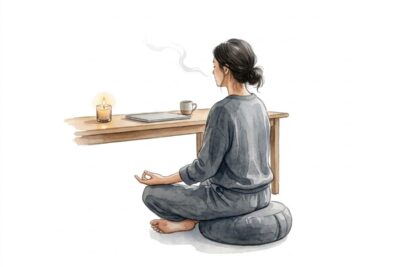
In the Theravāda meditation tradition, the five aggregates are not merely a theory — they are a direct object of contemplation. During Vipassanā (insight meditation), practitioners observe each aggregate arising and passing away:
Observing form: Noticing bodily sensations — heat, pressure, tingling — and seeing how they appear and vanish moment by moment. The body is not one solid thing, but a field of constantly changing sensations.
Observing feeling: With each contact — a sound, a thought, a touch — noticing the immediate tone: pleasant, unpleasant, or neutral. Not reacting to it, just seeing it clearly.
Observing perception: Watching the mind label things — “that’s a bird,” “that person is rude” — and recognizing the label as a mental event, not an absolute truth.
Observing formations: Seeing intentions arise — “I want to move,” “I should respond” — and noticing that even the sense of choice is conditioned, not a command from a permanent self.
Observing consciousness: Recognizing that awareness itself comes and goes — moments of clear knowing alternate with moments of dullness, and even consciousness is not constant.
Through this sustained observation, the practitioner gradually loosens the habit of identifying with any aggregate, and the natural result is a decrease in suffering.
Beginning to Observe the Five Aggregates
You do not need to understand the aggregates perfectly to start practicing. Just start observing:
Next time you feel happy — ask: what exactly is happy? The body or the mind? How long will this feeling of happiness last?
Next time you feel sad — ask: what exactly is sad? “I am sad” or “a feeling of sadness is present, and it will pass”?
Just that small shift — from “I am this feeling” to “this feeling is happening, and it will pass” — is the first step toward seeing the aggregates clearly. And each time you see clearly, you cling a little less. Cling less, suffer a little less.
Frequently Asked Questions
What are the Five Aggregates in Buddhism?
The Five Aggregates (Pañcakkhandha) are form (body/matter), feeling (pleasant/unpleasant/neutral), perception (recognition/labeling), volitional formations (intentions/habits), and consciousness (awareness). Together they make up the totality of human experience — and none of them is a permanent self.
How do the Five Aggregates relate to non-self (anattā)?
By examining each aggregate, we find that none contains a fixed, unchanging self. The body changes, feelings come and go, perceptions shift, intentions vary, consciousness fluctuates. No permanent entity called “I” exists within or across these five groups.
Why does the Buddha say clinging to the aggregates is suffering?
Because each aggregate is impermanent. When we cling to what constantly changes, we inevitably experience loss and disappointment. Seeing the aggregates clearly allows us to release this clinging and find genuine freedom.
How can I observe the Five Aggregates in daily life?
Start by noticing: when an emotion appears, distinguish — this is feeling (vedanā), this is perception (saññā), this is reaction (saṅkhāra). Simply seeing that “I am sad” is actually “a feeling of sadness is present” is already a significant step toward understanding the aggregates.
What is the difference between consciousness (viññāṇa) and a soul?
In Buddhist teaching, consciousness is not a permanent soul. It is a function of awareness that arises when conditions are sufficient and ceases when they end. It is not an unchanging entity that transmigrates — it is part of a continuous, conditioned process, like a flame passing from one candle to the next.
Do the Five Aggregates deny the existence of a person?
No. The Buddha acknowledged conventional personhood — we can meaningfully speak of “a person” in everyday language. What the aggregates reveal is that behind that convention, no fixed, unchanging entity exists. The person is real as a process, not as a permanent thing.